The post The FDA Is Trying To Make Corporate Free Speech Situational appeared on BitcoinEthereumNews.com. BENSENVILLE, ILLINOIS – SEPTEMBER 10: Flanked by U.S. Attorney General Pam Bondi (rear), and FDA Commissioner Marty Makary (R), Secretary of Health and Human Services Robert F. Kennedy Jr. speaks to the press outside Midwest Distribution after it was raided by federal agents on September 10, 2025 in Bensenville, Illinois. According to the company, various e-liquids were seized in the raid. (Photo by Scott Olson/Getty Images) Getty Images While running for President in 2008, Barack Obama famously chanted “Yes we can.” Love or hate his political views, Obama’s politics were quite effective. He was asking voters to think big, to envision a much better future. Advertisers no doubt approved. That’s because ads routinely evoke things not as they are, but as they could be. Gyms and exercise equipment companies don’t promote their locations and equipment with flabby, lumbering people, rather their ads show fit, upright, energetic individuals. A look ahead. Restaurants do the same with ads showing happy people enjoying impressively put together plates of food. Conversely, ads meant to convince smokers to quit have not infrequently shown the worst of the worst future downsides of the habit. The nature of advertising comes to mind as FDA commissioner Marty Makary puzzlingly brags that “The Trump Administration Is Taking On Big Pharma” in the New York Times. Makary laments pharmaceutical ads that “are filled with dancing patients, glowing smiles and catch jingles that drown out the fine print.” Not explained is whether Makary would be happier if drug companies placed ads with immobile patients, frowns, and funereal music. Seriously, what does he expect? Does he want drug companies to commit billions to drug development to accompany their achievements with imagery defined by misery? Has Makary stopped to contemplate the myriad shareholders lawsuits drugmakers would face if, upon risking staggering sums meant… The post The FDA Is Trying To Make Corporate Free Speech Situational appeared on BitcoinEthereumNews.com. BENSENVILLE, ILLINOIS – SEPTEMBER 10: Flanked by U.S. Attorney General Pam Bondi (rear), and FDA Commissioner Marty Makary (R), Secretary of Health and Human Services Robert F. Kennedy Jr. speaks to the press outside Midwest Distribution after it was raided by federal agents on September 10, 2025 in Bensenville, Illinois. According to the company, various e-liquids were seized in the raid. (Photo by Scott Olson/Getty Images) Getty Images While running for President in 2008, Barack Obama famously chanted “Yes we can.” Love or hate his political views, Obama’s politics were quite effective. He was asking voters to think big, to envision a much better future. Advertisers no doubt approved. That’s because ads routinely evoke things not as they are, but as they could be. Gyms and exercise equipment companies don’t promote their locations and equipment with flabby, lumbering people, rather their ads show fit, upright, energetic individuals. A look ahead. Restaurants do the same with ads showing happy people enjoying impressively put together plates of food. Conversely, ads meant to convince smokers to quit have not infrequently shown the worst of the worst future downsides of the habit. The nature of advertising comes to mind as FDA commissioner Marty Makary puzzlingly brags that “The Trump Administration Is Taking On Big Pharma” in the New York Times. Makary laments pharmaceutical ads that “are filled with dancing patients, glowing smiles and catch jingles that drown out the fine print.” Not explained is whether Makary would be happier if drug companies placed ads with immobile patients, frowns, and funereal music. Seriously, what does he expect? Does he want drug companies to commit billions to drug development to accompany their achievements with imagery defined by misery? Has Makary stopped to contemplate the myriad shareholders lawsuits drugmakers would face if, upon risking staggering sums meant…

The FDA Is Trying To Make Corporate Free Speech Situational

BENSENVILLE, ILLINOIS – SEPTEMBER 10: Flanked by U.S. Attorney General Pam Bondi (rear), and FDA Commissioner Marty Makary (R), Secretary of Health and Human Services Robert F. Kennedy Jr. speaks to the press outside Midwest Distribution after it was raided by federal agents on September 10, 2025 in Bensenville, Illinois. According to the company, various e-liquids were seized in the raid. (Photo by Scott Olson/Getty Images)

Getty Images

While running for President in 2008, Barack Obama famously chanted “Yes we can.” Love or hate his political views, Obama’s politics were quite effective. He was asking voters to think big, to envision a much better future.

Advertisers no doubt approved. That’s because ads routinely evoke things not as they are, but as they could be. Gyms and exercise equipment companies don’t promote their locations and equipment with flabby, lumbering people, rather their ads show fit, upright, energetic individuals. A look ahead. Restaurants do the same with ads showing happy people enjoying impressively put together plates of food. Conversely, ads meant to convince smokers to quit have not infrequently shown the worst of the worst future downsides of the habit.

The nature of advertising comes to mind as FDA commissioner Marty Makary puzzlingly brags that “The Trump Administration Is Taking On Big Pharma” in the New York Times. Makary laments pharmaceutical ads that “are filled with dancing patients, glowing smiles and catch jingles that drown out the fine print.” Not explained is whether Makary would be happier if drug companies placed ads with immobile patients, frowns, and funereal music.

Seriously, what does he expect? Does he want drug companies to commit billions to drug development to accompany their achievements with imagery defined by misery? Has Makary stopped to contemplate the myriad shareholders lawsuits drugmakers would face if, upon risking staggering sums meant to create a healthier future, they made sure to downplay or outright deny their achievements?

Makary pats his FDA and Trump administration on the back for acting to “rein in misleading pharmaceutical ads,” but it’s the equivalent of the Trump administration demanding that pharmaceutical companies demean their capabilities. How could the allegedly pro-business Trump administration make such a demand, one that no other politician or business would ever be expected to abide?

To which Makary and his defenders might reply that with pharmaceutical drugs, the rules should be different. Since health and health outcomes are on the line, sometimes of the life and death variety, pharmaceutical companies must follow a different set of rules. Except that pharmaceutical companies already do. And Makary knows this truth well.

As evidenced by the years of work and billions spent just to attain drug approval, pharmaceutical companies go to enormous lengths to get their innovations into the marketplace. Their drugs are FDA approved. Which is the point, or should be.

In seeking greater policing of drug advertising, Makary is adding another layer to the already substantial oversight provided by the FDA, oversight that has yet more layers. While pharmaceutical companies can advertise their FDA approved drugs, would-be patients can still only attain them insofar as they’re prescribed by a doctor. Which of course answers Makary’s odd critique that drugmakers are targeting potential users with “misleading ads.” Really? How?

Lest Makary forget, the ads are yet again for FDA approved drugs that are once again only accessible with a doctor-signed prescription. Which raises a basic question: if the FDA is doing its job in the approval process, and doctors are doing their jobs, why the limits on the free speech rights of pharmaceutical companies to advertise the health possibilities that come with their innovations? Why indeed.

Absent a compelling answer from Makary, it’s difficult to find a compelling reason for the Trump administration to make free speech situational. Pharmaceutical companies prosper by improving our lives. Let them advertise their capacity to do just that.

Source: https://www.forbes.com/sites/johntamny/2025/09/17/the-fda-is-trying-to-make-corporate-free-speech-situational/

Market Opportunity
SynFutures Logo
SynFutures Price(F)
$0.006285
$0.006285$0.006285
-0.36%
USD
SynFutures (F) Live Price Chart
Disclaimer: The articles reposted on this site are sourced from public platforms and are provided for informational purposes only. They do not necessarily reflect the views of MEXC. All rights remain with the original authors. If you believe any content infringes on third-party rights, please contact [email protected] for removal. MEXC makes no guarantees regarding the accuracy, completeness, or timeliness of the content and is not responsible for any actions taken based on the information provided. The content does not constitute financial, legal, or other professional advice, nor should it be considered a recommendation or endorsement by MEXC.

You May Also Like

Bitcoin Hyper Not Far from $20M, Whales Keep Buying: See What This $BTC Layer-2 Plans

Bitcoin Hyper Not Far from $20M, Whales Keep Buying: See What This $BTC Layer-2 Plans

To the uninitiated, Bitcoin and crypto are synonymous – and it’s only fair, given that the granddaddy of all crypto has been the face of the industry ever since it burst onto the scene a few years back. Since 2020, Bitcoin has generated over 1,500% in returns. Basically, crypto is so much about Bitcoin. All […]
Share
Bitcoinist2025/09/22 16:37
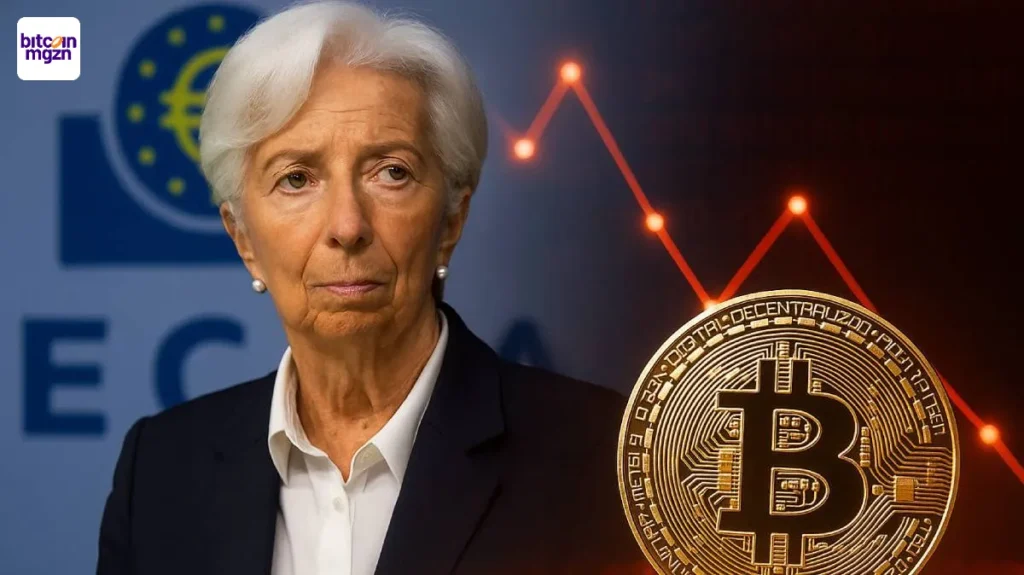
ECB-president hernieuwt aanval op Bitcoin terwijl euro daalt

ECB-president hernieuwt aanval op Bitcoin terwijl euro daalt

Snelle crypto updates? Connect op Instagram! Check onze Instagram   ECB-president Christine Lagarde noemt Bitcoin waardeloos en waarschuwt voor zijn speculatieve aard. Haar uitspraken komen op een moment dat DeFi groeit en de euro onder druk staat, wat de discussie over geld en controle opnieuw tot leven brengt. ECB houdt vast aan kritiek op Bitcoin en DeFi De Europese Centrale Bank (ECB) blijft vasthouden aan haar scherpe toon over Bitcoin. Volgens president Christine Lagarde ontbreekt de munt het fundament dat echt geld kenmerkt. Ze noemt het een speculatief middel zonder onderliggende waarde, en benadrukt dat de ECB het publieke vertrouwen in geld moet beschermen. Terwijl de digitale economie zich steeds meer richting decentralisatie beweegt, probeert de bank haar rol als stabiele pijler te behouden. ECB (European Central Bank) De European Central Bank (ECB) is de centrale bank van de eurozone en bepaalt samen met de nationale banken het monetaire beleid voor de euro. Ze houdt de inflatie in de gaten, bepaalt de rente en zorgt voor stabiliteit van het financiële systeem. In de cryptowereld speelt de ECB vooral een rol met het onderzoek en de voorbereidingen voor een digitale euro, een eigen centrale bank digitale munt (CBDC). Daarmee wil de bank inspelen op de groei van digitaal geld en alternatieven zoals stablecoins. Voor de crypto-industrie is dit belangrijk omdat een digitale euro de concurrentie en het speelveld voor private stablecoins kan veranderen. De waarschuwing van Lagarde past in een bredere strategie van de ECB. De opkomst van decentrale financiële systemen (DeFi) wordt gezien als een uitdaging voor de invloed van centrale banken. In die waarschuwing lijkt ook iets van zelfbescherming door te klinken: het behoud van macht over monetair beleid. Voorstanders van Bitcoin wijzen juist op de kracht van schaarste, transparantie en onafhankelijkheid; eigenschappen die fiatgeld in hun ogen steeds meer verliest. “How many bitcoin do you own?” That’s how it starts, a stupid question from the host. From there, it goes downhill fast. Christine Lagarde repeats every tired anti-bitcoin cliché the ECB has ever pushed. Let’s go… 1️⃣ “Bitcoin has no intrinsic value.” Neither does fiat.… pic.twitter.com/uMqtEHvkD0 — Eli Nagar (@EliNagarBrr) October 7, 2025 De euro verzwakt terwijl crypto aan invloed wint Ondertussen verliest de euro langzaam maar zeker aan koopkracht. Sinds de invoering in 2002 is de munt ruim veertig procent van haar reële waarde kwijtgeraakt. Dat voedt de twijfel over de houdbaarheid van het huidige fiatstelsel en vergroot de interesse in alternatieven zoals Bitcoin en andere cryptovaluta. Binnen de Europese cryptogemeenschap worden de woorden van de ECB dan ook met de nodige scepsis onthaald. Been 22 years, physical $Euro coins and banknotes entered circulation on January 1st 2002. Since then, this fiasco lost 40% of its buying power according to “official” stats. Won’t even mention real stats, or you’d be dumping ALL your Eurobolivars for #Bitcoin right now. pic.twitter.com/Rp3KinVfPm — Vandelay ₿TC Industries ⚡ (@VandelayBTC) January 3, 2024 DeFi-platforms en stablecoins winnen terrein in Europa, juist omdat ze nieuwe mogelijkheden bieden voor rendement en autonomie. Waar Lagarde waarschuwt voor volatiliteit, zien veel gebruikers vooral vrijheid in een systeem dat zich niets aantrekt van centrale banken. De groei van DeFi laat zien dat vertrouwen niet alleen via instituties ontstaat, maar ook via technologie. Monetaire controle en vertrouwen in het digitale tijdperk De standpunten van de ECB leggen een oud spanningsveld bloot: de strijd tussen stabiliteit en vrijheid. Aan de ene kant verdedigt de bank haar rol als bewaker van orde, aan de andere kant tonen cryptomarkten dat vertrouwen ook buiten traditionele kanalen kan bestaan. Terwijl de ECB pleit voor zekerheid en voorspelbaarheid, zoeken investeerders steeds vaker transparantie en zelfbeschikking. Lagarde’s uitspraken passen in een wereldwijde trend waarin centrale banken proberen hun gezag te behouden in een economie die snel verandert. Toch klinkt steeds luider de vraag of die vorm van controle nog houdbaar is. Nieuwe technologieën maken directe waardeoverdracht mogelijk,zonder tussenkomst van banken. Dat idee wringt natuurlijk met de kern van het bestaande financiële systeem. Exactly. It was narrative management. They feel threatened. That’s why real questions about monetary policy, inflation, and accountability never make it to the script. — Eli Nagar (@EliNagarBrr) October 8, 2025 De toekomst van waarde: centraal of gedecentraliseerd? De discussie tussen de ECB en de cryptowereld draait om meer dan geld. Het gaat om vertrouwen, transparantie en macht over waarde. Zolang de euro verder verzwakt en decentrale technologieën blijven groeien, lijkt de kloof tussen centrale banken en de cryptosector alleen maar groter te worden. Hoeveel invloed de ECB kan behouden, hangt af van haar vermogen zich aan te passen aan dit nieuwe tijdperk. De strijd om waarde is niet enkel economisch, maar ook ideologisch. In dat licht voelt de opkomst van Bitcoin minder als een bedreiging, en meer als een logisch gevolg van de zoektocht naar onafhankelijkheid in geld. Koop je Bitcoin via Best Wallet Best wallet is een topklasse crypto wallet waarmee je anoniem crypto kan kopen. Met meer dan 60 chains gesupport kan je al je main crypto coins aanschaffen via Best Wallet. Best wallet - betrouwbare en anonieme wallet Best wallet - betrouwbare en anonieme wallet Meer dan 60 chains beschikbaar voor alle crypto Vroege toegang tot nieuwe projecten Hoge staking belongingen Lage transactiekosten Best wallet review Koop nu via Best Wallet Let op: cryptocurrency is een zeer volatiele en ongereguleerde investering. Doe je eigen onderzoek. Het bericht ECB-president hernieuwt aanval op Bitcoin terwijl euro daalt is geschreven door Sebastiaan Krijnen en verscheen als eerst op Bitcoinmagazine.nl.
Share
Coinstats2025/10/11 03:16
What SBI Really Owns in Ripple May Surprise XRP Investors

What SBI Really Owns in Ripple May Surprise XRP Investors

The post What SBI Really Owns in Ripple May Surprise XRP Investors appeared on BitcoinEthereumNews.com. SBI Holdings Chairman Yoshitaka Kitao has confirmed that
Share
BitcoinEthereumNews2026/02/16 16:14