The post Hoskinson Blames Account Models for Address Poisoning appeared on BitcoinEthereumNews.com. Trader loses $50 million in USDT through an address poisoningThe post Hoskinson Blames Account Models for Address Poisoning appeared on BitcoinEthereumNews.com. Trader loses $50 million in USDT through an address poisoning

Hoskinson Blames Account Models for Address Poisoning

  • Trader loses $50 million in USDT through an address poisoning attack.
  • Charles Hoskinson states that UTXO blockchains like Cardano resist poisoning attacks.
  • Crypto thefts surpassed $3.4 billion in 2025, according to Chainalysis data.

Digital asset security remains the primary challenge facing the cryptocurrency sector as it enters 2026. An unnamed trader lost nearly $50 million in USDT to an address poisoning scam, raising questions about infrastructure resilience.

The victim had operated their wallet for approximately two years, primarily conducting USDT transfers. The trader followed standard security practices by sending a test transaction of 50 USDT before executing the larger transfer. Despite this precaution, the attack succeeded through social engineering tactics.

Address Poisoning Exploits Fundamental Design Flaws

Charles Hoskinson, founder of Cardano, stated that the vulnerability stems from architectural choices in account-based blockchain systems. Ethereum and other EVM-compatible chains display addresses as free-form strings in transaction histories. Wallets encourage users to copy addresses from previous transactions. This creates opportunities for attackers to inject malicious addresses.

Hoskinson argued that UTXO-based blockchains like Bitcoin and Cardano are not affected by this attack vector. These systems consume existing transaction outputs and create new ones with each transfer. This prevents the address reuse patterns that enable poisoning attacks. UTXO wallets select transaction outputs explicitly rather than copying destination addresses from account histories.

“A persistent account state to visually poison does not exist” in UTXO models, Hoskinson noted on X. One user disagreed, stating that address poisoning results from user error when copying incorrect addresses from blockchain explorers. Hoskinson responded that account abstraction and smart wallet standards make the problem worse rather than better.

Annual Theft Reaches Highest Levels Since 2022

Data from Chainalysis shows cryptocurrency hacks exceeded $3.4 billion in 2025, surpassing 2024 levels. The Bybit breach in February accounted for approximately $1.4 billion, making it the largest single cryptocurrency theft on record. North Korea-linked actors were attributed with responsibility for that attack.

The $50 million address poisoning incident is a growing trend of attacks targeting traders with large holdings. These schemes rely on exploiting human behavior rather than breaking cryptographic security or finding smart contract vulnerabilities.

Projects building on account-based models face pressure to implement additional safeguards against social engineering. Smart wallet standards and account abstraction introduce complexity that may create new vulnerability vectors. Meanwhile, UTXO-based chains position their architectural choices as inherent security advantages.

Related: What Prices to Expect for XRP, BTC, ETH, and ADA on Christmas?

Disclaimer: The information presented in this article is for informational and educational purposes only. The article does not constitute financial advice or advice of any kind. Coin Edition is not responsible for any losses incurred as a result of the utilization of content, products, or services mentioned. Readers are advised to exercise caution before taking any action related to the company.

Source: https://coinedition.com/hoskinson-blames-account-based-blockchains-for-50m-address-poisoning-scam/
Market Opportunity
Wink Logo
Wink Price(LIKE)
$0.003005
$0.003005$0.003005
0.00%
USD
Wink (LIKE) Live Price Chart
Disclaimer: The articles reposted on this site are sourced from public platforms and are provided for informational purposes only. They do not necessarily reflect the views of MEXC. All rights remain with the original authors. If you believe any content infringes on third-party rights, please contact [email protected] for removal. MEXC makes no guarantees regarding the accuracy, completeness, or timeliness of the content and is not responsible for any actions taken based on the information provided. The content does not constitute financial, legal, or other professional advice, nor should it be considered a recommendation or endorsement by MEXC.

You May Also Like

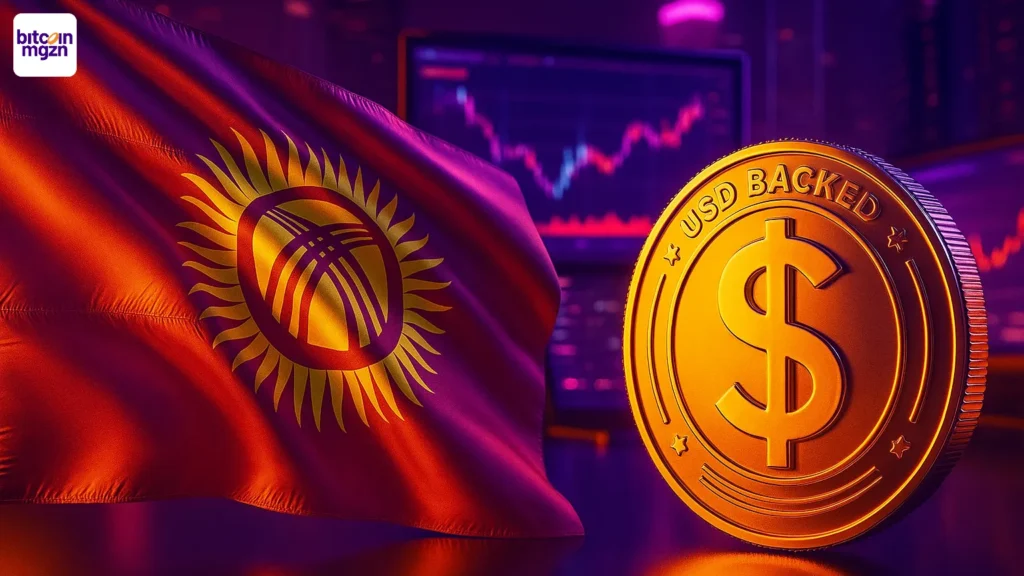
Waarom Kyrgyzstan via Binance inzet op een stablecoin

Waarom Kyrgyzstan via Binance inzet op een stablecoin

De stablecoin van Kyrgyzstan, KGST, is gelist op Binance. Dit is een belangrijke vooruitgang voor het land, wat de president ook benoemt. Voor stablecoins lijkt
Share
Coinstats2025/12/26 01:46
Saudi blockchain real estate offers tokenized investment under Vision 2030

Saudi blockchain real estate offers tokenized investment under Vision 2030

The Saudi Arabian Vision 2030 has sped up the digital transformation of various sectors. The real estate industry is about to enter a new era with tokenized ownership
Share
Tronweekly2025/12/26 02:04
Polygon Tops RWA Rankings With $1.1B in Tokenized Assets

Polygon Tops RWA Rankings With $1.1B in Tokenized Assets

The post Polygon Tops RWA Rankings With $1.1B in Tokenized Assets appeared on BitcoinEthereumNews.com. Key Notes A new report from Dune and RWA.xyz highlights Polygon’s role in the growing RWA sector. Polygon PoS currently holds $1.13 billion in RWA Total Value Locked (TVL) across 269 assets. The network holds a 62% market share of tokenized global bonds, driven by European money market funds. The Polygon POL $0.25 24h volatility: 1.4% Market cap: $2.64 B Vol. 24h: $106.17 M network is securing a significant position in the rapidly growing tokenization space, now holding over $1.13 billion in total value locked (TVL) from Real World Assets (RWAs). This development comes as the network continues to evolve, recently deploying its major “Rio” upgrade on the Amoy testnet to enhance future scaling capabilities. This information comes from a new joint report on the state of the RWA market published on Sept. 17 by blockchain analytics firm Dune and data platform RWA.xyz. The focus on RWAs is intensifying across the industry, coinciding with events like the ongoing Real-World Asset Summit in New York. Sandeep Nailwal, CEO of the Polygon Foundation, highlighted the findings via a post on X, noting that the TVL is spread across 269 assets and 2,900 holders on the Polygon PoS chain. The Dune and https://t.co/W6WSFlHoQF report on RWA is out and it shows that RWA is happening on Polygon. Here are a few highlights: – Leading in Global Bonds: Polygon holds 62% share of tokenized global bonds (driven by Spiko’s euro MMF and Cashlink euro issues) – Spiko U.S.… — Sandeep | CEO, Polygon Foundation (※,※) (@sandeepnailwal) September 17, 2025 Key Trends From the 2025 RWA Report The joint publication, titled “RWA REPORT 2025,” offers a comprehensive look into the tokenized asset landscape, which it states has grown 224% since the start of 2024. The report identifies several key trends driving this expansion. According to…
Share
BitcoinEthereumNews2025/09/18 00:40