US bill targeting prediction markets ban intensifies crackdown on political betting by officials
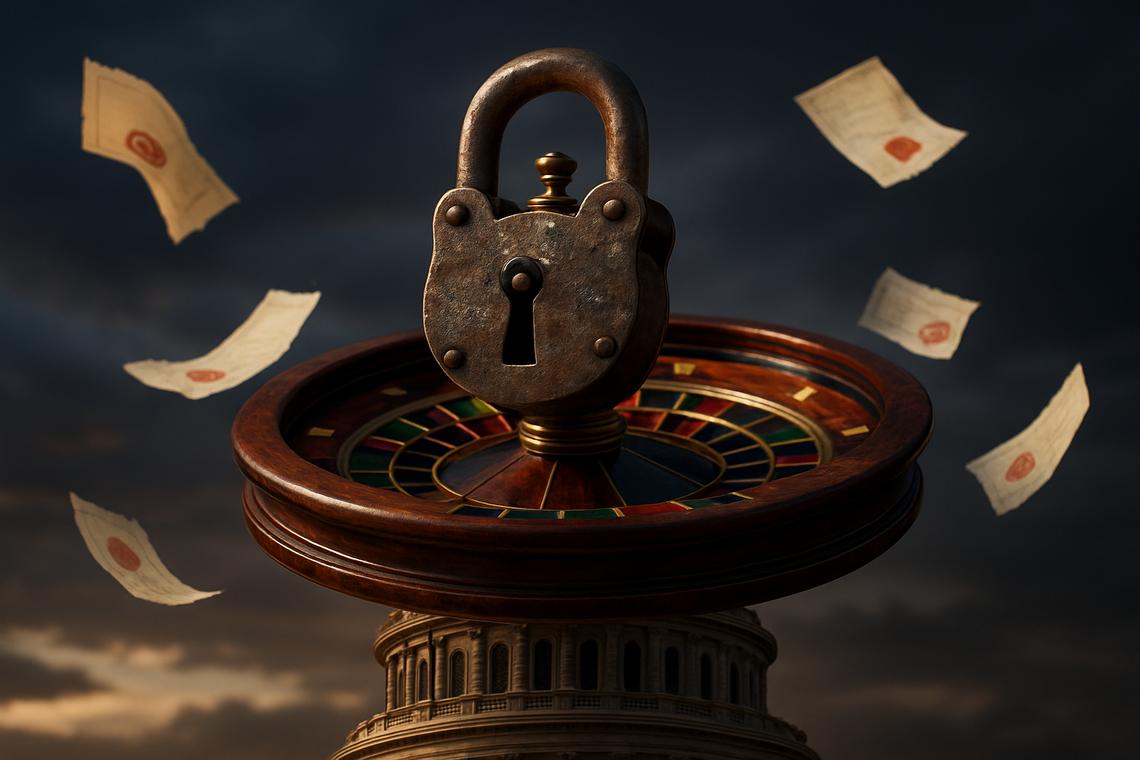
Amid rising concern over insider trading and political wagering, a new proposal in Washington explicitly targets a comprehensive prediction markets ban for top US officials.
New bipartisan bill targets trading by senior US officials
US lawmakers have introduced a bipartisan bill that would prohibit members of Congress, the president and other senior government officials from placing bets on prediction markets. The move reflects deepening scrutiny of speculative trading tied to politics, war and public policy outcomes.
The proposed legislation, unveiled on Tuesday, comes from US Representative Adrian Smith and Representative Nikki Budzinski. Officially titled the Preventing Real-time Exploitation and Deceptive Insider Congressional Trading Act, or PREDICT Act, it seeks to close what lawmakers see as a serious ethical gap.
“In recent months, we’ve seen instances of little-known traders making massive profits on events ranging from war with Iran to how long a government shutdown will last, raising necessary questions about the use of inside information,” Budzinski said. Her comments underscore growing fears that confidential intelligence could be monetized in real time.
The initiative lands as platforms such as Kalshi and Polymarket face intense pressure over contracts linked to sports, geopolitics and elections. Moreover, regulators and legislators at both the federal and state levels are examining whether existing rules adequately cover these emerging markets.
Scope of the PREDICT Act and penalties for violations
Under the bill, members of Congress, the president, vice president and political appointees would be barred from wagering on the outcomes of political events, policy decisions or other government actions on prediction venues. The prohibition would also extend to the spouses and dependents of these officials to prevent indirect participation.
The PREDICT Act lays out specific financial penalties. Violators could face a 10% fine on the total value of any contract involved, alongside the full disgorgement of profits to the US Treasury. However, enforcement mechanisms and oversight responsibilities would still need to be detailed in subsequent regulatory guidance.
Commenting on the proposal, Budzinski emphasized the importance of addressing remaining loopholes so that individuals with privileged access to information “cannot profit from it.” That said, the bill also fits into a broader political conversation about tightening rules around trading and financial exposure among public officials.
Supporters describe the measure as a form of congressional trading ban focused on event contracts rather than traditional securities. Moreover, it parallels separate efforts on Capitol Hill to restrict other types of speculative behavior by elected representatives and their families.
Parallel bill: the BETS OFF Act and insider information concerns
Budzinski is not alone in calling out alleged corruption risks around speculative event contracts. Earlier this month, two Democratic lawmakers introduced another proposal, the Banning Event Trading on Sensitive Operations and Federal Functions (BETS OFF) Act, aimed at limiting trading linked to sensitive government activities.
Speaking about this related bill, Senator Chris Murphy alleged that it was likely some market participants used “inside information” to place wagers on US President Donald Trump‘s military actions involving Iran. These claims have further fueled debate about the boundaries between legitimate speculation and illegal insider trading.
Together, the PREDICT Act and the BETS OFF framework indicate a widening push in Washington to draw clear lines around what officials and possibly the wider public can bet on. However, the exact interplay between these measures and existing securities and derivatives law remains a live policy question.
Advocates of stricter oversight argue that these initiatives mirror calls to expand a broader ban congressional trading agenda beyond stocks and into newer financial products. Moreover, the focus on military decisions, sanctions and foreign policy events underlines concerns about national security as well as market integrity.
Lawmakers escalate broader campaign against prediction markets
US policymakers are not only focused on alleged insider trading in event contracts. Sports-related prediction products have also triggered pushback at both the federal and state levels, as officials question whether these platforms resemble unregulated gambling.
Earlier this week, Cointelegraph reported that 11 states have already taken legal action against event-based platforms, with another two states preparing additional cases. That said, the details of these actions vary, ranging from cease-and-desist orders to broader regulatory complaints.
At the federal level, Senators John Curtis and Adam Schiff introduced a separate bill on Monday. It would bar any Commodity Futures Trading Commission (CFTC)-registered entity from listing contracts that resemble “a sports bet or casino-style game.” The measure targets firms that allegedly design products nearly indistinguishable from traditional sports gambling.
The senators argued that many companies have issued large volumes of contracts that “are indistinguishable from gambling” and criticized the CFTC for its evolving stance. Moreover, they accused the regulator of failing to uphold long-standing restrictions as platforms experimented with new event-based instruments.
Regulatory confrontation with the CFTC and platforms
According to Curtis and Schiff, “For fifteen years, the CFTC has enforced its authority to prohibit the listing of a contract that involves, relates to or references ‘gaming.'” However, they claimed that the commission and its chair have recently “abruptly reversed course,” shifting their approach as litigation and rulemaking unfold.
They said the CFTC has intervened in ongoing lawsuits and launched new rulemaking efforts that, in their view, significantly relax enforcement of this gaming clause. This marks a key flashpoint in the broader debate about how far regulators should go in policing speculative contracts tied to real-world events.
Following this political and regulatory pressure, both Kalshi and Polymarket have tightened their internal policies. The two platforms, among the largest in the sector, moved to restrict professional athletes and political candidates from placing wagers on outcome-based contracts to address conflict-of-interest concerns.
Amid these developments, the prediction markets ban debate has shifted from a niche legal question to a central issue in US financial policy. The PREDICT Act, the BETS OFF proposal and new CFTC-focused bills together signal that event-based trading is likely to face stricter oversight and more aggressive enforcement in the coming years.
You May Also Like

Nvidia Faces Class Action Over Alleged Hidden Crypto GPU Revenue

Next-Gen Payments, Prediction Markets, and the Future of US iGaming Infrastructure