A 39-year-old man in Russia’s Komi Republic is under criminal investigation for allegedly stealing electricity to run a cryptocurrency mining operation. AccordingA 39-year-old man in Russia’s Komi Republic is under criminal investigation for allegedly stealing electricity to run a cryptocurrency mining operation. According

Russian Crypto Miner Accused of Illegally Draining 6 Million Rubles in Electricity

2026/02/18 15:00
2 min read
For feedback or concerns regarding this content, please contact us at [email protected]

A 39-year-old man in Russia’s Komi Republic is under criminal investigation for allegedly stealing electricity to run a cryptocurrency mining operation.
According to the investigators from the Syktyvdinsky District Department of the Ministry of Internal Affairs in the Komi Republic, the crypto miner (suspect) caused damage worth about 6 million rubles to a regional energy supplier. The authorities also claim he illegally connected to the power grid to supply electricity to his private crypto farm.
Based on the findings, the man started mining crypto in August last year. And all the time he operated, he was not registered as a crypto miner, nor did he have legal permission to operate such an activity at the scale the authorities discovered.

Also Read: Russia Crypto Volume Surges to 50 Billion Rubles Daily Amid Push for Proper Regulation

Law enforcement officials said the mining equipment was installed in another building located on the suspect’s property. Instead of using a legal electricity connection, he tapped directly into the grid system without obtaining authorization. This allowed the crypto miner to power multiple machines while avoiding paying electrical bills.
The operation was uncovered by regional officers of the Federal Security Service (FSB). Following the discovery, officers carried out searches at the property and seized different computer equipment that is believed to have been used for the mining activities.

Criminal Charges and Ongoing Investigation on the Crypto Miner

The police have opened a criminal case under Part 2 of Article 165 of the Criminal Code of the Russian Federation, which relates to causing property damage without theft through the abuse of trust or by deception. Investigators have continued to gather evidence in order to fully determine the full scale of the losses.
If found guilty, the crypto miner could face serious legal consequences, as the Russian authorities continue to monitor other illegal cryptocurrency mining operations that place heavy pressure on the regional power grids

Also Read: Shiba Inu (SHIB) Signals Bullish Reversal: Could Prices Surge Over 400%?

Disclaimer: The articles reposted on this site are sourced from public platforms and are provided for informational purposes only. They do not necessarily reflect the views of MEXC. All rights remain with the original authors. If you believe any content infringes on third-party rights, please contact [email protected] for removal. MEXC makes no guarantees regarding the accuracy, completeness, or timeliness of the content and is not responsible for any actions taken based on the information provided. The content does not constitute financial, legal, or other professional advice, nor should it be considered a recommendation or endorsement by MEXC.

You May Also Like

Shocking OpenVPP Partnership Claim Draws Urgent Scrutiny

Shocking OpenVPP Partnership Claim Draws Urgent Scrutiny

The post Shocking OpenVPP Partnership Claim Draws Urgent Scrutiny appeared on BitcoinEthereumNews.com. The cryptocurrency world is buzzing with a recent controversy surrounding a bold OpenVPP partnership claim. This week, OpenVPP (OVPP) announced what it presented as a significant collaboration with the U.S. government in the innovative field of energy tokenization. However, this claim quickly drew the sharp eye of on-chain analyst ZachXBT, who highlighted a swift and official rebuttal that has sent ripples through the digital asset community. What Sparked the OpenVPP Partnership Claim Controversy? The core of the issue revolves around OpenVPP’s assertion of a U.S. government partnership. This kind of collaboration would typically be a monumental endorsement for any private cryptocurrency project, especially given the current regulatory climate. Such a partnership could signify a new era of mainstream adoption and legitimacy for energy tokenization initiatives. OpenVPP initially claimed cooperation with the U.S. government. This alleged partnership was said to be in the domain of energy tokenization. The announcement generated considerable interest and discussion online. ZachXBT, known for his diligent on-chain investigations, was quick to flag the development. He brought attention to the fact that U.S. Securities and Exchange Commission (SEC) Commissioner Hester Peirce had directly addressed the OpenVPP partnership claim. Her response, delivered within hours, was unequivocal and starkly contradicted OpenVPP’s narrative. How Did Regulatory Authorities Respond to the OpenVPP Partnership Claim? Commissioner Hester Peirce’s statement was a crucial turning point in this unfolding story. She clearly stated that the SEC, as an agency, does not engage in partnerships with private cryptocurrency projects. This response effectively dismantled the credibility of OpenVPP’s initial announcement regarding their supposed government collaboration. Peirce’s swift clarification underscores a fundamental principle of regulatory bodies: maintaining impartiality and avoiding endorsements of private entities. Her statement serves as a vital reminder to the crypto community about the official stance of government agencies concerning private ventures. Moreover, ZachXBT’s analysis…
Share
BitcoinEthereumNews2025/09/18 02:13
Solana Sees $10M Capital Rotation, Eyes $100 Breakout
Solana Sees $10M Capital Rotation, Eyes $100 Breakout

The post Solana Sees $10M Capital Rotation, Eyes $100 Breakout appeared on BitcoinEthereumNews.com. Capital rotation into Solana accelerated this week as traders
Share
BitcoinEthereumNews2026/03/18 00:18
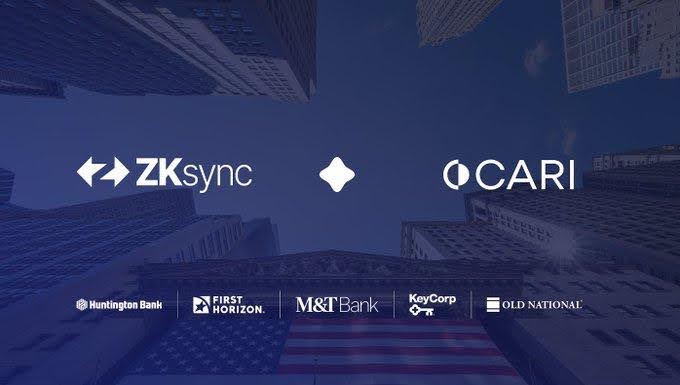
ZKsync Powers Tokenized Deposits in Major U.S. Bank Network

ZKsync Powers Tokenized Deposits in Major U.S. Bank Network

Key Takeaways: Five U.S. regional banks are building a tokenized deposit network on ZKsync. Deposits remain FDIC-insured bank liabilities, not stablecoins. The
Share
Crypto Ninjas2026/03/18 00:41
