Ethereum’s Next Scaling and MegaETH’s Vision(MegaETH Bread × PG Labs Tomo)
Ethereum’s Next Scaling and MegaETH’s Vision
As Ethereum enters a new phase of scaling, the focus of the discussion is shifting from whether it can scale to how it should scale. Scalability, user experience, and a cross-chain default are no longer side topics. They have become the core of how new networks are being designed.
In the second installment of the series, “Ethereum and Layer 2 Unlocking the Full Potential of the Ecosystem,” Pheasant Network CEO Tomo sat down with Bread from MegaETH. Together, they discussed what comes after a rollup-centric world, what real-time execution can unlock onchain, and why a monolithic Layer 2 and cross-chain infrastructure can evolve together rather than compete.
MegaETH Bread × Pheasant Tomo
Tomo: I’m Tomo, founder of Pheasant Network and PG Labs. In the first installment of this series, we invited Mo from the Ethereum Foundation to discuss the Ethereum ecosystem. This time, I’d like to dive into Ethereum scaling with Bread from MegaETH.
Pheasant Network is an AI-powered intent-centric interoperability protocol, and we are supporting MegaETH’s mainnet from day one as a launch partner. PG Labs is a Web3 studio building products we hope will become public goods loved around the world.
MegaETH is clearly one of the most forward-leaning projects when it comes to Ethereum scalability, so I’m excited to have this conversation. Bread, thanks for joining.
 PG Labs tomo
Bread: Tomo, thanks for having me. Excited to do this.
1. MegaETH as a Real-Time Blockchain
Tomo: To start, could you briefly introduce yourself and give an overview of MegaETH?
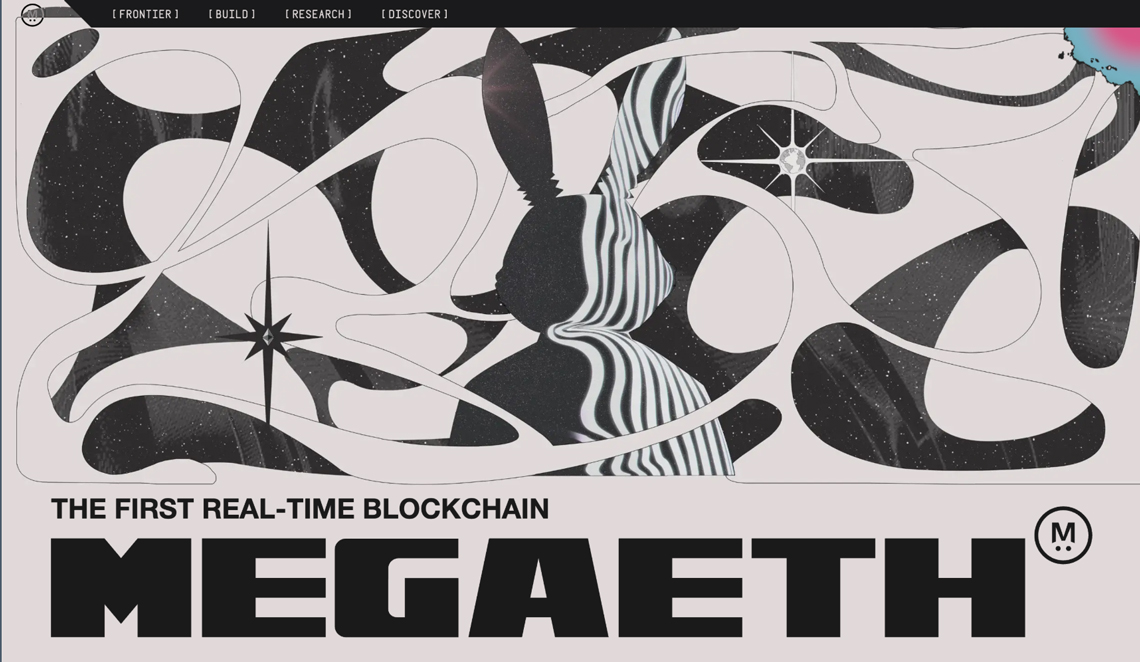
Bread: Hey! My name is Bread and I lead GTM at MegaETH—the first real-time blockchain. We’re fully leveraging the rollup centric roadmap to build an execution environment that can house massively scalable (100k TPS), responsive (10ms block times) applications that work as well as any app on your phone.
 MegaETH
Tomo: The phrase “real-time blockchain” really stuck with me when I first came across MegaETH. A lot of projects begin by explaining technical specs first, but MegaETH leads with an image of the experience, and that felt intentional.
Bread: It was. Before talking about TPS or block times, we wanted people to understand how it should feel. Users aren’t sitting there timing block production. They just know whether an app feels fast or not.
Tomo: Exactly. At the end of the day, users judge things in a very simple way. Does it feel like a normal app? As a builder myself, that’s also how I think about it. And that’s why I see MegaETH’s approach: designing around execution and responsiveness from the beginning, as a critical foundation for what comes next.
2. Beyond Rollup-Centric Scaling
Tomo: Ethereum scaling has been driven by rollups, from Optimistic Rollups like Arbitrum and Optimism to zkRollup like Linea and ZKsync. In that rollup-centric world, what do you see as the key innovation MegaETH is trying to deliver?
Bread: MegaETH is the logical conclusion of the rollup centric roadmap because it delivers both pragmatic and innovative solutions to the problems which have held back ~all chains within the Ethereum ecosystem to-date.
All rollups are currently building to be undifferentiated so that they can optimize for interoperability between one another despite the market telling them that they appreciate singular state environments.
MegaETH is taking the opposite approach and believes monolithic design is where value will accrue, but leverages Ethereum to take those design principles beyond what any L1 by itself can achieve.
So it’s a chain that believes you should be big + fast, but that the biggest + fastest will be a chain that outsources services (like consensus) to other chains so that it can optimize for execution. When looking around the landscape for where to outsource consensus, why not do it to the most durable, decentralized and stable chain in existence (Ethereum).
Tomo: I believe that one reason many execution layers have converged on similar designs is also simply development complexity. The rise of frameworks like OP Stack has made it dramatically easier to spin up networks, and we’ve seen that play out with the Superchain direction. For projects with enough resources, building their own L2 becomes very tempting, and the availability of standardized stacks lowers the barrier a lot.
But what’s striking about MegaETH is that it doesn’t feel like “using Ethereum” so much as “assuming Ethereum.” It’s not a dependency. It’s the base layer you lean on.
Bread: Exactly.
3. Use Cases That Will Define the Next Phase
Tomo: With that architecture in mind, what use cases do you think will become most important on MegaETH?
Bread: Consumer and trading applications.
Tomo: This is where MegaETH’s philosophy becomes the clearest.
Bread: MegaETH is the best chain for these outcomes for a singular reason: latency. With MegaETH outsourcing consensus to Ethereum it’s able to operate at a performance level that is physically not able to be obtained by any chains with consensus (L1s) due to the speed of light (i.e. they’re bound by physics).
Tomo: In trading especially, that performance gap isn’t just nice to have. It often determines whether the product gets used at all. Running Pheasant, I’ve seen plenty of cross-chain flows that are technically correct, yet fail at the UX level because even a brief pause breaks the experience.
Bread: Right. When a chain can do that it means its apps are as-responsive as any mobile app you’re used to and trading activity can close the drift-from-real-pricing that exists during block creation (which is extended by consensus).
So market makers are get closer to the nanosecond operating times they’re used to from traditional markets, and get those times with consistency due to predictability of a single sequencer operating at any given time.
Tomo: If MegaETH makes ultra-low latency the baseline, then real-time behavior stops being an exception and starts becoming the default. That would be a major turning point, not only for Ethereum, but for blockchains more broadly.
4. The Value of a Single Chain in a Cross-Chain Default World
Tomo: Let me shift the topic slightly. We’re clearly moving toward a world where cross-chain is the default. In that future, where do you think the value of a single chain continues to exist?
Bread: The value of single chain continues to exist in the level of performance it can offer the app that is hosted on it.
I agree that walls are coming down between chains, and as that continues to happen it means apps will simply build where their app behaves best. That means no waiting for tx confirmation and that means cheap transactions.
Tomo: So it’s not “pretty good everywhere,” but “this is the best place for this specific behavior.” That kind of clarity matters a lot to developers.
Bread: MegaETH will be the most responsive, because it’s block times are ~0 and other can’t come close, and it will be cheaper, longer because it’s optimize from the ground up for scale (~40x more scale than the most perf L2).
Tomo: In my experience, when teams decide to build onchain, one of the first questions is simply which network they should pick. L2s get categorized as Optimistic or ZK, but after that, keeping track of how each network actually differs and continuing to understand those differences over time is extremely hard unless you live and breathe interoperability.
If each network can express a clear “we are the best at this,” then the multi-chain environment might not become more chaotic. It could actually become more structured.
And on that note, how do you view collaboration with cross-chain infrastructure like Pheasant?
Bread: Many chains will exist, even if I think MegaETH will be the destination chain for all apps. In that world, you need cross-chain infra projects to allow for seamless swaps and deposits from any/all chains.
Tomo: That makes sense. Users always start from different places. That’s the reality.
At Pheasant, we’ve designed with that in mind, focusing on user journeys that don’t require people to think about where they’re coming from or what bridges they need. As more high-performance execution environments like MegaETH emerge, the destination becomes more attractive, and the role of cross-chain infrastructure becomes clearer.
Bread: Exactly. It’s not a competition. It’s a division of labor to make the experience actually work.
5. The Most Pressing Challenge for Ethereum’s Next Phase
Tomo: Finally, I’d like to zoom out and talk about Ethereum as a whole. What do you see as the most important challenge for the Ethereum ecosystem going forward, especially in the context of MegaETH’s post-mainnet vision?
Bread: Ethereum needs to scale enough to bring users and apps back to mainnet so that it can generate enough fees to pump $ETH and lift sentiment. It just can’t sacrifice its decentralization to do this.
Tomo: I agree. And that’s exactly why we’re seeing so many different approaches emerge in parallel. MegaETH feels like one of those healthy experiments, pushing the frontier while still anchoring itself in Ethereum’s decentralization.
Bread: One solution converging too quickly isn’t healthy. It’s better to test multiple hypotheses at the same time.
And for us, the vision is to make MageETH the destination for asset creation and AI interactions (for me). It’s scale, cost stability and speed make it perfect for the autonomous future and I think we’ll increasingly see builders come from that cohort so I want to make sure MegaETH is in a prime position to receive them.
Speed is what people talk about most, but stability matters just as much. Once you push scale, the real test is how well the system holds up when people start using it in ways you didn’t predict.
Tomo: That point really resonates, even from the perspective of an infrastructure project. If you have scalability but not stability, then you haven’t actually solved anything.
Especially in emerging areas like asset creation and AI, the quality of the execution environment directly shapes what is possible. I’m genuinely excited to see what kinds of builders and use cases MegaETH attracts, and what that ends up changing for Ethereum overall.
Bread, thank you for the conversation today.
Bread: Likewise. I really enjoyed discussing this with you, Tomo, and I hope we get to engage more with the community going forward.
Links
- MegaETH
- Pheasant Network
関連コンテンツ

それでも人は“冬ではない”と思いたい──価格上昇が覆い隠す、ビットコイン相場の静かな変質【エックスウィンリサーチ】

BitMine、イーサリアム価格下落の中で追加取得──総保有量は約432万ETHに