The Warsaw Stock Exchange just rolled out Poland’s first Bitcoin ETF, marking a milestone moment for Eastern Europe’s crypto adoption.The Warsaw Stock Exchange just rolled out Poland’s first Bitcoin ETF, marking a milestone moment for Eastern Europe’s crypto adoption.

Poland Debuts First Bitcoin ETF in Eastern Europe – Can Bitcoin Hyper Follow With 10x Gains?

5 min read
Poland Debuts First Bitcoin ETF in Eastern Europe – Can Bitcoin Hyper Follow With 10x Gains?

For the first time, Polish investors can tap into $BTC exposure through their brokerage accounts instead of navigating wallets, exchanges, or private keys.

The debut puts Poland on the same trajectory as Canada in 2021 and the US in 2024, where ETFs triggered billions in institutional inflows and signaled Bitcoin’s shift into mainstream finance.

With a population of 38M and a growing fintech sector, Poland’s move could ripple across the region. But if ETFs cement Bitcoin’s role as a regulated asset, what about scaling its utility? That’s where projects like Bitcoin Hyper ($HYPER) come in.

Poland Enters The ETF Arena

Poland’s debut product, the Bitcoin BETA ETF, began trading this week on the Warsaw Stock Exchange (GPW).
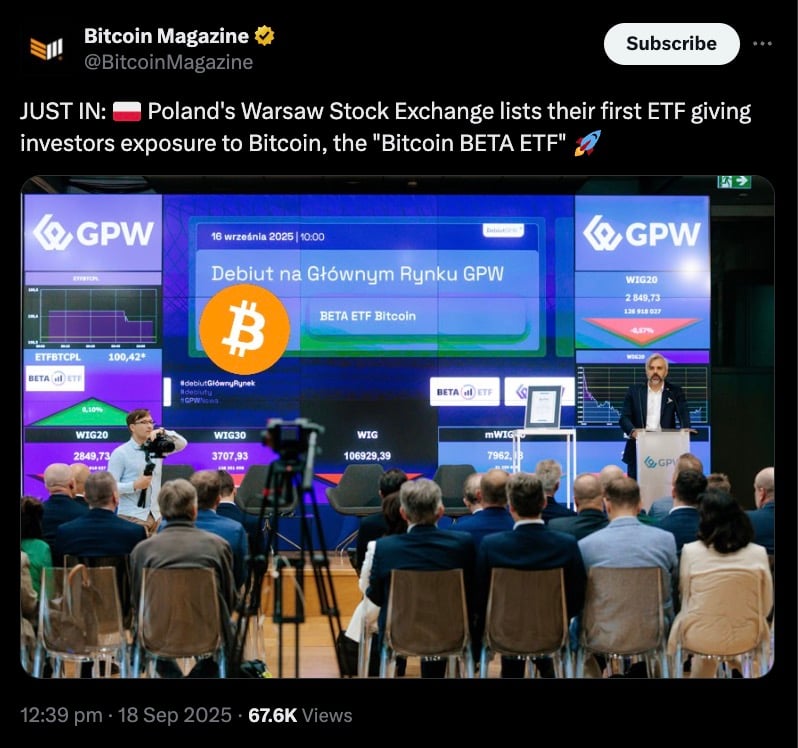
Announcement of the Bitcoin BETA ETF in Poland.

Source: X/@BitcoinMagazine

Managed by AgioFunds and greenlit by the Polish Financial Supervision Authority back in June, the fund gives traditional investors regulated access to $BTC without requiring direct custody.

Instead of holding Bitcoin itself, the ETF tracks futures contracts listed on the Chicago Mercantile Exchange (CME). Brokerage firm DM BOŚ serves as market maker, ensuring liquidity on the exchange.

The structure includes a management fee of up to 1% and hedges currency risk through forward contracts, softening the impact of USD/PLN swings on returns. The launch is framed as a response to investor demand.

With 400+ companies worth over $600B listed, GPW remains the heavyweight exchange in Central and Eastern Europe.

Why It Matters for Eastern Europe

Poland has positioned itself as a regional leader in digital finance. The timing of its first Bitcoin ETF is significant: it lands just as the EU rolls out its MiCA framework, giving investors regulatory clarity that has often been missing in Central and Eastern Europe.

That clarity matters. And it could encourage neighboring markets like Czechia, Hungary, and the Baltics to pursue similar products, sparking a domino effect across the region.

The move also mirrors global flows. In North America, Bitcoin ETFs routinely absorb thousands of $BTC in daily inflows, underscoring how traditional capital prefers regulated channels.
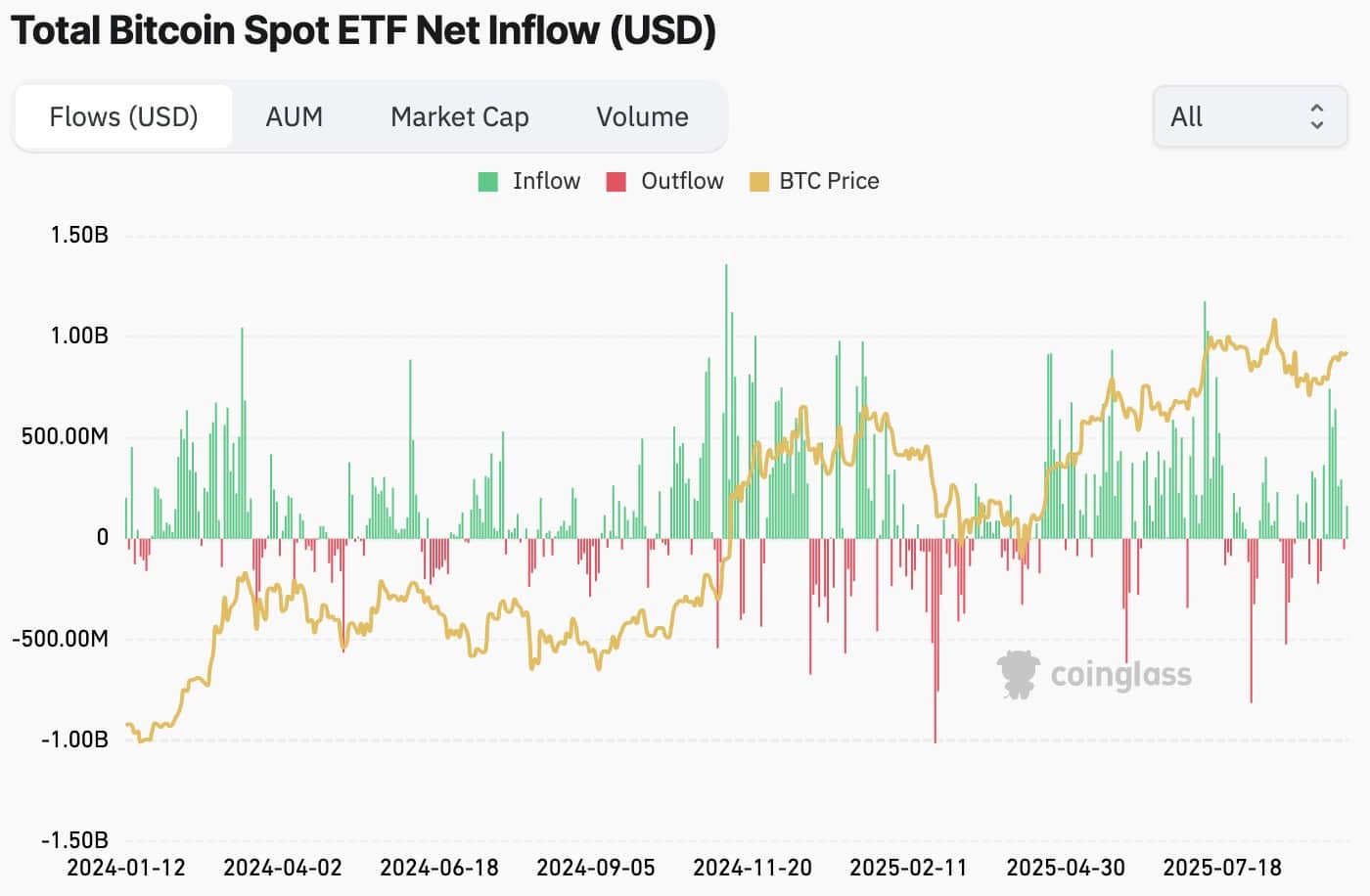
Total Bitcoin Spot ETF net inflow in USD.

Source: Coinglass

If that pattern repeats in Warsaw, Bitcoin could see stronger mainstream traction in Eastern Europe than ever before.

From Store of Value to Execution Layer

The arrival of Poland’s first Bitcoin ETF reinforces Bitcoin’s reputation as a store of value; a digital equivalent of gold that institutions can now access through regulated channels.

Yet Bitcoin’s core limitations remain unchanged – slow transaction speeds, high fees, and almost no programmability compared to chains like Ethereum ($ETH) or Solana ($SOL).

That gap is why Layer-2 solutions are emerging as the next frontier. These networks build on top of Bitcoin to bring speed, scalability, and functionality without compromising its base-layer security.

One of the first serious attempts to do this is Bitcoin Hyper ($HYPER), a project that aims to give Bitcoin the same flexibility developers enjoy on Solana and Ethereum. And for investors looking beyond ETFs, Bitcoin Hyper represents a chance to capture growth in Bitcoin’s utility layer, not just its store-of-value status.

Bitcoin Hyper ($HYPER) – A Layer-2 Set To Unleash Bitcoin’s Potential 

Bitcoin Hyper ($HYPER) positions itself as a true Layer-2 for Bitcoin, one that’s built on Ethereum infrastructure and integrates the Solana Virtual Machine (SVM).

The design lets users bridge their $BTC onto the network, where it is minted on-chain and instantly usable for sub-second, low-fee transactions. Zero-knowledge proofs continuously settle activity back to Bitcoin’s base layer, keeping the system trustless and secure.

The benefits go beyond speed. Because Bitcoin Hyper integrates the SVM, it integrates seamlessly with existing Solana apps from day one, unlocking a wide range of Bitcoin-native dApps, DeFi platforms, and even meme coin launches that Bitcoin’s main chain could never handle. Everything runs on the $HYPER token, which fuels transactions, staking, and governance.
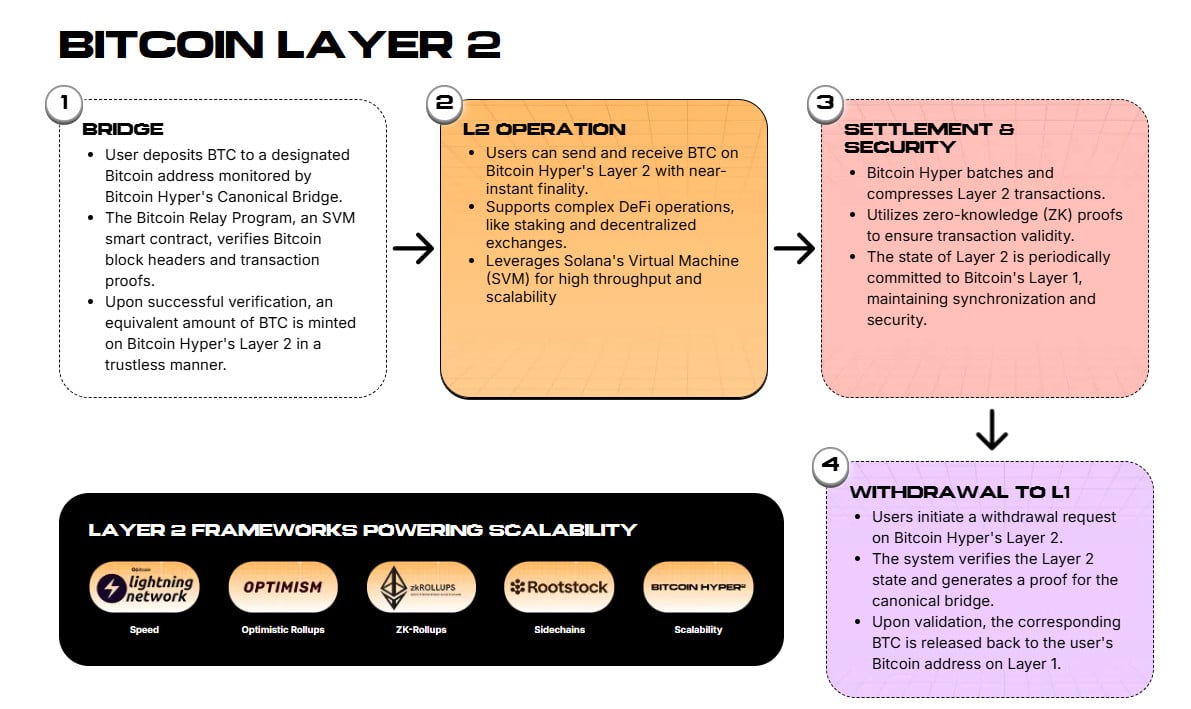
Bitcoin Hyper ($HYPER) Layer-2 framework for powering scalability.

Thanks to Bitcoin Hyper, investors effectively gain exposure to Bitcoin’s execution layer, while Bitcoin itself remains the monetary base. So, unsurprisingly, the Bitcoin Hyper presale is proving to be a phenomenal success. Just moments ago, it breached the $16.9M milestone. That figure has been helped along by a good few whale buys, including this one for $161.3K. 

Right now, $HYPER is priced at $0.012945 and you can stake your tokens for 68% APY. Want to find out more? Take a look at our guide to buying $HYPER.

Poland’s ETF listing helps normalize Bitcoin exposure for institutions, but Bitcoin Hyper stands out as the parallel play that expands $BTC’s use cases and drives real demand.

While ETFs pave the way for regulated inflows, projects like Bitcoin Hyper offer the kind of utility layer that carries 10x potential compared to passive ETF exposure.

Where ETFs make Bitcoin safe to hold, $HYPER makes it powerful to use. So much so, that our Bitcoin Hyper price prediction reckons this new meme coin has the potential to close the year at $0.2. That would mean a 1,445% return on your investment.

Ready to jump in? Join the $HYPER presale before the next price increase.

Market Opportunity
Hyperlane Logo
Hyperlane Price(HYPER)
$0,091
$0,091$0,091
-5,03%
USD
Hyperlane (HYPER) Live Price Chart
Disclaimer: The articles reposted on this site are sourced from public platforms and are provided for informational purposes only. They do not necessarily reflect the views of MEXC. All rights remain with the original authors. If you believe any content infringes on third-party rights, please contact [email protected] for removal. MEXC makes no guarantees regarding the accuracy, completeness, or timeliness of the content and is not responsible for any actions taken based on the information provided. The content does not constitute financial, legal, or other professional advice, nor should it be considered a recommendation or endorsement by MEXC.

You May Also Like

Woman shot 5 times by DHS to stare down Trump at State of the Union address

Woman shot 5 times by DHS to stare down Trump at State of the Union address

A House Democrat has invited Marimar Martinez to attend President Donald Trump's State of the Union address in Washington, D.C., after she was shot by Customs and
Share
Rawstory2026/02/06 03:36
What is Play-to-Earn Gaming? Unlocking New Possibilities

What is Play-to-Earn Gaming? Unlocking New Possibilities

The post What is Play-to-Earn Gaming? Unlocking New Possibilities appeared on BitcoinEthereumNews.com. The Play-to-Earn (P2E) model is playing a key role in the advancement of the crypto industry. Users are able to earn crypto by playing games and get involved with global communities of gamers, creators, and developers. In this article, we’ll explore the functionalities of P2E gaming, its core features, potential risks, benefits, legal issues, and highlight some of the most impactful games shaping the Web3 gaming frontier.  What is Play-to-Earn Gaming? As its name implies, you gain rewards for playing the game. Players in Play-to-Earn games get involved with blockchain networks and can receive crypto assets or NFTs as prizes. The assets you acquire can be sold, traded or kept as an investment to see if their value rises. In Axie Infinity, players gathered and combated Axies, which are fantastical creatures. The game gave players SLP, a coin that works the same as money and could be traded for fiat currencies or other coins. Due to its success, it has grown into a more advanced and eco-friendly economy on current gaming platforms. How P2E Works? Most P2E gaming relies on Ethereum and Layer 2 networks, including Immutable, Ronin, and Base. Users are given both tokens and NFTs for accomplishing various game goals, such as: Completing missions or winning battles Trading or crafting in-game items Participating in tournaments or community events Staking assets or voting in DAOs The main difference between P2E games and traditional ones is that players can truly own what they earn in the game. Weapons, land, avatars, and resources on the Web3 game are tokenized, enabling you to trade or transfer them elsewhere. For example, users in Decentraland are able to purchase virtual land as NFTs, set up experiences and earn money from events or the services they provide. They are different from other items since they…
Share
BitcoinEthereumNews2025/09/19 21:33
DBS Partners With Franklin Templeton and Ripple for Tokenized Lending Platform

DBS Partners With Franklin Templeton and Ripple for Tokenized Lending Platform

TLDR DBS Digital Exchange, Franklin Templeton, and Ripple signed a memorandum of understanding to launch tokenized trading and lending services on the XRP Ledger DBS will list Franklin Templeton’s sgBENJI token alongside Ripple’s RLUSD stablecoin, allowing real-time swaps for institutional investors The partnership enables portfolio rebalancing and yield generation during volatile market conditions through tokenized [...] The post DBS Partners With Franklin Templeton and Ripple for Tokenized Lending Platform appeared first on CoinCentral.
Share
Coincentral2025/09/18 17:06