The 2026 Guide to Blockchain Infrastructure Providers: RPC, Indexing, and Validators
Every Web3 project hits the same wall eventually, the app works, the contracts are deployed, but the infrastructure holding it together is a mess of different vendors, inconsistent uptime, and data pipelines that break at the worst possible time.
Picking the right infrastructure providers isn't just a technical decision. It determines how fast you ship, how much you spend on ops, and whether your app stays up when traffic spikes. This guide breaks down the top providers across every infrastructure layer in 2026, so you can make informed decisions before you're deep in a vendor lock-in.
Table of Content
- What Web3 Infrastructure Actually Covers
- RPC & Node Infrastructure
- Indexing Infrastructure
- Validator & Staking Infrastructure
- Cross-chain & Messaging
- Wallets & Account Abstraction
- What to Look for When Choosing a Provider
- Frequently Asked Questions
- About OnFinality
What Web3 Infrastructure Actually Covers
A few years ago, "infrastructure" in Web3 mostly meant RPC endpoints. That's no longer the full picture.
Modern Web3 applications require reliable node access, queryable onchain data, cross-chain communication, validator operations, and smart account tooling — often all at once. The infrastructure providers that matter in 2026 are the ones that help teams manage this complexity without building everything from scratch.
RPC & Node Infrastructure
RPC endpoints are how your application talks to the blockchain. Archive nodes store the full history. Dedicated nodes give you isolated compute. The providers below cover different combinations of these, across different chain sets.
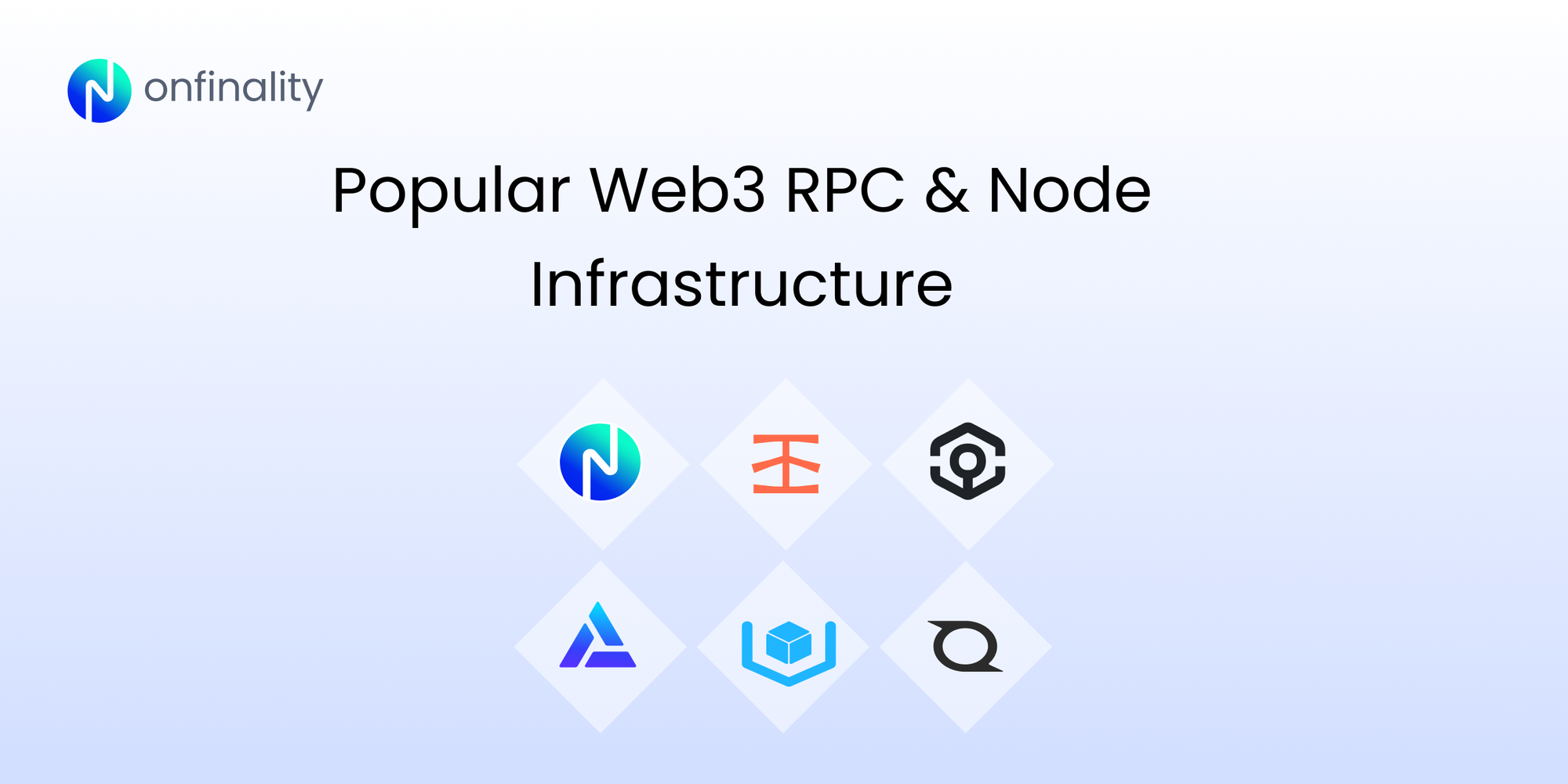
OnFinality
- Supports 130+ networks including Avalanche, BNB Chain, Cosmos, Polkadot, Ethereum, and Polygon.
- Products span shared API endpoints, dedicated nodes, enterprise nodes, managed indexing, staking, and AI tooling
- Lightning Restore provisions fully synced archive nodes in seconds with full control over CPU, memory, storage, and startup parameters
- Globally distributed network with intelligent routing across managed nodes
- Also provides managed hosting for SubQuery and subgraph indexers, and white-label validator deployment
Alchemy
- Supports 100+ chains with Node APIs, real-time webhooks, data products, rollup tooling, and embedded wallets
- Debug APIs include transaction simulation (simulateAssetChanges) and tracecalls for deeper visibility
- Ships ERC-4337 smart account infrastructure via Alchemy Account Kit, including bundler and paymaster
QuickNode
- Supports 82+ chains across 135+ networks
- Marketplace of add-on services including streams, serverless functions, and data feeds
- Dedicated endpoints with global distribution, analytics tooling, and monitoring built in
Infura
- One of the longest-running providers, primarily Ethereum and EVM-focused
- 99.99% uptime SLA, archive node access, and IPFS support alongside blockchain RPC
- Standard choice for teams that prioritize proven stability over newer features
Ankr
- RPC access across 80+ blockchains through a decentralized node model
- Public and premium tiers with broad chain coverage and accessible pricing
Uniblock
- Newer provider founded in 2022, raised $5.2M in April 2025 from SBI Group, AllianceDAO, and NGC Ventures
- Operates as an abstraction layer across 55+ upstream providers and 120+ blockchains
- AI Autorouter routes each request to the best-performing provider in real time with automatic failover
- Single API integration and consolidated billing across all connected providers
Indexing Infrastructure
Onchain data in its raw form isn't useful to most applications. Indexing layers transform that data into structured, queryable formats, making it possible to build dashboards, analytics, and data-heavy features without running your own data pipelines from scratch.
Self-Hosted Indexing
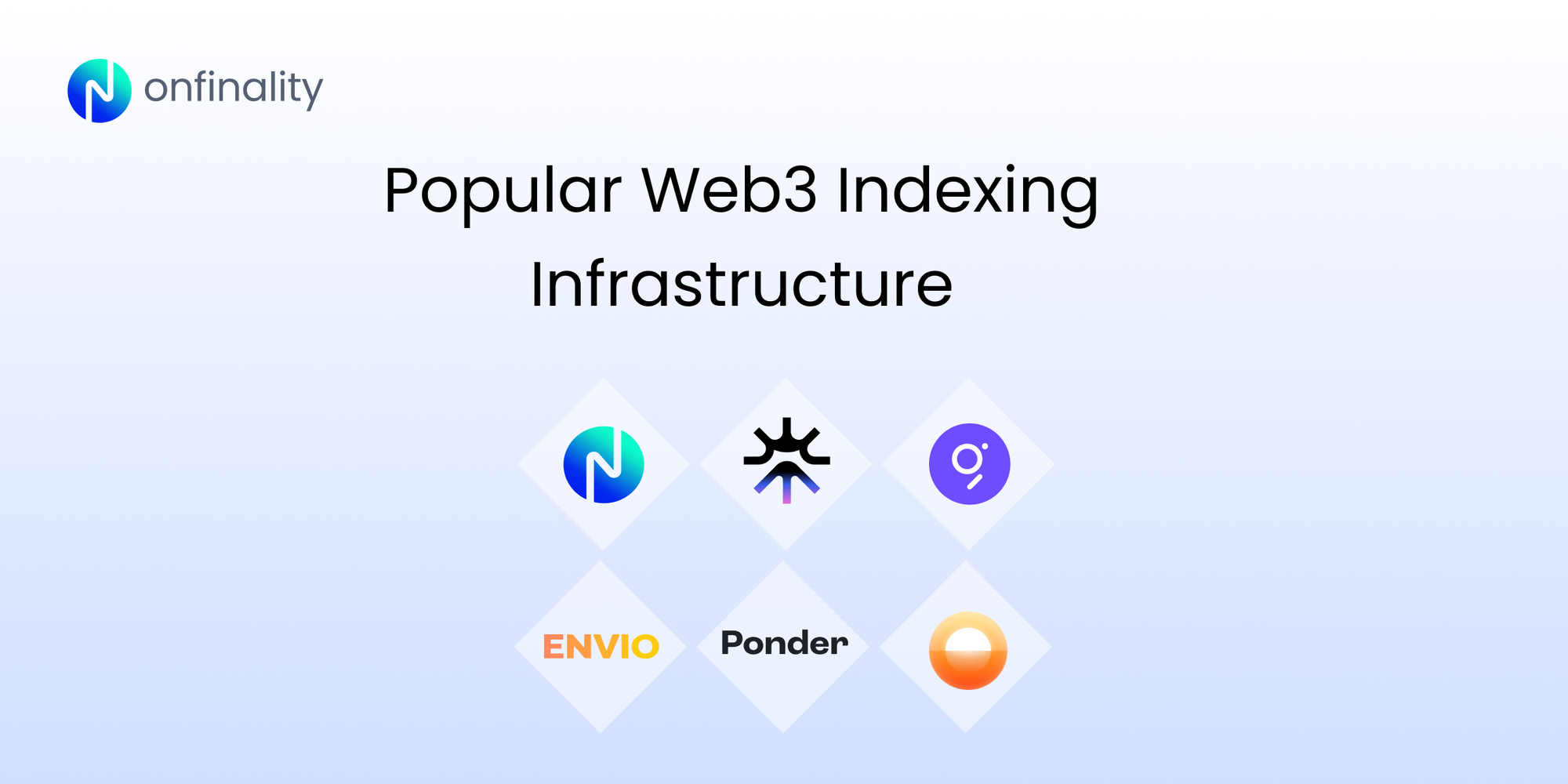
SubQuery
- Multi-chain indexing framework covering Substrate, EVM, Cosmos, and other ecosystems
- Available as self-hosted open-source framework or via the SubQuery decentralized network
- Also expanding into decentralized RPC and AI infrastructure alongside indexing
- Originated in the Polkadot/Substrate ecosystem, now broadly multi-chain
The Graph
- Decentralized indexing protocol across 80+ chains
- Subgraphs provide open GraphQL APIs for querying onchain data; Substreams enable high-performance data streaming
- Can be self-hosted via Graph Node or accessed via the decentralized network
- Widely adopted across DeFi and NFT protocols as a standard indexing layer
Envio
- Built around HyperSync, a Rust-based retrieval layer faster than standard JSON-RPC for historical data
- HyperIndex is its indexing framework on top of HyperSync
- Designed specifically for high-throughput, event-heavy workloads and historical backfills
Ponder
- Open-source TypeScript framework for EVM data indexing
- Runs as part of the application codebase with hot reloading, type safety, and local dev support
- Self-hosted, open source
Managed Indexing
OnFinality
- Managed hosting for SubQuery projects and The Graph indexers
- Handles deployment, scaling, and infrastructure management
- Sits within the same platform as OnFinality's RPC and node services
Goldsky
- Managed data platform with Subgraphs, Mirror (streaming pipelines into your own database), and instant GraphQL APIs
- Fully managed end to end with no self-hosted requirement
- Mirror is its standout product, streams onchain data directly into external databases in real time
Validator & Staking Infrastructure
Running validators requires reliable node operations, monitoring, and in many cases compliance tooling. These providers handle the infrastructure layer so teams can focus on the protocol.
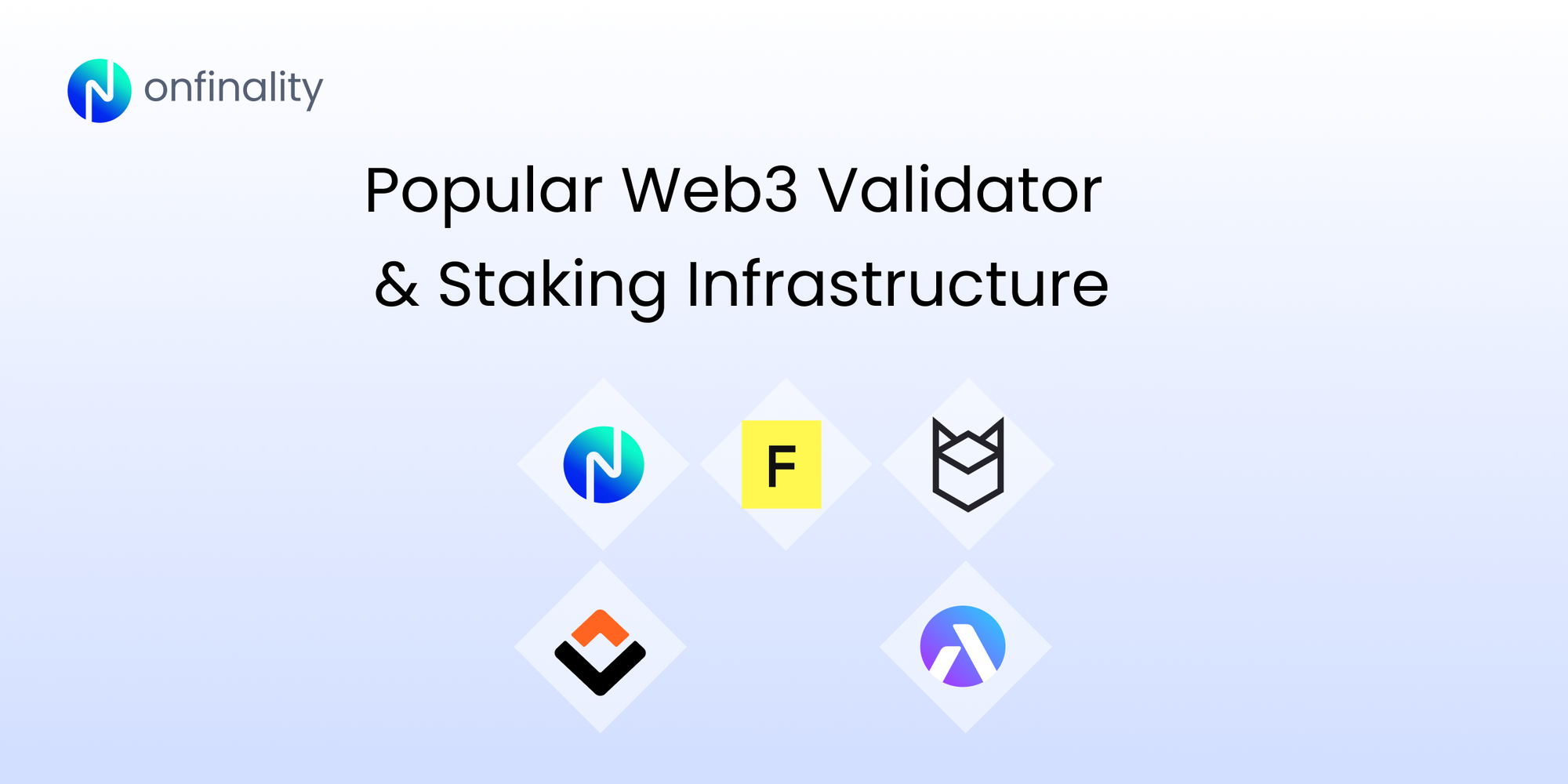
OnFinality
- White-label validator deployment and managed staking infrastructure
- Fully managed node operations and monitoring across supported networks including Substrate-based chains
Figment
- Institutional staking across multiple PoS networks with a focus on compliance and enterprise SLAs
- Offers delegated staking and white-label staking services for institutional clients
Blockdaemon
- Managed nodes, staking, and wallet infrastructure built for institutions
- Covers multiple PoS networks with dedicated validator management and enterprise-grade security tooling
Kiln
- Enterprise staking platform across 25+ PoS networks
- On-chain staking APIs, white-label staking, dashboard, and compliance reporting for institutional use cases
Allnodes
- Non-custodial node hosting and staking across 70+ networks including masternodes, full nodes, and validators
- Self-serve model with one-click deployment, monitoring, and alerts
Cross-chain & Messaging
As applications go multi-chain, they need reliable ways to pass messages and assets across networks. These protocols handle that layer.
LayerZero
- Omnichain messaging across EVM and non-EVM networks with a configurable security model
- Decentralized verifier networks for cross-chain message validation
- Widely adopted across DeFi for token transfers and cross-chain messaging
Wormhole
- Guardian-based cross-chain messaging across Solana, Cosmos, and EVM chains
- Supports token bridging, NFT bridging, and generic message passing
Axelar
- General Message Passing (GMP) with deep Cosmos integration and EVM support
- Operates its own PoS network to secure cross-chain operations
Hyperlane
- Permissionless interoperability framework with modular security via Interchain Security Modules
- No permissioned onboarding — chains configure their own security assumptions
- Accessible for new and custom chains without existing ecosystem relationships
Wallets & Account Abstraction
Smart accounts and embedded wallets reduce the friction of onboarding users to onchain applications. The providers below cover different parts of that stack.
Privy
- Embedded wallet infrastructure with email, social, and wallet-based auth
- Non-custodial, no seed phrase, web and mobile SDKs across EVM chains
Dynamic
- Embedded wallets with multi-wallet management, enterprise auth flows, and compliance controls
- Wallet analytics and user management tooling
Alchemy Account Kit
- ERC-4337 smart account SDK with bundler, paymaster, and account management integrated with Alchemy's node infrastructure
- Gasless transactions and session keys out of the box
Pimlico
- Dedicated ERC-4337 bundler and paymaster, works independently of any RPC provider
- Full account abstraction stack across major EVM networks
What to Look for When Choosing a Provider
With so many options across each layer, a few criteria narrow things down fast.
Network coverage: Does the provider support the chains your application targets today, and the ones you might expand to?
Stack consolidation: How many layers can a single provider cover? Fewer vendors means simpler ops.
Reliability and uptime: What SLAs are offered? How does failover work?
Pricing model: Shared endpoints, dedicated nodes, and managed services are priced very differently. Match the model to your usage pattern.
Developer tooling: APIs, dashboards, monitoring, and SDKs vary significantly across providers. The quality of tooling affects how fast you can build.
Frequently Asked Questions
What is Web3 infrastructure?
Web3 infrastructure refers to the technical services that support the development and operation of decentralized applications, including node access, data indexing, validator operations, cross-chain messaging, and wallet tooling.
Why does choosing the right RPC provider matter?
RPC providers are the connection layer between your application and the blockchain. Their uptime, latency, and chain coverage directly affect your application's reliability and performance.
What's the difference between self-hosted and managed indexing?
Self-hosted indexing frameworks give you full control over how data is indexed and where it's stored. Managed indexing providers handle that infrastructure for you, reducing operational overhead in exchange for less customization.
What is account abstraction and why does it matter?
Account abstraction (ERC-4337) allows smart contracts to act as wallets, enabling features like gasless transactions, session keys, and social recovery. It removes significant friction from user onboarding in consumer-facing applications.
How are multi-chain infrastructure needs changing in 2026?
As more applications operate across multiple chains simultaneously, the operational burden of managing separate provider relationships for each chain has grown. Providers that consolidate multiple layers RPC, indexing, validators, into a single platform are increasingly relevant for teams scaling across ecosystems.
About OnFinality
OnFinality is a blockchain infrastructure platform that serves hundreds of billions of API requests monthly across more than 130 networks, including Avalanche, BNB Chain, Cosmos, Polkadot, Ethereum, and Polygon. It provides scalable APIs, RPC endpoints, node hosting, and indexing tools to help developers launch and grow blockchain networks efficiently. OnFinality’s mission is to make Web3 infrastructure effortless so developers can focus on building the future of decentralised applications.
App | Website | Twitter | Telegram | LinkedIn | YouTube


You May Also Like

Federal Reserve expected to slash rates today, here's how it may impact crypto
Market participants are eagerly anticipating at least a 25 basis point (BPS) interest rate cut from the Federal Reserve on Wednesday. The Federal Reserve, the central bank of the United States, is expected to begin slashing interest rates on Wednesday, with analysts expecting a 25 basis point (BPS) cut and a boost to risk asset prices in the long term.Crypto prices are strongly correlated with liquidity cycles, Coin Bureau founder and market analyst Nic Puckrin said. However, while lower interest rates tend to raise asset prices long-term, Puckrin warned of a short-term price correction. “The main risk is that the move is already priced in, Puckrin said, adding, “hope is high and there’s a big chance of a ‘sell the news’ pullback. When that happens, speculative corners, memecoins in particular, are most vulnerable.”Read more

Pi Network KYC Debate Sparks Questions Over Referral Rewards and Transparency