

US-Iran Ceasefire Deadline: Critical 24-Hour Countdown Threatens Global Energy Stability
BitcoinWorld
US-Iran Ceasefire Deadline: Critical 24-Hour Countdown Threatens Global Energy Stability
WASHINGTON, D.C. – April 21, 2025: Global energy markets and Middle East stability face a critical test as the two-week US-Iran ceasefire enters its final 24 hours before expiration at 10:30 p.m. UTC today. This temporary halt in hostilities, announced by former President Donald Trump on April 7, represents one of the most significant diplomatic developments in the region this decade. Consequently, analysts worldwide now monitor the situation closely. The ceasefire’s continuation hinges entirely on Iran’s compliance with specific maritime security conditions regarding the Strait of Hormuz.
US-Iran Ceasefire Origins and Strategic Conditions
Former President Trump announced the mutual ceasefire agreement two weeks ago during a press briefing at Mar-a-Lago. He described the measure as a “reciprocal de-escalation” following months of heightened tensions. Importantly, the agreement specifically suspended all U.S. bombings and military attacks targeting Iranian assets. However, Trump attached a clear and non-negotiable condition to this pause. He demanded Iran ensure the “complete, immediate, and safe opening” of the Strait of Hormuz to international commercial shipping. This strategic waterway handles approximately 21 million barrels of oil daily, representing about 21% of global petroleum consumption. Therefore, its security directly impacts worldwide energy prices and economic stability.
The Trump administration’s condition reflects long-standing concerns about Iranian naval activities. For instance, Iran’s Islamic Revolutionary Guard Corps Navy has repeatedly conducted exercises near the strait. These exercises sometimes involve swarming tactics with fast attack boats. Maritime security reports from the past six months document at least 15 incidents of commercial vessels being harassed or temporarily detained. The U.S. Fifth Fleet, based in Bahrain, maintains a constant presence in the region to ensure freedom of navigation. A Pentagon spokesperson recently confirmed that U.S. naval patrols have continued during the ceasefire but have adopted a “non-provocative posture.”
Geopolitical Context and Historical Precedents
This ceasefire occurs within a complex historical framework of US-Iran relations. Tensions have fluctuated significantly across multiple administrations. The 2015 Joint Comprehensive Plan of Action (JCPOA), commonly called the Iran nuclear deal, temporarily reduced hostilities. However, the U.S. withdrawal from the agreement in 2018 under President Trump reignited confrontation. Subsequent years witnessed targeted strikes, including the 2020 elimination of Qasem Soleimani and Iranian retaliatory missile attacks. Regional proxy conflicts in Yemen, Syria, and Iraq further complicate the bilateral relationship. This current two-week pause therefore represents a rare diplomatic opening, albeit a fragile one.
The Strait of Hormuz: Global Economic Chokepoint
The ceasefire’s central demand focuses on the Strait of Hormuz for compelling economic reasons. This narrow passage, only 21 nautical miles wide at its narrowest point, serves as the exclusive sea passage from the Persian Gulf to the open ocean. The table below illustrates its critical importance to global energy supplies:
| Country | Approximate Daily Exports via Strait | Primary Destinations |
|---|---|---|
| Saudi Arabia | 7.2 million barrels | Asia, Europe, United States |
| United Arab Emirates | 3.0 million barrels | Japan, China, India |
| Kuwait | 2.1 million barrels | South Korea, China, Singapore |
| Qatar | 2.0 million barrels (LNG equivalent) | Japan, South Korea, India |
| Iran | 1.8 million barrels | China, Syria, Venezuela |
Any disruption to this traffic causes immediate price shocks. For example, temporary closures in 2019 and 2021 prompted oil price spikes of 15-20% within days. Insurance premiums for vessels transiting the area can increase tenfold during periods of tension. Consequently, global markets remain highly sensitive to developments in the region. Major importers like China, India, Japan, and South Korea maintain strategic petroleum reserves precisely for such contingencies. However, these reserves typically cover only 90-120 days of consumption, making prolonged disruptions unsustainable.
Ceasefire Implementation and Verification Challenges
Monitoring compliance with the ceasefire conditions presents significant technical and diplomatic challenges. The United States employs multiple intelligence, surveillance, and reconnaissance (ISR) assets to monitor the strait. These assets include:
- Satellite surveillance: Commercial and government satellites track vessel movements and identify unusual patterns.
- Maritime patrol aircraft: P-8 Poseidon aircraft from regional bases conduct regular patrols.
- Unmanned systems: SeaGuardian drones provide persistent coverage of critical areas.
- Commercial shipping Automatic Identification System (AIS) data from thousands of vessels provides real-time tracking.
International observers from the United Nations and International Maritime Organization have reportedly offered to establish a neutral verification mechanism. However, neither Washington nor Tehran has formally accepted such proposals. Iranian officials have consistently stated their commitment to keeping the strait open, citing their own economic dependence on the route. Yet they simultaneously assert their right to conduct military exercises in their territorial waters. This creates inherent tension in interpreting what constitutes “safe” passage. The U.S. definition appears to include the absence of any Iranian military vessels approaching commercial ships within a specified distance, a standard Iran has not explicitly acknowledged.
Regional Stakeholder Perspectives
Gulf Cooperation Council (GCC) states maintain cautiously optimistic public statements while preparing for various outcomes. Saudi Arabia and the UAE have reportedly increased their air and naval patrols in the southern Persian Gulf as a precaution. Oman, which controls territory on both sides of the strait’s entrance, has positioned itself as a potential mediator. Meanwhile, European Union foreign policy chief Josep Borrell issued a statement yesterday urging both parties to “seize this opportunity for sustained dialogue.” China and Russia, both with significant interests in regional stability, have called for “non-interference” and respect for Iranian sovereignty. This diverse range of international perspectives underscores the ceasefire’s global significance.
Potential Scenarios Following Deadline Expiration
As the 24-hour countdown progresses, analysts outline several plausible scenarios based on recent patterns of behavior:
- Scenario 1: Tacit Extension – Neither party announces an extension, but hostilities do not resume immediately, creating an undeclared continuation of the pause.
- Scenario 2: Conditional Renewal – The U.S. announces a short-term extension based on verified Iranian compliance over the past 48 hours.
- Scenario 3: Gradual Escalation – Limited incidents occur without immediate major retaliation, beginning a slow return to pre-ceasefire tension levels.
- Scenario 4: Rapid Deterioration – A significant incident triggers immediate reciprocal actions, ending the diplomatic window abruptly.
Energy market reactions provide a real-time barometer of perceived risks. Brent crude futures have shown increased volatility this week, with prices fluctuating within a $5 band. Shipping companies like Maersk and MSC have reportedly prepared contingency routing plans that would add 7-10 days to voyages by bypassing the Persian Gulf entirely. These rerouting decisions would increase transportation costs by approximately 15-20%, costs ultimately passed to consumers. The global economic impact, therefore, extends far beyond the immediate region.
Conclusion
The expiration of the US-Iran ceasefire in 24 hours represents a pivotal moment for Middle East stability and global energy security. This temporary arrangement successfully paused overt hostilities for two weeks, providing a valuable demonstration that de-escalation remains possible. However, its future now depends entirely on verifiable Iranian actions regarding the Strait of Hormuz and corresponding U.S. interpretations of those actions. The strategic importance of this waterway ensures that developments here will reverberate through international markets and diplomatic channels worldwide. Ultimately, the coming hours will reveal whether this fragile pause can evolve into more substantial diplomacy or whether the region will return to its previous state of confrontation.
FAQs
Q1: What exactly did the US-Iran ceasefire agreement stipulate?
The agreement announced on April 7 suspended U.S. military attacks against Iranian targets for two weeks. In exchange, Iran was required to ensure the complete, immediate, and safe opening of the Strait of Hormuz to international shipping.
Q2: Why is the Strait of Hormuz so important to global energy markets?
The strait is a geographic chokepoint through which approximately 21% of the world’s traded petroleum passes daily. Major producers like Saudi Arabia, the UAE, Kuwait, and Iran export most of their oil through this narrow passage.
Q3: How is compliance with the ceasefire conditions being verified?
The United States monitors the situation using satellite surveillance, maritime patrol aircraft, unmanned drones, and commercial shipping data. There is no formal international verification mechanism currently in place.
Q4: What happens if the ceasefire expires without renewal?
If the ceasefire expires, the previous status quo of heightened military readiness and potential for incidents returns. The U.S. would likely resume its previous posture, potentially including increased naval patrols and readiness for defensive actions.
Q5: How are other countries in the region responding to this situation?
Gulf Arab states have increased their own security patrols while calling for calm. European and Asian nations have urged diplomatic resolution, reflecting their economic dependence on stable energy supplies from the region.
Q6: Could this ceasefire lead to broader negotiations between the US and Iran?
While possible, significant obstacles remain, including deep disagreements over Iran’s nuclear program, regional activities, and sanctions. The ceasefire primarily addresses immediate security concerns rather than these underlying issues.
This post US-Iran Ceasefire Deadline: Critical 24-Hour Countdown Threatens Global Energy Stability first appeared on BitcoinWorld.


You May Also Like
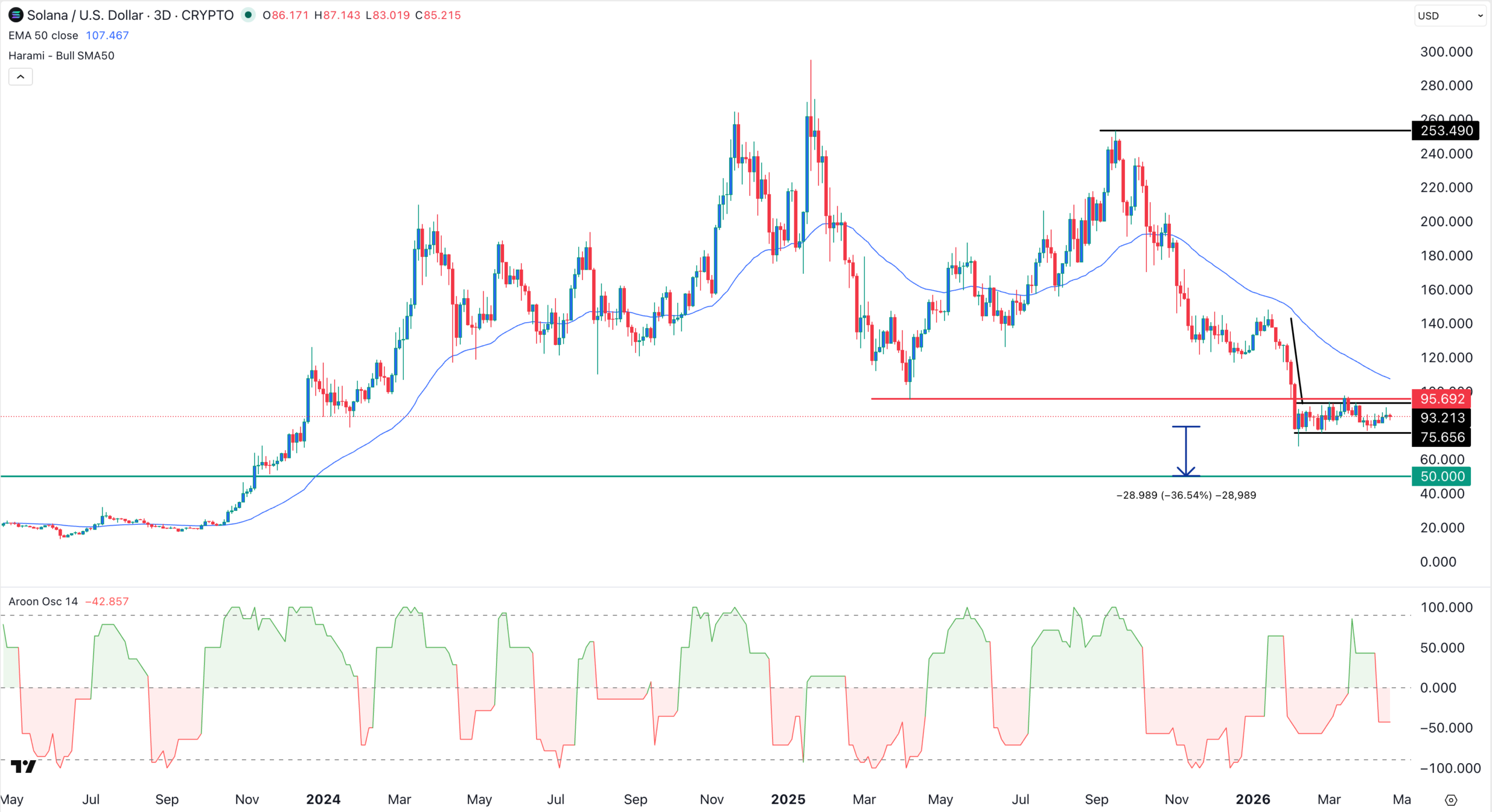
Solana Price at Risk as Key Network Metrics Wane and ETF Inflows Lag

VanEck Flags Semiconductor Stocks as Key AI Infrastructure Plays for 2026




