China’s Crypto strategy is turning money into a weapon of statecraft. A recent study published by Study Times—the journal of China’s Central Party School—argued that digital assets now shape warfare and finance. The study described crypto and central bank digital currencies (CBDCs) as tools of “financial mobilization.” They allow states to redirect liquidity when banks fail or sanctions tighten. Blockchain networks were called a “digital logistics front,” merging economic survival with national security. Digital money becomes a tool of geopolitical power The study said the battlefield now stretches into finance. Crypto forms an infrastructure for “total war,” blending deterrence, capital mobilization, and social stability. By digitizing money flows, Beijing could sustain liquidity, fund defense industries, and support domestic demand when global finance fractures. It also outlined a triad of “total war, hybrid war, and digital financial war,” claiming that digital ledgers underpin national resilience. The digital yuan and blockchain settlements act as strategic assets within this framework. They are built to operate independently of U.S. sanctions and the SWIFT network. “Digital currencies have become strategic assets in hybrid warfare, reshaping cross-border capital flows during wartime.” — Study Times (2025) This shift reflects a broader trend. Economist Barry Eichengreen notes that the dollar’s share of global reserves fell from 71% in 2000 to 58% in 2024. He wrote that governments are “moving away from the dollar… for geopolitical reasons, while firms still prefer its liquidity.” Meanwhile, Beijing’s mBridge project—linking CBDCs from China, Saudi Arabia, Thailand, and the UAE—seeks to bypass SWIFT and build a parallel network beyond the US’s reach. For China, blockchain means more than speed; it represents autonomy under economic pressure. The TRM Labs 2025 Crypto Crime Report shows that digital assets operate on both sides of the geopolitical battlefield. Sanctioned exchanges such as Russia’s Garantex and Iran’s Nobitex handled over 85% of illicit inflows to restricted markets. Distribution of 86 designated addresses | TRM Terror groups—including Hamas, Hezbollah, and ISIS affiliates—used stablecoins like USDT on TRON to raise funds. As a result, Israel froze millions in related accounts. Digital finance, once hailed as borderless innovation, has instead become a field of control and enforcement. From cyber defense to “soft power” projection Military theorist Jason P. Lowery argues in Softwar that Bitcoin is “a non-lethal form of power projection—a digital defense system secured by electricity, not explosives.” This idea now shapes Beijing’s view of blockchain as a base for resilience and deterrence. By embedding monetary control in code, states can project power through networks instead of troops. Visualizing blockchain applications in military contexts | Blockchain Applications in the Military Domain A 2025 review in Technologies found that blockchain “strengthens military operations through secure communication, immutable logistics, and quantum-safe authentication.” Researchers said distributed ledgers can harden command systems and supply chains against cyber or physical attacks. These findings show how cryptographic infrastructure is shifting from finance to defense, linking data integrity, funding agility, and operational trust. The geopolitical divide is widening. Western governments aim to limit crypto’s militarization, whereas China embeds it in state policy. As Eichengreen cautioned, “geopolitics cuts both ways.” Depending on who builds the rails, crypto could weaken or reinforce dollar dominance. Ultimately, Beijing’s hybrid model—combining economic control with technological sovereignty—signals that the next great-power contest will unfold in markets or cyberspace and across the distributed ledgers that connect them.China’s Crypto strategy is turning money into a weapon of statecraft. A recent study published by Study Times—the journal of China’s Central Party School—argued that digital assets now shape warfare and finance. The study described crypto and central bank digital currencies (CBDCs) as tools of “financial mobilization.” They allow states to redirect liquidity when banks fail or sanctions tighten. Blockchain networks were called a “digital logistics front,” merging economic survival with national security. Digital money becomes a tool of geopolitical power The study said the battlefield now stretches into finance. Crypto forms an infrastructure for “total war,” blending deterrence, capital mobilization, and social stability. By digitizing money flows, Beijing could sustain liquidity, fund defense industries, and support domestic demand when global finance fractures. It also outlined a triad of “total war, hybrid war, and digital financial war,” claiming that digital ledgers underpin national resilience. The digital yuan and blockchain settlements act as strategic assets within this framework. They are built to operate independently of U.S. sanctions and the SWIFT network. “Digital currencies have become strategic assets in hybrid warfare, reshaping cross-border capital flows during wartime.” — Study Times (2025) This shift reflects a broader trend. Economist Barry Eichengreen notes that the dollar’s share of global reserves fell from 71% in 2000 to 58% in 2024. He wrote that governments are “moving away from the dollar… for geopolitical reasons, while firms still prefer its liquidity.” Meanwhile, Beijing’s mBridge project—linking CBDCs from China, Saudi Arabia, Thailand, and the UAE—seeks to bypass SWIFT and build a parallel network beyond the US’s reach. For China, blockchain means more than speed; it represents autonomy under economic pressure. The TRM Labs 2025 Crypto Crime Report shows that digital assets operate on both sides of the geopolitical battlefield. Sanctioned exchanges such as Russia’s Garantex and Iran’s Nobitex handled over 85% of illicit inflows to restricted markets. Distribution of 86 designated addresses | TRM Terror groups—including Hamas, Hezbollah, and ISIS affiliates—used stablecoins like USDT on TRON to raise funds. As a result, Israel froze millions in related accounts. Digital finance, once hailed as borderless innovation, has instead become a field of control and enforcement. From cyber defense to “soft power” projection Military theorist Jason P. Lowery argues in Softwar that Bitcoin is “a non-lethal form of power projection—a digital defense system secured by electricity, not explosives.” This idea now shapes Beijing’s view of blockchain as a base for resilience and deterrence. By embedding monetary control in code, states can project power through networks instead of troops. Visualizing blockchain applications in military contexts | Blockchain Applications in the Military Domain A 2025 review in Technologies found that blockchain “strengthens military operations through secure communication, immutable logistics, and quantum-safe authentication.” Researchers said distributed ledgers can harden command systems and supply chains against cyber or physical attacks. These findings show how cryptographic infrastructure is shifting from finance to defense, linking data integrity, funding agility, and operational trust. The geopolitical divide is widening. Western governments aim to limit crypto’s militarization, whereas China embeds it in state policy. As Eichengreen cautioned, “geopolitics cuts both ways.” Depending on who builds the rails, crypto could weaken or reinforce dollar dominance. Ultimately, Beijing’s hybrid model—combining economic control with technological sovereignty—signals that the next great-power contest will unfold in markets or cyberspace and across the distributed ledgers that connect them.

China Turns Crypto into a Weapon of Statecraft: Digital Yuan at the Frontlines

2025/10/22 10:00
3 min read

China’s Crypto strategy is turning money into a weapon of statecraft. A recent study published by Study Times—the journal of China’s Central Party School—argued that digital assets now shape warfare and finance.

The study described crypto and central bank digital currencies (CBDCs) as tools of “financial mobilization.” They allow states to redirect liquidity when banks fail or sanctions tighten. Blockchain networks were called a “digital logistics front,” merging economic survival with national security.

Digital money becomes a tool of geopolitical power

The study said the battlefield now stretches into finance. Crypto forms an infrastructure for “total war,” blending deterrence, capital mobilization, and social stability. By digitizing money flows, Beijing could sustain liquidity, fund defense industries, and support domestic demand when global finance fractures.

It also outlined a triad of “total war, hybrid war, and digital financial war,” claiming that digital ledgers underpin national resilience. The digital yuan and blockchain settlements act as strategic assets within this framework. They are built to operate independently of U.S. sanctions and the SWIFT network.

This shift reflects a broader trend. Economist Barry Eichengreen notes that the dollar’s share of global reserves fell from 71% in 2000 to 58% in 2024. He wrote that governments are “moving away from the dollar… for geopolitical reasons, while firms still prefer its liquidity.”

Meanwhile, Beijing’s mBridge project—linking CBDCs from China, Saudi Arabia, Thailand, and the UAE—seeks to bypass SWIFT and build a parallel network beyond the US’s reach. For China, blockchain means more than speed; it represents autonomy under economic pressure.

The TRM Labs 2025 Crypto Crime Report shows that digital assets operate on both sides of the geopolitical battlefield. Sanctioned exchanges such as Russia’s Garantex and Iran’s Nobitex handled over 85% of illicit inflows to restricted markets.
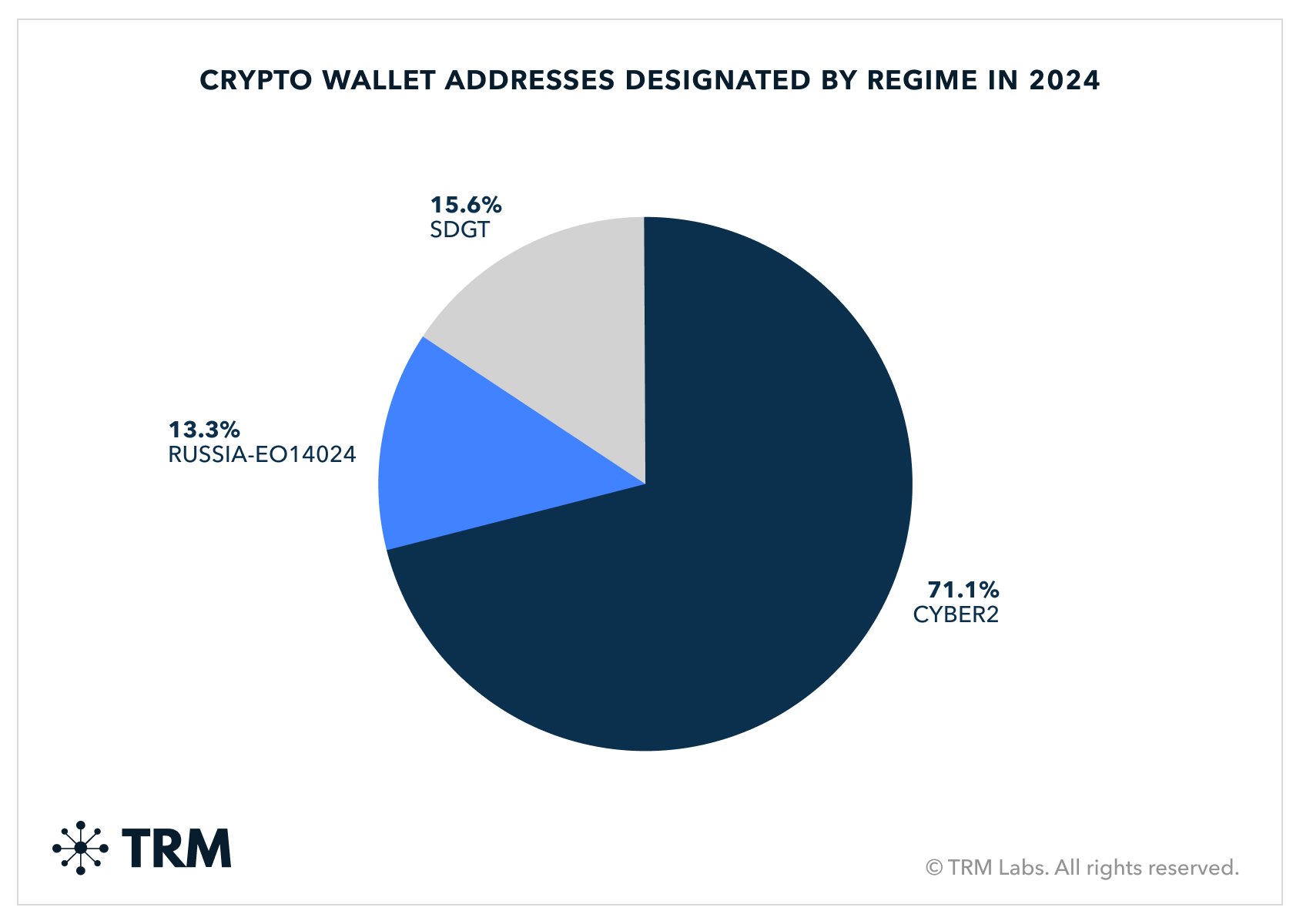
Distribution of 86 designated addresses | TRM

Terror groups—including Hamas, Hezbollah, and ISIS affiliates—used stablecoins like USDT on TRON to raise funds. As a result, Israel froze millions in related accounts. Digital finance, once hailed as borderless innovation, has instead become a field of control and enforcement.

From cyber defense to “soft power” projection

Military theorist Jason P. Lowery argues in Softwar that Bitcoin is “a non-lethal form of power projection—a digital defense system secured by electricity, not explosives.” This idea now shapes Beijing’s view of blockchain as a base for resilience and deterrence. By embedding monetary control in code, states can project power through networks instead of troops.
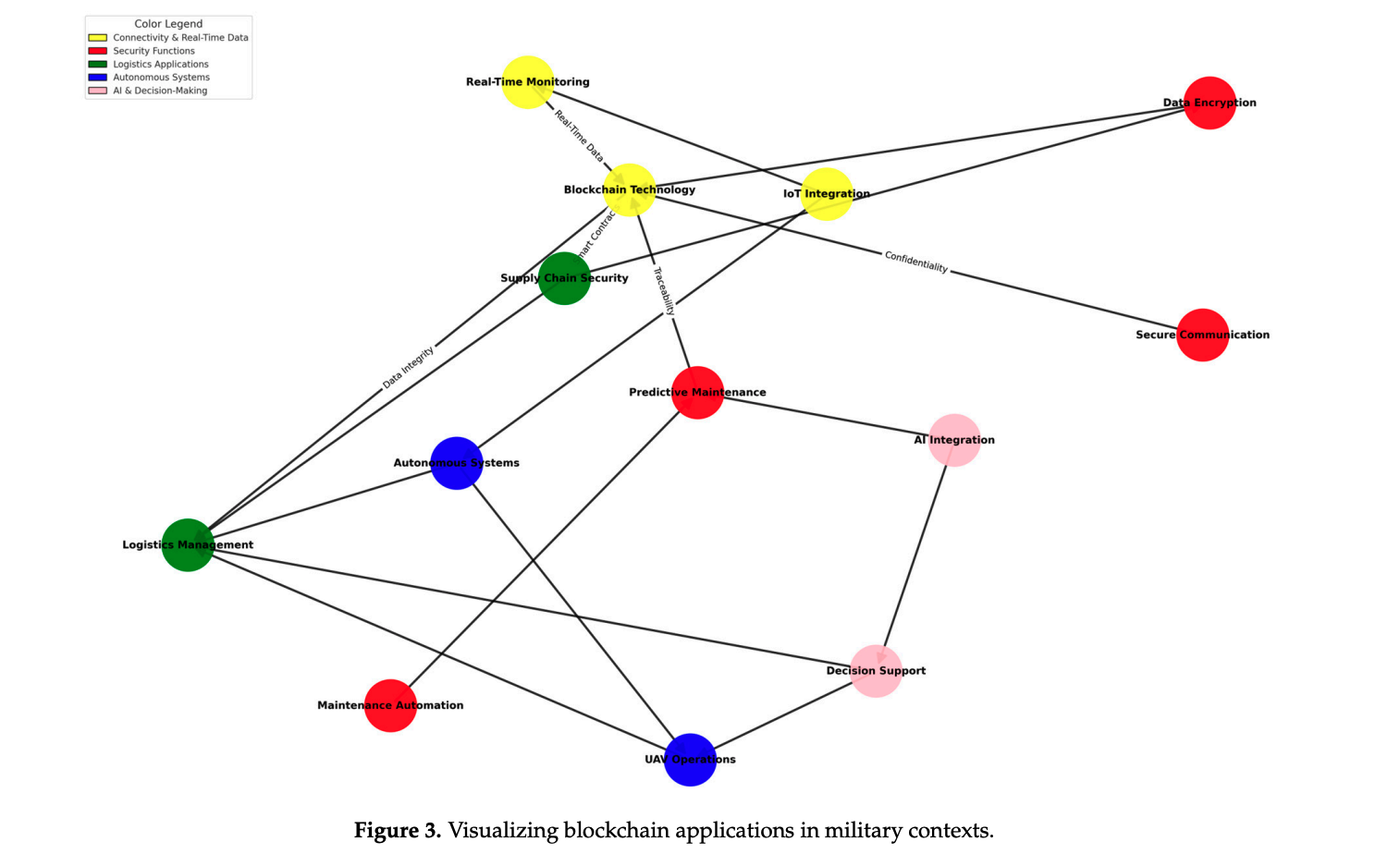
Visualizing blockchain applications in military contexts | Blockchain Applications in the Military Domain

A 2025 review in Technologies found that blockchain “strengthens military operations through secure communication, immutable logistics, and quantum-safe authentication.” Researchers said distributed ledgers can harden command systems and supply chains against cyber or physical attacks. These findings show how cryptographic infrastructure is shifting from finance to defense, linking data integrity, funding agility, and operational trust.

The geopolitical divide is widening. Western governments aim to limit crypto’s militarization, whereas China embeds it in state policy. As Eichengreen cautioned, “geopolitics cuts both ways.” Depending on who builds the rails, crypto could weaken or reinforce dollar dominance. Ultimately, Beijing’s hybrid model—combining economic control with technological sovereignty—signals that the next great-power contest will unfold in markets or cyberspace and across the distributed ledgers that connect them.

Market Opportunity
Nowchain Logo
Nowchain Price(NOW)
$0.0008734
$0.0008734$0.0008734
-18.03%
USD
Nowchain (NOW) Live Price Chart
Disclaimer: The articles reposted on this site are sourced from public platforms and are provided for informational purposes only. They do not necessarily reflect the views of MEXC. All rights remain with the original authors. If you believe any content infringes on third-party rights, please contact [email protected] for removal. MEXC makes no guarantees regarding the accuracy, completeness, or timeliness of the content and is not responsible for any actions taken based on the information provided. The content does not constitute financial, legal, or other professional advice, nor should it be considered a recommendation or endorsement by MEXC.

You May Also Like

Gold continues to hit new highs. How to invest in gold in the crypto market?

Gold continues to hit new highs. How to invest in gold in the crypto market?

As Bitcoin encounters a "value winter", real-world gold is recasting the iron curtain of value on the blockchain.
Share
PANews2025/04/14 17:12
Chorus One and MEV Zone Team Up to Boost Avalanche Staking Rewards

Chorus One and MEV Zone Team Up to Boost Avalanche Staking Rewards

The post Chorus One and MEV Zone Team Up to Boost Avalanche Staking Rewards appeared on BitcoinEthereumNews.com. Through the partnership with MEV Zone, Chorus One users will earn extra yield automatically. The Chorus One Avalanche node has a total stake of over 1.7 million, valued at around $55 million. This collaboration will introduce MEV Zone to both public nodes and Validator-as-a-Service. The Avalanche network stands to benefit from fairer and more efficient markets due to enhanced transparency. Chorus One, a highly decorated institutional-grade staking provider, has inked a strategic partnership with MEV Zone to enhance yield generation on the Avalanche (AVAX) network. The Chorus One partnered with MEV Zone to increase the AVAX staking yields, while simultaneously contributing to the general growth of the Avalanche network. “At Chorus One, we see this as an important step in our ongoing journey to provide robust infrastructure and innovative yield strategies for our partners and clients,” the announcement noted.  Why Did Chorus One Partner With MEV Zone? The Chorus One platform has grown to a top-tier institutional-grade staking ecosystem, with more than 40 blockchains, since 2018. In a bid to evolve with the needs of crypto investors and the supported blockchains, Chorus One has inked several strategic partnerships in the recent past, including MEV Zone. In the recent past, MEV Zone has specialized in addressing the Maximal Extractable Value (MEV) challenges on the Avalanche network. The MEV Zone will help Chorus One’s AVAX node validator to use Proposer-Builder Separation (PBS). As such, Chorus One’s AVAX node will seamlessly select certain transactions that are more profitable when making blocks. For instance, MEV Zone will help Chorus One’s AVAX node validator to capture arbitrage and liquidation transactions more often since they are more profitable.  How will Chorus One’s AVAX Stakers Benefit Via This Partnership? The Chorus One AVAX node has grown over the years to more than 1.77 million coins staked, valued…
Share
BitcoinEthereumNews2025/09/18 03:19
What Wednesday’s Mixed Close Reveals

What Wednesday’s Mixed Close Reveals

The post What Wednesday’s Mixed Close Reveals appeared on BitcoinEthereumNews.com. Crucial US Stock Market Update: What Wednesday’s Mixed Close Reveals Skip to content Home Crypto News Crucial US Stock Market Update: What Wednesday’s Mixed Close Reveals Source: https://bitcoinworld.co.in/us-stock-market-update/
Share
BitcoinEthereumNews2025/09/18 08:55
