Tokenization means turning ownership, rights, or access into digital pieces that can move easily across crypto networks. A world where everything is tokenized feels futuristic, but it’s not far off.Tokenization means turning ownership, rights, or access into digital pieces that can move easily across crypto networks. A world where everything is tokenized feels futuristic, but it’s not far off.

When Everything Is a Token: Imagining a Fully Tokenized Economy

2025/10/23 13:43
7 min read

\ You pay for your coffee with one token, split the rent on your apartment with another, and earn tiny royalties from a funny video you posted thanks to a different token that tracks every play. A world where everything is tokenized feels futuristic, but it’s not far off. 

Tokenization means turning ownership, rights, or access into digital pieces that can move easily across crypto networks. When you hear about a “tokenized economy,” it means almost everything of value can be sliced into small digital units, tradable and programmable on distributed ledgers, without red tape, middlemen, or complex steps. 

The result could change how we interact with money, property, and each other.

How Does Tokenization Work? 

There are several approaches. Fungible tokens act like interchangeable units, much like digital cash or airline miles. Non-Fungible Tokens (NFTs) represent unique items, such as digital art or a concert ticket tied to a single seat. Security tokens map directly to regulated financial instruments like shares or bonds, which means they carry the same obligations as their paper or electronic counterparts. Tokenization is not just about creating new forms of money, but also about digitizing existing assets and making them tradable in new ways.

One practical example is tokenized real estate. Instead of needing the funds to buy an entire apartment for investment purposes, you could buy a small fraction of it. That fraction would live on a ledger as your token, and you could sell it later or receive your share of rental income automatically. These digital claims make ownership of physical assets easier to divide and transfer —and these tokenized assets are known as “Real-World Assets” (RWAs) in crypto.

From a practical perspective, the process involves choosing a crypto network or distributed ledger that supports token issuance, creating a legal structure to hold the underlying asset (if it’s something big, like real estate), and then issuing tokens that represent shares in that asset. These tokens are then sold or distributed through a compliant platform.

How a Fully Tokenized Economy Might Work Day to Day

In a fully tokenized society, everything around us could be sliced into tokens. Each transaction would run on ledgers maintained by different networks. Smart contracts would handle the rules behind the scenes. Rent could be split automatically when a tenant transfers a rent token to a landlord’s wallet. A bus ride might mean buying a transport token valid for that route. Musicians could get paid instantly every time a track is streamed through tokens coded to handle royalties.

Money itself could become a mix of tokens. Some would come from private companies, like stablecoins, while others could come directly from central banks in the form of Central Bank Digital Currencies (CBDCs). In any case, multiple token systems will need to ‘talk’ to each other. That’s called interoperability, and it’s still not entirely solved. Without it, our tokenized economy might feel like living with dozens of different subway cards, each only valid on one line.

But it’s not just technology that matters. Legal structures must back most of these tokens. As legal analysts explain, owning a token for part of a building is only meaningful if courts recognize that digital entry as enforceable ownership. Otherwise, the token is just a digital receipt with no teeth. A company, in most cases, would end up having “official” ownership of the property and then issue tokens among its clients.

Everyday Benefits

The appeal of tokenization comes down to speed, access, and flexibility. With this system in place, selling something big (like shares or property) can be settled in minutes, not days, because there’s no paperwork shuffle between middlemen. Tokens also allow fractional ownership, which means you don’t need millions to invest in a skyscraper or a rare artwork. Suddenly, more people can take part in markets once reserved for the very wealthy. 

Everyday examples are easy to imagine. A fan (or any outside investor) could buy a token that entitles them to a fraction of the revenue of a certain song, collected automatically every time it streams. Loyalty programs could issue tokens that not only get you discounts but can also be traded, like any other coin. 

Tokenization can also help the planet. Carbon credits, for instance, can be tracked and traded as tokens, making it easier for companies and people to prove and offset emissions in a transparent way. Supply chains could use tokens to track a product’s journey from the farm to the store shelf, giving customers proof of authenticity and ethical processes. 

Besides, real estate tokenization could make buying and selling properties as simple as trading shares online. The bottom line is that tokens lower the barriers for people to take part in more parts of the economy.

Some Risks and Limits

It all sounds neat, but there are some concerns. Regulation is one. If a token represents a security, regulators will treat it as such, whether it lives on a digital ledger or not. That means compliance, reporting, and oversight will still be required. The US Securities and Exchange Commission (SEC), for instance, has already cracked down on numerous crypto tokens considered securities.

Interoperability may be another hurdle. Crypto networks are separate islands, and we must build bridges between them. Without common standards or shared infrastructure, tokens on different ledgers may never work smoothly together. This way, tokens risk becoming isolated platforms instead of part of a connected system.

Centralization is a bigger challenge. Many token systems are controlled by a small group of entities, which creates risks of censorship, frozen assets, and surveillance. CBDCs are the clearest example. They are designed to be fully centralized, giving central banks direct power over issuance, distribution, and use. This could make transactions efficient, but it also hands governments the ability to monitor or even freeze payments instantly. 

Surveillance and censorship worries aren’t science fiction. If your rent token (with a customized smart contract included) can be frozen because someone flags your account, or if your bus token (with all your physical routes registered) no longer works because you fell out of favor with authorities, then the promise of freedom turns into a tool of control. 

Centralization concentrates power and makes that scenario possible. This is why decentralization isn’t just a technical feature but a safeguard for personal freedoms.

How We Get There

The road to a tokenized society is uneven. Financial institutions are experimenting with tokenized bonds, while organizations like SWIFT are testing how different CBDCs and tokenized assets could connect globally. Several firms and experts argue that tokenization is moving from hype to real use cases in real estate and beyond. The big question is not whether tokenization is coming, but what shape it will take.

If tokenization is built mostly on centralized systems like CBDCs, then the future could feel less like empowerment and more like oppression. Alternatives matter. Platforms such as Obyte offer a fully decentralized approach where anyone can create customized tokens without the risk of a central authority freezing or censoring them —not even miners or “validators”. That is closer to the open, P2P spirit that made digital money attractive in the first place. Decentralization distributes power, which helps keep tokenization a tool for people rather than a control mechanism.

\ For most of us, the best move is to stay informed. Don’t take every “tokenized” pitch at face value. Ask what the token represents, whether the legal rights are enforceable, and who has the power to pull the plug. Watch for pilots and experiments that test how tokens move between platforms and across borders. Above all, remember that technology alone won’t decide how tokenization plays out. Human choices about design, governance, and law will shape whether everything-as-a-token feels liberating or suffocating.

In the end, tokenization could open the door to a more flexible and inclusive economy. It could also create new chokepoints for control if left in the hands of centralized authorities. The outcome depends on whether we use these tools to spread opportunity or concentrate power. The technology is here. The direction we take is still up to us.

\


\n Featured Vector Image by Freepik

\n

Market Opportunity
TokenFi Logo
TokenFi Price(TOKEN)
$0.003356
$0.003356$0.003356
+1.11%
USD
TokenFi (TOKEN) Live Price Chart
Disclaimer: The articles reposted on this site are sourced from public platforms and are provided for informational purposes only. They do not necessarily reflect the views of MEXC. All rights remain with the original authors. If you believe any content infringes on third-party rights, please contact [email protected] for removal. MEXC makes no guarantees regarding the accuracy, completeness, or timeliness of the content and is not responsible for any actions taken based on the information provided. The content does not constitute financial, legal, or other professional advice, nor should it be considered a recommendation or endorsement by MEXC.

You May Also Like

Crucial ETH Unstaking Period: Vitalik Buterin’s Unwavering Defense for Network Security

Crucial ETH Unstaking Period: Vitalik Buterin’s Unwavering Defense for Network Security

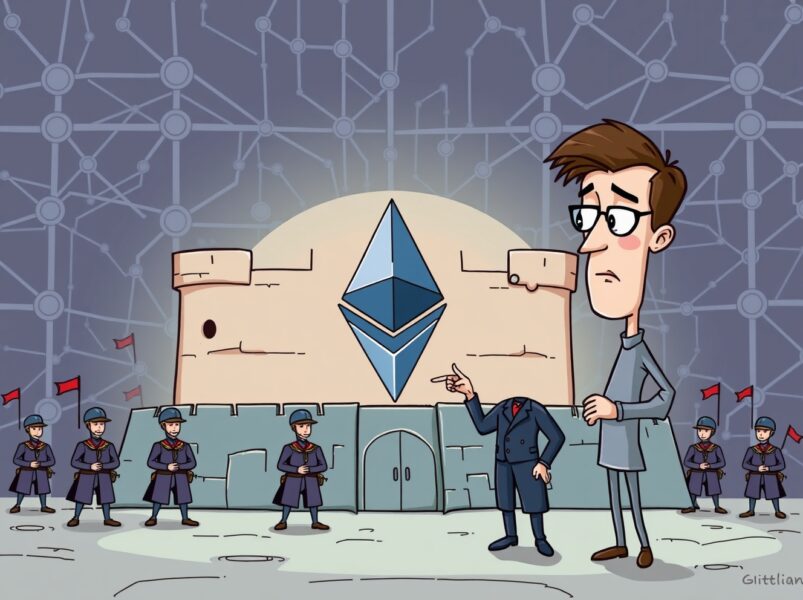
BitcoinWorld Crucial ETH Unstaking Period: Vitalik Buterin’s Unwavering Defense for Network Security Ever wondered why withdrawing your staked Ethereum (ETH) isn’t an instant process? It’s a question that often sparks debate within the crypto community. Ethereum founder Vitalik Buterin recently stepped forward to defend the network’s approximately 45-day ETH unstaking period, asserting its crucial role in safeguarding the network’s integrity. This lengthy waiting time, while sometimes seen as an inconvenience, is a deliberate design choice with profound implications for security. Why is the ETH Unstaking Period a Vital Security Measure? Vitalik Buterin’s defense comes amidst comparisons to other networks, like Solana, which boast significantly shorter unstaking times. He drew a compelling parallel to military operations, explaining that an army cannot function effectively if its soldiers can simply abandon their posts at a moment’s notice. Similarly, a blockchain network requires a stable and committed validator set to maintain its security. The current ETH unstaking period isn’t merely an arbitrary delay. It acts as a critical buffer, providing the network with sufficient time to detect and respond to potential malicious activities. If validators could instantly exit, it would open doors for sophisticated attacks, jeopardizing the entire system. Currently, Ethereum boasts over one million active validators, collectively staking approximately 35.6 million ETH, representing about 30% of the total supply. This massive commitment underpins the network’s robust security model, and the unstaking period helps preserve this stability. Network Security: Ethereum’s Paramount Concern A shorter ETH unstaking period might seem appealing for liquidity, but it introduces significant risks. Imagine a scenario where a large number of validators, potentially colluding, could quickly withdraw their stake after committing a malicious act. Without a substantial delay, the network would have limited time to penalize them or mitigate the damage. This “exit queue” mechanism is designed to prevent sudden validator exodus, which could lead to: Reduced decentralization: A rapid drop in active validators could concentrate power among fewer participants. Increased vulnerability to attacks: A smaller, less stable validator set is easier to compromise. Network instability: Frequent and unpredictable changes in validator numbers can lead to performance issues and consensus failures. Therefore, the extended period is not a bug; it’s a feature. It’s a calculated trade-off between immediate liquidity for stakers and the foundational security of the entire Ethereum ecosystem. Ethereum vs. Solana: Different Approaches to Unstaking When discussing the ETH unstaking period, many point to networks like Solana, which offers a much quicker two-day unstaking process. While this might seem like an advantage for stakers seeking rapid access to their funds, it reflects fundamental differences in network architecture and security philosophies. Solana’s design prioritizes speed and immediate liquidity, often relying on different consensus mechanisms and validator economics to manage security risks. Ethereum, on the other hand, with its proof-of-stake evolution from proof-of-work, has adopted a more cautious approach to ensure its transition and long-term stability are uncompromised. Each network makes design choices based on its unique goals and threat models. Ethereum’s substantial value and its role as a foundational layer for countless dApps necessitate an extremely robust security posture, making the current unstaking duration a deliberate and necessary component. What Does the ETH Unstaking Period Mean for Stakers? For individuals and institutions staking ETH, understanding the ETH unstaking period is crucial for managing expectations and investment strategies. It means that while staking offers attractive rewards, it also comes with a commitment to the network’s long-term health. Here are key considerations for stakers: Liquidity Planning: Stakers should view their staked ETH as a longer-term commitment, not immediately liquid capital. Risk Management: The delay inherently reduces the ability to react quickly to market volatility with staked assets. Network Contribution: By participating, stakers contribute directly to the security and decentralization of Ethereum, reinforcing its value proposition. While the current waiting period may not be “optimal” in every sense, as Buterin acknowledged, simply shortening it without addressing the underlying security implications would be a dangerous gamble for the network’s reliability. In conclusion, Vitalik Buterin’s defense of the lengthy ETH unstaking period underscores a fundamental principle: network security cannot be compromised for the sake of convenience. It is a vital mechanism that protects Ethereum’s integrity, ensuring its stability and trustworthiness as a leading blockchain platform. This deliberate design choice, while requiring patience from stakers, ultimately fortifies the entire ecosystem against potential threats, paving the way for a more secure and reliable decentralized future. Frequently Asked Questions (FAQs) Q1: What is the main reason for Ethereum’s long unstaking period? A1: The primary reason is network security. A lengthy ETH unstaking period prevents malicious actors from quickly withdrawing their stake after an attack, giving the network time to detect and penalize them, thus maintaining stability and integrity. Q2: How long is the current ETH unstaking period? A2: The current ETH unstaking period is approximately 45 days. This duration can fluctuate based on network conditions and the number of validators in the exit queue. Q3: How does Ethereum’s unstaking period compare to other blockchains? A3: Ethereum’s unstaking period is notably longer than some other networks, such as Solana, which has a two-day period. This difference reflects varying network architectures and security priorities. Q4: Does the unstaking period affect ETH stakers? A4: Yes, it means stakers need to plan their liquidity carefully, as their staked ETH is not immediately accessible. It encourages a longer-term commitment to the network, aligning staker interests with Ethereum’s stability. Q5: Could the ETH unstaking period be shortened in the future? A5: While Vitalik Buterin acknowledged the current period might not be “optimal,” any significant shortening would likely require extensive research and network upgrades to ensure security isn’t compromised. For now, the focus remains on maintaining robust network defenses. Found this article insightful? Share it with your friends and fellow crypto enthusiasts on social media to spread awareness about the critical role of the ETH unstaking period in Ethereum’s security! To learn more about the latest Ethereum trends, explore our article on key developments shaping Ethereum’s institutional adoption. This post Crucial ETH Unstaking Period: Vitalik Buterin’s Unwavering Defense for Network Security first appeared on BitcoinWorld.
Share
Coinstats2025/09/18 15:30
XRP holders hit new high, but THIS keeps pressure on price

XRP holders hit new high, but THIS keeps pressure on price

The post XRP holders hit new high, but THIS keeps pressure on price appeared on BitcoinEthereumNews.com. Ripple [XRP] remains one of the top five cryptocurrencies
Share
BitcoinEthereumNews2026/02/17 08:49
Will Bitcoin Price Drop to $50,000 by March 2026?

Will Bitcoin Price Drop to $50,000 by March 2026?

The post Will Bitcoin Price Drop to $50,000 by March 2026? appeared on BitcoinEthereumNews.com. Bitcoin is trading around $68,700, down nearly 22% year to date
Share
BitcoinEthereumNews2026/02/17 08:59