The post Tokenization Is Fixing Film Financing, Dethroning Hollywood Studios appeared on BitcoinEthereumNews.com. Hollywood has hit a breaking point. Audiences are fatigued by franchise sequels and reboots. YouTube has overtaken Disney as the world’s largest distributor. And Gen AI tools like Sora 2 can soon turn anyone into a filmmaker. Yet one thing hasn’t changed: how films get financed. And that’s why we keep getting fewer original films. Decline of original screenplays at the US box office (1984-2023) Source: The Numbers and Box Office Mojo For decades, filmmakers have had only two ways to raise capital: courting wealthy “patrons of the arts” or signing away IP in restrictive studio deals. These small circles still control who the next David Lynch will be, or which film becomes the next Napoleon Dynamite, while everyday fans — the people who live and breathe these films — have never had a seat at the table. (Fewer than 1% of Americans meet SEC “accreditation” standards to invest in most private ventures, including film.) That’s finally changing, thanks to tokenization. The promise of “decentralization in film” has arrived, quietly and legally this time. A few years ago, “Web3 Film” had the right dream but the wrong tools: people were slicing films into NFT frames, touting complex tokenomics and skirting securities laws. None of it worked. Projects like Stoner Cats, Ashton Kutcher’s NFT cartoon, became cautionary tales after the SEC cracked down for selling unregistered securities to unaccredited investors. Today, the difference is compliance. Through licensed platforms operating under SEC exemptions such as Reg CF, production companies can take on thousands of unaccredited investors (even in the U.S.) to back real film projects and share in the upside. Security tokens issued on blockchain rails make it possible to distribute dividends transparently and cost-effectively — and, eventually, trade investors’ stakes on secondary markets. And it’s already working. Tens of thousands of… The post Tokenization Is Fixing Film Financing, Dethroning Hollywood Studios appeared on BitcoinEthereumNews.com. Hollywood has hit a breaking point. Audiences are fatigued by franchise sequels and reboots. YouTube has overtaken Disney as the world’s largest distributor. And Gen AI tools like Sora 2 can soon turn anyone into a filmmaker. Yet one thing hasn’t changed: how films get financed. And that’s why we keep getting fewer original films. Decline of original screenplays at the US box office (1984-2023) Source: The Numbers and Box Office Mojo For decades, filmmakers have had only two ways to raise capital: courting wealthy “patrons of the arts” or signing away IP in restrictive studio deals. These small circles still control who the next David Lynch will be, or which film becomes the next Napoleon Dynamite, while everyday fans — the people who live and breathe these films — have never had a seat at the table. (Fewer than 1% of Americans meet SEC “accreditation” standards to invest in most private ventures, including film.) That’s finally changing, thanks to tokenization. The promise of “decentralization in film” has arrived, quietly and legally this time. A few years ago, “Web3 Film” had the right dream but the wrong tools: people were slicing films into NFT frames, touting complex tokenomics and skirting securities laws. None of it worked. Projects like Stoner Cats, Ashton Kutcher’s NFT cartoon, became cautionary tales after the SEC cracked down for selling unregistered securities to unaccredited investors. Today, the difference is compliance. Through licensed platforms operating under SEC exemptions such as Reg CF, production companies can take on thousands of unaccredited investors (even in the U.S.) to back real film projects and share in the upside. Security tokens issued on blockchain rails make it possible to distribute dividends transparently and cost-effectively — and, eventually, trade investors’ stakes on secondary markets. And it’s already working. Tens of thousands of…

Tokenization Is Fixing Film Financing, Dethroning Hollywood Studios

Hollywood has hit a breaking point. Audiences are fatigued by franchise sequels and reboots. YouTube has overtaken Disney as the world’s largest distributor. And Gen AI tools like Sora 2 can soon turn anyone into a filmmaker. Yet one thing hasn’t changed: how films get financed. And that’s why we keep getting fewer original films.

Decline of original screenplays at the US box office (1984-2023)

Source: The Numbers and Box Office Mojo

For decades, filmmakers have had only two ways to raise capital: courting wealthy “patrons of the arts” or signing away IP in restrictive studio deals. These small circles still control who the next David Lynch will be, or which film becomes the next Napoleon Dynamite, while everyday fans — the people who live and breathe these films — have never had a seat at the table. (Fewer than 1% of Americans meet SEC “accreditation” standards to invest in most private ventures, including film.)

That’s finally changing, thanks to tokenization. The promise of “decentralization in film” has arrived, quietly and legally this time. A few years ago, “Web3 Film” had the right dream but the wrong tools: people were slicing films into NFT frames, touting complex tokenomics and skirting securities laws. None of it worked. Projects like Stoner Cats, Ashton Kutcher’s NFT cartoon, became cautionary tales after the SEC cracked down for selling unregistered securities to unaccredited investors.

Today, the difference is compliance. Through licensed platforms operating under SEC exemptions such as Reg CF, production companies can take on thousands of unaccredited investors (even in the U.S.) to back real film projects and share in the upside. Security tokens issued on blockchain rails make it possible to distribute dividends transparently and cost-effectively — and, eventually, trade investors’ stakes on secondary markets.

And it’s already working. Tens of thousands of investors have contributed more than $30 million to premium productions from some of Hollywood’s most respected names. This year, Robert Rodriguez (Sin City, Spy Kids) raised $2 million from 2,000 fans to invest in new action films — and every investor got to pitch him a film as part of the slate. Pressman Film — the company behind American Psycho, Wall Street and The Crow raised $2 million for a slate of bold, original films, and is already starting to return capital within six months. And Eli Roth (Hostel, Inglorious Basterds) launched a fan-owned horror studio that maxed out its $5 million Reg CF campaign in July. He was tired of studios deeming his ideas too gory, even though the most profitable film of 2024 was the unrated slasher, Terrifier 3.

Tokenized fan investing is opening up new paths for capital and creativity. Filmmakers can now tap their audiences for capital instead of taking the studio deal, allowing them to retain more ownership of their IP and take creative risks without interference from the suits or the algorithm. For fans, tokenization opens up access to a previously inaccessible opportunity: investing in film as an alternative asset class. Ultimately, these projects tend to perform better — not just creatively but financially — as audiences with skin in the game drive buzz and box-office returns.

The timing couldn’t be better. With IPOs slowing and private markets swelling, tokenization is unlocking billions in household capital and opening doors to previously gatekept opportunities across private credit, venture capital and now, film. The GENIUS Act has brought long-awaited regulatory clarity to digital assets, while institutions from BlackRock to Visa are embedding blockchain infrastructure into the mainstream economy. Tokenization has quietly graduated from crypto casino to financial plumbing, and entertainment is proving to be one of its most relatable (and needed) use cases.

There may be no better Trojan horse for mainstream adoption of tokenization than culture real-world assets (RWAs). Few industries are as ripe for disruption as film, and none as universally relatable, considering nearly all of us end our day watching Netflix (and then complain about the content). But when the audience can invest in the projects they want to see, whether from established filmmakers or up-and-coming creators, we won’t just get new financing models. We’ll get better movies.

Source: https://www.coindesk.com/coindesk-indices/2025/10/22/hollywood-s-next-financier-you
Market Opportunity
null Logo
null Price(null)
--
----
USD
null (null) Live Price Chart
Disclaimer: The articles reposted on this site are sourced from public platforms and are provided for informational purposes only. They do not necessarily reflect the views of MEXC. All rights remain with the original authors. If you believe any content infringes on third-party rights, please contact [email protected] for removal. MEXC makes no guarantees regarding the accuracy, completeness, or timeliness of the content and is not responsible for any actions taken based on the information provided. The content does not constitute financial, legal, or other professional advice, nor should it be considered a recommendation or endorsement by MEXC.

You May Also Like

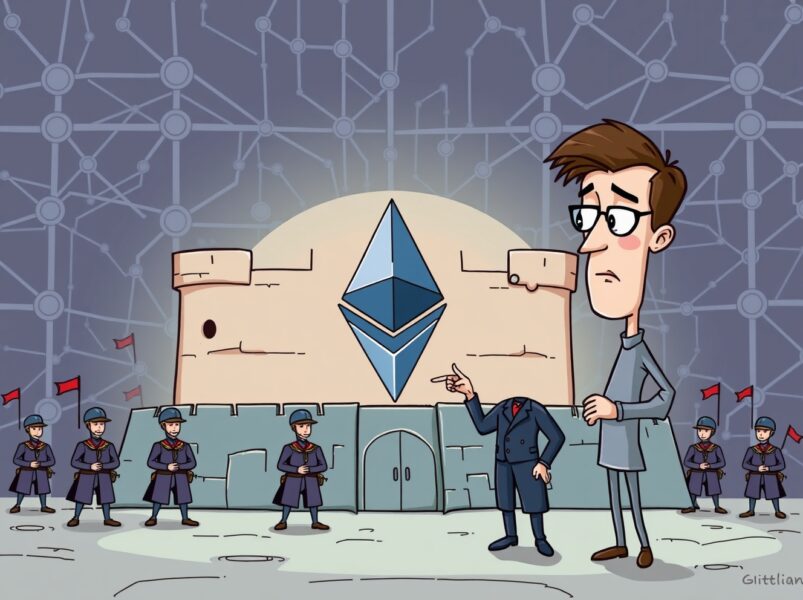
Crucial ETH Unstaking Period: Vitalik Buterin’s Unwavering Defense for Network Security

Crucial ETH Unstaking Period: Vitalik Buterin’s Unwavering Defense for Network Security

BitcoinWorld Crucial ETH Unstaking Period: Vitalik Buterin’s Unwavering Defense for Network Security Ever wondered why withdrawing your staked Ethereum (ETH) isn’t an instant process? It’s a question that often sparks debate within the crypto community. Ethereum founder Vitalik Buterin recently stepped forward to defend the network’s approximately 45-day ETH unstaking period, asserting its crucial role in safeguarding the network’s integrity. This lengthy waiting time, while sometimes seen as an inconvenience, is a deliberate design choice with profound implications for security. Why is the ETH Unstaking Period a Vital Security Measure? Vitalik Buterin’s defense comes amidst comparisons to other networks, like Solana, which boast significantly shorter unstaking times. He drew a compelling parallel to military operations, explaining that an army cannot function effectively if its soldiers can simply abandon their posts at a moment’s notice. Similarly, a blockchain network requires a stable and committed validator set to maintain its security. The current ETH unstaking period isn’t merely an arbitrary delay. It acts as a critical buffer, providing the network with sufficient time to detect and respond to potential malicious activities. If validators could instantly exit, it would open doors for sophisticated attacks, jeopardizing the entire system. Currently, Ethereum boasts over one million active validators, collectively staking approximately 35.6 million ETH, representing about 30% of the total supply. This massive commitment underpins the network’s robust security model, and the unstaking period helps preserve this stability. Network Security: Ethereum’s Paramount Concern A shorter ETH unstaking period might seem appealing for liquidity, but it introduces significant risks. Imagine a scenario where a large number of validators, potentially colluding, could quickly withdraw their stake after committing a malicious act. Without a substantial delay, the network would have limited time to penalize them or mitigate the damage. This “exit queue” mechanism is designed to prevent sudden validator exodus, which could lead to: Reduced decentralization: A rapid drop in active validators could concentrate power among fewer participants. Increased vulnerability to attacks: A smaller, less stable validator set is easier to compromise. Network instability: Frequent and unpredictable changes in validator numbers can lead to performance issues and consensus failures. Therefore, the extended period is not a bug; it’s a feature. It’s a calculated trade-off between immediate liquidity for stakers and the foundational security of the entire Ethereum ecosystem. Ethereum vs. Solana: Different Approaches to Unstaking When discussing the ETH unstaking period, many point to networks like Solana, which offers a much quicker two-day unstaking process. While this might seem like an advantage for stakers seeking rapid access to their funds, it reflects fundamental differences in network architecture and security philosophies. Solana’s design prioritizes speed and immediate liquidity, often relying on different consensus mechanisms and validator economics to manage security risks. Ethereum, on the other hand, with its proof-of-stake evolution from proof-of-work, has adopted a more cautious approach to ensure its transition and long-term stability are uncompromised. Each network makes design choices based on its unique goals and threat models. Ethereum’s substantial value and its role as a foundational layer for countless dApps necessitate an extremely robust security posture, making the current unstaking duration a deliberate and necessary component. What Does the ETH Unstaking Period Mean for Stakers? For individuals and institutions staking ETH, understanding the ETH unstaking period is crucial for managing expectations and investment strategies. It means that while staking offers attractive rewards, it also comes with a commitment to the network’s long-term health. Here are key considerations for stakers: Liquidity Planning: Stakers should view their staked ETH as a longer-term commitment, not immediately liquid capital. Risk Management: The delay inherently reduces the ability to react quickly to market volatility with staked assets. Network Contribution: By participating, stakers contribute directly to the security and decentralization of Ethereum, reinforcing its value proposition. While the current waiting period may not be “optimal” in every sense, as Buterin acknowledged, simply shortening it without addressing the underlying security implications would be a dangerous gamble for the network’s reliability. In conclusion, Vitalik Buterin’s defense of the lengthy ETH unstaking period underscores a fundamental principle: network security cannot be compromised for the sake of convenience. It is a vital mechanism that protects Ethereum’s integrity, ensuring its stability and trustworthiness as a leading blockchain platform. This deliberate design choice, while requiring patience from stakers, ultimately fortifies the entire ecosystem against potential threats, paving the way for a more secure and reliable decentralized future. Frequently Asked Questions (FAQs) Q1: What is the main reason for Ethereum’s long unstaking period? A1: The primary reason is network security. A lengthy ETH unstaking period prevents malicious actors from quickly withdrawing their stake after an attack, giving the network time to detect and penalize them, thus maintaining stability and integrity. Q2: How long is the current ETH unstaking period? A2: The current ETH unstaking period is approximately 45 days. This duration can fluctuate based on network conditions and the number of validators in the exit queue. Q3: How does Ethereum’s unstaking period compare to other blockchains? A3: Ethereum’s unstaking period is notably longer than some other networks, such as Solana, which has a two-day period. This difference reflects varying network architectures and security priorities. Q4: Does the unstaking period affect ETH stakers? A4: Yes, it means stakers need to plan their liquidity carefully, as their staked ETH is not immediately accessible. It encourages a longer-term commitment to the network, aligning staker interests with Ethereum’s stability. Q5: Could the ETH unstaking period be shortened in the future? A5: While Vitalik Buterin acknowledged the current period might not be “optimal,” any significant shortening would likely require extensive research and network upgrades to ensure security isn’t compromised. For now, the focus remains on maintaining robust network defenses. Found this article insightful? Share it with your friends and fellow crypto enthusiasts on social media to spread awareness about the critical role of the ETH unstaking period in Ethereum’s security! To learn more about the latest Ethereum trends, explore our article on key developments shaping Ethereum’s institutional adoption. This post Crucial ETH Unstaking Period: Vitalik Buterin’s Unwavering Defense for Network Security first appeared on BitcoinWorld.
Share
Coinstats2025/09/18 15:30
XRP holders hit new high, but THIS keeps pressure on price

XRP holders hit new high, but THIS keeps pressure on price

The post XRP holders hit new high, but THIS keeps pressure on price appeared on BitcoinEthereumNews.com. Ripple [XRP] remains one of the top five cryptocurrencies
Share
BitcoinEthereumNews2026/02/17 08:49
Will Bitcoin Price Drop to $50,000 by March 2026?

Will Bitcoin Price Drop to $50,000 by March 2026?

The post Will Bitcoin Price Drop to $50,000 by March 2026? appeared on BitcoinEthereumNews.com. Bitcoin is trading around $68,700, down nearly 22% year to date
Share
BitcoinEthereumNews2026/02/17 08:59