Anatoly Yakovenko is the founder and CEO of Solana, a blockchain platform known for its speed and efficiency. With a background in computer science and engineering, Yakovenko brought his experience together to create one of the fastest-growing blockchain systems in the world. He designed Solana’s proof-of-history technology, which helps it handle thousands of transactions per second.Yakovenko’s work has made Solana stand out in the crowded world of cryptocurrency. The platform has attracted a lot of attention for its ability to scale and its approach to solving real problems in blockchain technology.Anatoly Yakovenko: Solana FounderAnatoly Yakovenko, the driving force behind Solana, is well known for his technical expertise and entrepreneurial mindset. He combined a strong background in computer science with experience in major tech companies to create one of the fastest blockchain platforms.Early Life and BackgroundAnatoly Yakovenko was born in Ukraine before moving to the United States. He grew up in a family that valued education and hard work. His early interests were centered around mathematics, science, and computers.By the time he was a teenager, Anatoly was already experimenting with computer systems and programming. Moving to the US gave him access to better opportunities in technology. During these formative years, he developed a strong foundation in logical thinking and problem-solving.He began building his career as a software engineer, taking on small projects and collaborating with others online. These early experiences shaped his understanding of technology’s potential to solve real-world problems.Education and Academic JourneyAnatoly Yakovenko attended the University of Illinois at Urbana-Champaign, a well-known school for computer science. While there, he focused his studies on computer engineering and programming. This academic environment allowed him to learn from respected professors and peers.His coursework included important subjects like algorithms, distributed systems, and cryptography. These fields later played a role in his blockchain work. He also participated in research projects and coding competitions, which helped him think creatively and solve complex problems.This education gave him the tools to understand how computers communicate and process large amounts of data. After graduation, he applied these skills in the tech industry, further shaping his future projects and collaborations.Motivation for Entering BlockchainYakovenko’s work in the tech industry, especially at Qualcomm, exposed him to the limits of existing systems. He saw issues with scale, speed, and fairness in popular payment and data networks. These challenges motivated him to explore blockchain and decentralized technologies.He recognized the need for a system that could offer fast, cheap, and secure transactions. Anatoly saw proof-of-history (PoH) as a solution, letting blockchains process thousands of transactions quickly. His engineering knowledge gave him the confidence to experiment with new consensus methods.By founding Solana, he sought to build a blockchain that would solve the problems he encountered in earlier roles. His personal drive came from a desire to make technology more accessible for both developers and users.Professional Experience Before SolanaBefore founding Solana, Anatoly Yakovenko built a strong background in technology and engineering. He gained experience in voice over internet protocol, software systems, and large-scale computing at several important companies.Alescere and VoIP InnovationsEarly in his career, Yakovenko co-founded Alescere, a startup focused on Voice over Internet Protocol (VoIP) technology. This project aimed to improve communication over the internet by making phone calls cheaper and more reliable. He took on challenges related to network stability and audio quality, which were big concerns for VoIP in the early 2000s.Yakovenko’s work at Alescere helped him develop skills in real-time data processing. It also gave him a foundation in distributed systems, as VoIP requires computers in many places to work together smoothly. His early startup experience trained him in both technical problem-solving and business operations.Role at QualcommAnatoly Yakovenko spent over a decade at Qualcomm, a major player in mobile technology. At Qualcomm, he worked as a software engineer focused on high-performance networking, wireless technologies, and data compression.He was involved in building systems for 4K video processing and signal optimization. His work demanded strict efficiency and speed, dealing with large data streams common in today’s smartphones and mobile networks.Part of his role was to ensure reliable communication over mobile devices worldwide. This position also required a deep understanding of handling massive amounts of data, which became important in his later blockchain work.Work at Mesosphere and DropboxAfter Qualcomm, Yakovenko joined Mesosphere, where he focused on cloud infrastructure and large-scale distributed systems. His main tasks centered on designing platforms to manage computer resources automatically in data centers.He later worked at Dropbox, a cloud storage company serving millions. At Dropbox, Yakovenko’s role was to help build and maintain software that worked smoothly at large scale.This meant dealing with enormous numbers of user files and ensuring fast, secure access. Such experience in distributed cloud systems further expanded his skills, paving the way for Solana’s development.Founding of SolanaSolana began as an ambitious project to solve common problems in blockchain technology. The aim was to create a high-speed, scalable network with low transaction costs and increased efficiency.Conceptualization of SolanaAnatoly Yakovenko is widely credited as the main visionary behind Solana. He drew on his background as a software engineer, particularly in distributed systems, to identify scalability as a major concern for blockchains.Yakovenko introduced an innovative approach called Proof of History (PoH). This technique uses timestamps as a core part of its blockchain, allowing for faster processing and validation of transactions. The goal was to make a blockchain that could process thousands of transactions per second.His concept was designed to address the slow speeds and high fees seen in networks like Bitcoin and Ethereum. Yakovenko wrote the first whitepaper for Solana in late 2017 and began building a prototype soon after. The focus was on solving real problems and providing a technical foundation for decentralized applications.Co-Founders and TeamWhile Anatoly Yakovenko was the original creator, Raj Gokal joined as a co-founder and played a key role in shaping Solana’s direction. Together, they formed Solana Labs in San Francisco to lead the project’s development.Raj GokalThe founding team brought in experts from well-known tech companies such as Qualcomm, Apple, and Intel. Their combined experience helped build a robust and innovative blockchain. They also received support from a growing community and investors interested in blockchain scalability.Solana Labs later helped launch the Solana Foundation, a separate entity focused on growth and community development. This group supports ecosystem projects, organizes events, and provides grants to developers building on the Solana blockchain.Launch TimelineDevelopment on Solana started soon after the original whitepaper in late 2017. After building early prototypes and working through technical challenges, the team released Solana’s first testnet in 2018.By March OF 2020, the Solana mainnet was launched to the public. This marked the official start of the Solana blockchain, allowing developers to deploy decentralized applications and services.Solana Ecosystem and GrowthSolana has become a major network for applications involving both decentralized finance and digital collectibles. Its fast transaction speeds and low fees support a growing community of developers and users.DeFi and Financial MarketsDecentralized finance (DeFi) is a key part of Solana’s ecosystem. Many projects have launched on Solana, taking advantage of its efficient proof-of-stake system. Users can lend, borrow, and trade with little delay.The SOL token is used for paying transaction fees and is central to financial activities on the network. DeFi apps have brought more liquidity and helped Solana compete with other blockchains.Some protocols allow users to earn interest or provide liquidity. Solana’s DeFi platforms have grown rapidly, even as other blockchains face congestion or high costs. The network supports a range of financial products including exchanges and trading platforms.NFT Marketplaces and ProjectsSolana is home to an active market for NFTs (non-fungible tokens). NFT marketplaces like Magic Eden have become popular for buying and selling digital art, music, and collectibles.The platform’s fast, low-cost transactions make it appealing for creators and traders. This has led to many new NFT projects launching on Solana.Solana’s NFT community is known for original collections and frequent releases. Projects often use NFTs for gaming, memberships, and other digital experiences. The ecosystem keeps attracting both artists and collectors, which helps it stay dynamic.Challenges and SetbacksSolana and its founder Anatoly Yakovenko have faced technical and external challenges. Issues with network stability and changes in regulation have impacted the blockchain's growth and reputation.Network Outages and ReliabilitySolana became known for its fast and low-cost transactions. However, this speed sometimes caused problems. The blockchain’s high throughput led to network congestion, especially during periods of heavy use. In several cases, Solana experienced network outages where transactions would stop for hours.Key examples include:Multiple outages from 2021 to 2023, often linked to overloaded validators.Technical setbacks requiring software updates and team coordination.Challenges in handling outages while protecting user funds and trust.To address these reliability issues, Yakovenko and the Solana team developed new software like the Firedancer client. These efforts aimed to make the Solana blockchain more stable and ensure fewer disruptions for users and developers.Anatoly Yakovenko’s Net WorthAnatoly Yakovenko’s financial standing is closely linked to his role as a co-founder of Solana Labs and his early ownership of SOL tokens. As of 2025, estimates place his net worth between $500 million and $800 million. Much of this value comes from his early equity in Solana Labs and large personal holdings of the SOL token.When Solana’s value reached higher levels in previous years, his net worth briefly surpassed $1 billion, but fluctuated with the token’s price. His wealth is not only built on SOL holdings, but also on investments in different tech ventures and blockchain startups.Yakovenko is recognized as one of the more influential figures in crypto thanks in part to his technical background and business decisions. He is not publicly known for a flashy lifestyle, keeping much of his wealth out of the spotlight.Intellectual Property and PatentsYakovenko’s contributions to technology go beyond just finances — they include key intellectual property and engineering solutions. As a former engineer at Qualcomm, and later as Solana’s creator, he has led or contributed to projects that address blockchain scalability and speed.He holds several patents related to wireless technologies and data transmission from his engineering career, most from his time at Qualcomm. While specific patent details related to Solana's technology are not widely published, his technical papers and protocol designs are well-documented in open-source forums.Yakovenko’s focus has been on sharing solutions with the development community rather than restricting access through exclusive patents. Open-source principles guide much of his work with Solana, making the platform’s core innovations available to all. This has helped Solana attract more developers and engage the community in its growth.Frequently Asked QuestionsWho is the founder of Solana?Anatoly Yakovenko is the founder of Solana. He created the foundation for the project and played a large role in its launch and ongoing development.What is the nationality of Solana's founder?Anatoly Yakovenko is a Ukrainian immigrant. He later lived and worked in the United States.How did Anatoly Yakovenko contribute to Solana's development?Yakovenko designed Solana’s Proof of History, which is a key innovation that helps the blockchain process transactions quickly. He has led Solana Labs and directed much of the platform's technical progress from the start.What is the estimated net worth of Anatoly Yakovenko?Exact figures vary, but Anatoly Yakovenko's estimated net worth has been reported to be between $500 million and $800 million.Does Raj Gokal have a role in the creation of Solana?Raj Gokal is a co-founder of Solana and works alongside Anatoly Yakovenko. He has contributed to the growth of the Solana project, especially on the business and operations side.Anatoly Yakovenko is the founder and CEO of Solana, a blockchain platform known for its speed and efficiency. With a background in computer science and engineering, Yakovenko brought his experience together to create one of the fastest-growing blockchain systems in the world. He designed Solana’s proof-of-history technology, which helps it handle thousands of transactions per second.Yakovenko’s work has made Solana stand out in the crowded world of cryptocurrency. The platform has attracted a lot of attention for its ability to scale and its approach to solving real problems in blockchain technology.Anatoly Yakovenko: Solana FounderAnatoly Yakovenko, the driving force behind Solana, is well known for his technical expertise and entrepreneurial mindset. He combined a strong background in computer science with experience in major tech companies to create one of the fastest blockchain platforms.Early Life and BackgroundAnatoly Yakovenko was born in Ukraine before moving to the United States. He grew up in a family that valued education and hard work. His early interests were centered around mathematics, science, and computers.By the time he was a teenager, Anatoly was already experimenting with computer systems and programming. Moving to the US gave him access to better opportunities in technology. During these formative years, he developed a strong foundation in logical thinking and problem-solving.He began building his career as a software engineer, taking on small projects and collaborating with others online. These early experiences shaped his understanding of technology’s potential to solve real-world problems.Education and Academic JourneyAnatoly Yakovenko attended the University of Illinois at Urbana-Champaign, a well-known school for computer science. While there, he focused his studies on computer engineering and programming. This academic environment allowed him to learn from respected professors and peers.His coursework included important subjects like algorithms, distributed systems, and cryptography. These fields later played a role in his blockchain work. He also participated in research projects and coding competitions, which helped him think creatively and solve complex problems.This education gave him the tools to understand how computers communicate and process large amounts of data. After graduation, he applied these skills in the tech industry, further shaping his future projects and collaborations.Motivation for Entering BlockchainYakovenko’s work in the tech industry, especially at Qualcomm, exposed him to the limits of existing systems. He saw issues with scale, speed, and fairness in popular payment and data networks. These challenges motivated him to explore blockchain and decentralized technologies.He recognized the need for a system that could offer fast, cheap, and secure transactions. Anatoly saw proof-of-history (PoH) as a solution, letting blockchains process thousands of transactions quickly. His engineering knowledge gave him the confidence to experiment with new consensus methods.By founding Solana, he sought to build a blockchain that would solve the problems he encountered in earlier roles. His personal drive came from a desire to make technology more accessible for both developers and users.Professional Experience Before SolanaBefore founding Solana, Anatoly Yakovenko built a strong background in technology and engineering. He gained experience in voice over internet protocol, software systems, and large-scale computing at several important companies.Alescere and VoIP InnovationsEarly in his career, Yakovenko co-founded Alescere, a startup focused on Voice over Internet Protocol (VoIP) technology. This project aimed to improve communication over the internet by making phone calls cheaper and more reliable. He took on challenges related to network stability and audio quality, which were big concerns for VoIP in the early 2000s.Yakovenko’s work at Alescere helped him develop skills in real-time data processing. It also gave him a foundation in distributed systems, as VoIP requires computers in many places to work together smoothly. His early startup experience trained him in both technical problem-solving and business operations.Role at QualcommAnatoly Yakovenko spent over a decade at Qualcomm, a major player in mobile technology. At Qualcomm, he worked as a software engineer focused on high-performance networking, wireless technologies, and data compression.He was involved in building systems for 4K video processing and signal optimization. His work demanded strict efficiency and speed, dealing with large data streams common in today’s smartphones and mobile networks.Part of his role was to ensure reliable communication over mobile devices worldwide. This position also required a deep understanding of handling massive amounts of data, which became important in his later blockchain work.Work at Mesosphere and DropboxAfter Qualcomm, Yakovenko joined Mesosphere, where he focused on cloud infrastructure and large-scale distributed systems. His main tasks centered on designing platforms to manage computer resources automatically in data centers.He later worked at Dropbox, a cloud storage company serving millions. At Dropbox, Yakovenko’s role was to help build and maintain software that worked smoothly at large scale.This meant dealing with enormous numbers of user files and ensuring fast, secure access. Such experience in distributed cloud systems further expanded his skills, paving the way for Solana’s development.Founding of SolanaSolana began as an ambitious project to solve common problems in blockchain technology. The aim was to create a high-speed, scalable network with low transaction costs and increased efficiency.Conceptualization of SolanaAnatoly Yakovenko is widely credited as the main visionary behind Solana. He drew on his background as a software engineer, particularly in distributed systems, to identify scalability as a major concern for blockchains.Yakovenko introduced an innovative approach called Proof of History (PoH). This technique uses timestamps as a core part of its blockchain, allowing for faster processing and validation of transactions. The goal was to make a blockchain that could process thousands of transactions per second.His concept was designed to address the slow speeds and high fees seen in networks like Bitcoin and Ethereum. Yakovenko wrote the first whitepaper for Solana in late 2017 and began building a prototype soon after. The focus was on solving real problems and providing a technical foundation for decentralized applications.Co-Founders and TeamWhile Anatoly Yakovenko was the original creator, Raj Gokal joined as a co-founder and played a key role in shaping Solana’s direction. Together, they formed Solana Labs in San Francisco to lead the project’s development.Raj GokalThe founding team brought in experts from well-known tech companies such as Qualcomm, Apple, and Intel. Their combined experience helped build a robust and innovative blockchain. They also received support from a growing community and investors interested in blockchain scalability.Solana Labs later helped launch the Solana Foundation, a separate entity focused on growth and community development. This group supports ecosystem projects, organizes events, and provides grants to developers building on the Solana blockchain.Launch TimelineDevelopment on Solana started soon after the original whitepaper in late 2017. After building early prototypes and working through technical challenges, the team released Solana’s first testnet in 2018.By March OF 2020, the Solana mainnet was launched to the public. This marked the official start of the Solana blockchain, allowing developers to deploy decentralized applications and services.Solana Ecosystem and GrowthSolana has become a major network for applications involving both decentralized finance and digital collectibles. Its fast transaction speeds and low fees support a growing community of developers and users.DeFi and Financial MarketsDecentralized finance (DeFi) is a key part of Solana’s ecosystem. Many projects have launched on Solana, taking advantage of its efficient proof-of-stake system. Users can lend, borrow, and trade with little delay.The SOL token is used for paying transaction fees and is central to financial activities on the network. DeFi apps have brought more liquidity and helped Solana compete with other blockchains.Some protocols allow users to earn interest or provide liquidity. Solana’s DeFi platforms have grown rapidly, even as other blockchains face congestion or high costs. The network supports a range of financial products including exchanges and trading platforms.NFT Marketplaces and ProjectsSolana is home to an active market for NFTs (non-fungible tokens). NFT marketplaces like Magic Eden have become popular for buying and selling digital art, music, and collectibles.The platform’s fast, low-cost transactions make it appealing for creators and traders. This has led to many new NFT projects launching on Solana.Solana’s NFT community is known for original collections and frequent releases. Projects often use NFTs for gaming, memberships, and other digital experiences. The ecosystem keeps attracting both artists and collectors, which helps it stay dynamic.Challenges and SetbacksSolana and its founder Anatoly Yakovenko have faced technical and external challenges. Issues with network stability and changes in regulation have impacted the blockchain's growth and reputation.Network Outages and ReliabilitySolana became known for its fast and low-cost transactions. However, this speed sometimes caused problems. The blockchain’s high throughput led to network congestion, especially during periods of heavy use. In several cases, Solana experienced network outages where transactions would stop for hours.Key examples include:Multiple outages from 2021 to 2023, often linked to overloaded validators.Technical setbacks requiring software updates and team coordination.Challenges in handling outages while protecting user funds and trust.To address these reliability issues, Yakovenko and the Solana team developed new software like the Firedancer client. These efforts aimed to make the Solana blockchain more stable and ensure fewer disruptions for users and developers.Anatoly Yakovenko’s Net WorthAnatoly Yakovenko’s financial standing is closely linked to his role as a co-founder of Solana Labs and his early ownership of SOL tokens. As of 2025, estimates place his net worth between $500 million and $800 million. Much of this value comes from his early equity in Solana Labs and large personal holdings of the SOL token.When Solana’s value reached higher levels in previous years, his net worth briefly surpassed $1 billion, but fluctuated with the token’s price. His wealth is not only built on SOL holdings, but also on investments in different tech ventures and blockchain startups.Yakovenko is recognized as one of the more influential figures in crypto thanks in part to his technical background and business decisions. He is not publicly known for a flashy lifestyle, keeping much of his wealth out of the spotlight.Intellectual Property and PatentsYakovenko’s contributions to technology go beyond just finances — they include key intellectual property and engineering solutions. As a former engineer at Qualcomm, and later as Solana’s creator, he has led or contributed to projects that address blockchain scalability and speed.He holds several patents related to wireless technologies and data transmission from his engineering career, most from his time at Qualcomm. While specific patent details related to Solana's technology are not widely published, his technical papers and protocol designs are well-documented in open-source forums.Yakovenko’s focus has been on sharing solutions with the development community rather than restricting access through exclusive patents. Open-source principles guide much of his work with Solana, making the platform’s core innovations available to all. This has helped Solana attract more developers and engage the community in its growth.Frequently Asked QuestionsWho is the founder of Solana?Anatoly Yakovenko is the founder of Solana. He created the foundation for the project and played a large role in its launch and ongoing development.What is the nationality of Solana's founder?Anatoly Yakovenko is a Ukrainian immigrant. He later lived and worked in the United States.How did Anatoly Yakovenko contribute to Solana's development?Yakovenko designed Solana’s Proof of History, which is a key innovation that helps the blockchain process transactions quickly. He has led Solana Labs and directed much of the platform's technical progress from the start.What is the estimated net worth of Anatoly Yakovenko?Exact figures vary, but Anatoly Yakovenko's estimated net worth has been reported to be between $500 million and $800 million.Does Raj Gokal have a role in the creation of Solana?Raj Gokal is a co-founder of Solana and works alongside Anatoly Yakovenko. He has contributed to the growth of the Solana project, especially on the business and operations side.

Solana Founder: The Visionary Behind Solana’s Rise

2025/10/23 21:30
10 min read

Anatoly Yakovenko is the founder and CEO of Solana, a blockchain platform known for its speed and efficiency. With a background in computer science and engineering, Yakovenko brought his experience together to create one of the fastest-growing blockchain systems in the world. He designed Solana’s proof-of-history technology, which helps it handle thousands of transactions per second.

Yakovenko’s work has made Solana stand out in the crowded world of cryptocurrency. The platform has attracted a lot of attention for its ability to scale and its approach to solving real problems in blockchain technology.

Anatoly Yakovenko: Solana Founder

Anatoly Yakovenko, the driving force behind Solana, is well known for his technical expertise and entrepreneurial mindset. He combined a strong background in computer science with experience in major tech companies to create one of the fastest blockchain platforms.

Early Life and Background

Anatoly Yakovenko was born in Ukraine before moving to the United States. He grew up in a family that valued education and hard work. His early interests were centered around mathematics, science, and computers.

By the time he was a teenager, Anatoly was already experimenting with computer systems and programming. Moving to the US gave him access to better opportunities in technology. During these formative years, he developed a strong foundation in logical thinking and problem-solving.

He began building his career as a software engineer, taking on small projects and collaborating with others online. These early experiences shaped his understanding of technology’s potential to solve real-world problems.

Education and Academic Journey

Anatoly Yakovenko attended the University of Illinois at Urbana-Champaign, a well-known school for computer science. While there, he focused his studies on computer engineering and programming. This academic environment allowed him to learn from respected professors and peers.

His coursework included important subjects like algorithms, distributed systems, and cryptography. These fields later played a role in his blockchain work. He also participated in research projects and coding competitions, which helped him think creatively and solve complex problems.

This education gave him the tools to understand how computers communicate and process large amounts of data. After graduation, he applied these skills in the tech industry, further shaping his future projects and collaborations.

Motivation for Entering Blockchain

Yakovenko’s work in the tech industry, especially at Qualcomm, exposed him to the limits of existing systems. He saw issues with scale, speed, and fairness in popular payment and data networks. These challenges motivated him to explore blockchain and decentralized technologies.

He recognized the need for a system that could offer fast, cheap, and secure transactions. Anatoly saw proof-of-history (PoH) as a solution, letting blockchains process thousands of transactions quickly. His engineering knowledge gave him the confidence to experiment with new consensus methods.

By founding Solana, he sought to build a blockchain that would solve the problems he encountered in earlier roles. His personal drive came from a desire to make technology more accessible for both developers and users.

Professional Experience Before Solana

Before founding Solana, Anatoly Yakovenko built a strong background in technology and engineering. He gained experience in voice over internet protocol, software systems, and large-scale computing at several important companies.

Alescere and VoIP Innovations

Early in his career, Yakovenko co-founded Alescere, a startup focused on Voice over Internet Protocol (VoIP) technology. This project aimed to improve communication over the internet by making phone calls cheaper and more reliable. He took on challenges related to network stability and audio quality, which were big concerns for VoIP in the early 2000s.

Yakovenko’s work at Alescere helped him develop skills in real-time data processing. It also gave him a foundation in distributed systems, as VoIP requires computers in many places to work together smoothly. His early startup experience trained him in both technical problem-solving and business operations.

Role at Qualcomm

Anatoly Yakovenko spent over a decade at Qualcomm, a major player in mobile technology. At Qualcomm, he worked as a software engineer focused on high-performance networking, wireless technologies, and data compression.

He was involved in building systems for 4K video processing and signal optimization. His work demanded strict efficiency and speed, dealing with large data streams common in today’s smartphones and mobile networks.

Part of his role was to ensure reliable communication over mobile devices worldwide. This position also required a deep understanding of handling massive amounts of data, which became important in his later blockchain work.

Work at Mesosphere and Dropbox

After Qualcomm, Yakovenko joined Mesosphere, where he focused on cloud infrastructure and large-scale distributed systems. His main tasks centered on designing platforms to manage computer resources automatically in data centers.

He later worked at Dropbox, a cloud storage company serving millions. At Dropbox, Yakovenko’s role was to help build and maintain software that worked smoothly at large scale.

This meant dealing with enormous numbers of user files and ensuring fast, secure access. Such experience in distributed cloud systems further expanded his skills, paving the way for Solana’s development.

Founding of Solana

Solana began as an ambitious project to solve common problems in blockchain technology. The aim was to create a high-speed, scalable network with low transaction costs and increased efficiency.

Conceptualization of Solana

Anatoly Yakovenko is widely credited as the main visionary behind Solana. He drew on his background as a software engineer, particularly in distributed systems, to identify scalability as a major concern for blockchains.

Yakovenko introduced an innovative approach called Proof of History (PoH). This technique uses timestamps as a core part of its blockchain, allowing for faster processing and validation of transactions. The goal was to make a blockchain that could process thousands of transactions per second.

His concept was designed to address the slow speeds and high fees seen in networks like Bitcoin and Ethereum. Yakovenko wrote the first whitepaper for Solana in late 2017 and began building a prototype soon after. The focus was on solving real problems and providing a technical foundation for decentralized applications.

Co-Founders and Team

While Anatoly Yakovenko was the original creator, Raj Gokal joined as a co-founder and played a key role in shaping Solana’s direction. Together, they formed Solana Labs in San Francisco to lead the project’s development.

Raj Gokal

The founding team brought in experts from well-known tech companies such as Qualcomm, Apple, and Intel. Their combined experience helped build a robust and innovative blockchain. They also received support from a growing community and investors interested in blockchain scalability.

Solana Labs later helped launch the Solana Foundation, a separate entity focused on growth and community development. This group supports ecosystem projects, organizes events, and provides grants to developers building on the Solana blockchain.

Launch Timeline

Development on Solana started soon after the original whitepaper in late 2017. After building early prototypes and working through technical challenges, the team released Solana’s first testnet in 2018.

By March OF 2020, the Solana mainnet was launched to the public. This marked the official start of the Solana blockchain, allowing developers to deploy decentralized applications and services.

Solana Ecosystem and Growth

Solana has become a major network for applications involving both decentralized finance and digital collectibles. Its fast transaction speeds and low fees support a growing community of developers and users.

DeFi and Financial Markets

Decentralized finance (DeFi) is a key part of Solana’s ecosystem. Many projects have launched on Solana, taking advantage of its efficient proof-of-stake system. Users can lend, borrow, and trade with little delay.

The SOL token is used for paying transaction fees and is central to financial activities on the network. DeFi apps have brought more liquidity and helped Solana compete with other blockchains.

Some protocols allow users to earn interest or provide liquidity. Solana’s DeFi platforms have grown rapidly, even as other blockchains face congestion or high costs. The network supports a range of financial products including exchanges and trading platforms.

NFT Marketplaces and Projects

Solana is home to an active market for NFTs (non-fungible tokens). NFT marketplaces like Magic Eden have become popular for buying and selling digital art, music, and collectibles.

The platform’s fast, low-cost transactions make it appealing for creators and traders. This has led to many new NFT projects launching on Solana.

Solana’s NFT community is known for original collections and frequent releases. Projects often use NFTs for gaming, memberships, and other digital experiences. The ecosystem keeps attracting both artists and collectors, which helps it stay dynamic.

Challenges and Setbacks

Solana and its founder Anatoly Yakovenko have faced technical and external challenges. Issues with network stability and changes in regulation have impacted the blockchain's growth and reputation.

Network Outages and Reliability

Solana became known for its fast and low-cost transactions. However, this speed sometimes caused problems. The blockchain’s high throughput led to network congestion, especially during periods of heavy use. In several cases, Solana experienced network outages where transactions would stop for hours.

Key examples include:

  • Multiple outages from 2021 to 2023, often linked to overloaded validators.

  • Technical setbacks requiring software updates and team coordination.

  • Challenges in handling outages while protecting user funds and trust.

To address these reliability issues, Yakovenko and the Solana team developed new software like the Firedancer client. These efforts aimed to make the Solana blockchain more stable and ensure fewer disruptions for users and developers.

Anatoly Yakovenko’s Net Worth

Anatoly Yakovenko’s financial standing is closely linked to his role as a co-founder of Solana Labs and his early ownership of SOL tokens. As of 2025, estimates place his net worth between $500 million and $800 million. Much of this value comes from his early equity in Solana Labs and large personal holdings of the SOL token.

When Solana’s value reached higher levels in previous years, his net worth briefly surpassed $1 billion, but fluctuated with the token’s price. His wealth is not only built on SOL holdings, but also on investments in different tech ventures and blockchain startups.

Yakovenko is recognized as one of the more influential figures in crypto thanks in part to his technical background and business decisions. He is not publicly known for a flashy lifestyle, keeping much of his wealth out of the spotlight.

Intellectual Property and Patents

Yakovenko’s contributions to technology go beyond just finances — they include key intellectual property and engineering solutions. As a former engineer at Qualcomm, and later as Solana’s creator, he has led or contributed to projects that address blockchain scalability and speed.

He holds several patents related to wireless technologies and data transmission from his engineering career, most from his time at Qualcomm. While specific patent details related to Solana's technology are not widely published, his technical papers and protocol designs are well-documented in open-source forums.

Yakovenko’s focus has been on sharing solutions with the development community rather than restricting access through exclusive patents. Open-source principles guide much of his work with Solana, making the platform’s core innovations available to all. This has helped Solana attract more developers and engage the community in its growth.

Frequently Asked Questions

Who is the founder of Solana?

Anatoly Yakovenko is the founder of Solana. He created the foundation for the project and played a large role in its launch and ongoing development.

What is the nationality of Solana's founder?

Anatoly Yakovenko is a Ukrainian immigrant. He later lived and worked in the United States.

How did Anatoly Yakovenko contribute to Solana's development?

Yakovenko designed Solana’s Proof of History, which is a key innovation that helps the blockchain process transactions quickly. He has led Solana Labs and directed much of the platform's technical progress from the start.

What is the estimated net worth of Anatoly Yakovenko?

Exact figures vary, but Anatoly Yakovenko's estimated net worth has been reported to be between $500 million and $800 million.

Does Raj Gokal have a role in the creation of Solana?

Raj Gokal is a co-founder of Solana and works alongside Anatoly Yakovenko. He has contributed to the growth of the Solana project, especially on the business and operations side.

Market Opportunity
RISE Logo
RISE Price(RISE)
$0.003567
$0.003567$0.003567
+0.93%
USD
RISE (RISE) Live Price Chart
Disclaimer: The articles reposted on this site are sourced from public platforms and are provided for informational purposes only. They do not necessarily reflect the views of MEXC. All rights remain with the original authors. If you believe any content infringes on third-party rights, please contact [email protected] for removal. MEXC makes no guarantees regarding the accuracy, completeness, or timeliness of the content and is not responsible for any actions taken based on the information provided. The content does not constitute financial, legal, or other professional advice, nor should it be considered a recommendation or endorsement by MEXC.

You May Also Like

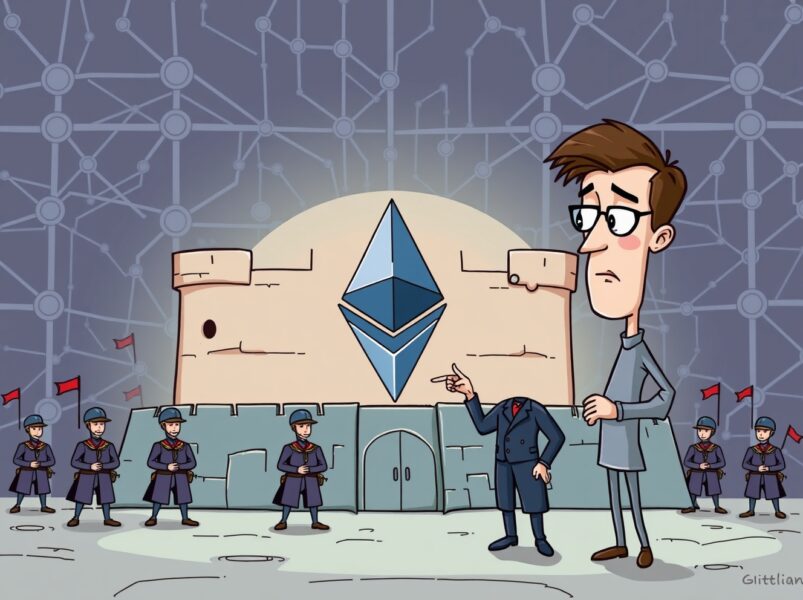
Crucial ETH Unstaking Period: Vitalik Buterin’s Unwavering Defense for Network Security

Crucial ETH Unstaking Period: Vitalik Buterin’s Unwavering Defense for Network Security

BitcoinWorld Crucial ETH Unstaking Period: Vitalik Buterin’s Unwavering Defense for Network Security Ever wondered why withdrawing your staked Ethereum (ETH) isn’t an instant process? It’s a question that often sparks debate within the crypto community. Ethereum founder Vitalik Buterin recently stepped forward to defend the network’s approximately 45-day ETH unstaking period, asserting its crucial role in safeguarding the network’s integrity. This lengthy waiting time, while sometimes seen as an inconvenience, is a deliberate design choice with profound implications for security. Why is the ETH Unstaking Period a Vital Security Measure? Vitalik Buterin’s defense comes amidst comparisons to other networks, like Solana, which boast significantly shorter unstaking times. He drew a compelling parallel to military operations, explaining that an army cannot function effectively if its soldiers can simply abandon their posts at a moment’s notice. Similarly, a blockchain network requires a stable and committed validator set to maintain its security. The current ETH unstaking period isn’t merely an arbitrary delay. It acts as a critical buffer, providing the network with sufficient time to detect and respond to potential malicious activities. If validators could instantly exit, it would open doors for sophisticated attacks, jeopardizing the entire system. Currently, Ethereum boasts over one million active validators, collectively staking approximately 35.6 million ETH, representing about 30% of the total supply. This massive commitment underpins the network’s robust security model, and the unstaking period helps preserve this stability. Network Security: Ethereum’s Paramount Concern A shorter ETH unstaking period might seem appealing for liquidity, but it introduces significant risks. Imagine a scenario where a large number of validators, potentially colluding, could quickly withdraw their stake after committing a malicious act. Without a substantial delay, the network would have limited time to penalize them or mitigate the damage. This “exit queue” mechanism is designed to prevent sudden validator exodus, which could lead to: Reduced decentralization: A rapid drop in active validators could concentrate power among fewer participants. Increased vulnerability to attacks: A smaller, less stable validator set is easier to compromise. Network instability: Frequent and unpredictable changes in validator numbers can lead to performance issues and consensus failures. Therefore, the extended period is not a bug; it’s a feature. It’s a calculated trade-off between immediate liquidity for stakers and the foundational security of the entire Ethereum ecosystem. Ethereum vs. Solana: Different Approaches to Unstaking When discussing the ETH unstaking period, many point to networks like Solana, which offers a much quicker two-day unstaking process. While this might seem like an advantage for stakers seeking rapid access to their funds, it reflects fundamental differences in network architecture and security philosophies. Solana’s design prioritizes speed and immediate liquidity, often relying on different consensus mechanisms and validator economics to manage security risks. Ethereum, on the other hand, with its proof-of-stake evolution from proof-of-work, has adopted a more cautious approach to ensure its transition and long-term stability are uncompromised. Each network makes design choices based on its unique goals and threat models. Ethereum’s substantial value and its role as a foundational layer for countless dApps necessitate an extremely robust security posture, making the current unstaking duration a deliberate and necessary component. What Does the ETH Unstaking Period Mean for Stakers? For individuals and institutions staking ETH, understanding the ETH unstaking period is crucial for managing expectations and investment strategies. It means that while staking offers attractive rewards, it also comes with a commitment to the network’s long-term health. Here are key considerations for stakers: Liquidity Planning: Stakers should view their staked ETH as a longer-term commitment, not immediately liquid capital. Risk Management: The delay inherently reduces the ability to react quickly to market volatility with staked assets. Network Contribution: By participating, stakers contribute directly to the security and decentralization of Ethereum, reinforcing its value proposition. While the current waiting period may not be “optimal” in every sense, as Buterin acknowledged, simply shortening it without addressing the underlying security implications would be a dangerous gamble for the network’s reliability. In conclusion, Vitalik Buterin’s defense of the lengthy ETH unstaking period underscores a fundamental principle: network security cannot be compromised for the sake of convenience. It is a vital mechanism that protects Ethereum’s integrity, ensuring its stability and trustworthiness as a leading blockchain platform. This deliberate design choice, while requiring patience from stakers, ultimately fortifies the entire ecosystem against potential threats, paving the way for a more secure and reliable decentralized future. Frequently Asked Questions (FAQs) Q1: What is the main reason for Ethereum’s long unstaking period? A1: The primary reason is network security. A lengthy ETH unstaking period prevents malicious actors from quickly withdrawing their stake after an attack, giving the network time to detect and penalize them, thus maintaining stability and integrity. Q2: How long is the current ETH unstaking period? A2: The current ETH unstaking period is approximately 45 days. This duration can fluctuate based on network conditions and the number of validators in the exit queue. Q3: How does Ethereum’s unstaking period compare to other blockchains? A3: Ethereum’s unstaking period is notably longer than some other networks, such as Solana, which has a two-day period. This difference reflects varying network architectures and security priorities. Q4: Does the unstaking period affect ETH stakers? A4: Yes, it means stakers need to plan their liquidity carefully, as their staked ETH is not immediately accessible. It encourages a longer-term commitment to the network, aligning staker interests with Ethereum’s stability. Q5: Could the ETH unstaking period be shortened in the future? A5: While Vitalik Buterin acknowledged the current period might not be “optimal,” any significant shortening would likely require extensive research and network upgrades to ensure security isn’t compromised. For now, the focus remains on maintaining robust network defenses. Found this article insightful? Share it with your friends and fellow crypto enthusiasts on social media to spread awareness about the critical role of the ETH unstaking period in Ethereum’s security! To learn more about the latest Ethereum trends, explore our article on key developments shaping Ethereum’s institutional adoption. This post Crucial ETH Unstaking Period: Vitalik Buterin’s Unwavering Defense for Network Security first appeared on BitcoinWorld.
Share
Coinstats2025/09/18 15:30
XRP holders hit new high, but THIS keeps pressure on price

XRP holders hit new high, but THIS keeps pressure on price

The post XRP holders hit new high, but THIS keeps pressure on price appeared on BitcoinEthereumNews.com. Ripple [XRP] remains one of the top five cryptocurrencies
Share
BitcoinEthereumNews2026/02/17 08:49
Will Bitcoin Price Drop to $50,000 by March 2026?

Will Bitcoin Price Drop to $50,000 by March 2026?

The post Will Bitcoin Price Drop to $50,000 by March 2026? appeared on BitcoinEthereumNews.com. Bitcoin is trading around $68,700, down nearly 22% year to date
Share
BitcoinEthereumNews2026/02/17 08:59