Ethereum co-founder Vitalik Buterin issued a stark reminder that while blockchain security prevents even a majority of validator collusion from stealing on-chain assets, this protection vanishes completely when users trust validators with off-chain tasks. He noted that if 51% of validators collude or fall victim to software bugs, they cannot steal assets stored on-chain, but this ironclad protection vanishes the moment users trust validators with tasks beyond the blockchain’s direct control. The warning particularly highlights a critical but often misunderstood boundary in blockchain architecture. While on-chain funds remain cryptographically protected even under majority-attacker attacks, any off-chain activity that relies on validator honesty leaves users vulnerable to manipulation with no recourse. The Security Boundary Blockchain Can’t Cross Blockchain protocols enforce strict validation rules that every node independently verifies by checking transaction signatures, preventing double-spending, and ensuring that state transitions follow the protocol logic. This decentralized verification means colluding validators cannot forge transactions or create invalid blocks that steal user funds. The system’s distributed nature ensures that even majority control cannot override these fundamental safeguards.Source: EMLearning However, this protection breaks down when validators handle off-chain tasks like oracle data feeds, governance decisions, or restaking services. These activities fall outside the blockchain’s algorithmic enforcement and rely instead on validator honesty. A colluding majority could provide false data or manipulated outcomes without the cryptographic proofs that protect on-chain transactions. Users affected by such off-chain collusion have no automatic dispute-resolution or recovery mechanism. The blockchain cannot verify or contest decisions made beyond its consensus layer, leaving victims without the recourse that makes on-chain assets fundamentally secure. Why Off-Chain Trust Amplifies Risk Traditional blockchain verification requires computers to perform 100 times as much work as the original calculation. However, when users move funds off-chain, through custodial wallets, centralized exchanges, or validator-controlled computations, they surrender the blockchain’s built-in protections. Off-chain systems lack the independent verification that every on-chain node provides, leaving them vulnerable to majority validator manipulation. The distinction matters because blockchain consensus operates through algorithmic rule enforcement that no single party controls.Source: B2BINPAY Off-chain activities depend on coordinated behavior and validator integrity, but not on protocol-level verification. Smart contracts that rely on validator-provided oracle data could yield incorrect outcomes if a majority colludes to report false information, potentially causing financial losses that on-chain mechanisms cannot prevent or reverse. When asked whether his warning referenced restaking protocols like EigenLayer, Buterin confirmed the platform addresses this vulnerability through slashing mechanisms using its own token. This economic penalty system provides some protection but cannot match the cryptographic guarantees that secure on-chain block validity against majority attacks. Balancing Privacy with Blockchain’s Transparency Shield Buterin’s security reminder comes as Ethereum pursues major privacy improvements that are different from the network’s traditionally transparent nature. Earlier this month, he detailed GKR, a cryptographic technique that verifies calculations 10 times faster than traditional methods while enabling zero-knowledge proofs, allowing computers to prove calculations are correct without revealing the underlying data. The Ethereum Foundation also launched a 47-member Privacy Cluster in September to make network privacy default rather than optional, addressing concerns that public blockchains expose too much financial information. Aside from enterprise demand, Vitalik sees it as the only way to global adoption, especially for Ethereum. Just recently, while speaking with Cryptonews, industry expert Petro Golovko compared current blockchain transparency to the pre-encryption internet era, arguing that systems exposing salaries and account balances remain “unusable for regular people and impossible for institutions.” The initiative aims to enable private transactions, selective identity disclosure, and improved user privacy experience without sacrificing the verification mechanisms that prevent validator manipulation. However, the privacy push creates an apparent paradox. If transactions become private, how can the network maintain the transparent verification that protects against off-chain manipulation, Buterin warned about? The solution lies in cryptographic techniques like GKR that allow verification of transaction validity without exposing transaction details, preserving the blockchain’s core security property where invalid blocks remain rejected even under majority attacks, while shielding sensitive financial data from public viewEthereum co-founder Vitalik Buterin issued a stark reminder that while blockchain security prevents even a majority of validator collusion from stealing on-chain assets, this protection vanishes completely when users trust validators with off-chain tasks. He noted that if 51% of validators collude or fall victim to software bugs, they cannot steal assets stored on-chain, but this ironclad protection vanishes the moment users trust validators with tasks beyond the blockchain’s direct control. The warning particularly highlights a critical but often misunderstood boundary in blockchain architecture. While on-chain funds remain cryptographically protected even under majority-attacker attacks, any off-chain activity that relies on validator honesty leaves users vulnerable to manipulation with no recourse. The Security Boundary Blockchain Can’t Cross Blockchain protocols enforce strict validation rules that every node independently verifies by checking transaction signatures, preventing double-spending, and ensuring that state transitions follow the protocol logic. This decentralized verification means colluding validators cannot forge transactions or create invalid blocks that steal user funds. The system’s distributed nature ensures that even majority control cannot override these fundamental safeguards.Source: EMLearning However, this protection breaks down when validators handle off-chain tasks like oracle data feeds, governance decisions, or restaking services. These activities fall outside the blockchain’s algorithmic enforcement and rely instead on validator honesty. A colluding majority could provide false data or manipulated outcomes without the cryptographic proofs that protect on-chain transactions. Users affected by such off-chain collusion have no automatic dispute-resolution or recovery mechanism. The blockchain cannot verify or contest decisions made beyond its consensus layer, leaving victims without the recourse that makes on-chain assets fundamentally secure. Why Off-Chain Trust Amplifies Risk Traditional blockchain verification requires computers to perform 100 times as much work as the original calculation. However, when users move funds off-chain, through custodial wallets, centralized exchanges, or validator-controlled computations, they surrender the blockchain’s built-in protections. Off-chain systems lack the independent verification that every on-chain node provides, leaving them vulnerable to majority validator manipulation. The distinction matters because blockchain consensus operates through algorithmic rule enforcement that no single party controls.Source: B2BINPAY Off-chain activities depend on coordinated behavior and validator integrity, but not on protocol-level verification. Smart contracts that rely on validator-provided oracle data could yield incorrect outcomes if a majority colludes to report false information, potentially causing financial losses that on-chain mechanisms cannot prevent or reverse. When asked whether his warning referenced restaking protocols like EigenLayer, Buterin confirmed the platform addresses this vulnerability through slashing mechanisms using its own token. This economic penalty system provides some protection but cannot match the cryptographic guarantees that secure on-chain block validity against majority attacks. Balancing Privacy with Blockchain’s Transparency Shield Buterin’s security reminder comes as Ethereum pursues major privacy improvements that are different from the network’s traditionally transparent nature. Earlier this month, he detailed GKR, a cryptographic technique that verifies calculations 10 times faster than traditional methods while enabling zero-knowledge proofs, allowing computers to prove calculations are correct without revealing the underlying data. The Ethereum Foundation also launched a 47-member Privacy Cluster in September to make network privacy default rather than optional, addressing concerns that public blockchains expose too much financial information. Aside from enterprise demand, Vitalik sees it as the only way to global adoption, especially for Ethereum. Just recently, while speaking with Cryptonews, industry expert Petro Golovko compared current blockchain transparency to the pre-encryption internet era, arguing that systems exposing salaries and account balances remain “unusable for regular people and impossible for institutions.” The initiative aims to enable private transactions, selective identity disclosure, and improved user privacy experience without sacrificing the verification mechanisms that prevent validator manipulation. However, the privacy push creates an apparent paradox. If transactions become private, how can the network maintain the transparent verification that protects against off-chain manipulation, Buterin warned about? The solution lies in cryptographic techniques like GKR that allow verification of transaction validity without exposing transaction details, preserving the blockchain’s core security property where invalid blocks remain rejected even under majority attacks, while shielding sensitive financial data from public view

Your Crypto Isn’t Safe Outside the Blockchain, Vitalik Buterin Warns

2025/10/26 17:47
4 min read

Ethereum co-founder Vitalik Buterin issued a stark reminder that while blockchain security prevents even a majority of validator collusion from stealing on-chain assets, this protection vanishes completely when users trust validators with off-chain tasks.

He noted that if 51% of validators collude or fall victim to software bugs, they cannot steal assets stored on-chain, but this ironclad protection vanishes the moment users trust validators with tasks beyond the blockchain’s direct control.

The warning particularly highlights a critical but often misunderstood boundary in blockchain architecture.

While on-chain funds remain cryptographically protected even under majority-attacker attacks, any off-chain activity that relies on validator honesty leaves users vulnerable to manipulation with no recourse.

The Security Boundary Blockchain Can’t Cross

Blockchain protocols enforce strict validation rules that every node independently verifies by checking transaction signatures, preventing double-spending, and ensuring that state transitions follow the protocol logic.

This decentralized verification means colluding validators cannot forge transactions or create invalid blocks that steal user funds.

The system’s distributed nature ensures that even majority control cannot override these fundamental safeguards.
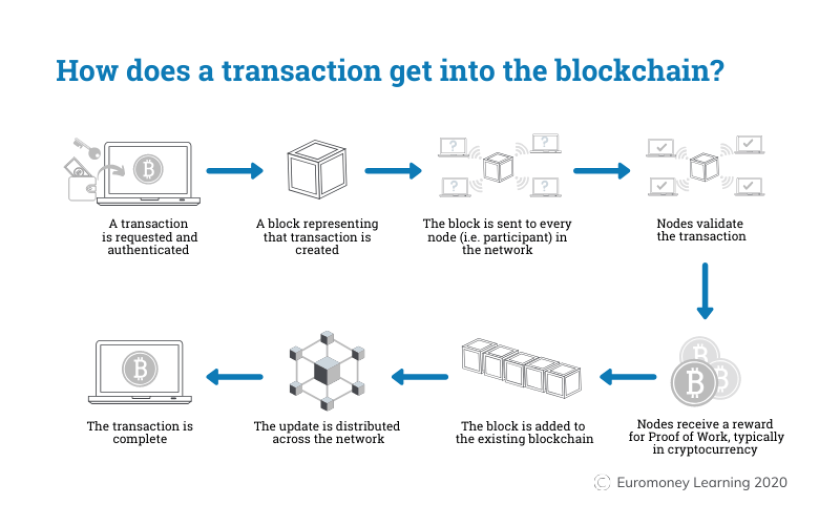
Vitalik Buterin BlockchainSource: EMLearning

However, this protection breaks down when validators handle off-chain tasks like oracle data feeds, governance decisions, or restaking services.

These activities fall outside the blockchain’s algorithmic enforcement and rely instead on validator honesty.

A colluding majority could provide false data or manipulated outcomes without the cryptographic proofs that protect on-chain transactions.

Users affected by such off-chain collusion have no automatic dispute-resolution or recovery mechanism.

The blockchain cannot verify or contest decisions made beyond its consensus layer, leaving victims without the recourse that makes on-chain assets fundamentally secure.

Why Off-Chain Trust Amplifies Risk

Traditional blockchain verification requires computers to perform 100 times as much work as the original calculation.

However, when users move funds off-chain, through custodial wallets, centralized exchanges, or validator-controlled computations, they surrender the blockchain’s built-in protections.

Off-chain systems lack the independent verification that every on-chain node provides, leaving them vulnerable to majority validator manipulation.

The distinction matters because blockchain consensus operates through algorithmic rule enforcement that no single party controls.

Vitalik Buterin BlockchainSource: B2BINPAY

Off-chain activities depend on coordinated behavior and validator integrity, but not on protocol-level verification.

Smart contracts that rely on validator-provided oracle data could yield incorrect outcomes if a majority colludes to report false information, potentially causing financial losses that on-chain mechanisms cannot prevent or reverse.

When asked whether his warning referenced restaking protocols like EigenLayer, Buterin confirmed the platform addresses this vulnerability through slashing mechanisms using its own token.

This economic penalty system provides some protection but cannot match the cryptographic guarantees that secure on-chain block validity against majority attacks.

Balancing Privacy with Blockchain’s Transparency Shield

Buterin’s security reminder comes as Ethereum pursues major privacy improvements that are different from the network’s traditionally transparent nature.

Earlier this month, he detailed GKR, a cryptographic technique that verifies calculations 10 times faster than traditional methods while enabling zero-knowledge proofs, allowing computers to prove calculations are correct without revealing the underlying data.

The Ethereum Foundation also launched a 47-member Privacy Cluster in September to make network privacy default rather than optional, addressing concerns that public blockchains expose too much financial information.

Aside from enterprise demand, Vitalik sees it as the only way to global adoption, especially for Ethereum.

Just recently, while speaking with Cryptonews, industry expert Petro Golovko compared current blockchain transparency to the pre-encryption internet era, arguing that systems exposing salaries and account balances remain “unusable for regular people and impossible for institutions.

The initiative aims to enable private transactions, selective identity disclosure, and improved user privacy experience without sacrificing the verification mechanisms that prevent validator manipulation.

However, the privacy push creates an apparent paradox. If transactions become private, how can the network maintain the transparent verification that protects against off-chain manipulation, Buterin warned about?

The solution lies in cryptographic techniques like GKR that allow verification of transaction validity without exposing transaction details, preserving the blockchain’s core security property where invalid blocks remain rejected even under majority attacks, while shielding sensitive financial data from public view.

Market Opportunity
Threshold Logo
Threshold Price(T)
$0.006929
$0.006929$0.006929
-0.27%
USD
Threshold (T) Live Price Chart
Disclaimer: The articles reposted on this site are sourced from public platforms and are provided for informational purposes only. They do not necessarily reflect the views of MEXC. All rights remain with the original authors. If you believe any content infringes on third-party rights, please contact [email protected] for removal. MEXC makes no guarantees regarding the accuracy, completeness, or timeliness of the content and is not responsible for any actions taken based on the information provided. The content does not constitute financial, legal, or other professional advice, nor should it be considered a recommendation or endorsement by MEXC.

You May Also Like

The UA Sprinkler Fitters Local 669 JATC – Notice of Privacy Incident

The UA Sprinkler Fitters Local 669 JATC – Notice of Privacy Incident

Landover, Maryland, February 6, 2026– The UA Sprinkler Fitters Local 669 Joint Apprenticeship and Training Committee (“JATC”) is providing notice of an event that
Share
AI Journal2026/02/07 07:30
CME pushes Solana, XRP into derivatives spotlight with new options
CME pushes Solana, XRP into derivatives spotlight with new options

CME Group is launching options for Solana and XRP futures this October. The move signals a major shift, acknowledging that institutional liquidity is now firmly expanding beyond the established dominance of Bitcoin and Ether. According to a press release dated…
Share
Crypto.news2025/09/18 01:18
Ethereum koers toont zeldzaam dubbel koopsignaal en richt zich op $4.550

Ethereum koers toont zeldzaam dubbel koopsignaal en richt zich op $4.550

Connect met Like-minded Crypto Enthusiasts! Connect op Discord! Check onze Discord   Ethereum laat op de uurgrafiek twee opeenvolgende TD Sequential koopsignalen zien. Deze indicator meet uitputting in een trend en geeft vaak een signaal dat de verkoopdruk kan afnemen. Dit dubbele signaal verschijnt rond het niveau van $4.516, waar de ETH prijs kortstondig steun vindt. Dit type formatie komt zelden voor en wordt daarom extra nauwlettend gevolgd. Wat gaat de Ethereum koers hiermee doen? Ethereum koers test steun rond $4.516 De scherpe daling van de Ethereum koers vanaf de prijszone rond $4.800 bracht de ETH prijs in korte tijd naar ongeveer $4.516. Op dit niveau trad duidelijke koopactiviteit op, waardoor de neerwaartse beweging tijdelijk werd gestopt. Het dubbele signaal dat door de TD Sequential indicator is gegenereerd, viel precies samen met dit prijspunt. De TD Sequential is opgebouwd uit negen candles die een trend meetellen. Wanneer de negende candle verschijnt, kan dit duiden op een trendomslag. In dit geval verschenen zelfs twee signalen kort na elkaar, wat aangeeft dat de verkoopdruk mogelijk uitgeput is. Het feit dat dit gebeurde in een zone waar ETH kopers actief bleven, maakt het patroon extra opvallend. TD Sequential just flashed two buy signals for Ethereum $ETH! pic.twitter.com/JPO8EhiEPi — Ali (@ali_charts) September 16, 2025 Welke crypto nu kopen?Lees onze uitgebreide gids en leer welke crypto nu kopen verstandig kan zijn! Welke crypto nu kopen? Fed-voorzitter Jerome Powell heeft aangekondigd dat de rentes binnenkort zomaar eens omlaag zouden kunnen gaan, en tegelijkertijd blijft BlackRock volop crypto kopen, en dus lijkt de markt klaar om te gaan stijgen. Eén vraag komt telkens terug: welke crypto moet je nu kopen? In dit artikel bespreken we de munten die… Continue reading Ethereum koers toont zeldzaam dubbel koopsignaal en richt zich op $4.550 document.addEventListener('DOMContentLoaded', function() { var screenWidth = window.innerWidth; var excerpts = document.querySelectorAll('.lees-ook-description'); excerpts.forEach(function(description) { var excerpt = description.getAttribute('data-description'); var wordLimit = screenWidth wordLimit) { var trimmedDescription = excerpt.split(' ').slice(0, wordLimit).join(' ') + '...'; description.textContent = trimmedDescription; } }); }); Technische indicatoren schetsen herstelkans voor ETH Naast de dubbele koopsignalen verstrekken ook andere indicatoren belangrijke aanwijzingen. Tijdens de daling van de ETH koers waren grote rode candles zichtbaar, maar na de test van $4.516 stabiliseerde de Ethereum koers. Dit wijst op een mogelijke verschuiving in het evenwicht tussen de bears en bulls. Als deze opwaartse beweging doorzet, liggen de eerste weerstanden rond $4.550. Daarboven wacht een sterkere zone rond $4.650. Deze niveaus zijn in eerdere Ethereum sessies al meerdere keren getest. Een doorbraak zou ruimte openen richting de all-time high van ETH rond $4.953. Wanneer de prijs toch opnieuw onder $4.516 zakt, liggen er zones rond $4.500 en $4.450 waar grotere kooporders worden verwacht. Deze niveaus kunnen als een vangnet fungeren, mocht de druk opnieuw toenemen. Marktdynamiek bevestigt technische indicatoren De huidige situatie volgt op een bredere correctie in de cryptomarkt. Verschillende vooraanstaande crypto tokens zagen scherpe koersdalingen, waarna traders op zoek gingen naar signalen voor een mogelijke ommekeer. Dat juist Ethereum nu een dubbel TD Sequential signaal toont, versterkt de interesse in dit scenario. Fundamenteel blijft Ethereum sterk. Het aantal ETH tokens dat via staking is vastgezet, blijft groeien. Dat verkleint de vrije circulatie en vermindert verkoopdruk. Tegelijk blijft het netwerk intensief gebruikt voor DeFi, NFT’s en stablecoins. Deze activiteiten zorgen voor een stabiele vraag naar ETH, ook wanneer de prijs tijdelijk onder druk staat. Fundamentele drijfveren achter de Ethereum koers De Ethereum koers wordt echter niet alleen bepaald door candles en patronen, maar ook door bredere factoren. Een stijgend percentage van de totale ETH supply staat vast in staking contracten. Hierdoor neemt de liquiditeit op exchanges af. Dit kan prijsschommelingen versterken wanneer er plotseling meer koopdruk ontstaat. Daarnaast is Ethereum nog steeds het grootste smart contract platform. Nieuwe standaarden zoals ERC-8004 en ontwikkelingen rond layer-2 oplossingen houden de activiteit hoog. Deze technologische vooruitgang kan de waardepropositie ondersteunen en zo indirect bijdragen aan een ETH prijsherstel. Het belang van de korte termijn dynamiek De komende handelsdagen zullen duidelijk maken of de bulls genoeg kracht hebben om door de weerstandszone rond $4.550 te breken. Voor de bears ligt de focus juist op het verdedigen van de prijsregio rond $4.516. De whales, die met grote handelsorders opereren, kunnen hierin een beslissende rol spelen. Het dubbele TD Sequential signaal blijft hoe dan ook een zeldzame gebeurtenis. Voor cryptoanalisten vormt het een objectief aanknopingspunt om de kracht van de huidige Ethereum trend te toetsen. Vooruitblik op de ETH koers Ethereum liet twee opeenvolgende TD Sequential signalen zien op de uurgrafiek, iets wat zelden voorkomt. Deze formatie viel samen met steun rond $4.516, waar de bulls actief werden. Als de Ethereum koers boven dit niveau blijft, kan er ruimte ontstaan richting $4.550 en mogelijk $4.650. Zakt de prijs toch opnieuw onder $4.516, dan komen $4.500 en $4.450 in beeld als nieuwe steunzones. De combinatie van zeldzame indicatoren en een sterke fundamentele basis maakt Ethereum interessant voor zowel technische als fundamentele analyses. Of de bulls het momentum echt kunnen overnemen, zal blijken zodra de Ethereum koers de eerstvolgende weerstanden opnieuw test. Koop je crypto via Best Wallet Best wallet is een topklasse crypto wallet waarmee je anoniem crypto kan kopen. Met meer dan 60 chains gesupport kan je al je main crypto coins aanschaffen via Best Wallet. Best wallet - betrouwbare en anonieme wallet Best wallet - betrouwbare en anonieme wallet Meer dan 60 chains beschikbaar voor alle crypto Vroege toegang tot nieuwe projecten Hoge staking belongingen Lage transactiekosten Best wallet review Koop nu via Best Wallet Let op: cryptocurrency is een zeer volatiele en ongereguleerde investering. Doe je eigen onderzoek. Het bericht Ethereum koers toont zeldzaam dubbel koopsignaal en richt zich op $4.550 is geschreven door Dirk van Haaster en verscheen als eerst op Bitcoinmagazine.nl.
Share
Coinstats2025/09/17 23:31
