How AI Smart Contracts Are Advancing Blockchain Automation? The fusion of artificial intelligence (AI) and blockchain technology marks a new era in digital transformation. While blockchain provides trust, transparency, and immutability, AI brings intelligence, adaptability, and prediction. Together, they give rise to a groundbreaking innovation — AI Smart Contracts. These intelligent contracts are reshaping automation in blockchain networks, making transactions faster, smarter, and more secure than ever before. In this comprehensive guide, we’ll explore how AI smart contracts work, their architecture, benefits, and their role in advancing blockchain automation for businesses, developers, and decentralized systems worldwide. 1. The Concept of AI Smart Contracts Explained A smart contract functions as an automated blockchain protocol executing predefined terms. It automatically enforces terms when predefined conditions are met, removing the need for intermediaries. However, traditional smart contracts have limitations — they lack reasoning ability, adaptability, and dynamic decision-making. That’s where AI Smart Contracts step in. By integrating AI algorithms, machine learning models, and natural language processing into blockchain environments, these contracts gain the ability to analyze data, make context-based decisions, and evolve over time. Instead of static rule execution, they enable intelligent automation — capable of understanding real-world variables and adjusting accordingly. For example, an AI-powered insurance contract can analyze weather data, accident reports, or claim histories to determine fair settlements instantly without human review. 2. How AI Smart Contracts Work AI Smart Contracts combine the logical structure of blockchain with the computational intelligence of AI models. Here’s how they typically function: Data Input Layer — External data feeds (via oracles) supply real-time information such as prices, IoT data, or user behavior into the contract.AI Processing Layer — AI algorithms interpret this data, predict outcomes, and trigger specific contract conditions based on learned patterns.Execution Layer — Once conditions are met, blockchain executes the transaction securely and immutably.Feedback and Learning Layer — The AI model continues learning from outcomes, improving future decision accuracy. This loop enables contracts to evolve — moving from “if-this-then-that” logic to adaptive, autonomous execution. 3. The Role of AI in Blockchain Automation Automation has always been blockchain’s strength. However, with AI, this automation becomes dynamic and context-aware. Traditional blockchain systems follow deterministic logic — they execute predefined conditions without flexibility. AI introduces reasoning, enabling the blockchain to automate complex processes such as: ★Fraud detection and prevention ★Predictive pricing in decentralized exchanges ★Supply chain optimization ★Automated compliance and auditing ★Risk assessment in DeFi lending This advancement allows blockchain networks to move beyond static automation into intelligent automation, where contracts can process real-world complexity. 4. Key Components of AI Smart Contract Architecture AI Smart Contracts integrate several technological layers to operate effectively: Blockchain Layer — Provides decentralization, immutability, and trust for recording transactions.Smart Contract Layer — Defines logic, conditions, and functions for contract execution.AI Model Layer — Embeds algorithms or connects with AI APIs to analyze and predict outcomes.Oracle Layer — Bridges off-chain data to on-chain smart contracts securely.Data Storage Layer — Stores AI model outputs and relevant training data for continuous learning. This multi-layer design ensures that AI insights directly influence automated decisions within blockchain ecosystems. 5. Advantages of AI Smart Contracts The integration of AI within smart contracts unlocks several powerful benefits: a) Intelligent Decision-MakingAI algorithms allow contracts to interpret complex inputs and act intelligently rather than rigidly following pre-set logic. b) Predictive AutomationAI smart contracts can predict trends, outcomes, and risks based on historical and live data — allowing proactive decision-making. c) Improved EfficiencyBy automating analysis and execution, businesses save time and reduce operational bottlenecks. d) Enhanced SecurityMachine learning models detect anomalies or potential frauds, helping strengthen blockchain’s existing security mechanisms. e) Dynamic Contract AdjustmentAI can modify contract conditions in real time, adapting to new data or market fluctuations. f) Reduced CostsAutomation of complex processes eliminates intermediaries and manual interventions, lowering transaction and management costs. g) Continuous LearningUnlike traditional contracts, AI smart contracts evolve with data, improving their accuracy and performance over time. 6. AI Smart Contracts in Action: Use Cases Across Industries 1. Decentralized Finance (DeFi)AI Smart Contracts enhance lending, yield farming, and trading by predicting price fluctuations, managing risks, and optimizing liquidity pools automatically. 2. Insurance AutomationAI-powered insurance contracts assess risk, validate claims, and trigger instant payouts using AI-based verification of off-chain data sources. 3. Supply Chain ManagementBy analyzing IoT sensor data, AI smart contracts monitor goods in real time, verify authenticity, and automatically release payments upon verified delivery. 4. Real Estate TokenizationAI ensures transparent property valuation, predictive pricing, and automated escrow management for tokenized assets on blockchain networks. 5. Healthcare Data ManagementAI Smart Contracts automate access control, consent management, and data sharing between healthcare providers while maintaining patient privacy. 6. Energy TradingIn renewable energy systems, AI smart contracts balance supply-demand ratios, automate billing, and manage peer-to-peer energy exchanges efficiently. 7. Gaming and NFTsAI agents within smart contracts personalize in-game economics, manage NFT royalties, and prevent fraudulent asset duplication. 8. Governance and VotingAI Smart Contracts can analyze voting behavior, identify irregularities, and ensure transparent and secure DAO governance. 7. How AI Improves Traditional Smart Contracts Traditional smart contracts operate on deterministic rules: if X happens, then execute Y. While effective for predefined logic, this approach fails in uncertain or data-rich environments. AI adds several layers of sophistication: By merging the two technologies, blockchain systems evolve into autonomous economic agents, capable of handling complexity at scale. 8. Challenges in AI Smart Contract Adoption While AI Smart Contracts offer remarkable potential, several challenges remain: Data Reliability — AI depends on accurate data inputs; unreliable oracles can lead to false outcomes.Computational Costs — Running AI models on-chain can be expensive; hybrid models (off-chain AI + on-chain verification) are often needed.Transparency Issues — AI’s decision-making process can be opaque, complicating trust verification in decentralized ecosystems.Security Risks — AI model manipulation or data poisoning could lead to incorrect contract execution.Regulatory Concerns — Governments are still catching up to AI’s integration with decentralized systems, raising compliance questions. These hurdles, though significant, are gradually being addressed through innovations in AI explainability, zero-knowledge proofs, and decentralized data oracles. 9. The Future of Blockchain Automation with AI As AI continues to mature, its synergy with blockchain will create autonomous digital ecosystems capable of running complex operations without human input. Future smart contracts will not just execute predefined conditions but will also: ★Negotiate and amend contract terms automatically ★Analyze real-time global data to optimize outcomes ★Interact with other AI agents for multi-contract coordination ★Handle cross-chain transactions intelligently These self-learning blockchain environments could give rise to fully autonomous organizations (AOs) — businesses operated entirely by AI-driven smart contracts that make decisions, execute strategies, and manage assets transparently. 10. Strategic Business Benefits of AI Smart Contracts For enterprises, integrating AI Smart Contracts brings measurable business advantages: Faster Decision Cycles: Real-time analytics enable rapid business responses.Optimized Operations: Automation minimizes manual overheads and errors.Increased Profitability: AI-driven insights lead to smarter pricing and higher ROI.Better Risk Management: Predictive models prevent losses and ensure compliance.Enhanced Trust: Blockchain’s transparency combined with AI’s intelligence ensures reliable digital transactions. These capabilities help organizations transition from reactive operations to proactive, self-optimizing business ecosystems. 11. The Path Ahead for Developers and Innovators Developers building AI Smart Contracts must balance decentralization with computational practicality. Emerging trends include: Hybrid Architectures: AI models run off-chain, while blockchain verifies outputs.Federated Learning: AI learns collaboratively across nodes without sharing raw data.Explainable AI (XAI): Increases transparency in AI decision-making within smart contracts.Quantum-Safe AI Contracts: Prepare for next-gen cryptographic security in automation. Such advancements are paving the way for more efficient, scalable, and transparent blockchain ecosystems. Conclusion AI Smart Contracts represent the next frontier in blockchain automation. By merging the trust and transparency of blockchain with the intelligence and adaptability of AI, businesses gain systems that not only execute transactions but understand context, predict outcomes, and continuously optimize processes. As this fusion deepens, blockchain networks will evolve into self-governing digital infrastructures — capable of managing entire economic systems without human intervention. The future of blockchain automation is not just decentralized — it’s intelligent, predictive, and autonomous. AI Smart Contracts aren’t just advancing blockchain automation — they’re redefining how the digital economy operates. How AI Smart Contracts Are Advancing Blockchain Automation? was originally published in Coinmonks on Medium, where people are continuing the conversation by highlighting and responding to this storyHow AI Smart Contracts Are Advancing Blockchain Automation? The fusion of artificial intelligence (AI) and blockchain technology marks a new era in digital transformation. While blockchain provides trust, transparency, and immutability, AI brings intelligence, adaptability, and prediction. Together, they give rise to a groundbreaking innovation — AI Smart Contracts. These intelligent contracts are reshaping automation in blockchain networks, making transactions faster, smarter, and more secure than ever before. In this comprehensive guide, we’ll explore how AI smart contracts work, their architecture, benefits, and their role in advancing blockchain automation for businesses, developers, and decentralized systems worldwide. 1. The Concept of AI Smart Contracts Explained A smart contract functions as an automated blockchain protocol executing predefined terms. It automatically enforces terms when predefined conditions are met, removing the need for intermediaries. However, traditional smart contracts have limitations — they lack reasoning ability, adaptability, and dynamic decision-making. That’s where AI Smart Contracts step in. By integrating AI algorithms, machine learning models, and natural language processing into blockchain environments, these contracts gain the ability to analyze data, make context-based decisions, and evolve over time. Instead of static rule execution, they enable intelligent automation — capable of understanding real-world variables and adjusting accordingly. For example, an AI-powered insurance contract can analyze weather data, accident reports, or claim histories to determine fair settlements instantly without human review. 2. How AI Smart Contracts Work AI Smart Contracts combine the logical structure of blockchain with the computational intelligence of AI models. Here’s how they typically function: Data Input Layer — External data feeds (via oracles) supply real-time information such as prices, IoT data, or user behavior into the contract.AI Processing Layer — AI algorithms interpret this data, predict outcomes, and trigger specific contract conditions based on learned patterns.Execution Layer — Once conditions are met, blockchain executes the transaction securely and immutably.Feedback and Learning Layer — The AI model continues learning from outcomes, improving future decision accuracy. This loop enables contracts to evolve — moving from “if-this-then-that” logic to adaptive, autonomous execution. 3. The Role of AI in Blockchain Automation Automation has always been blockchain’s strength. However, with AI, this automation becomes dynamic and context-aware. Traditional blockchain systems follow deterministic logic — they execute predefined conditions without flexibility. AI introduces reasoning, enabling the blockchain to automate complex processes such as: ★Fraud detection and prevention ★Predictive pricing in decentralized exchanges ★Supply chain optimization ★Automated compliance and auditing ★Risk assessment in DeFi lending This advancement allows blockchain networks to move beyond static automation into intelligent automation, where contracts can process real-world complexity. 4. Key Components of AI Smart Contract Architecture AI Smart Contracts integrate several technological layers to operate effectively: Blockchain Layer — Provides decentralization, immutability, and trust for recording transactions.Smart Contract Layer — Defines logic, conditions, and functions for contract execution.AI Model Layer — Embeds algorithms or connects with AI APIs to analyze and predict outcomes.Oracle Layer — Bridges off-chain data to on-chain smart contracts securely.Data Storage Layer — Stores AI model outputs and relevant training data for continuous learning. This multi-layer design ensures that AI insights directly influence automated decisions within blockchain ecosystems. 5. Advantages of AI Smart Contracts The integration of AI within smart contracts unlocks several powerful benefits: a) Intelligent Decision-MakingAI algorithms allow contracts to interpret complex inputs and act intelligently rather than rigidly following pre-set logic. b) Predictive AutomationAI smart contracts can predict trends, outcomes, and risks based on historical and live data — allowing proactive decision-making. c) Improved EfficiencyBy automating analysis and execution, businesses save time and reduce operational bottlenecks. d) Enhanced SecurityMachine learning models detect anomalies or potential frauds, helping strengthen blockchain’s existing security mechanisms. e) Dynamic Contract AdjustmentAI can modify contract conditions in real time, adapting to new data or market fluctuations. f) Reduced CostsAutomation of complex processes eliminates intermediaries and manual interventions, lowering transaction and management costs. g) Continuous LearningUnlike traditional contracts, AI smart contracts evolve with data, improving their accuracy and performance over time. 6. AI Smart Contracts in Action: Use Cases Across Industries 1. Decentralized Finance (DeFi)AI Smart Contracts enhance lending, yield farming, and trading by predicting price fluctuations, managing risks, and optimizing liquidity pools automatically. 2. Insurance AutomationAI-powered insurance contracts assess risk, validate claims, and trigger instant payouts using AI-based verification of off-chain data sources. 3. Supply Chain ManagementBy analyzing IoT sensor data, AI smart contracts monitor goods in real time, verify authenticity, and automatically release payments upon verified delivery. 4. Real Estate TokenizationAI ensures transparent property valuation, predictive pricing, and automated escrow management for tokenized assets on blockchain networks. 5. Healthcare Data ManagementAI Smart Contracts automate access control, consent management, and data sharing between healthcare providers while maintaining patient privacy. 6. Energy TradingIn renewable energy systems, AI smart contracts balance supply-demand ratios, automate billing, and manage peer-to-peer energy exchanges efficiently. 7. Gaming and NFTsAI agents within smart contracts personalize in-game economics, manage NFT royalties, and prevent fraudulent asset duplication. 8. Governance and VotingAI Smart Contracts can analyze voting behavior, identify irregularities, and ensure transparent and secure DAO governance. 7. How AI Improves Traditional Smart Contracts Traditional smart contracts operate on deterministic rules: if X happens, then execute Y. While effective for predefined logic, this approach fails in uncertain or data-rich environments. AI adds several layers of sophistication: By merging the two technologies, blockchain systems evolve into autonomous economic agents, capable of handling complexity at scale. 8. Challenges in AI Smart Contract Adoption While AI Smart Contracts offer remarkable potential, several challenges remain: Data Reliability — AI depends on accurate data inputs; unreliable oracles can lead to false outcomes.Computational Costs — Running AI models on-chain can be expensive; hybrid models (off-chain AI + on-chain verification) are often needed.Transparency Issues — AI’s decision-making process can be opaque, complicating trust verification in decentralized ecosystems.Security Risks — AI model manipulation or data poisoning could lead to incorrect contract execution.Regulatory Concerns — Governments are still catching up to AI’s integration with decentralized systems, raising compliance questions. These hurdles, though significant, are gradually being addressed through innovations in AI explainability, zero-knowledge proofs, and decentralized data oracles. 9. The Future of Blockchain Automation with AI As AI continues to mature, its synergy with blockchain will create autonomous digital ecosystems capable of running complex operations without human input. Future smart contracts will not just execute predefined conditions but will also: ★Negotiate and amend contract terms automatically ★Analyze real-time global data to optimize outcomes ★Interact with other AI agents for multi-contract coordination ★Handle cross-chain transactions intelligently These self-learning blockchain environments could give rise to fully autonomous organizations (AOs) — businesses operated entirely by AI-driven smart contracts that make decisions, execute strategies, and manage assets transparently. 10. Strategic Business Benefits of AI Smart Contracts For enterprises, integrating AI Smart Contracts brings measurable business advantages: Faster Decision Cycles: Real-time analytics enable rapid business responses.Optimized Operations: Automation minimizes manual overheads and errors.Increased Profitability: AI-driven insights lead to smarter pricing and higher ROI.Better Risk Management: Predictive models prevent losses and ensure compliance.Enhanced Trust: Blockchain’s transparency combined with AI’s intelligence ensures reliable digital transactions. These capabilities help organizations transition from reactive operations to proactive, self-optimizing business ecosystems. 11. The Path Ahead for Developers and Innovators Developers building AI Smart Contracts must balance decentralization with computational practicality. Emerging trends include: Hybrid Architectures: AI models run off-chain, while blockchain verifies outputs.Federated Learning: AI learns collaboratively across nodes without sharing raw data.Explainable AI (XAI): Increases transparency in AI decision-making within smart contracts.Quantum-Safe AI Contracts: Prepare for next-gen cryptographic security in automation. Such advancements are paving the way for more efficient, scalable, and transparent blockchain ecosystems. Conclusion AI Smart Contracts represent the next frontier in blockchain automation. By merging the trust and transparency of blockchain with the intelligence and adaptability of AI, businesses gain systems that not only execute transactions but understand context, predict outcomes, and continuously optimize processes. As this fusion deepens, blockchain networks will evolve into self-governing digital infrastructures — capable of managing entire economic systems without human intervention. The future of blockchain automation is not just decentralized — it’s intelligent, predictive, and autonomous. AI Smart Contracts aren’t just advancing blockchain automation — they’re redefining how the digital economy operates. How AI Smart Contracts Are Advancing Blockchain Automation? was originally published in Coinmonks on Medium, where people are continuing the conversation by highlighting and responding to this story

How AI Smart Contracts Are Advancing Blockchain Automation?

2025/10/28 23:22
7 min read

How AI Smart Contracts Are Advancing Blockchain Automation?

The fusion of artificial intelligence (AI) and blockchain technology marks a new era in digital transformation. While blockchain provides trust, transparency, and immutability, AI brings intelligence, adaptability, and prediction. Together, they give rise to a groundbreaking innovation — AI Smart Contracts. These intelligent contracts are reshaping automation in blockchain networks, making transactions faster, smarter, and more secure than ever before. In this comprehensive guide, we’ll explore how AI smart contracts work, their architecture, benefits, and their role in advancing blockchain automation for businesses, developers, and decentralized systems worldwide.

1. The Concept of AI Smart Contracts Explained

A smart contract functions as an automated blockchain protocol executing predefined terms. It automatically enforces terms when predefined conditions are met, removing the need for intermediaries. However, traditional smart contracts have limitations — they lack reasoning ability, adaptability, and dynamic decision-making.

That’s where AI Smart Contracts step in. By integrating AI algorithms, machine learning models, and natural language processing into blockchain environments, these contracts gain the ability to analyze data, make context-based decisions, and evolve over time. Instead of static rule execution, they enable intelligent automation — capable of understanding real-world variables and adjusting accordingly.

For example, an AI-powered insurance contract can analyze weather data, accident reports, or claim histories to determine fair settlements instantly without human review.

2. How AI Smart Contracts Work

AI Smart Contracts combine the logical structure of blockchain with the computational intelligence of AI models. Here’s how they typically function:

Data Input Layer — External data feeds (via oracles) supply real-time information such as prices, IoT data, or user behavior into the contract.
AI Processing Layer — AI algorithms interpret this data, predict outcomes, and trigger specific contract conditions based on learned patterns.
Execution Layer — Once conditions are met, blockchain executes the transaction securely and immutably.
Feedback and Learning Layer — The AI model continues learning from outcomes, improving future decision accuracy.

This loop enables contracts to evolve — moving from “if-this-then-that” logic to adaptive, autonomous execution.

3. The Role of AI in Blockchain Automation

Automation has always been blockchain’s strength. However, with AI, this automation becomes dynamic and context-aware. Traditional blockchain systems follow deterministic logic — they execute predefined conditions without flexibility. AI introduces reasoning, enabling the blockchain to automate complex processes such as:

★Fraud detection and prevention
★Predictive pricing in decentralized exchanges
★Supply chain optimization
★Automated compliance and auditing
★Risk assessment in DeFi lending

This advancement allows blockchain networks to move beyond static automation into intelligent automation, where contracts can process real-world complexity.

4. Key Components of AI Smart Contract Architecture

AI Smart Contracts integrate several technological layers to operate effectively:

Blockchain Layer — Provides decentralization, immutability, and trust for recording transactions.
Smart Contract Layer — Defines logic, conditions, and functions for contract execution.
AI Model Layer — Embeds algorithms or connects with AI APIs to analyze and predict outcomes.
Oracle Layer — Bridges off-chain data to on-chain smart contracts securely.
Data Storage Layer — Stores AI model outputs and relevant training data for continuous learning.

This multi-layer design ensures that AI insights directly influence automated decisions within blockchain ecosystems.

5. Advantages of AI Smart Contracts

The integration of AI within smart contracts unlocks several powerful benefits:

a) Intelligent Decision-Making
AI algorithms allow contracts to interpret complex inputs and act intelligently rather than rigidly following pre-set logic.

b) Predictive Automation
AI smart contracts can predict trends, outcomes, and risks based on historical and live data — allowing proactive decision-making.

c) Improved Efficiency
By automating analysis and execution, businesses save time and reduce operational bottlenecks.

d) Enhanced Security
Machine learning models detect anomalies or potential frauds, helping strengthen blockchain’s existing security mechanisms.

e) Dynamic Contract Adjustment
AI can modify contract conditions in real time, adapting to new data or market fluctuations.

f) Reduced Costs
Automation of complex processes eliminates intermediaries and manual interventions, lowering transaction and management costs.

g) Continuous Learning
Unlike traditional contracts, AI smart contracts evolve with data, improving their accuracy and performance over time.

6. AI Smart Contracts in Action: Use Cases Across Industries

1. Decentralized Finance (DeFi)
AI Smart Contracts enhance lending, yield farming, and trading by predicting price fluctuations, managing risks, and optimizing liquidity pools automatically.

2. Insurance Automation
AI-powered insurance contracts assess risk, validate claims, and trigger instant payouts using AI-based verification of off-chain data sources.

3. Supply Chain Management
By analyzing IoT sensor data, AI smart contracts monitor goods in real time, verify authenticity, and automatically release payments upon verified delivery.

4. Real Estate Tokenization
AI ensures transparent property valuation, predictive pricing, and automated escrow management for tokenized assets on blockchain networks.

5. Healthcare Data Management
AI Smart Contracts automate access control, consent management, and data sharing between healthcare providers while maintaining patient privacy.

6. Energy Trading
In renewable energy systems, AI smart contracts balance supply-demand ratios, automate billing, and manage peer-to-peer energy exchanges efficiently.

7. Gaming and NFTs
AI agents within smart contracts personalize in-game economics, manage NFT royalties, and prevent fraudulent asset duplication.

8. Governance and Voting
AI Smart Contracts can analyze voting behavior, identify irregularities, and ensure transparent and secure DAO governance.

7. How AI Improves Traditional Smart Contracts

Traditional smart contracts operate on deterministic rules: if X happens, then execute Y. While effective for predefined logic, this approach fails in uncertain or data-rich environments. AI adds several layers of sophistication:

By merging the two technologies, blockchain systems evolve into autonomous economic agents, capable of handling complexity at scale.

8. Challenges in AI Smart Contract Adoption

While AI Smart Contracts offer remarkable potential, several challenges remain:

Data Reliability — AI depends on accurate data inputs; unreliable oracles can lead to false outcomes.
Computational Costs — Running AI models on-chain can be expensive; hybrid models (off-chain AI + on-chain verification) are often needed.
Transparency Issues — AI’s decision-making process can be opaque, complicating trust verification in decentralized ecosystems.
Security Risks — AI model manipulation or data poisoning could lead to incorrect contract execution.
Regulatory Concerns — Governments are still catching up to AI’s integration with decentralized systems, raising compliance questions.

These hurdles, though significant, are gradually being addressed through innovations in AI explainability, zero-knowledge proofs, and decentralized data oracles.

9. The Future of Blockchain Automation with AI

As AI continues to mature, its synergy with blockchain will create autonomous digital ecosystems capable of running complex operations without human input. Future smart contracts will not just execute predefined conditions but will also:

★Negotiate and amend contract terms automatically
★Analyze real-time global data to optimize outcomes
★Interact with other AI agents for multi-contract coordination
★Handle cross-chain transactions intelligently

These self-learning blockchain environments could give rise to fully autonomous organizations (AOs) — businesses operated entirely by AI-driven smart contracts that make decisions, execute strategies, and manage assets transparently.

10. Strategic Business Benefits of AI Smart Contracts

For enterprises, integrating AI Smart Contracts brings measurable business advantages:

Faster Decision Cycles: Real-time analytics enable rapid business responses.
Optimized Operations: Automation minimizes manual overheads and errors.
Increased Profitability: AI-driven insights lead to smarter pricing and higher ROI.
Better Risk Management: Predictive models prevent losses and ensure compliance.
Enhanced Trust: Blockchain’s transparency combined with AI’s intelligence ensures reliable digital transactions.

These capabilities help organizations transition from reactive operations to proactive, self-optimizing business ecosystems.

11. The Path Ahead for Developers and Innovators

Developers building AI Smart Contracts must balance decentralization with computational practicality. Emerging trends include:

Hybrid Architectures: AI models run off-chain, while blockchain verifies outputs.
Federated Learning: AI learns collaboratively across nodes without sharing raw data.
Explainable AI (XAI): Increases transparency in AI decision-making within smart contracts.
Quantum-Safe AI Contracts: Prepare for next-gen cryptographic security in automation.

Such advancements are paving the way for more efficient, scalable, and transparent blockchain ecosystems.

Conclusion

AI Smart Contracts represent the next frontier in blockchain automation. By merging the trust and transparency of blockchain with the intelligence and adaptability of AI, businesses gain systems that not only execute transactions but understand context, predict outcomes, and continuously optimize processes.

As this fusion deepens, blockchain networks will evolve into self-governing digital infrastructures — capable of managing entire economic systems without human intervention. The future of blockchain automation is not just decentralized — it’s intelligent, predictive, and autonomous.

AI Smart Contracts aren’t just advancing blockchain automation — they’re redefining how the digital economy operates.


How AI Smart Contracts Are Advancing Blockchain Automation? was originally published in Coinmonks on Medium, where people are continuing the conversation by highlighting and responding to this story.

Market Opportunity
null Logo
null Price(null)
--
----
USD
null (null) Live Price Chart
Disclaimer: The articles reposted on this site are sourced from public platforms and are provided for informational purposes only. They do not necessarily reflect the views of MEXC. All rights remain with the original authors. If you believe any content infringes on third-party rights, please contact [email protected] for removal. MEXC makes no guarantees regarding the accuracy, completeness, or timeliness of the content and is not responsible for any actions taken based on the information provided. The content does not constitute financial, legal, or other professional advice, nor should it be considered a recommendation or endorsement by MEXC.

You May Also Like

Ethereum unveils roadmap focusing on scaling, interoperability, and security at Japan Dev Conference
Ethereum unveils roadmap focusing on scaling, interoperability, and security at Japan Dev Conference

The post Ethereum unveils roadmap focusing on scaling, interoperability, and security at Japan Dev Conference appeared on BitcoinEthereumNews.com. Key Takeaways Ethereum’s new roadmap was presented by Vitalik Buterin at the Japan Dev Conference. Short-term priorities include Layer 1 scaling and raising gas limits to enhance transaction throughput. Vitalik Buterin presented Ethereum’s development roadmap at the Japan Dev Conference today, outlining the blockchain platform’s priorities across multiple timeframes. The short-term goals focus on scaling solutions and increasing Layer 1 gas limits to improve transaction capacity. Mid-term objectives target enhanced cross-Layer 2 interoperability and faster network responsiveness to create a more seamless user experience across different scaling solutions. The long-term vision emphasizes building a secure, simple, quantum-resistant, and formally verified minimalist Ethereum network. This approach aims to future-proof the platform against emerging technological threats while maintaining its core functionality. The roadmap presentation comes as Ethereum continues to compete with other blockchain platforms for market share in the smart contract and decentralized application space. Source: https://cryptobriefing.com/ethereum-roadmap-scaling-interoperability-security-japan/
Share
BitcoinEthereumNews2025/09/18 00:25
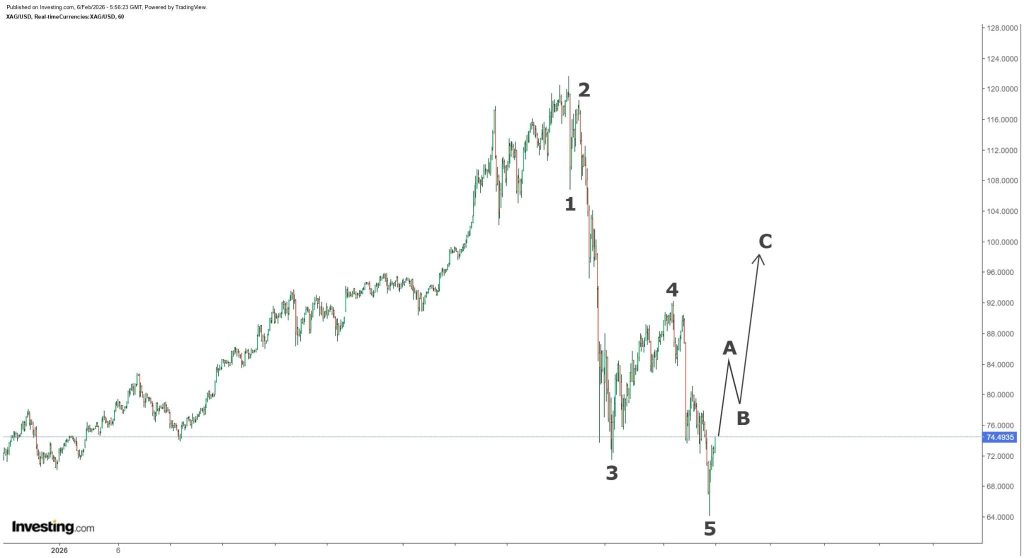
Silver Price Crash Is Over “For Real This Time,” Analyst Predicts a Surge Back Above $90

Silver Price Crash Is Over “For Real This Time,” Analyst Predicts a Surge Back Above $90

Silver has been taking a beating lately, and the Silver price hasn’t exactly been acting like a safe haven. After running up into the highs, the whole move reversed
Share
Captainaltcoin2026/02/07 03:15
Tapzi is Investors’ 1000x Pick in Volatile Market

Tapzi is Investors’ 1000x Pick in Volatile Market

The post Tapzi is Investors’ 1000x Pick in Volatile Market appeared on BitcoinEthereumNews.com. Crypto News 18 September 2025 | 00:05 Bitcoin swings after CPI data release as Tapzi’s presale gains momentum, emerging as a top crypto project in 2025. The crypto market moved sharply last week after the release of US Consumer Price Index (CPI) data. Bitcoin, the largest digital asset, reacted within minutes of the announcement, recording rapid swings before settling back near earlier levels.  At the same time, presale projects continued to attract investors, with Tapzi emerging as one of the most-watched tokens this month. It is being picked by investors as the next crypto to explode due to its high-growth potential in Tier 1 and Tier 2 countries, with Web3 gaming’s increasing adoption. Tapzi Presale Draws Attention While Bitcoin reacted to economic data, Tapzi’s presale has become a focal point among both retail and larger investors. Tapzi is a Web3 gaming platform designed to merge competitive gameplay with blockchain-based settlements. Players stake TAPZI tokens in head-to-head matches of chess, checkers, rock-paper-scissors, and tic-tac-toe. Winners receive tokens directly from prize pools funded by players, not by inflationary rewards. Don’t Watch the Wave – Ride It With $TAPZI! The presale opened with tokens priced at $0.0035. More than 27 million tokens have already been sold, with prices set to increase in each new stage. Analysts following the sale point to potential gains of around 300% once TAPZI lists on exchanges later this year. Liquidity locks and vesting schedules are in place to reduce the risks of sharp sell-offs after launch. This has placed Tapzi on the radar of investors searching for the best crypto to buy now. Bitcoin Price Reacts to CPI Last week, Bitcoin climbed toward $114,000 before jumping to $114,500, its highest level in weeks. The gains were short-lived as the price quickly dropped by $1,000. At press time, Bitcoin…
Share
BitcoinEthereumNews2025/09/18 06:26