The post Ripple Latest News Feature XRP Tundra Presale Launching XRP Staking appeared on BitcoinEthereumNews.com. Ripple officially introduced the XRP Ledger’s Ethereum Virtual Machine (EVM) sidechain to the mainnet in June, opening a new chapter for the network’s utility. The upgrade enables developers to deploy Ethereum-based decentralized applications (dApps) directly within the XRPL framework while maintaining full connectivity to the original ledger. The update merges EVM-compatible smart contracts with XRPL’s native transaction speed and low-cost execution. Ripple described the move as a way to eliminate the traditional trade-off between flexibility and performance, allowing dApps to plug directly into XRP’s payments infrastructure. That expansion set the stage for a new class of DeFi protocols — including XRP Tundra, which is using the live sidechain to bring on-chain staking to Ripple’s ecosystem for the first time. Staking Arrives Through XRP Tundra’s Dual-Chain Architecture Until recently, XRP holders could only earn yield through centralized exchanges or indirect liquidity products. XRP Tundra redefines that process through a dual-chain architecture that connects the XRPL EVM sidechain with Solana, coordinated through GlacierChain, its dedicated Layer-2 environment. GlacierChain functions as a computational layer designed to handle staking logic, validator coordination, and reward calculation. It synchronizes real-time data between Solana’s high-performance network and the XRP Ledger’s settlement layer without acting as a custodial bridge. This setup allows staking, liquidity operations, and vault activity to run seamlessly across both ecosystems while preserving XRPL’s low-cost transaction framework. Through the EVM interface introduced by Ripple in June, all vault interactions remain fully transparent and auditable on-chain. Rather than altering Ripple’s base protocol, Tundra builds around it — expanding the ledger’s capabilities into DeFi without compromising its reliability. The result is an architecture that keeps XRP’s speed intact while adding programmable yield mechanics native to the broader EVM ecosystem. Cryo Vaults Turn XRP Into a Yield Asset At the heart of Tundra’s staking ecosystem are Cryo Vaults,… The post Ripple Latest News Feature XRP Tundra Presale Launching XRP Staking appeared on BitcoinEthereumNews.com. Ripple officially introduced the XRP Ledger’s Ethereum Virtual Machine (EVM) sidechain to the mainnet in June, opening a new chapter for the network’s utility. The upgrade enables developers to deploy Ethereum-based decentralized applications (dApps) directly within the XRPL framework while maintaining full connectivity to the original ledger. The update merges EVM-compatible smart contracts with XRPL’s native transaction speed and low-cost execution. Ripple described the move as a way to eliminate the traditional trade-off between flexibility and performance, allowing dApps to plug directly into XRP’s payments infrastructure. That expansion set the stage for a new class of DeFi protocols — including XRP Tundra, which is using the live sidechain to bring on-chain staking to Ripple’s ecosystem for the first time. Staking Arrives Through XRP Tundra’s Dual-Chain Architecture Until recently, XRP holders could only earn yield through centralized exchanges or indirect liquidity products. XRP Tundra redefines that process through a dual-chain architecture that connects the XRPL EVM sidechain with Solana, coordinated through GlacierChain, its dedicated Layer-2 environment. GlacierChain functions as a computational layer designed to handle staking logic, validator coordination, and reward calculation. It synchronizes real-time data between Solana’s high-performance network and the XRP Ledger’s settlement layer without acting as a custodial bridge. This setup allows staking, liquidity operations, and vault activity to run seamlessly across both ecosystems while preserving XRPL’s low-cost transaction framework. Through the EVM interface introduced by Ripple in June, all vault interactions remain fully transparent and auditable on-chain. Rather than altering Ripple’s base protocol, Tundra builds around it — expanding the ledger’s capabilities into DeFi without compromising its reliability. The result is an architecture that keeps XRP’s speed intact while adding programmable yield mechanics native to the broader EVM ecosystem. Cryo Vaults Turn XRP Into a Yield Asset At the heart of Tundra’s staking ecosystem are Cryo Vaults,…

Ripple Latest News Feature XRP Tundra Presale Launching XRP Staking

4 min read

Ripple officially introduced the XRP Ledger’s Ethereum Virtual Machine (EVM) sidechain to the mainnet in June, opening a new chapter for the network’s utility. The upgrade enables developers to deploy Ethereum-based decentralized applications (dApps) directly within the XRPL framework while maintaining full connectivity to the original ledger.

The update merges EVM-compatible smart contracts with XRPL’s native transaction speed and low-cost execution. Ripple described the move as a way to eliminate the traditional trade-off between flexibility and performance, allowing dApps to plug directly into XRP’s payments infrastructure.

That expansion set the stage for a new class of DeFi protocols — including XRP Tundra, which is using the live sidechain to bring on-chain staking to Ripple’s ecosystem for the first time.

Staking Arrives Through XRP Tundra’s Dual-Chain Architecture

Until recently, XRP holders could only earn yield through centralized exchanges or indirect liquidity products. XRP Tundra redefines that process through a dual-chain architecture that connects the XRPL EVM sidechain with Solana, coordinated through GlacierChain, its dedicated Layer-2 environment.

GlacierChain functions as a computational layer designed to handle staking logic, validator coordination, and reward calculation. It synchronizes real-time data between Solana’s high-performance network and the XRP Ledger’s settlement layer without acting as a custodial bridge.

This setup allows staking, liquidity operations, and vault activity to run seamlessly across both ecosystems while preserving XRPL’s low-cost transaction framework. Through the EVM interface introduced by Ripple in June, all vault interactions remain fully transparent and auditable on-chain.

Rather than altering Ripple’s base protocol, Tundra builds around it — expanding the ledger’s capabilities into DeFi without compromising its reliability. The result is an architecture that keeps XRP’s speed intact while adding programmable yield mechanics native to the broader EVM ecosystem.

Cryo Vaults Turn XRP Into a Yield Asset

At the heart of Tundra’s staking ecosystem are Cryo Vaults, a system of smart contracts that allocate rewards to users staking TUNDRA-S, the platform’s primary yield token. A secondary asset, TUNDRA-X, powers governance, liquidity operations, and cross-chain fees.

Vaults are transparent, tiered, and verifiable in real time across both networks. Rewards are calculated automatically through GlacierChain validators and distributed through the EVM sidechain connection to XRPL.

This makes Cryo Vaults the first verifiable yield framework built directly around Ripple’s live EVM infrastructure. A breakdown of the process was featured in Crypto Sister’s analysis, which showcased how vault activity can be audited on both Solana and the XRP EVM network simultaneously.

Verified Code and Public Documentation

Security remains a core part of the rollout. The project’s contracts and bridge mechanics have undergone independent reviews by Cyberscope, Solidproof, and FreshCoins, confirming accurate reward logic, bridge stability, and withdrawal conditions.

In addition, the development team completed KYC verification through Vital Block, making all documentation publicly accessible. That transparency distinguishes Tundra’s approach from traditional exchange-based “staking,” which relies on off-chain accounting and custodial control.

Presale Connects Participants to Staking Activation

Tundra’s Phase 9 presale acts as the entry route to staking participation ahead of Cryo Vault activation. Each purchase of TUNDRA-S, priced at $0.147 with an 11% bonus, includes a proportional allocation of TUNDRA-Xat no extra cost. The reference value for TUNDRA-X stands at $0.0735.

More than $2 million has already been raised, and over $32,000 in rewards have been distributed through the project’s Arctic Spinner program. Each phase introduces a price step, and the time between rounds continues to shorten as new participants join — a sign of steady organic traction.

Presale participants will transition directly into staking once Cryo Vault deployment completes on the XRPL EVM sidechain.

EVM Connectivity Gives XRP Its First On-Chain Yield Layer

The introduction of EVM functionality to the XRP Ledger has quietly transformed Ripple’s technology stack from a payments-only environment into a programmable DeFi network. XRP Tundra’s Cryo Vaults are the first proof of that expansion — a live staking framework built on verifiable infrastructure, audited code, and direct connectivity to Ripple’s new sidechain.

For XRP holders, it marks a shift from transactional utility to yield-bearing participation — achieved without sacrificing compliance, speed, or transparency.

Join early participants preparing for Cryo Vault activation — the first staking layer built for Ripple’s live EVM ecosystem is now taking shape.

Website: xrptundra.com
Medium: medium.com/@xrptundra
Telegram: t.me/xrptundra
X (Twitter): x.com/xrptundra

Contact: Tim Fénix — [email protected]

Source: https://www.cryptopolitan.com/ripple-latest-news-feature-xrp-tundra-presale-launching-xrp-staking/


Market Opportunity
XRP Logo
XRP Price(XRP)
$1.2713
$1.2713$1.2713
-1.93%
USD
XRP (XRP) Live Price Chart
Disclaimer: The articles reposted on this site are sourced from public platforms and are provided for informational purposes only. They do not necessarily reflect the views of MEXC. All rights remain with the original authors. If you believe any content infringes on third-party rights, please contact [email protected] for removal. MEXC makes no guarantees regarding the accuracy, completeness, or timeliness of the content and is not responsible for any actions taken based on the information provided. The content does not constitute financial, legal, or other professional advice, nor should it be considered a recommendation or endorsement by MEXC.

You May Also Like

Once Upon a Farm Announces Pricing of Initial Public Offering

Once Upon a Farm Announces Pricing of Initial Public Offering

BERKELEY, Calif.–(BUSINESS WIRE)–Once Upon a Farm today announced the pricing of its initial public offering of 10,997,209 shares of its common stock, 7,631,537
Share
AI Journal2026/02/06 08:15
Forward Industries Bets Big on Solana With $4B Capital Plan

Forward Industries Bets Big on Solana With $4B Capital Plan

The firm has filed with the U.S. Securities and Exchange Commission to launch a $4 billion at-the-market (ATM) equity program, […] The post Forward Industries Bets Big on Solana With $4B Capital Plan appeared first on Coindoo.
Share
Coindoo2025/09/18 04:15
332M accounts and $28B TVL,

332M accounts and $28B TVL,

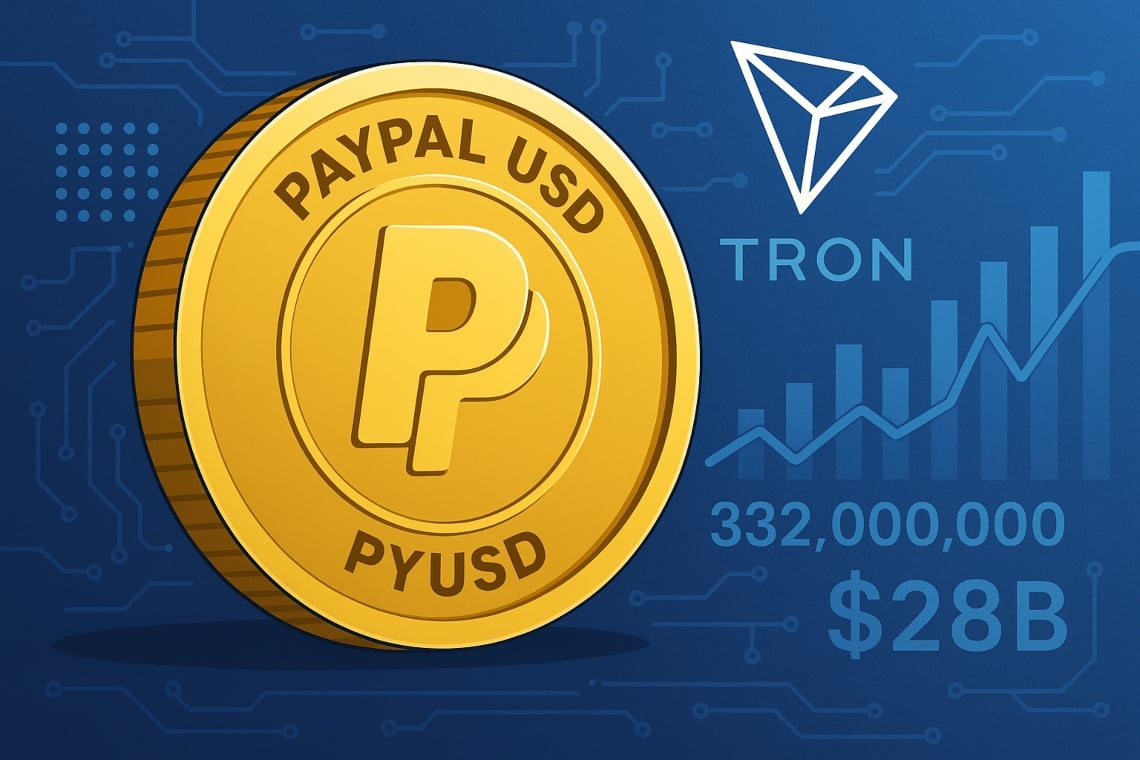
The post 332M accounts and $28B TVL, appeared on BitcoinEthereumNews.com. PayPal USD debuts on TRON as a permissionless token PYUSD0, enabled by LayerZero’s OFT standard and the Stargate Hydra extension. The announcement on September 18, 2025 (Geneva) introduces native interoperability between chains and transfers without manual steps for users; the news echoes elements already communicated by PayPal at the launch of PYUSD PayPal Newsroom. The move concerns an ecosystem that includes 332 million accounts and over $28 billion in TVL. In this context, the fungibility of a stablecoin regulated across multiple networks and the use of TRON as a settlement layer for payments and remittances is at stake. According to the data collected by TRONSCAN updated as of September 18, 2025, the network metrics confirm the cited volumes and highlighted traffic patterns. Our editorial team has verified the transaction logs and monitored the public chain metrics to corroborate the reported figures; the observations on daily flows and TVL are consistent with the network dashboards. Industry analysts observe that the entry of a regulated issuer like PayPal tends to increase institutional interest, provided there is transparency on reserves and compliance checks. What is PYUSD0 on TRON and why is it relevant PYUSD0 is the representation of PayPal USD on TRON. It is pegged one-to-one to PYUSD through the OFT standard: the two tokens remain a single stablecoin, fungible and reconciled across chains. The integration is made possible by Stargate Hydra, now operational through LayerZero. According to the founder of TRON, Justin Sun, the extension on TRON expands access and trust for users and institutions. For Bryan Pellegrino (CEO of LayerZero Labs), stablecoins represent a pillar of global payments and remittances, as the native compatibility between chains enables their operational scalability. It must be said that the alignment between issuer, cross-chain infrastructure, and settlement network is a key element. Key Numbers: TRON…
Share
BitcoinEthereumNews2025/09/19 08:18