YouTube has started what some consider to be a direct attack on blockchain gaming videos. This has raised concerns within the blockchain gaming community that it could potentially limit the availability of content that promotes or discusses decentralized gaming ecosystems. The decision comes after YouTube announced new restrictions on content that promotes gambling involving digital […]YouTube has started what some consider to be a direct attack on blockchain gaming videos. This has raised concerns within the blockchain gaming community that it could potentially limit the availability of content that promotes or discusses decentralized gaming ecosystems. The decision comes after YouTube announced new restrictions on content that promotes gambling involving digital […]

YouTube launches what some consider a direct attack on blockchain gaming videos

2025/11/05 03:45
4 min read

YouTube has started what some consider to be a direct attack on blockchain gaming videos. This has raised concerns within the blockchain gaming community that it could potentially limit the availability of content that promotes or discusses decentralized gaming ecosystems.

The decision comes after YouTube announced new restrictions on content that promotes gambling involving digital goods, including NFTs and in-game items. 

According to the new update, YouTube expanded its ban on content that directs viewers to online gambling services not certified by Google. It now covers any online gambling using digital items with real monetary value. 

In particular, the new rules point to NFTs, video game skins, and cosmetics. These additions reflect the growing trend of digital goods being used in betting, especially in games like Counter-Strike 2, where skin gambling has been a longstanding issue.

Blockchain games don’t promote gambling directly, but YouTube can act on videos flagged by viewers if those videos involve gameplay that mimics gambling activities. That includes opening loot boxes with NFTs inside, battling for token rewards, or using terms like staking, winning tokens, or high-value NFT drops. 

Gaming tokens tank up to nearly 10% 

This scrutiny comes at a time when Web3 gaming is gaining traction, intersecting with major cryptocurrencies like ETH and gaming-specific tokens such as SAND and AXS.

At this point, Animoca Brands is looking forward to a Nasdaq listing after 5 years of being delisted from the Australian Securities Exchange (ASX). 

However, YouTube’s apparent crackdown on blockchain gaming videos may restrict visibility for projects developed on platforms such as Ethereum, where non-fungible tokens (NFTs) and play-to-earn models thrive. 

Top gaming tokens. Source: CoinMarketCap

Already, gaming tokens have seen declines. In the last 24 hours, RENDER and IMX have lost more than 9%, and MANA and SAND have lost more than 5%. FLOKI is down 7.6%, and STX is down 6.9%.

On-chain transaction volumes for gaming NFTs have still shown resilience. For instance, both MANA and SAND recorded a 13% surge in trading volumes. This shows that while sentiment may sour initially, institutional interest in blockchain gaming remains strong.

Experts have advised investors trading crypto pairs like SAND/USDT or AXS/BTC to monitor correlations with overall market cap fluctuations. This is because, if YouTube’s actions signal a wider scrutiny of tech platforms, it could get into stock markets, affecting tech giants and indirectly boosting decentralized finance (DeFi) tokens.

Odysee accuses YouTube of anti-competitive behaviour.

In other news, YouTube quietly censored links to Odysee, a video-sharing platform built on blockchain technology similar to YouTube. Screenshots shared on X showed Odysee links disappearing from YouTube comments and descriptions. This triggered accusations that Google’s video giant is cutting off a rival.

Odysee has marketed itself as a free-speech alternative since its launch in 2020. This has drawn users frustrated with YouTube’s strict moderation. Its blockchain design keeps videos online even after takedowns, with creators earning crypto tips instead of ad revenue. 

To that end, Odysee’s team urged users to pressure YouTube by tagging its official accounts, accusing the platform of anti-competitive behaviour.

However, YouTube did not directly address Odysee but pointed to its external link and spam rules, which can block links linked to scams or misleading material. YouTube has 2.5 billion users, while Odysee only has a few million. Analysts and gamers have raised concerns about YouTube’s monopoly power and whether it is unfairly controlling what users have access to.

This made Odysee a popular place for controversial voices because it drew people who believe in conspiracies. Supporters see it as proof that sites like YouTube can’t shut down everyone. But advocacy groups say the site often becomes a breeding ground for harmful content.

Join a premium crypto trading community free for 30 days - normally $100/mo.

Disclaimer: The articles reposted on this site are sourced from public platforms and are provided for informational purposes only. They do not necessarily reflect the views of MEXC. All rights remain with the original authors. If you believe any content infringes on third-party rights, please contact [email protected] for removal. MEXC makes no guarantees regarding the accuracy, completeness, or timeliness of the content and is not responsible for any actions taken based on the information provided. The content does not constitute financial, legal, or other professional advice, nor should it be considered a recommendation or endorsement by MEXC.

You May Also Like

Structural job strain caps rand gains – Commerzbank
Structural job strain caps rand gains – Commerzbank

The post Structural job strain caps rand gains – Commerzbank appeared on BitcoinEthereumNews.com. Commerzbank’s Volkmar Baur highlights that South Africa’s unemployment
Share
BitcoinEthereumNews2026/02/19 05:27
Trump gushes over Nicki Minaj's skin to mark Black History Month: 'So beautiful'

Trump gushes over Nicki Minaj's skin to mark Black History Month: 'So beautiful'

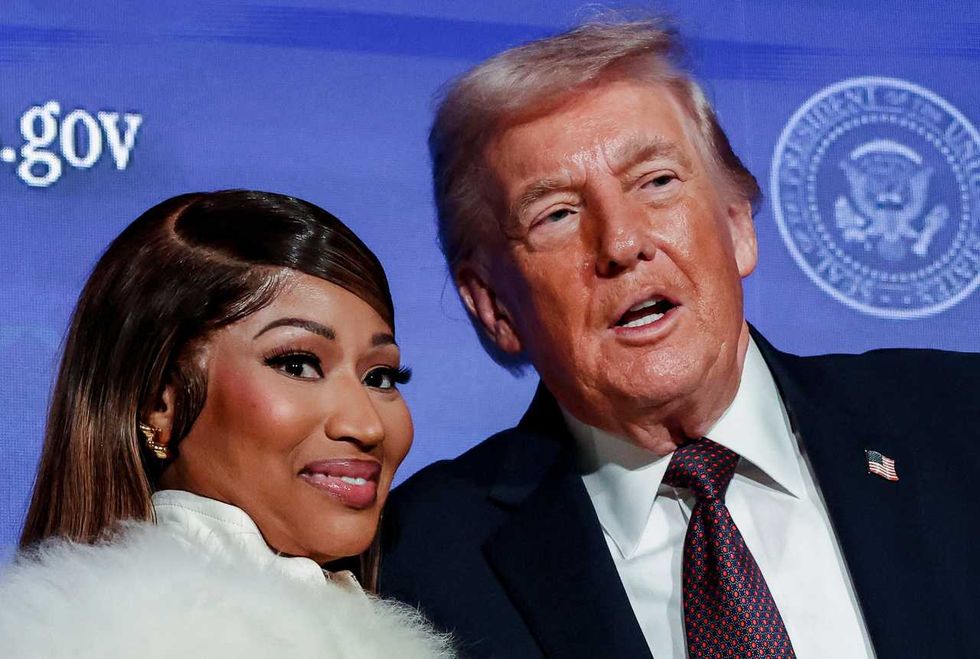
President Donald Trump used an event marking Black History Month to remark on Nicki Minaj's complexion."I love Nikki Minaj," the president told the audience. "She
Share
Rawstory2026/02/19 05:07
Google's AP2 protocol has been released. Does encrypted AI still have a chance?

Google's AP2 protocol has been released. Does encrypted AI still have a chance?

Following the MCP and A2A protocols, the AI Agent market has seen another blockbuster arrival: the Agent Payments Protocol (AP2), developed by Google. This will clearly further enhance AI Agents' autonomous multi-tasking capabilities, but the unfortunate reality is that it has little to do with web3AI. Let's take a closer look: What problem does AP2 solve? Simply put, the MCP protocol is like a universal hook, enabling AI agents to connect to various external tools and data sources; A2A is a team collaboration communication protocol that allows multiple AI agents to cooperate with each other to complete complex tasks; AP2 completes the last piece of the puzzle - payment capability. In other words, MCP opens up connectivity, A2A promotes collaboration efficiency, and AP2 achieves value exchange. The arrival of AP2 truly injects "soul" into the autonomous collaboration and task execution of Multi-Agents. Imagine AI Agents connecting Qunar, Meituan, and Didi to complete the booking of flights, hotels, and car rentals, but then getting stuck at the point of "self-payment." What's the point of all that multitasking? So, remember this: AP2 is an extension of MCP+A2A, solving the last mile problem of AI Agent automated execution. What are the technical highlights of AP2? The core innovation of AP2 is the Mandates mechanism, which is divided into real-time authorization mode and delegated authorization mode. Real-time authorization is easy to understand. The AI Agent finds the product and shows it to you. The operation can only be performed after the user signs. Delegated authorization requires the user to set rules in advance, such as only buying the iPhone 17 when the price drops to 5,000. The AI Agent monitors the trigger conditions and executes automatically. The implementation logic is cryptographically signed using Verifiable Credentials (VCs). Users can set complex commission conditions, including price ranges, time limits, and payment method priorities, forming a tamper-proof digital contract. Once signed, the AI Agent executes according to the conditions, with VCs ensuring auditability and security at every step. Of particular note is the "A2A x402" extension, a technical component developed by Google specifically for crypto payments, developed in collaboration with Coinbase and the Ethereum Foundation. This extension enables AI Agents to seamlessly process stablecoins, ETH, and other blockchain assets, supporting native payment scenarios within the Web3 ecosystem. What kind of imagination space can AP2 bring? After analyzing the technical principles, do you think that's it? Yes, in fact, the AP2 is boring when it is disassembled alone. Its real charm lies in connecting and opening up the "MCP+A2A+AP2" technology stack, completely opening up the complete link of AI Agent's autonomous analysis+execution+payment. From now on, AI Agents can open up many application scenarios. For example, AI Agents for stock investment and financial management can help us monitor the market 24/7 and conduct independent transactions. Enterprise procurement AI Agents can automatically replenish and renew without human intervention. AP2's complementary payment capabilities will further expand the penetration of the Agent-to-Agent economy into more scenarios. Google obviously understands that after the technical framework is established, the ecological implementation must be relied upon, so it has brought in more than 60 partners to develop it, almost covering the entire payment and business ecosystem. Interestingly, it also involves major Crypto players such as Ethereum, Coinbase, MetaMask, and Sui. Combined with the current trend of currency and stock integration, the imagination space has been doubled. Is web3 AI really dead? Not entirely. Google's AP2 looks complete, but it only achieves technical compatibility with Crypto payments. It can only be regarded as an extension of the traditional authorization framework and belongs to the category of automated execution. There is a "paradigm" difference between it and the autonomous asset management pursued by pure Crypto native solutions. The Crypto-native solutions under exploration are taking the "decentralized custody + on-chain verification" route, including AI Agent autonomous asset management, AI Agent autonomous transactions (DeFAI), AI Agent digital identity and on-chain reputation system (ERC-8004...), AI Agent on-chain governance DAO framework, AI Agent NPC and digital avatars, and many other interesting and fun directions. Ultimately, once users get used to AI Agent payments in traditional fields, their acceptance of AI Agents autonomously owning digital assets will also increase. And for those scenarios that AP2 cannot reach, such as anonymous transactions, censorship-resistant payments, and decentralized asset management, there will always be a time for crypto-native solutions to show their strength? The two are more likely to be complementary rather than competitive, but to be honest, the key technological advancements behind AI Agents currently all come from web2AI, and web3AI still needs to keep up the good work!
Share
PANews2025/09/18 07:00