The post Why U.S. Natural Gas Prices Could Be Headed Higher In 2026 appeared on BitcoinEthereumNews.com. The tanker LNG GENEVA, which departs from the Port of Cameron, USA, unloads US liquefied natural gas at the Revithoussa terminal near Athens, in Megara, Greece, on November 7, 2025. Greece emerges as a major regional hub for US LNG as the EU plans to phase out Russian LNG flows by 2027. (Photo by Nicolas Koutsokostas/NurPhoto via Getty Images) NurPhoto via Getty Images As oil prices struggle to find a footing in the wake of the latest OPEC moves, natural gas has stepped into a standout role in the global energy mix. This year, the demand and price trends for natural gas underscore both its resilience and its growing importance as an economic driver and transition fuel. Why Natural Gas Is Defying the Energy Downturn Global energy markets have been anything but stable in recent years. Geopolitical tensions, inflationary pressures, and the accelerating push toward decarbonization have made investors uneasy. Yet natural gas has defied much of that turbulence. In the United States, dry-gas production is forecast to reach around 118 billion cubic feet per day in 2026, up from the 107 billion or so recorded in 2025. At the same time, consumption is set to climb: the U.S. Energy Information Administration (EIA) projects U.S. natural-gas demand will rise to about 91.4 Bcf/d this year—a record level. Meanwhile, liquefied natural gas (LNG) export capacity is improving, further underpinning the supply-demand dynamics. These combined elements—strong production, export growth, and global demand—position natural gas as a stabilizing force in the energy sector even when the overall energy landscape is volatile. Pricing Trends Point to Renewed Strength Natural gas prices have rebounded sharply from 2024 lows. The EIA forecasts a full-year 2025 average of about $3.80/MMBtu, sharply higher than the sub-$3.00 levels of the previous two years. The EIA projects a further rise… The post Why U.S. Natural Gas Prices Could Be Headed Higher In 2026 appeared on BitcoinEthereumNews.com. The tanker LNG GENEVA, which departs from the Port of Cameron, USA, unloads US liquefied natural gas at the Revithoussa terminal near Athens, in Megara, Greece, on November 7, 2025. Greece emerges as a major regional hub for US LNG as the EU plans to phase out Russian LNG flows by 2027. (Photo by Nicolas Koutsokostas/NurPhoto via Getty Images) NurPhoto via Getty Images As oil prices struggle to find a footing in the wake of the latest OPEC moves, natural gas has stepped into a standout role in the global energy mix. This year, the demand and price trends for natural gas underscore both its resilience and its growing importance as an economic driver and transition fuel. Why Natural Gas Is Defying the Energy Downturn Global energy markets have been anything but stable in recent years. Geopolitical tensions, inflationary pressures, and the accelerating push toward decarbonization have made investors uneasy. Yet natural gas has defied much of that turbulence. In the United States, dry-gas production is forecast to reach around 118 billion cubic feet per day in 2026, up from the 107 billion or so recorded in 2025. At the same time, consumption is set to climb: the U.S. Energy Information Administration (EIA) projects U.S. natural-gas demand will rise to about 91.4 Bcf/d this year—a record level. Meanwhile, liquefied natural gas (LNG) export capacity is improving, further underpinning the supply-demand dynamics. These combined elements—strong production, export growth, and global demand—position natural gas as a stabilizing force in the energy sector even when the overall energy landscape is volatile. Pricing Trends Point to Renewed Strength Natural gas prices have rebounded sharply from 2024 lows. The EIA forecasts a full-year 2025 average of about $3.80/MMBtu, sharply higher than the sub-$3.00 levels of the previous two years. The EIA projects a further rise…

Why U.S. Natural Gas Prices Could Be Headed Higher In 2026

The tanker LNG GENEVA, which departs from the Port of Cameron, USA, unloads US liquefied natural gas at the Revithoussa terminal near Athens, in Megara, Greece, on November 7, 2025. Greece emerges as a major regional hub for US LNG as the EU plans to phase out Russian LNG flows by 2027. (Photo by Nicolas Koutsokostas/NurPhoto via Getty Images)

NurPhoto via Getty Images

As oil prices struggle to find a footing in the wake of the latest OPEC moves, natural gas has stepped into a standout role in the global energy mix. This year, the demand and price trends for natural gas underscore both its resilience and its growing importance as an economic driver and transition fuel.

Why Natural Gas Is Defying the Energy Downturn

Global energy markets have been anything but stable in recent years. Geopolitical tensions, inflationary pressures, and the accelerating push toward decarbonization have made investors uneasy. Yet natural gas has defied much of that turbulence. In the United States, dry-gas production is forecast to reach around 118 billion cubic feet per day in 2026, up from the 107 billion or so recorded in 2025.

At the same time, consumption is set to climb: the U.S. Energy Information Administration (EIA) projects U.S. natural-gas demand will rise to about 91.4 Bcf/d this year—a record level. Meanwhile, liquefied natural gas (LNG) export capacity is improving, further underpinning the supply-demand dynamics.

These combined elements—strong production, export growth, and global demand—position natural gas as a stabilizing force in the energy sector even when the overall energy landscape is volatile.

Natural gas prices have rebounded sharply from 2024 lows. The EIA forecasts a full-year 2025 average of about $3.80/MMBtu, sharply higher than the sub-$3.00 levels of the previous two years. The EIA projects a further rise to around $4.20/MMBtu in 2026—driven by tighter supply-demand balances and expanding LNG exports.

By contrast, oil has faced headwinds from prolonged OPEC+ production and weaker demand in some regions. Natural gas, for once, is benefiting from structural tailwinds: as a fuel for heating, industrial processes, and power generation (especially with surging AI data center demand), it has multiple use cases—especially when renewables cannot yet fully cover demand or when intermittent supply needs backup.

The Bridge Fuel Becomes a Foundation

Beyond the immediate numbers, natural gas is playing a strategic role in the broader energy transition. It is the cleanest major fossil fuel, producing roughly half as much CO₂ as coal when combusted for the same power output.

Its flexibility makes it an ideal partner for renewables: gas-fired plants can ramp up and down to balance solar and wind intermittency. In many regions, gas infrastructure is now being paired with low-carbon technologies such as hydrogen blending and carbon capture, helping extend its relevance in a low-carbon world.

Just as important, gas-fired plants offer the flexible backup power needed to stabilize electric grids increasingly reliant on intermittent solar and wind energy. Around the world, new gas infrastructure is being built with future adaptability in mind—incorporating carbon capture, hydrogen blending, and other low-carbon technologies that will help extend its relevance well into the transition era.

As Wood Mackenzie put it, natural gas remains “the crucial bridge” to a lower-carbon future—even as electrification accelerates.

Emerging Demand from Data and Exports

New demand drivers are also emerging. The growth of AI and hyperscale data centers is creating fresh, consistent energy demand. To ensure uptime and lower emissions, many large operators are deploying on-site natural gas turbines instead of diesel generators. East Daley Analytics estimates this could add as much as 6 Bcf/d of new gas demand by 2030.

Meanwhile, global LNG trade continues to expand. Europe’s shift away from Russian pipeline gas and Asia’s continued industrial growth are reinforcing America’s position as the world’s leading LNG exporter. Together, these forces are turning natural gas from a transitional fuel into a foundation of both the digital economy and global commerce.

Risks Remain—but Fundamentals Hold

Natural gas is not without challenges. Prices remain sensitive to weather-driven demand swings and geopolitical shocks. Policy uncertainty—especially around carbon pricing and methane regulations—could raise costs and affect competitiveness. Infrastructure delays also remain a risk, as new pipelines and liquefaction projects depend on timely permitting and capital commitments.

Even so, the fundamentals remain solid. As renewable deployment struggles to keep pace with targets and oil faces cyclical weakness, natural gas offers a rare combination of reliability, affordability, and growth potential.

Investor Takeaways

For investors, natural gas presents several compelling opportunities:

  • Upstream: Major natural gas producers and LNG exporters stand to benefit most directly from rising global demand.
  • Midstream Infrastructure: Pipeline and storage operators are poised for higher throughput and stronger cash flows as export volumes grow.
  • Integrated Transition Strategies: Firms investing in carbon capture and hydrogen blending alongside gas assets could enjoy lasting resilience through the transition.

While volatility is part of the package, natural gas remains a cornerstone for portfolios seeking exposure to both current cash flow and long-term transition themes.

Bottom Line

In a world striving for net-zero carbon emissions, natural gas is proving indispensable. It powers homes, industries, and data centers; it connects continents through LNG trade; and it bridges the gap between fossil fuels and renewables.

As oil falters and clean energy faces growing pains, natural gas is emerging as the bright spot—an energy source that is both pragmatic and profitable.

Source: https://www.forbes.com/sites/rrapier/2025/11/07/why-us-natural-gas-prices-could-be-headed-higher-in-2026/

Market Opportunity
Union Logo
Union Price(U)
$0.00122
$0.00122$0.00122
+4.18%
USD
Union (U) Live Price Chart
Disclaimer: The articles reposted on this site are sourced from public platforms and are provided for informational purposes only. They do not necessarily reflect the views of MEXC. All rights remain with the original authors. If you believe any content infringes on third-party rights, please contact [email protected] for removal. MEXC makes no guarantees regarding the accuracy, completeness, or timeliness of the content and is not responsible for any actions taken based on the information provided. The content does not constitute financial, legal, or other professional advice, nor should it be considered a recommendation or endorsement by MEXC.

You May Also Like

Kalshi debuts ecosystem hub with Solana and Base

Kalshi debuts ecosystem hub with Solana and Base

The post Kalshi debuts ecosystem hub with Solana and Base appeared on BitcoinEthereumNews.com. Kalshi, the US-regulated prediction market exchange, rolled out a new program on Wednesday called KalshiEco Hub. The initiative, developed in partnership with Solana and Coinbase-backed Base, is designed to attract builders, traders, and content creators to a growing ecosystem around prediction markets. By combining its regulatory footing with crypto-native infrastructure, Kalshi said it is aiming to become a bridge between traditional finance and onchain innovation. The hub offers grants, technical assistance, and marketing support to selected projects. Kalshi also announced that it will support native deposits of Solana’s SOL token and USDC stablecoin, making it easier for users already active in crypto to participate directly. Early collaborators include Kalshinomics, a dashboard for market analytics, and Verso, which is building professional-grade tools for market discovery and execution. Other partners, such as Caddy, are exploring ways to expand retail-facing trading experiences. Kalshi’s move to embrace blockchain partnerships comes at a time when prediction markets are drawing fresh attention for their ability to capture sentiment around elections, economic policy, and cultural events. Competitor Polymarket recently acquired QCEX — a derivatives exchange with a CFTC license — to pave its way back into US operations under regulatory compliance. At the same time, platforms like PredictIt continue to push for a clearer regulatory footing. The legal terrain remains complex, with some states issuing cease-and-desist orders over whether these event contracts count as gambling, not finance. This is a developing story. This article was generated with the assistance of AI and reviewed by editor Jeffrey Albus before publication. Get the news in your inbox. Explore Blockworks newsletters: Source: https://blockworks.co/news/kalshi-ecosystem-hub-solana-base
Share
BitcoinEthereumNews2025/09/18 04:40
Spacecoin Saving Lives with Decentralized Connectivity

Spacecoin Saving Lives with Decentralized Connectivity

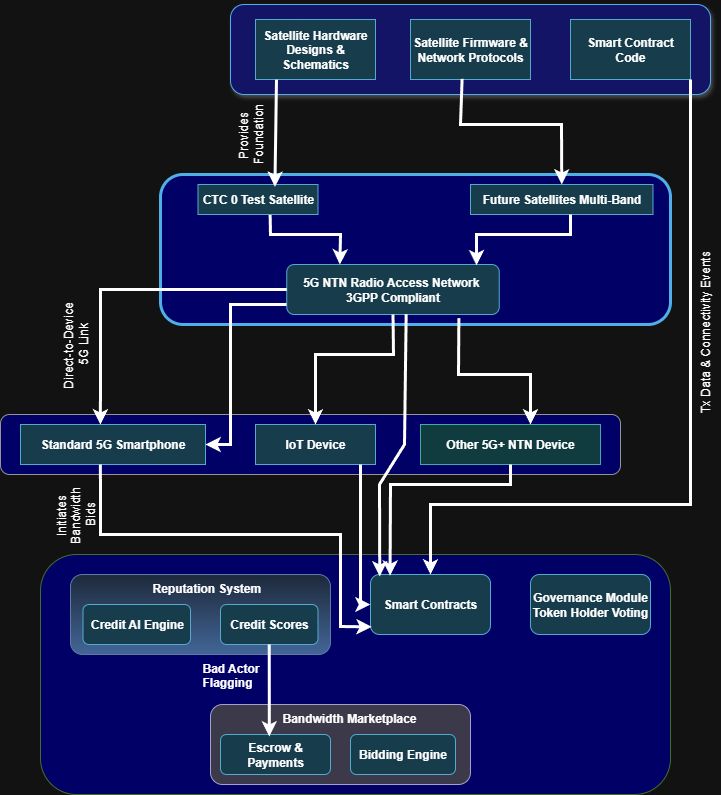
Spacecoin is the first decentralized physical infrastructure network powered by nanosatellites in a low-Earth orbit (LEO) The mission of Spacecoin is clear. “Connect the unconnected” by deploying an open, trustless blockchain-enabled satellite constellation.
Share
Hackernoon2025/09/21 23:13
UNI Gears Up for Next Bull Run After Surging 100% to $9.19

UNI Gears Up for Next Bull Run After Surging 100% to $9.19

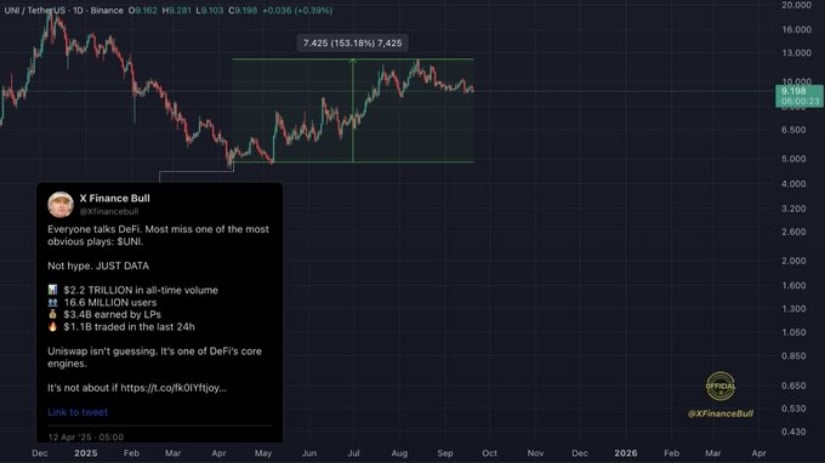
Uniswap has already doubled from its bottom and is now consolidating strongly around $9.19, showing resilience as one of DeFi’s core engines.
Share
Brave Newcoin2025/09/22 05:24