The post U.S. Treasury’s GENIUS Act Sets Stage for Privacy-First Crypto Regulation, Says a16z appeared first on Coinpedia Fintech News As the U.S. Treasury begins implementing the GENIUS Act, a landmark bill shaping the future of stablecoin and cryptocurrency regulation, Michele Korver, Head of Regulatory at a16z Crypto, has issued a powerful call for privacy-preserving innovation. In a detailed submission to the Treasury, Korver outlined how decentralized digital identity (DID) and zero-knowledge proofs (ZKPs) can …The post U.S. Treasury’s GENIUS Act Sets Stage for Privacy-First Crypto Regulation, Says a16z appeared first on Coinpedia Fintech News As the U.S. Treasury begins implementing the GENIUS Act, a landmark bill shaping the future of stablecoin and cryptocurrency regulation, Michele Korver, Head of Regulatory at a16z Crypto, has issued a powerful call for privacy-preserving innovation. In a detailed submission to the Treasury, Korver outlined how decentralized digital identity (DID) and zero-knowledge proofs (ZKPs) can …

U.S. Treasury’s GENIUS Act Sets Stage for Privacy-First Crypto Regulation, Says a16z
2025/11/12 14:28
3 min read
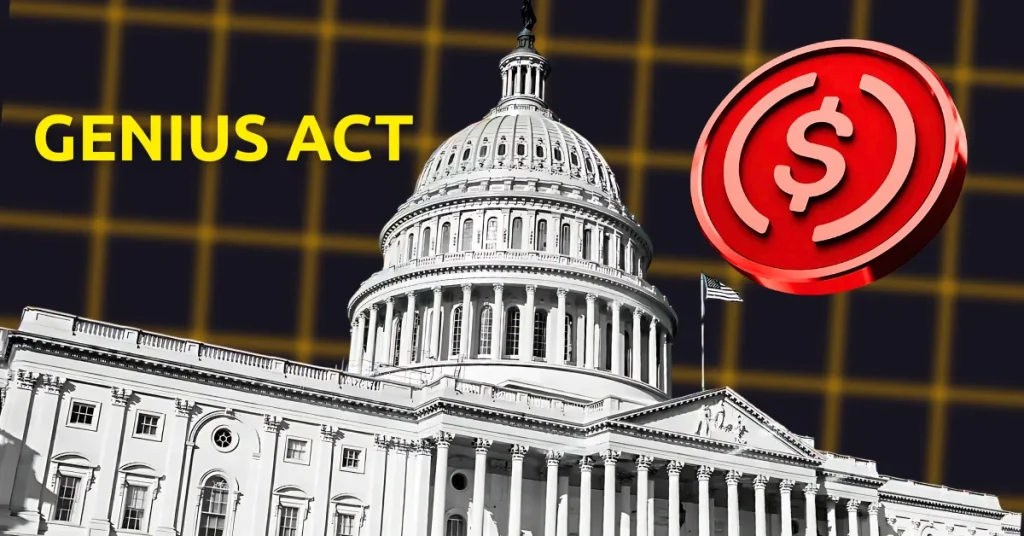
GENIUS Act

The post U.S. Treasury’s GENIUS Act Sets Stage for Privacy-First Crypto Regulation, Says a16z appeared first on Coinpedia Fintech News

As the U.S. Treasury begins implementing the GENIUS Act, a landmark bill shaping the future of stablecoin and cryptocurrency regulation, Michele Korver, Head of Regulatory at a16z Crypto, has issued a powerful call for privacy-preserving innovation.

In a detailed submission to the Treasury, Korver outlined how decentralized digital identity (DID) and zero-knowledge proofs (ZKPs) can revolutionize compliance, making the crypto ecosystem safer, more transparent, and less intrusive.

Building a Privacy-First Framework for Crypto Compliance

Korver emphasized that decentralized digital identity, supported by privacy-preserving cryptography, can achieve two critical goals simultaneously: strengthening national security and protecting civil liberties.

She argued that current AML/KYC rules are outdated, restricting financial institutions from adopting blockchain-based identity tools. a16z urged FinCEN to use its exceptive relief authority to modernize these frameworks, allowing both crypto firms and traditional financial institutions to verify users through digital wallets instead of centralized databases.

According to Korver, this approach would empower individuals to control their personal data while still giving regulators the visibility needed to prevent illicit activity. Technologies such as zero-knowledge proofs (ZKPs) and multi-party computation (MPC) enable verification without exposing private information, reducing risks of surveillance, hacking, and large-scale data breaches common in centralized systems.

Smarter Crypto Compliance, Not Stricter Surveillance

In its submission, a16z Crypto explained that decentralized identifiers (DIDs) and verifiable digital credentials (VDCs) can help meet obligations under the Bank Secrecy Act (BSA) and Anti-Money Laundering (AML) laws.

However, these innovations are not yet recognized under existing Customer Identification Program (CIP) rules. a16z urged FinCEN to officially recognize decentralized identity as a valid “non-documentary” compliance method and extend these exemptions to money service businesses (MSBs) a category that includes most crypto exchanges.

  • Also Read :
  •   Top Two ‘Whale Approved’ Altcoins To Stack For Massive December Rally
  •   ,

The firm also called for clearer definitions to distinguish decentralized stablecoins from payment stablecoins, a move that would promote fair competition and innovation-friendly oversight. a16z highlighted data showing that less than 1% of on-chain transactions are illicit, arguing that smart, tech-driven solutions, not tighter surveillance, are the key to effective compliance.

Crypto Community Backs a16z’s Privacy-First Approach

Following Korver’s remarks, crypto leaders and developers across X (Twitter) voiced strong support for privacy-first decentralized identity frameworks.

Notably, crypto user Phan Howellter and developers from Inception praised the initiative, calling it a major step toward responsible, innovation-driven digital finance.

Many see the GENIUS Act as a turning point for the U.S., offering a chance to lead globally in privacy-centric crypto regulation, proving that privacy, compliance, and progress can thrive together in the next chapter of digital asset oversight.

Never Miss a Beat in the Crypto World!

Stay ahead with breaking news, expert analysis, and real-time updates on the latest trends in Bitcoin, altcoins, DeFi, NFTs, and more.

bell icon Subscribe to News

FAQs

What is the GENIUS Act and why is it important for crypto?

The GENIUS Act is a U.S. Treasury initiative setting new standards for stablecoin and crypto regulation, focusing on innovation and financial safety.

How can decentralized digital identity improve crypto compliance?

It lets users verify identity through digital wallets, protecting privacy while meeting AML and KYC rules without centralized data storage.

What role do zero-knowledge proofs play in financial regulation?

ZKPs allow verification of user information without revealing personal data, reducing risks of hacking, leaks, and over-surveillance.

How could the GENIUS Act change crypto regulation in the U.S.?

It could modernize AML and stablecoin rules, promoting privacy-first innovation and making the U.S. a leader in responsible digital finance.

Market Opportunity
Union Logo
Union Price(U)
$0.001017
$0.001017$0.001017
+0.39%
USD
Union (U) Live Price Chart
Disclaimer: The articles reposted on this site are sourced from public platforms and are provided for informational purposes only. They do not necessarily reflect the views of MEXC. All rights remain with the original authors. If you believe any content infringes on third-party rights, please contact [email protected] for removal. MEXC makes no guarantees regarding the accuracy, completeness, or timeliness of the content and is not responsible for any actions taken based on the information provided. The content does not constitute financial, legal, or other professional advice, nor should it be considered a recommendation or endorsement by MEXC.

You May Also Like

Will Bitcoin Soar or Stumble Next?

Will Bitcoin Soar or Stumble Next?

The post Will Bitcoin Soar or Stumble Next? appeared on BitcoinEthereumNews.com. With the Federal Reserve’s forthcoming decision on interest rates causing speculation, Bitcoin‘s value remains stable at $115,400. China’s surprising maneuvers in the financial landscape have shifted expected market trends, prompting deeper examination by investors into analysts’ past evaluations regarding rate reductions. Continue Reading:Will Bitcoin Soar or Stumble Next? Source: https://en.bitcoinhaber.net/will-bitcoin-soar-or-stumble-next
Share
BitcoinEthereumNews2025/09/18 03:09
House Judiciary Rejects Vote To Subpoena Banks CEOs For Epstein Case

House Judiciary Rejects Vote To Subpoena Banks CEOs For Epstein Case

The post House Judiciary Rejects Vote To Subpoena Banks CEOs For Epstein Case appeared on BitcoinEthereumNews.com. Topline House Judiciary Committee Republicans blocked a Democrat effort Wednesday to subpoena a group of major banks as part of a renewed investigation into late sex offender Jeffrey Epstein’s financial ties. Congressman Jim Jordan, R-OH, is the chairman of the committee. (Photo by Nathan Posner/Anadolu via Getty Images) Anadolu via Getty Images Key Facts A near party-line vote squashed the effort to vote on a subpoena, with Rep. Thomas Massie, R-Ky., who is leading a separate effort to force the Justice Department to release more Epstein case materials, voting alongside Democrats. The vote, if successful, would have resulted in the issuing of subpoenas to JPMorgan Chase CEO Jamie Dimon, Bank of America CEO Brian Moynihan, Deutsche Bank CEO Christian Sewing and Bank of New York Mellon CEO Robin Vince. The subpoenas would have specifically looked into multiple reports that claimed the four banks flagged $1.5 billion in suspicious transactions linked to Epstein. The failed effort from Democrats followed an FBI oversight hearing in which agency director Kash Patel misleadingly claimed the FBI cannot release many of the files it has on Epstein. Get Forbes Breaking News Text Alerts: We’re launching text message alerts so you’ll always know the biggest stories shaping the day’s headlines. Text “Alerts” to (201) 335-0739 or sign up here. Crucial Quote Dimon, who attended a lunch with Senate Republicans before the vote, according to Politico, told reporters, “We regret any association with that man at all. And, of course, if it’s a legal requirement, we would conform to it. We have no issue with that.” Chief Critic “Republicans had the chance to subpoena the CEOs of JPMorgan, Bank of America, Deutsche Bank, and Bank of New York Mellon to expose Epstein’s money trail,” the House Judiciary Democrats said in a tweet. “Instead, they tried to bury…
Share
BitcoinEthereumNews2025/09/18 08:02
Zero-Trust Databases: Redefining the Future of Data Security

Zero-Trust Databases: Redefining the Future of Data Security

Sayantan Saha is a researcher in advanced computing and data protection. He explores how zero-trust databases are reshaping the landscape of information security.
Share
Hackernoon2025/09/18 14:19