The post LivLive ($LIVE) vs Cardano (ADA): Can Real-World Rewards Beat Established Blockchain Utility? (Best Crypto to Buy Today) appeared on BitcoinEthereumNews.com. The crypto landscape in 2025 is filled with both veteran giants and ambitious newcomers, but one of the most talked-about matchups right now is LivLive ($LIVE) versus Cardano (ADA). On one side stands Cardano, a blockchain veteran known for its research-driven foundation and strong ecosystem. On the other is LivLive, a fast-rising presale project that connects physical activity with digital rewards through wearable technology and augmented reality. Investors are beginning to ask a crucial question: can LivLive’s real-world earning model outperform the proven infrastructure of Cardano? The answer may reveal the direction of crypto’s next growth phase, utility that is lived, not just transacted. Cardano (ADA): A Veteran of Blockchain Utility Since launching in 2017, Cardano has built a reputation for technical precision, academic rigor, and long-term scalability. It was one of the first blockchain projects to integrate peer-reviewed research into its development roadmap, helping to create a secure, decentralized network capable of supporting smart contracts and DeFi ecosystems. ADA, Cardano’s native token, is widely used for staking, governance, and transaction fees within its ecosystem. The network hosts hundreds of dApps, decentralized exchanges, and NFT projects. Analysts view Cardano as a dependable layer-1 blockchain that prioritizes sustainability and scientific methodology over hype. However, despite its strong fundamentals, Cardano’s price growth has slowed in recent years compared to younger, faster-moving projects. While it remains a cornerstone of the crypto market, its growth is tied closely to the broader adoption of DeFi rather than direct user engagement or real-world interaction. This is where LivLive offers something entirely different. LivLive ($LIVE): Merging Lifestyle and Blockchain LivLive is redefining what blockchain can do by blending augmented reality (AR), wearable technology, and crypto rewards into one seamless ecosystem. Instead of relying solely on trading or staking, LivLive allows users to earn tokens by participating in… The post LivLive ($LIVE) vs Cardano (ADA): Can Real-World Rewards Beat Established Blockchain Utility? (Best Crypto to Buy Today) appeared on BitcoinEthereumNews.com. The crypto landscape in 2025 is filled with both veteran giants and ambitious newcomers, but one of the most talked-about matchups right now is LivLive ($LIVE) versus Cardano (ADA). On one side stands Cardano, a blockchain veteran known for its research-driven foundation and strong ecosystem. On the other is LivLive, a fast-rising presale project that connects physical activity with digital rewards through wearable technology and augmented reality. Investors are beginning to ask a crucial question: can LivLive’s real-world earning model outperform the proven infrastructure of Cardano? The answer may reveal the direction of crypto’s next growth phase, utility that is lived, not just transacted. Cardano (ADA): A Veteran of Blockchain Utility Since launching in 2017, Cardano has built a reputation for technical precision, academic rigor, and long-term scalability. It was one of the first blockchain projects to integrate peer-reviewed research into its development roadmap, helping to create a secure, decentralized network capable of supporting smart contracts and DeFi ecosystems. ADA, Cardano’s native token, is widely used for staking, governance, and transaction fees within its ecosystem. The network hosts hundreds of dApps, decentralized exchanges, and NFT projects. Analysts view Cardano as a dependable layer-1 blockchain that prioritizes sustainability and scientific methodology over hype. However, despite its strong fundamentals, Cardano’s price growth has slowed in recent years compared to younger, faster-moving projects. While it remains a cornerstone of the crypto market, its growth is tied closely to the broader adoption of DeFi rather than direct user engagement or real-world interaction. This is where LivLive offers something entirely different. LivLive ($LIVE): Merging Lifestyle and Blockchain LivLive is redefining what blockchain can do by blending augmented reality (AR), wearable technology, and crypto rewards into one seamless ecosystem. Instead of relying solely on trading or staking, LivLive allows users to earn tokens by participating in…

LivLive ($LIVE) vs Cardano (ADA): Can Real-World Rewards Beat Established Blockchain Utility? (Best Crypto to Buy Today)

The crypto landscape in 2025 is filled with both veteran giants and ambitious newcomers, but one of the most talked-about matchups right now is LivLive ($LIVE) versus Cardano (ADA). On one side stands Cardano, a blockchain veteran known for its research-driven foundation and strong ecosystem. On the other is LivLive, a fast-rising presale project that connects physical activity with digital rewards through wearable technology and augmented reality.

Investors are beginning to ask a crucial question: can LivLive’s real-world earning model outperform the proven infrastructure of Cardano? The answer may reveal the direction of crypto’s next growth phase, utility that is lived, not just transacted.

Cardano (ADA): A Veteran of Blockchain Utility

Since launching in 2017, Cardano has built a reputation for technical precision, academic rigor, and long-term scalability. It was one of the first blockchain projects to integrate peer-reviewed research into its development roadmap, helping to create a secure, decentralized network capable of supporting smart contracts and DeFi ecosystems.

ADA, Cardano’s native token, is widely used for staking, governance, and transaction fees within its ecosystem. The network hosts hundreds of dApps, decentralized exchanges, and NFT projects. Analysts view Cardano as a dependable layer-1 blockchain that prioritizes sustainability and scientific methodology over hype.

However, despite its strong fundamentals, Cardano’s price growth has slowed in recent years compared to younger, faster-moving projects. While it remains a cornerstone of the crypto market, its growth is tied closely to the broader adoption of DeFi rather than direct user engagement or real-world interaction. This is where LivLive offers something entirely different.

LivLive ($LIVE): Merging Lifestyle and Blockchain

LivLive is redefining what blockchain can do by blending augmented reality (AR), wearable technology, and crypto rewards into one seamless ecosystem. Instead of relying solely on trading or staking, LivLive allows users to earn tokens by participating in verified real-world activities. These can include AR-based city quests, shopping experiences, or attending brand-sponsored events.

Each action is tracked through a wearable wristband, ensuring that every movement is authenticated and rewarded transparently on-chain. This proof-of-activity model creates a dynamic link between the physical and digital worlds, making crypto part of daily life rather than a separate investment category.

The LivLive presale has already raised over $2,077,000 from 230 participants, with tokens currently priced at $0.02. The launch target sits at $0.25, promising early investors a potential 1,150 percent return. To encourage participation, LivLive offers two exclusive promo codes: EARLY100, which doubles token allocations up to $2,000, and BOOST200, which triples allocations for higher contributions.

A $5,000 investment under BOOST200 secures 750,000 tokens, which could be worth $187,500 if $LIVE reaches its launch target. Every presale investor also gains entry into a $2.5 million Treasure Vault containing more than 300 NFT and token prizes, including a $1 million ICON jackpot.

Real-World Rewards vs Traditional Blockchain Utility

Cardano’s value lies in its established infrastructure and academic credibility, while LivLive focuses on user participation and lifestyle integration. This difference reflects a growing divide in the crypto market between foundational blockchains and application-driven ecosystems.

Cardano powers DeFi platforms, staking protocols, and digital identity projects, making it essential to blockchain architecture. LivLive, however, introduces an entirely new model of engagement by turning motion, exploration, and social interaction into tangible financial rewards. This makes it one of the few projects directly connecting blockchain to everyday life.

Investors drawn to Cardano appreciate its long-term security and network stability. Those flocking to LivLive see the chance to profit from an entirely new category of crypto: activity-based finance. For many, LivLive’s model represents a shift toward the next stage of adoption, where users earn not just by trading or staking but by participating in real, measurable ways.

Market Outlook: Innovation Versus Longevity

Market analysts agree that both LivLive and Cardano have staying power, but for different reasons. Cardano remains one of the top-ten blockchains by market capitalization and is favored by institutions for its academic rigor and consistent updates. Its slow and steady approach ensures long-term sustainability, though it lacks the viral momentum that fuels faster growth.

LivLive, in contrast, operates like an early-stage disruptor. Its beta platform and wearable integration appeal to the growing demographic of younger, mobile-first users who want to blend lifestyle and technology. The success of similar “move-to-earn” models proves that investors are ready for projects that make blockchain both fun and functional.

With a live presale, generous token multipliers, and a real-world feedback loop, LivLive has all the ingredients to become one of the top crypto presales of 2025. As analysts continue to highlight its early momentum, it is quickly gaining recognition as one of the best crypto investments to buy right now.

Conclusion: The New Era of Utility

The comparison between LivLive and Cardano highlights the evolution of blockchain itself. Cardano built the foundation for secure, scalable networks, while LivLive is building the bridge between crypto and daily experience. Both serve important roles, but LivLive offers something fresh and accessible for the next wave of users entering the market.

At a presale price of $0.02, with bonuses up to 200% extra tokens through EARLY100 and BOOST200, LivLive presents a unique opportunity for investors seeking exposure to a project with both innovation and earning potential. Each presale purchase also provides access to the $2.5 million Treasure Vault, a bonus that further fuels investor excitement.

For anyone searching for the best crypto to buy today, LivLive stands out as a rare combination of technology, lifestyle, and financial growth. It may not yet have Cardano’s established reputation, but its momentum and creativity suggest it could become one of 2025’s breakout success stories.

For More Information:

Website: http://www.livlive.com 

X: https://x.com/livliveapp  

Telegram Chat: https://t.me/livliveapp 

Source: https://blockchainreporter.net/livlive-live-vs-cardano-ada-can-real-world-rewards-beat-established-blockchain-utility-best-crypto-to-buy-today/

Market Opportunity
SecondLive Logo
SecondLive Price(LIVE)
$0.0000391
$0.0000391$0.0000391
-4.40%
USD
SecondLive (LIVE) Live Price Chart
Disclaimer: The articles reposted on this site are sourced from public platforms and are provided for informational purposes only. They do not necessarily reflect the views of MEXC. All rights remain with the original authors. If you believe any content infringes on third-party rights, please contact [email protected] for removal. MEXC makes no guarantees regarding the accuracy, completeness, or timeliness of the content and is not responsible for any actions taken based on the information provided. The content does not constitute financial, legal, or other professional advice, nor should it be considered a recommendation or endorsement by MEXC.

You May Also Like

Cashing In On University Patents Means Giving Up On Our Innovation Future

Cashing In On University Patents Means Giving Up On Our Innovation Future

The post Cashing In On University Patents Means Giving Up On Our Innovation Future appeared on BitcoinEthereumNews.com. “It’s a raid on American innovation that would deliver pennies to the Treasury while kneecapping the very engine of our economic and medical progress,” writes Pipes. Getty Images Washington is addicted to taxing success. Now, Commerce Secretary Howard Lutnick is floating a plan to skim half the patent earnings from inventions developed at universities with federal funding. It’s being sold as a way to shore up programs like Social Security. In reality, it’s a raid on American innovation that would deliver pennies to the Treasury while kneecapping the very engine of our economic and medical progress. Yes, taxpayer dollars support early-stage research. But the real payoff comes later—in the jobs created, cures discovered, and industries launched when universities and private industry turn those discoveries into real products. By comparison, the sums at stake in patent licensing are trivial. Universities collectively earn only about $3.6 billion annually in patent income—less than the federal government spends on Social Security in a single day. Even confiscating half would barely register against a $6 trillion federal budget. And yet the damage from such a policy would be anything but trivial. The true return on taxpayer investment isn’t in licensing checks sent to Washington, but in the downstream economic activity that federally supported research unleashes. Thanks to the bipartisan Bayh-Dole Act of 1980, universities and private industry have powerful incentives to translate early-stage discoveries into real-world products. Before Bayh-Dole, the government hoarded patents from federally funded research, and fewer than 5% were ever licensed. Once universities could own and license their own inventions, innovation exploded. The result has been one of the best returns on investment in government history. Since 1996, university research has added nearly $2 trillion to U.S. industrial output, supported 6.5 million jobs, and launched more than 19,000 startups. Those companies pay…
Share
BitcoinEthereumNews2025/09/18 03:26
China Blocks Nvidia’s RTX Pro 6000D as Local Chips Rise

China Blocks Nvidia’s RTX Pro 6000D as Local Chips Rise

The post China Blocks Nvidia’s RTX Pro 6000D as Local Chips Rise appeared on BitcoinEthereumNews.com. China Blocks Nvidia’s RTX Pro 6000D as Local Chips Rise China’s internet regulator has ordered the country’s biggest technology firms, including Alibaba and ByteDance, to stop purchasing Nvidia’s RTX Pro 6000D GPUs. According to the Financial Times, the move shuts down the last major channel for mass supplies of American chips to the Chinese market. Why Beijing Halted Nvidia Purchases Chinese companies had planned to buy tens of thousands of RTX Pro 6000D accelerators and had already begun testing them in servers. But regulators intervened, halting the purchases and signaling stricter controls than earlier measures placed on Nvidia’s H20 chip. Image: Nvidia An audit compared Huawei and Cambricon processors, along with chips developed by Alibaba and Baidu, against Nvidia’s export-approved products. Regulators concluded that Chinese chips had reached performance levels comparable to the restricted U.S. models. This assessment pushed authorities to advise firms to rely more heavily on domestic processors, further tightening Nvidia’s already limited position in China. China’s Drive Toward Tech Independence The decision highlights Beijing’s focus on import substitution — developing self-sufficient chip production to reduce reliance on U.S. supplies. “The signal is now clear: all attention is focused on building a domestic ecosystem,” said a representative of a leading Chinese tech company. Nvidia had unveiled the RTX Pro 6000D in July 2025 during CEO Jensen Huang’s visit to Beijing, in an attempt to keep a foothold in China after Washington restricted exports of its most advanced chips. But momentum is shifting. Industry sources told the Financial Times that Chinese manufacturers plan to triple AI chip production next year to meet growing demand. They believe “domestic supply will now be sufficient without Nvidia.” What It Means for the Future With Huawei, Cambricon, Alibaba, and Baidu stepping up, China is positioning itself for long-term technological independence. Nvidia, meanwhile, faces…
Share
BitcoinEthereumNews2025/09/18 01:37
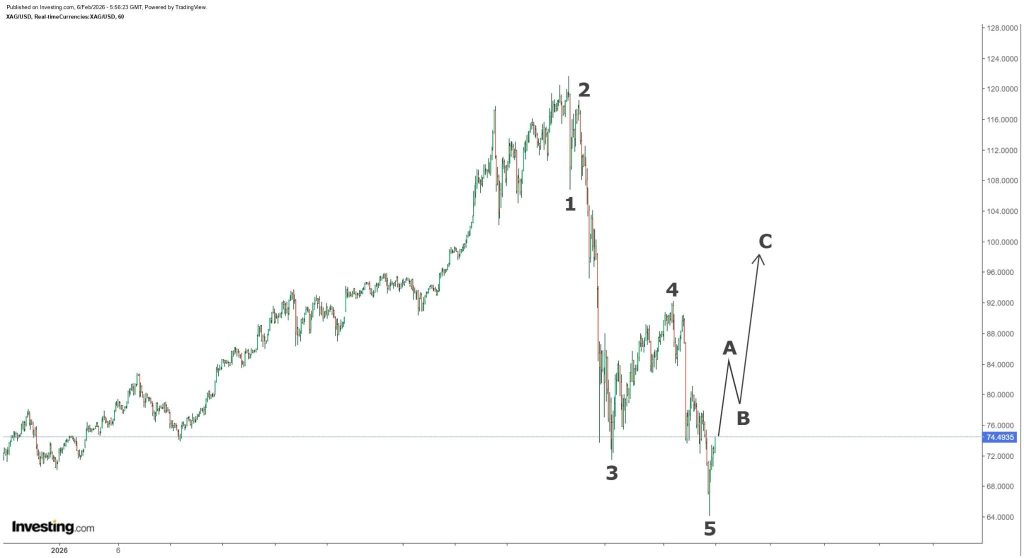
Silver Price Crash Is Over “For Real This Time,” Analyst Predicts a Surge Back Above $90

Silver Price Crash Is Over “For Real This Time,” Analyst Predicts a Surge Back Above $90

Silver has been taking a beating lately, and the Silver price hasn’t exactly been acting like a safe haven. After running up into the highs, the whole move reversed
Share
Captainaltcoin2026/02/07 03:15