Mutuum Finance has raised more than $18.5 million in its presale. The project is transitioning from pure development to the final testing phase before mainnet release. Mutuum Finance is designed to bring efficiency and transparency to DeFi lending markets.Mutuum Finance has raised more than $18.5 million in its presale. The project is transitioning from pure development to the final testing phase before mainnet release. Mutuum Finance is designed to bring efficiency and transparency to DeFi lending markets.

Ethereum-Based Protocol Mutuum Finance (MUTM) Crosses $18.5 Million in Funding as V1 Launch Nears

2025/11/14 15:24
5 min read

Mutuum Finance (MUTM) continues to make waves in the decentralized finance (DeFi) space as it crosses a major funding milestone. Built on Ethereum, the project has now raised more than $18.5 million, attracting over 17,850 holders and securing its place as one of the most closely followed new crypto launches of 2025.

With its V1 testnet scheduled to go live on the Sepolia network in Q4 2025, Mutuum Finance is transitioning from pure development to the final testing phase before mainnet release. This marks a major turning point for a protocol that has spent months building a comprehensive foundation for on-chain lending and borrowing.

A Steady Rise Through the Presale

Mutuum Finance launched its presale in early 2025, using a fixed-price, fixed-allocation model designed to ensure transparency and fairness. Each phase has a set number of tokens available, and as those allocations sell out, the price automatically increases in the next stage.

The token, MUTM, began at $0.01 in Phase 1 and has now reached $0.035 in Phase 6, representing a nearly 3x increase since the start of the year. According to official data, Phase 6 is already more than 85% allocated, signaling strong investor confidence ahead of the upcoming V1 testnet launch.

The structure has not only provided clarity for early buyers but also sustained the project’s growth over time. Each stage of the presale has sold out faster than the last, creating growing demand and a sense of urgency as the available supply continues to shrink.

Building a Functional DeFi Ecosystem

At its core, Mutuum Finance is designed to bring efficiency and transparency to DeFi lending markets. The protocol allows users to lend or borrow digital assets while maintaining control over their funds through smart contracts, automated systems that execute transactions without intermediaries.

When users deposit assets, they receive mtTokens, interest-bearing tokens that automatically accumulate yield over time. These tokens represent the user’s share of the liquidity pool and can be redeemed for both the original deposit and earned interest.

Borrowers, on the other hand, can take loans by providing collateral, with parameters such as loan-to-value (LTV) ratios and liquidation thresholds carefully adjusted to maintain system health. Mutuum Finance also integrates automated liquidations to protect the pool from under-collateralized positions, ensuring stability even during volatile market movements.

Phase 2: Building Mutuum Finance

Mutuum Finance is currently deep into Phase 2 of its roadmap, known as Building Mutuum. This stage focuses on completing the project’s technical core, including smart contract coding and testing, DApp front-end and back-end development, feature integration, and risk management systems.

The team is also finalizing analytics tools that will track key metrics like utilization rates, lending yields, and market performance. These tools are expected to help users make more informed decisions while interacting with the protocol.

Once Phase 2 is complete, the project will move into Phase 3: Finalizing Mutuum, which includes bug testing, documentation, and multiple layers of external security review. The V1 Sepolia testnet is the final step before the project’s mainnet deployment, giving early users the opportunity to experience the platform in a live, simulated environment.

Transparency and Security

In DeFi, security and trust are essential. Mutuum Finance has completed a full smart contract audit by CertiK, one of the most respected blockchain security firms in the industry. The protocol received a 90/100 Token Scan score, confirming that its code meets high standards for reliability and safety.

The team has also implemented a $50,000 bug bounty program, encouraging white-hat developers to test the system and report potential issues before the full launch. This open approach not only improves the platform’s defenses but also demonstrates a strong commitment to transparency.

Such steps have built confidence among holders and participants, further driving demand throughout the presale.

Community Engagement and Accessibility

One of the standout features of Mutuum Finance is its approach to community engagement. The project runs a 24-hour leaderboard, which rewards the top daily contributor with $500 worth of MUTM tokens. This mechanism keeps community activity high, adds transparency to the presale process, and has become a defining element of the project’s growth.

In addition, MUTM tokens can now be purchased directly using card payments, removing traditional crypto barriers and allowing new users to join the ecosystem easily. This accessibility has helped expand the community base and attract participants beyond typical crypto circles.

With $18.5 million raised, nearly 18,000 holders, and a robust roadmap, Mutuum Finance (MUTM) has emerged as one of the top cryptos to watch heading into 2026. Its focus on sustainable yield, secure lending mechanisms, and transparent governance has earned it recognition across the new cryptocurrency landscape.

The combination of audited smart contracts, strong presale performance, and real development milestones shows that Mutuum Finance is not just another presale token, it’s a fully developing protocol approaching operational readiness.

As the DeFi market continues to expand, Mutuum Finance’s blend of innovation, transparency, and community growth positions it as one of the most promising DeFi crypto projects of 2025.

For more information about Mutuum Finance (MUTM) visit the links below:

Website: https://www.mutuum.com

Linktree: https://linktr.ee/mutuumfinance

:::tip This story was published as a press release by Btcwire under HackerNoon’s Business Blogging Program. Do Your Own Research before making any financial decision.

:::

\ \ \ \ \

Market Opportunity
Moonveil Logo
Moonveil Price(MORE)
$0.0006499
$0.0006499$0.0006499
-1.23%
USD
Moonveil (MORE) Live Price Chart
Disclaimer: The articles reposted on this site are sourced from public platforms and are provided for informational purposes only. They do not necessarily reflect the views of MEXC. All rights remain with the original authors. If you believe any content infringes on third-party rights, please contact [email protected] for removal. MEXC makes no guarantees regarding the accuracy, completeness, or timeliness of the content and is not responsible for any actions taken based on the information provided. The content does not constitute financial, legal, or other professional advice, nor should it be considered a recommendation or endorsement by MEXC.

You May Also Like

Cashing In On University Patents Means Giving Up On Our Innovation Future

Cashing In On University Patents Means Giving Up On Our Innovation Future

The post Cashing In On University Patents Means Giving Up On Our Innovation Future appeared on BitcoinEthereumNews.com. “It’s a raid on American innovation that would deliver pennies to the Treasury while kneecapping the very engine of our economic and medical progress,” writes Pipes. Getty Images Washington is addicted to taxing success. Now, Commerce Secretary Howard Lutnick is floating a plan to skim half the patent earnings from inventions developed at universities with federal funding. It’s being sold as a way to shore up programs like Social Security. In reality, it’s a raid on American innovation that would deliver pennies to the Treasury while kneecapping the very engine of our economic and medical progress. Yes, taxpayer dollars support early-stage research. But the real payoff comes later—in the jobs created, cures discovered, and industries launched when universities and private industry turn those discoveries into real products. By comparison, the sums at stake in patent licensing are trivial. Universities collectively earn only about $3.6 billion annually in patent income—less than the federal government spends on Social Security in a single day. Even confiscating half would barely register against a $6 trillion federal budget. And yet the damage from such a policy would be anything but trivial. The true return on taxpayer investment isn’t in licensing checks sent to Washington, but in the downstream economic activity that federally supported research unleashes. Thanks to the bipartisan Bayh-Dole Act of 1980, universities and private industry have powerful incentives to translate early-stage discoveries into real-world products. Before Bayh-Dole, the government hoarded patents from federally funded research, and fewer than 5% were ever licensed. Once universities could own and license their own inventions, innovation exploded. The result has been one of the best returns on investment in government history. Since 1996, university research has added nearly $2 trillion to U.S. industrial output, supported 6.5 million jobs, and launched more than 19,000 startups. Those companies pay…
Share
BitcoinEthereumNews2025/09/18 03:26
China Blocks Nvidia’s RTX Pro 6000D as Local Chips Rise
China Blocks Nvidia’s RTX Pro 6000D as Local Chips Rise

The post China Blocks Nvidia’s RTX Pro 6000D as Local Chips Rise appeared on BitcoinEthereumNews.com. China Blocks Nvidia’s RTX Pro 6000D as Local Chips Rise China’s internet regulator has ordered the country’s biggest technology firms, including Alibaba and ByteDance, to stop purchasing Nvidia’s RTX Pro 6000D GPUs. According to the Financial Times, the move shuts down the last major channel for mass supplies of American chips to the Chinese market. Why Beijing Halted Nvidia Purchases Chinese companies had planned to buy tens of thousands of RTX Pro 6000D accelerators and had already begun testing them in servers. But regulators intervened, halting the purchases and signaling stricter controls than earlier measures placed on Nvidia’s H20 chip. Image: Nvidia An audit compared Huawei and Cambricon processors, along with chips developed by Alibaba and Baidu, against Nvidia’s export-approved products. Regulators concluded that Chinese chips had reached performance levels comparable to the restricted U.S. models. This assessment pushed authorities to advise firms to rely more heavily on domestic processors, further tightening Nvidia’s already limited position in China. China’s Drive Toward Tech Independence The decision highlights Beijing’s focus on import substitution — developing self-sufficient chip production to reduce reliance on U.S. supplies. “The signal is now clear: all attention is focused on building a domestic ecosystem,” said a representative of a leading Chinese tech company. Nvidia had unveiled the RTX Pro 6000D in July 2025 during CEO Jensen Huang’s visit to Beijing, in an attempt to keep a foothold in China after Washington restricted exports of its most advanced chips. But momentum is shifting. Industry sources told the Financial Times that Chinese manufacturers plan to triple AI chip production next year to meet growing demand. They believe “domestic supply will now be sufficient without Nvidia.” What It Means for the Future With Huawei, Cambricon, Alibaba, and Baidu stepping up, China is positioning itself for long-term technological independence. Nvidia, meanwhile, faces…
Share
BitcoinEthereumNews2025/09/18 01:37
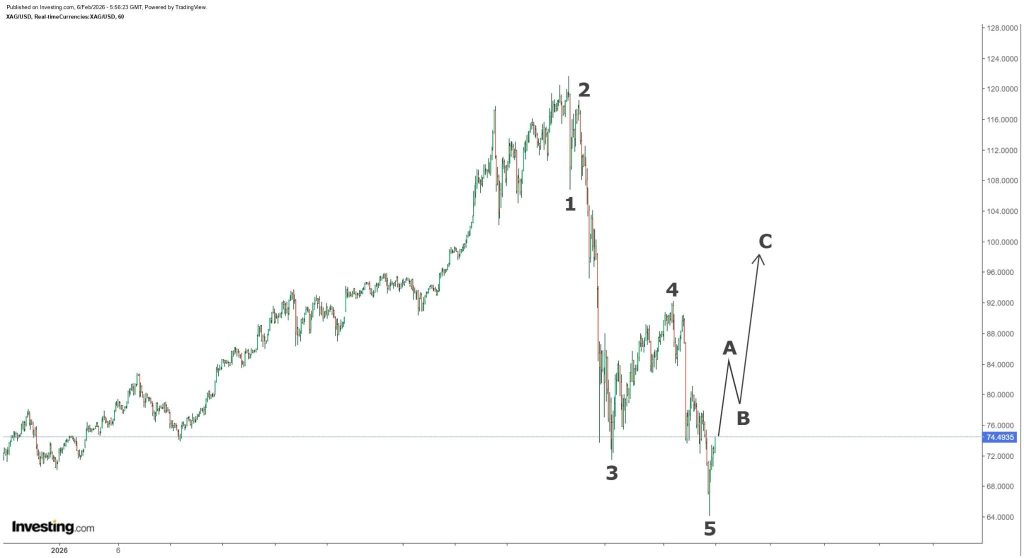
Silver Price Crash Is Over “For Real This Time,” Analyst Predicts a Surge Back Above $90

Silver Price Crash Is Over “For Real This Time,” Analyst Predicts a Surge Back Above $90

Silver has been taking a beating lately, and the Silver price hasn’t exactly been acting like a safe haven. After running up into the highs, the whole move reversed
Share
Captainaltcoin2026/02/07 03:15