South Korea is once again facing mounting uncertainty over its long-delayed crypto tax regime, as officials warn that the country remains far from prepared to implement virtual asset taxation by the scheduled January 2027 start date. Despite five years of political debate, technical planning, and repeated postponements, key infrastructure and regulatory guidelines are still missing, raising concerns that a fourth delay may be inevitable. Korea’s 2027 Virtual Asset Tax Plan Still Lacks Infrastructure, Analysts Warn The country’s virtual asset tax law was first approved in 2020 and initially set to begin in 2022. But the rollout has now been pushed back three times, with deadlines shifting from 2022 to 2023, then 2025, and now 2027. Officials and researchers say the reasons remain largely unchanged: unclear tax rules, absent reporting systems, and persistent political deadlock. Analysts say Korea is falling behind regional peers. Japan recently moved to classify more than 100 cryptocurrencies on domestic exchanges as financial products, which will subject profits to roughly a 20% tax rate, similar to stocks. By contrast, Korea plans a 22% tax on annual virtual asset gains above 2.5 million won, but the lack of a functioning framework continues to stall implementation. Kim Kab-lae of the Korea Capital Market Institute called the repeated delays “unprecedented,” arguing that few major economies have postponed a tax law this many times. Eleven months after the last deferral, he said, authorities have still not established the necessary infrastructure. No public-private task force has been formed, and virtual asset taxation remains absent from the national tax administration plan. Regulators have not clarified how income from airdrops, staking rewards, mining, lending, or hard forks will be taxed. Systems for gathering transaction data, verifying taxpayers, and tracking overseas activity are also incomplete. As a result, the 2025 tax bill introduced in September contains no significant updates, largely replicating the wording of the deferred 2024 framework. Korea Races to Align With OECD Rules as Crypto Tax Ambiguity Raises Red Flags Market concerns are growing, especially as retail participation in crypto reaches record highs. According to the Financial Services Commission, verified users eligible to trade on domestic exchanges reached 10.77 million in the first half of 2025. Analysts warn that launching a tax regime without clear rules could expose the government to legal disputes. Political conflict has contributed to the delays. The ruling People’s Power Party has pushed for postponements to protect market growth and avoid driving investors to foreign exchanges, while the opposition Democratic Party initially resisted the deferrals before ultimately supporting the latest delay. Some lawmakers want more time to align with the OECD’s Crypto-Asset Reporting Framework, which enables automatic cross-border sharing of crypto transaction data starting in 2027. Tax enforcement around crypto has intensified, showing the government’s determination to strengthen compliance even without a finalized tax code. The National Tax Service has warned it can seize cold wallets from taxpayers who fail to settle debts, stating that blockchain analysis tools now allow authorities to monitor transaction histories. In recent years, officials have confiscated more than 146 billion won in crypto from over 14,000 delinquent taxpayers. Local governments have also begun taking direct action. Cheongju city announced that it seized crypto from 203 residents since 2021 and liquidated the assets through its own exchange account. Other districts, including Seoul’s Gangnam area, have expanded their seizure programs as well. Authorities expect the move to reduce tax evasion but note gaps remain, particularly with users on foreign or decentralized platforms. Researchers warn that failure to resolve remaining issues soon could undermine the 2027 launch date. Park Joo-cheol of the Korea Institute of Public Finance said lingering ambiguities could trigger legal challenges once taxation begins. He urged policymakers to use the remaining runway to clarify definitions and prepare for cross-border data-sharing obligationsSouth Korea is once again facing mounting uncertainty over its long-delayed crypto tax regime, as officials warn that the country remains far from prepared to implement virtual asset taxation by the scheduled January 2027 start date. Despite five years of political debate, technical planning, and repeated postponements, key infrastructure and regulatory guidelines are still missing, raising concerns that a fourth delay may be inevitable. Korea’s 2027 Virtual Asset Tax Plan Still Lacks Infrastructure, Analysts Warn The country’s virtual asset tax law was first approved in 2020 and initially set to begin in 2022. But the rollout has now been pushed back three times, with deadlines shifting from 2022 to 2023, then 2025, and now 2027. Officials and researchers say the reasons remain largely unchanged: unclear tax rules, absent reporting systems, and persistent political deadlock. Analysts say Korea is falling behind regional peers. Japan recently moved to classify more than 100 cryptocurrencies on domestic exchanges as financial products, which will subject profits to roughly a 20% tax rate, similar to stocks. By contrast, Korea plans a 22% tax on annual virtual asset gains above 2.5 million won, but the lack of a functioning framework continues to stall implementation. Kim Kab-lae of the Korea Capital Market Institute called the repeated delays “unprecedented,” arguing that few major economies have postponed a tax law this many times. Eleven months after the last deferral, he said, authorities have still not established the necessary infrastructure. No public-private task force has been formed, and virtual asset taxation remains absent from the national tax administration plan. Regulators have not clarified how income from airdrops, staking rewards, mining, lending, or hard forks will be taxed. Systems for gathering transaction data, verifying taxpayers, and tracking overseas activity are also incomplete. As a result, the 2025 tax bill introduced in September contains no significant updates, largely replicating the wording of the deferred 2024 framework. Korea Races to Align With OECD Rules as Crypto Tax Ambiguity Raises Red Flags Market concerns are growing, especially as retail participation in crypto reaches record highs. According to the Financial Services Commission, verified users eligible to trade on domestic exchanges reached 10.77 million in the first half of 2025. Analysts warn that launching a tax regime without clear rules could expose the government to legal disputes. Political conflict has contributed to the delays. The ruling People’s Power Party has pushed for postponements to protect market growth and avoid driving investors to foreign exchanges, while the opposition Democratic Party initially resisted the deferrals before ultimately supporting the latest delay. Some lawmakers want more time to align with the OECD’s Crypto-Asset Reporting Framework, which enables automatic cross-border sharing of crypto transaction data starting in 2027. Tax enforcement around crypto has intensified, showing the government’s determination to strengthen compliance even without a finalized tax code. The National Tax Service has warned it can seize cold wallets from taxpayers who fail to settle debts, stating that blockchain analysis tools now allow authorities to monitor transaction histories. In recent years, officials have confiscated more than 146 billion won in crypto from over 14,000 delinquent taxpayers. Local governments have also begun taking direct action. Cheongju city announced that it seized crypto from 203 residents since 2021 and liquidated the assets through its own exchange account. Other districts, including Seoul’s Gangnam area, have expanded their seizure programs as well. Authorities expect the move to reduce tax evasion but note gaps remain, particularly with users on foreign or decentralized platforms. Researchers warn that failure to resolve remaining issues soon could undermine the 2027 launch date. Park Joo-cheol of the Korea Institute of Public Finance said lingering ambiguities could trigger legal challenges once taxation begins. He urged policymakers to use the remaining runway to clarify definitions and prepare for cross-border data-sharing obligations

Korea Faces Fresh Crypto Tax Chaos as 2027 Deadline Nears: Report

2025/11/18 18:35
4 min read

South Korea is once again facing mounting uncertainty over its long-delayed crypto tax regime, as officials warn that the country remains far from prepared to implement virtual asset taxation by the scheduled January 2027 start date.

Despite five years of political debate, technical planning, and repeated postponements, key infrastructure and regulatory guidelines are still missing, raising concerns that a fourth delay may be inevitable.

Korea’s 2027 Virtual Asset Tax Plan Still Lacks Infrastructure, Analysts Warn

The country’s virtual asset tax law was first approved in 2020 and initially set to begin in 2022. But the rollout has now been pushed back three times, with deadlines shifting from 2022 to 2023, then 2025, and now 2027.

Officials and researchers say the reasons remain largely unchanged: unclear tax rules, absent reporting systems, and persistent political deadlock.

Analysts say Korea is falling behind regional peers. Japan recently moved to classify more than 100 cryptocurrencies on domestic exchanges as financial products, which will subject profits to roughly a 20% tax rate, similar to stocks.

By contrast, Korea plans a 22% tax on annual virtual asset gains above 2.5 million won, but the lack of a functioning framework continues to stall implementation.

Kim Kab-lae of the Korea Capital Market Institute called the repeated delays “unprecedented,” arguing that few major economies have postponed a tax law this many times.

Eleven months after the last deferral, he said, authorities have still not established the necessary infrastructure. No public-private task force has been formed, and virtual asset taxation remains absent from the national tax administration plan.

Regulators have not clarified how income from airdrops, staking rewards, mining, lending, or hard forks will be taxed.

Systems for gathering transaction data, verifying taxpayers, and tracking overseas activity are also incomplete.

As a result, the 2025 tax bill introduced in September contains no significant updates, largely replicating the wording of the deferred 2024 framework.

Korea Races to Align With OECD Rules as Crypto Tax Ambiguity Raises Red Flags

Market concerns are growing, especially as retail participation in crypto reaches record highs.

According to the Financial Services Commission, verified users eligible to trade on domestic exchanges reached 10.77 million in the first half of 2025.

Analysts warn that launching a tax regime without clear rules could expose the government to legal disputes.

Political conflict has contributed to the delays. The ruling People’s Power Party has pushed for postponements to protect market growth and avoid driving investors to foreign exchanges, while the opposition Democratic Party initially resisted the deferrals before ultimately supporting the latest delay.

Some lawmakers want more time to align with the OECD’s Crypto-Asset Reporting Framework, which enables automatic cross-border sharing of crypto transaction data starting in 2027.

Tax enforcement around crypto has intensified, showing the government’s determination to strengthen compliance even without a finalized tax code.

The National Tax Service has warned it can seize cold wallets from taxpayers who fail to settle debts, stating that blockchain analysis tools now allow authorities to monitor transaction histories.

In recent years, officials have confiscated more than 146 billion won in crypto from over 14,000 delinquent taxpayers.

Local governments have also begun taking direct action. Cheongju city announced that it seized crypto from 203 residents since 2021 and liquidated the assets through its own exchange account.

Other districts, including Seoul’s Gangnam area, have expanded their seizure programs as well.

Authorities expect the move to reduce tax evasion but note gaps remain, particularly with users on foreign or decentralized platforms.

Researchers warn that failure to resolve remaining issues soon could undermine the 2027 launch date.

Park Joo-cheol of the Korea Institute of Public Finance said lingering ambiguities could trigger legal challenges once taxation begins.

He urged policymakers to use the remaining runway to clarify definitions and prepare for cross-border data-sharing obligations.

Disclaimer: The articles reposted on this site are sourced from public platforms and are provided for informational purposes only. They do not necessarily reflect the views of MEXC. All rights remain with the original authors. If you believe any content infringes on third-party rights, please contact [email protected] for removal. MEXC makes no guarantees regarding the accuracy, completeness, or timeliness of the content and is not responsible for any actions taken based on the information provided. The content does not constitute financial, legal, or other professional advice, nor should it be considered a recommendation or endorsement by MEXC.

You May Also Like

Satoshi-Era Mt. Gox’s 1,000 Bitcoin Wallet Suddenly Reactivated
Satoshi-Era Mt. Gox’s 1,000 Bitcoin Wallet Suddenly Reactivated

The post Satoshi-Era Mt. Gox’s 1,000 Bitcoin Wallet Suddenly Reactivated appeared on BitcoinEthereumNews.com. X account @SaniExp, which belongs to the founder of the Timechain Index explorer, has published data showing that a dormant BTC wallet was activated after hibernating for six years. However, it was set up 13 years ago, according to the tweet — the time when Satoshi Nakamoto’s shadow was still casting itself around, so to speak. The X post states that the tweet belongs to infamous early Bitcoin exchange Mt. Gox, which suffered from a major hack in the early 2010s, and last year it began paying out compensation to clients who lost their crypto in that hack. The deadline was eventually extended to October 2025. Mt. Gox’s wallet with 1,000 BTC reactivated The above-mentioned data source shared a screenshot from the Timechain Index explorer, showing multiple transactions marked as confirmed and moving a total of 1,000 Bitcoins. This amount of crypto is valued at $116,195,100 at the time of the initiated transaction. Last year, Mt. Gox began to move the remains of its gargantuan funds to pay out compensations to its creditors. Earlier this year, it also made several massive transactions to partner exchanges to distribute funds to Mt. Gox investors. All of the compensations were promised to be paid out by Oct. 31, 2025. The aforementioned transaction is likely preparation for another payout. The exchange was hacked for several years due to multiple unnoticed security breaches, and in 2014, when the site went offline, 744,408 Bitcoins were reported stolen. Source: https://u.today/satoshi-era-mtgoxs-1000-bitcoin-wallet-suddenly-reactivated
Share
BitcoinEthereumNews2025/09/18 10:18
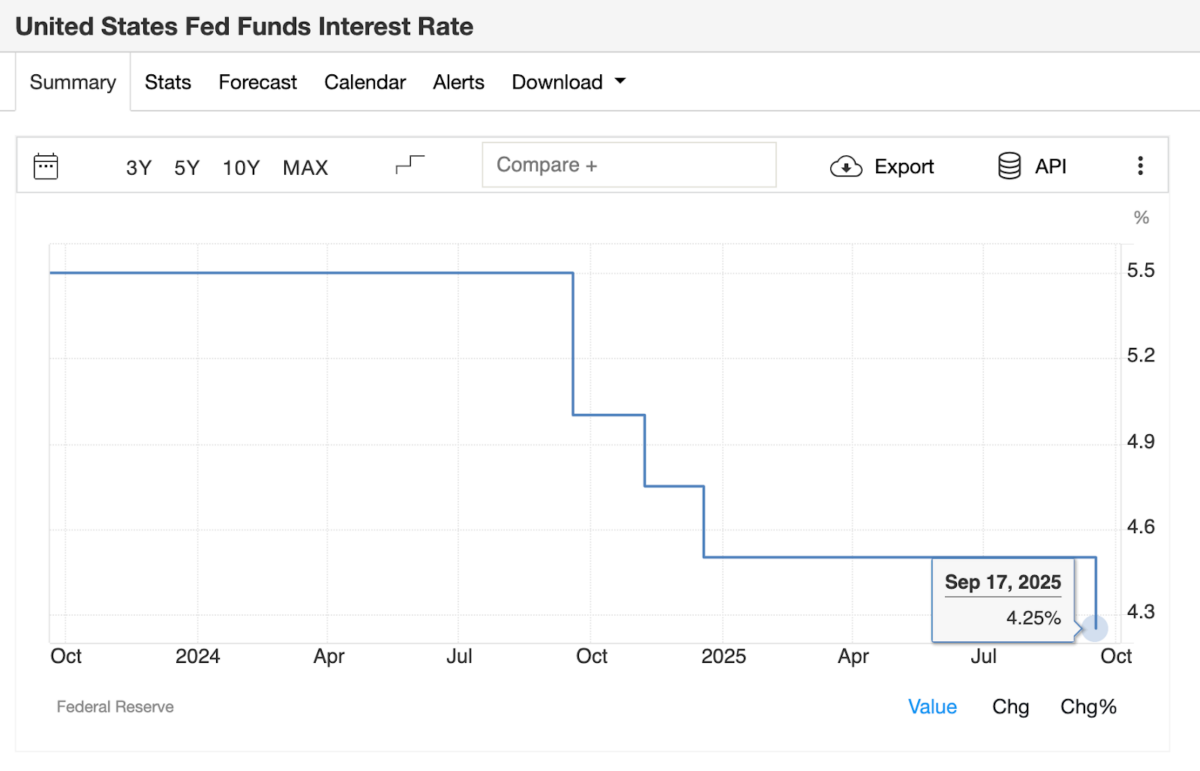
Bitcoin Holds $115K Support as Fed Cuts Rates by 25 Basis Points

Bitcoin Holds $115K Support as Fed Cuts Rates by 25 Basis Points

Bitcoin maintained support above $115,000 following the Federal Reserve's 25 basis point rate cut, which fell short of the widely anticipated 50bp reduction. The post Bitcoin Holds $115K Support as Fed Cuts Rates by 25 Basis Points appeared first on Coinspeaker.
Share
Coinspeaker2025/09/18 07:44
MoonBull, Brett, and Dogwifhat Compared

MoonBull, Brett, and Dogwifhat Compared

The post MoonBull, Brett, and Dogwifhat Compared appeared on BitcoinEthereumNews.com. Crypto News 18 September 2025 | 05:15 Explore MoonBull Whitelist, Brett token, and Dogwifhat price action. Learn why MoonBull’s best crypto whitelist is live now with big FOMO potential. Ever wondered why meme coins stir so much hype in the crypto jungle? Traders, students, and even seasoned blockchain builders keep chasing the next peanut pile of gains, hoping their bags turn into bull-sized fortunes overnight. In today’s scene, names like Brett and Dogwifhat grab the spotlight, while MoonBull lights up conversations with its whitelist buzz. Each of these projects carries its own flavor, yet the energy they generate reveals how meme culture keeps shaking financial markets. Brett became a crowd darling by spinning internet humor into tokenomics. Dogwifhat turned playful memes into market waves, pulling traders in with viral appeal. Both show how lighthearted memes can fuel serious capital flow. Yet the chatter doesn’t stop with them. MoonBull now appears, sparking urgency with its whitelist, creating noise louder than a hippo splash in shallow waters. MoonBull’s whitelist offering exclusive early perks, the crypto crowd feels the tug of FOMO stronger than ever. This first-come, first-served invite could be a rare second shot at a moonshot. MoonBull Whitelist is Live: Your Chance to Join the Best Crypto Whitelist MoonBull ($MOBU) has entered the arena not as just another meme coin but as a project built with the precision of Ethereum’s secure backbone. Designed for those chasing explosive upside, MoonBull stacks its chips on elite staking rewards and secret token drops. Its whitelist isn’t simply a sign-up form; it’s a ticket into Stage One of the presale, where entry comes at the lowest price possible and doors swing open to bonus allocations. Being whitelisted is like being a penguin in the front row of a bull stampede. Whitelist members aren’t just joining…
Share
BitcoinEthereumNews2025/09/18 10:17