The post DNS Attack Knocks Top DEX Protocols Offline appeared on BitcoinEthereumNews.com. Crime The crypto industry just received another reminder that even the most decentralized applications still rely on centralized components — and that those weak points can be exploited. Key Takeaways: The attack on Aerodrome and Velodrome targeted their web domains, not their smart contracts or user funds. Both exchanges redirected users to decentralized front-ends after their centralized domains were compromised. The incident highlights that Web3 platforms remain vulnerable when Web2 infrastructure — like DNS — is exploited. Early Saturday, two of the largest decentralized exchanges in the Optimism Superchain ecosystem, Aerodrome on Base and Velodrome on Optimism, found themselves dealing with a threat that didn’t target their smart contracts or liquidity, but something far simpler: their websites. A Web2 Weak Link in a Web3 World The disruption didn’t emerge from on-chain vulnerabilities. Liquidity pools, staking contracts, and user funds remained fully secure. Instead, attackers took control of the Domain Name System layer, redirecting visitors from the real webpages to an imitation interface designed to trick users. Anyone typing the correct URLs could still land on a malicious landing page — a classic Web2 exploit wrapped around a Web3 service. To avoid exposing users to the malicious interface, both teams instructed traders to access the DEXs through decentralized mirrors and browser-safe alternatives rather than the official domain. The Hijack Was Brief — But Not Without Implications By Saturday afternoon, the fake front-end stopped loading. Velodrome briefly reached out publicly to its domain provider, My.box, before deleting the request. Neither team issued additional comments by publication time. Investigations are ongoing, and there is no confirmation yet on whether the attacker responsible for the weekend incident is the same type of threat actor from a similar event in November 2023, when a DNS compromise caused losses of more than $100,000, according to blockchain… The post DNS Attack Knocks Top DEX Protocols Offline appeared on BitcoinEthereumNews.com. Crime The crypto industry just received another reminder that even the most decentralized applications still rely on centralized components — and that those weak points can be exploited. Key Takeaways: The attack on Aerodrome and Velodrome targeted their web domains, not their smart contracts or user funds. Both exchanges redirected users to decentralized front-ends after their centralized domains were compromised. The incident highlights that Web3 platforms remain vulnerable when Web2 infrastructure — like DNS — is exploited. Early Saturday, two of the largest decentralized exchanges in the Optimism Superchain ecosystem, Aerodrome on Base and Velodrome on Optimism, found themselves dealing with a threat that didn’t target their smart contracts or liquidity, but something far simpler: their websites. A Web2 Weak Link in a Web3 World The disruption didn’t emerge from on-chain vulnerabilities. Liquidity pools, staking contracts, and user funds remained fully secure. Instead, attackers took control of the Domain Name System layer, redirecting visitors from the real webpages to an imitation interface designed to trick users. Anyone typing the correct URLs could still land on a malicious landing page — a classic Web2 exploit wrapped around a Web3 service. To avoid exposing users to the malicious interface, both teams instructed traders to access the DEXs through decentralized mirrors and browser-safe alternatives rather than the official domain. The Hijack Was Brief — But Not Without Implications By Saturday afternoon, the fake front-end stopped loading. Velodrome briefly reached out publicly to its domain provider, My.box, before deleting the request. Neither team issued additional comments by publication time. Investigations are ongoing, and there is no confirmation yet on whether the attacker responsible for the weekend incident is the same type of threat actor from a similar event in November 2023, when a DNS compromise caused losses of more than $100,000, according to blockchain…

DNS Attack Knocks Top DEX Protocols Offline

Crime

The crypto industry just received another reminder that even the most decentralized applications still rely on centralized components — and that those weak points can be exploited.

Key Takeaways:
  • The attack on Aerodrome and Velodrome targeted their web domains, not their smart contracts or user funds.
  • Both exchanges redirected users to decentralized front-ends after their centralized domains were compromised.
  • The incident highlights that Web3 platforms remain vulnerable when Web2 infrastructure — like DNS — is exploited.

Early Saturday, two of the largest decentralized exchanges in the Optimism Superchain ecosystem, Aerodrome on Base and Velodrome on Optimism, found themselves dealing with a threat that didn’t target their smart contracts or liquidity, but something far simpler: their websites.

The disruption didn’t emerge from on-chain vulnerabilities. Liquidity pools, staking contracts, and user funds remained fully secure. Instead, attackers took control of the Domain Name System layer, redirecting visitors from the real webpages to an imitation interface designed to trick users.

Anyone typing the correct URLs could still land on a malicious landing page — a classic Web2 exploit wrapped around a Web3 service.

To avoid exposing users to the malicious interface, both teams instructed traders to access the DEXs through decentralized mirrors and browser-safe alternatives rather than the official domain.

The Hijack Was Brief — But Not Without Implications

By Saturday afternoon, the fake front-end stopped loading. Velodrome briefly reached out publicly to its domain provider, My.box, before deleting the request. Neither team issued additional comments by publication time.

Investigations are ongoing, and there is no confirmation yet on whether the attacker responsible for the weekend incident is the same type of threat actor from a similar event in November 2023, when a DNS compromise caused losses of more than $100,000, according to blockchain tracer ZachXBT.

New Era, Old Attack Surface

Despite their dominance in the borrowing-and-lending markets of the Optimism Superchain, both platforms still depend on Web2 infrastructure — a core contradiction of the current decentralized economy. Smart contracts may be bulletproof, but if the entry point to them can be rerouted, attackers don’t need to touch the blockchain at all.

The Unification Backdrop

The attack arrives at a pivotal moment. Dromos Labs, the team behind Velodrome, has been preparing to merge the two major DEXs into a single entity called Aero.

Set to debut in Q2 2026, Aero will consolidate both platforms and their tokens into a single AERO token, designed to represent the full productive output of the unified exchange. The transition is expected to reduce fragmentation and increase liquidity — and now, likely, to demand hardened domain and access security.

Bigger Than a Weekend Hack

Neither Aerodrome nor Velodrome lost funds. Contract security held. But the event showed that centralized website infrastructure remains one of the most effective attack vectors against decentralized protocols.
To users, the takeaway may be uncomfortable but essential: even in Web3, the safest route to DeFi is not always the most convenient one.


The information provided in this article is for educational purposes only and does not constitute financial, investment, or trading advice. Coindoo.com does not endorse or recommend any specific investment strategy or cryptocurrency. Always conduct your own research and consult with a licensed financial advisor before making any investment decisions.

Author

Kosta joined the team in 2021 and quickly established himself with his thirst for knowledge, incredible dedication, and analytical thinking. He not only covers a wide range of current topics, but also writes excellent reviews, PR articles, and educational materials. His articles are also quoted by other news agencies.

Next article

Source: https://coindoo.com/dns-attack-knocks-top-dex-protocols-offline-smart-contracts-remain-secure/

Market Opportunity
TOP Network Logo
TOP Network Price(TOP)
$0.000096
$0.000096$0.000096
0.00%
USD
TOP Network (TOP) Live Price Chart
Disclaimer: The articles reposted on this site are sourced from public platforms and are provided for informational purposes only. They do not necessarily reflect the views of MEXC. All rights remain with the original authors. If you believe any content infringes on third-party rights, please contact [email protected] for removal. MEXC makes no guarantees regarding the accuracy, completeness, or timeliness of the content and is not responsible for any actions taken based on the information provided. The content does not constitute financial, legal, or other professional advice, nor should it be considered a recommendation or endorsement by MEXC.

You May Also Like

Bitcoin Hyper Not Far from $20M, Whales Keep Buying: See What This $BTC Layer-2 Plans

Bitcoin Hyper Not Far from $20M, Whales Keep Buying: See What This $BTC Layer-2 Plans

To the uninitiated, Bitcoin and crypto are synonymous – and it’s only fair, given that the granddaddy of all crypto has been the face of the industry ever since it burst onto the scene a few years back. Since 2020, Bitcoin has generated over 1,500% in returns. Basically, crypto is so much about Bitcoin. All […]
Share
Bitcoinist2025/09/22 16:37
ECB-president hernieuwt aanval op Bitcoin terwijl euro daalt

ECB-president hernieuwt aanval op Bitcoin terwijl euro daalt

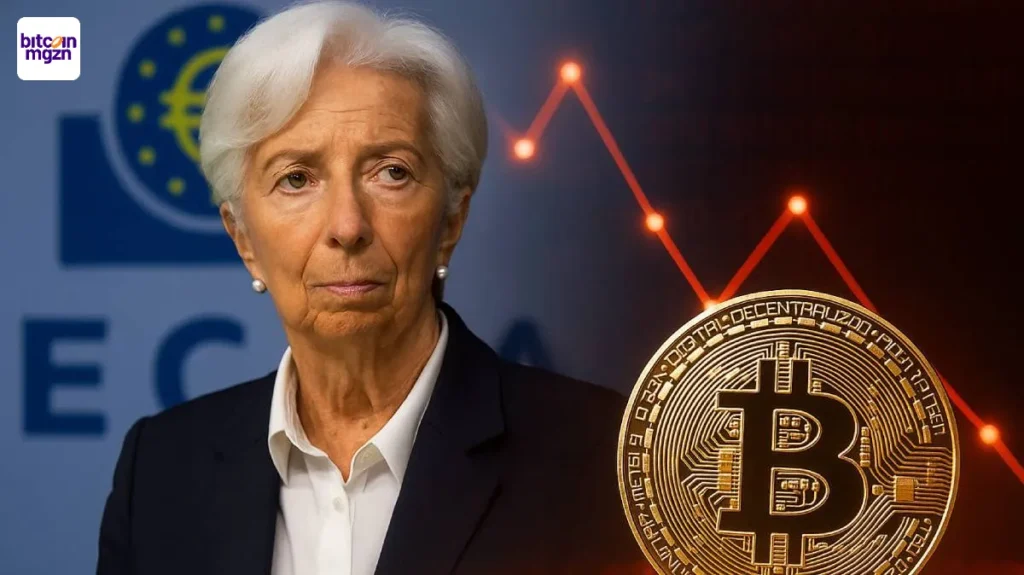
Snelle crypto updates? Connect op Instagram! Check onze Instagram   ECB-president Christine Lagarde noemt Bitcoin waardeloos en waarschuwt voor zijn speculatieve aard. Haar uitspraken komen op een moment dat DeFi groeit en de euro onder druk staat, wat de discussie over geld en controle opnieuw tot leven brengt. ECB houdt vast aan kritiek op Bitcoin en DeFi De Europese Centrale Bank (ECB) blijft vasthouden aan haar scherpe toon over Bitcoin. Volgens president Christine Lagarde ontbreekt de munt het fundament dat echt geld kenmerkt. Ze noemt het een speculatief middel zonder onderliggende waarde, en benadrukt dat de ECB het publieke vertrouwen in geld moet beschermen. Terwijl de digitale economie zich steeds meer richting decentralisatie beweegt, probeert de bank haar rol als stabiele pijler te behouden. ECB (European Central Bank) De European Central Bank (ECB) is de centrale bank van de eurozone en bepaalt samen met de nationale banken het monetaire beleid voor de euro. Ze houdt de inflatie in de gaten, bepaalt de rente en zorgt voor stabiliteit van het financiële systeem. In de cryptowereld speelt de ECB vooral een rol met het onderzoek en de voorbereidingen voor een digitale euro, een eigen centrale bank digitale munt (CBDC). Daarmee wil de bank inspelen op de groei van digitaal geld en alternatieven zoals stablecoins. Voor de crypto-industrie is dit belangrijk omdat een digitale euro de concurrentie en het speelveld voor private stablecoins kan veranderen. De waarschuwing van Lagarde past in een bredere strategie van de ECB. De opkomst van decentrale financiële systemen (DeFi) wordt gezien als een uitdaging voor de invloed van centrale banken. In die waarschuwing lijkt ook iets van zelfbescherming door te klinken: het behoud van macht over monetair beleid. Voorstanders van Bitcoin wijzen juist op de kracht van schaarste, transparantie en onafhankelijkheid; eigenschappen die fiatgeld in hun ogen steeds meer verliest. “How many bitcoin do you own?” That’s how it starts, a stupid question from the host. From there, it goes downhill fast. Christine Lagarde repeats every tired anti-bitcoin cliché the ECB has ever pushed. Let’s go… 1️⃣ “Bitcoin has no intrinsic value.” Neither does fiat.… pic.twitter.com/uMqtEHvkD0 — Eli Nagar (@EliNagarBrr) October 7, 2025 De euro verzwakt terwijl crypto aan invloed wint Ondertussen verliest de euro langzaam maar zeker aan koopkracht. Sinds de invoering in 2002 is de munt ruim veertig procent van haar reële waarde kwijtgeraakt. Dat voedt de twijfel over de houdbaarheid van het huidige fiatstelsel en vergroot de interesse in alternatieven zoals Bitcoin en andere cryptovaluta. Binnen de Europese cryptogemeenschap worden de woorden van de ECB dan ook met de nodige scepsis onthaald. Been 22 years, physical $Euro coins and banknotes entered circulation on January 1st 2002. Since then, this fiasco lost 40% of its buying power according to “official” stats. Won’t even mention real stats, or you’d be dumping ALL your Eurobolivars for #Bitcoin right now. pic.twitter.com/Rp3KinVfPm — Vandelay ₿TC Industries ⚡ (@VandelayBTC) January 3, 2024 DeFi-platforms en stablecoins winnen terrein in Europa, juist omdat ze nieuwe mogelijkheden bieden voor rendement en autonomie. Waar Lagarde waarschuwt voor volatiliteit, zien veel gebruikers vooral vrijheid in een systeem dat zich niets aantrekt van centrale banken. De groei van DeFi laat zien dat vertrouwen niet alleen via instituties ontstaat, maar ook via technologie. Monetaire controle en vertrouwen in het digitale tijdperk De standpunten van de ECB leggen een oud spanningsveld bloot: de strijd tussen stabiliteit en vrijheid. Aan de ene kant verdedigt de bank haar rol als bewaker van orde, aan de andere kant tonen cryptomarkten dat vertrouwen ook buiten traditionele kanalen kan bestaan. Terwijl de ECB pleit voor zekerheid en voorspelbaarheid, zoeken investeerders steeds vaker transparantie en zelfbeschikking. Lagarde’s uitspraken passen in een wereldwijde trend waarin centrale banken proberen hun gezag te behouden in een economie die snel verandert. Toch klinkt steeds luider de vraag of die vorm van controle nog houdbaar is. Nieuwe technologieën maken directe waardeoverdracht mogelijk,zonder tussenkomst van banken. Dat idee wringt natuurlijk met de kern van het bestaande financiële systeem. Exactly. It was narrative management. They feel threatened. That’s why real questions about monetary policy, inflation, and accountability never make it to the script. — Eli Nagar (@EliNagarBrr) October 8, 2025 De toekomst van waarde: centraal of gedecentraliseerd? De discussie tussen de ECB en de cryptowereld draait om meer dan geld. Het gaat om vertrouwen, transparantie en macht over waarde. Zolang de euro verder verzwakt en decentrale technologieën blijven groeien, lijkt de kloof tussen centrale banken en de cryptosector alleen maar groter te worden. Hoeveel invloed de ECB kan behouden, hangt af van haar vermogen zich aan te passen aan dit nieuwe tijdperk. De strijd om waarde is niet enkel economisch, maar ook ideologisch. In dat licht voelt de opkomst van Bitcoin minder als een bedreiging, en meer als een logisch gevolg van de zoektocht naar onafhankelijkheid in geld. Koop je Bitcoin via Best Wallet Best wallet is een topklasse crypto wallet waarmee je anoniem crypto kan kopen. Met meer dan 60 chains gesupport kan je al je main crypto coins aanschaffen via Best Wallet. Best wallet - betrouwbare en anonieme wallet Best wallet - betrouwbare en anonieme wallet Meer dan 60 chains beschikbaar voor alle crypto Vroege toegang tot nieuwe projecten Hoge staking belongingen Lage transactiekosten Best wallet review Koop nu via Best Wallet Let op: cryptocurrency is een zeer volatiele en ongereguleerde investering. Doe je eigen onderzoek. Het bericht ECB-president hernieuwt aanval op Bitcoin terwijl euro daalt is geschreven door Sebastiaan Krijnen en verscheen als eerst op Bitcoinmagazine.nl.
Share
Coinstats2025/10/11 03:16
What SBI Really Owns in Ripple May Surprise XRP Investors

What SBI Really Owns in Ripple May Surprise XRP Investors

The post What SBI Really Owns in Ripple May Surprise XRP Investors appeared on BitcoinEthereumNews.com. SBI Holdings Chairman Yoshitaka Kitao has confirmed that
Share
BitcoinEthereumNews2026/02/16 16:14