What does Pulte’s FHFA crypto mortgage signal actually mean for American homebuyers, and could it rewrite lending norms for those who store wealth in Bitcoin and stablecoins? Mortgage, Pulte, and FHFA enter the crypto conversation In a recent announcement, Federal…What does Pulte’s FHFA crypto mortgage signal actually mean for American homebuyers, and could it rewrite lending norms for those who store wealth in Bitcoin and stablecoins? Mortgage, Pulte, and FHFA enter the crypto conversation In a recent announcement, Federal…

Pulte’s FHFA eyes crypto in $8.5 trillion U.S. housing and mortgage markets — what’s next?

8 min read

What does Pulte’s FHFA crypto mortgage signal actually mean for American homebuyers, and could it rewrite lending norms for those who store wealth in Bitcoin and stablecoins?

Table of Contents

  • Mortgage, Pulte, and FHFA enter the crypto conversation
  • Freddie Mac compliance drives lender finance models
  • How crypto might be evaluated
  • Gains in private finance suggest real demand for Bitcoin integration

Mortgage, Pulte, and FHFA enter the crypto conversation

In a recent announcement, Federal Housing Finance Agency Director Bill Pulte has publicly stated that the agency will “study the usage of cryptocurrency holdings as it relates to qualifying for mortgages.” 

The announcement, posted on X on Jun. 24, introduces the possibility that Bitcoin (BTC) and other digital assets could soon factor into U.S. home loan evaluations.

The idea comes at a time when housing access remains strained. As of mid-2025, the average rate for a 30-year fixed mortgage is just under 7%, the highest level since the mid-2000s. 
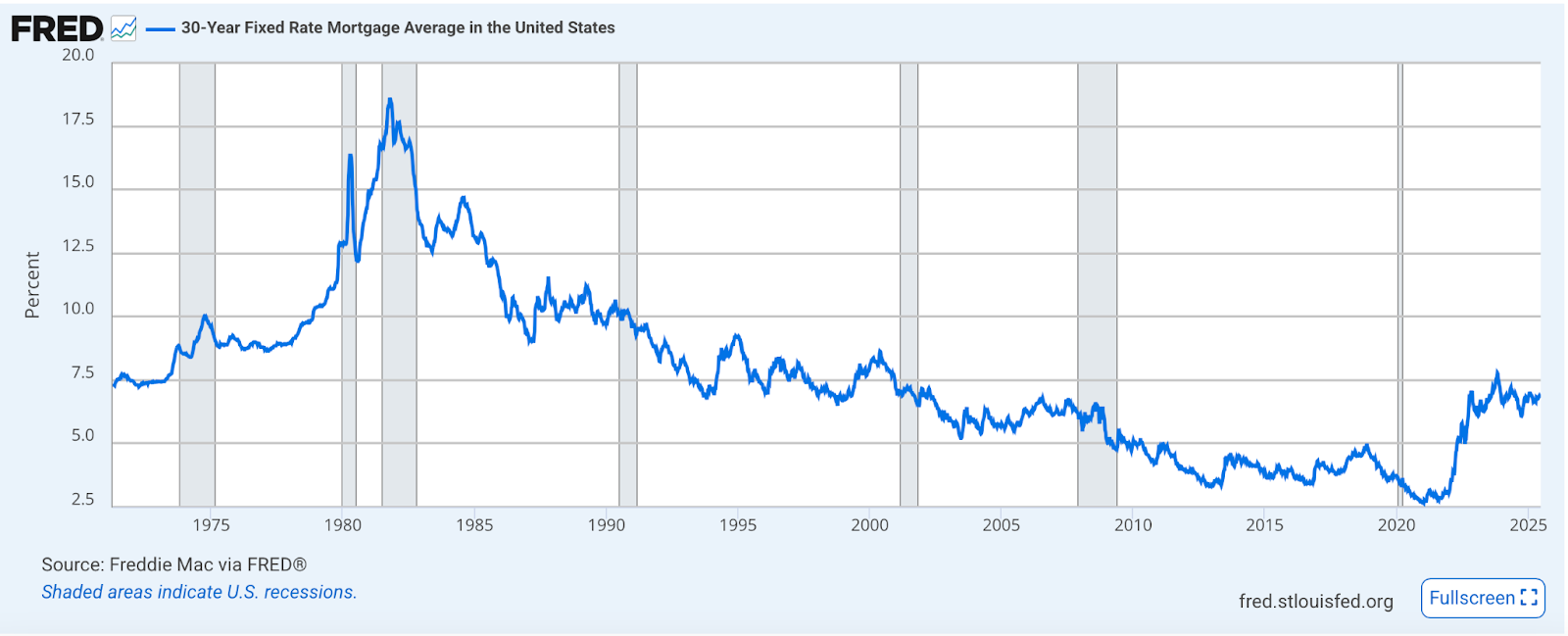
Pulte’s FHFA eyes crypto in $8.5 trillion U.S. housing and mortgage markets — what’s next? - 1

In May, the median price for an existing home reached $422,800, a record high for the month. Existing home sales have also slowed sharply, with May 2025 marking the weakest pace for that month since 2009.

Meanwhile, the affordability squeeze is especially pronounced for first-time buyers. According to the National Association of Realtors, only 30% of home purchases are currently being made by first-time buyers, well below the 40% share considered typical for a balanced market. 

Rising monthly payments and strict lending criteria have made access difficult for younger buyers and self-employed individuals, particularly those with irregular income but sizable assets.

The FHFA is now examining whether crypto holdings could be considered similar to savings, investment portfolios, or other assets during mortgage evaluations. 

Under such a framework, for example, a person holding $200,000 worth of Bitcoin or Ethereum (ETH), but lacking a traditional salary, might still qualify for a loan based on their overall net worth.

At present, most mortgage lenders exclude crypto from financial assessments, citing concerns over price volatility, limited regulatory clarity, and the challenges of verifying digital asset ownership. 

Even high net-worth applicants holding substantial crypto assets are often treated as lacking adequate financial stability under current standards.

The FHFA’s announcement does not indicate a finalized policy or regulatory timeline. The review remains in its early stages, and many operational and legal questions will need to be addressed before any change is implemented.

Freddie Mac compliance drives lender finance models

The FHFA plays a quiet but central role in shaping how Americans access home loans. It oversees Fannie Mae and Freddie Mac, the two government-sponsored entities that guarantee the majority of mortgage loans in the United States.

It also regulates the Federal Home Loan Bank system, a network of regional banks that provide liquidity to housing and community development lenders. According to the agency’s data, these institutions collectively support over $8.5 trillion in U.S. home financing.

Any change in policy issued by the FHFA carries broad market consequences. Updates to guidelines on credit scores, down payments, or eligible asset classes often influence how banks and lenders structure their loan products. 

Most lending institutions follow FHFA standards to ensure that their mortgages remain eligible for resale to Fannie or Freddie, which helps manage long-term risk exposure.

The agency was established in 2008, following the housing market collapse, with a mandate to strengthen oversight and preserve the safety and liquidity of the mortgage finance system. 

Within that framework, even a preliminary inquiry into counting crypto assets toward mortgage qualifications carries real weight.

The agency’s current direction is closely tied to the background of its director, Bill Pulte. 

Appointed in March 2025 during President Trump’s second term, Pulte took office after a lengthy confirmation process. He is the grandson of William Pulte, founder of Pulte Homes, one of the largest homebuilders in the country.

Before entering public service, Pulte led Pulte Capital, a private investment firm. He also gained a public following through philanthropic giveaways on X, where he became known as the “Twitter Philanthropist.”

Unlike his predecessors, Pulte has direct involvement in the crypto space. Financial disclosures show personal holdings of $500,000 to $1 million in Bitcoin, along with a similar-sized position in Solana (SOL). 

He also holds equity in Marathon Digital Holdings, a U.S.-based Bitcoin mining company, and has previously invested in speculative stocks such as GameStop.

His profile stands out in a field typically characterized by conservative financial backgrounds. Pulte has publicly supported crypto since 2019, using his social media presence to promote adoption and encourage policy openness toward digital assets.

While the FHFA’s review of crypto in mortgage underwriting is still early and exploratory, its very consideration reflects a shift in both the asset class’s relevance and the leadership’s priorities.

How crypto might be evaluated

Pulte’s announcement has raised fresh questions about how crypto holdings might eventually be evaluated under mortgage lending standards. 

Currently, borrowers who want to use digital assets in the mortgage process must first convert them into U.S. dollars and deposit the funds into a regulated American bank account. 

To meet eligibility for down payments or reserves under Fannie Mae and Freddie Mac guidelines, those funds must also be seasoned, meaning they must remain in the account for at least 60 days.

The FHFA’s review is expected to examine whether these requirements can or should be updated.

One likely area of focus is asset valuation. Due to the volatility of crypto assets like Bitcoin and Ethereum, lenders may hesitate to accept their full market value when assessing borrower assets. 

A common method in traditional finance is to apply a haircut — a discount from the stated value — to account for potential price swings. Whether similar adjustments would be adopted for crypto remains uncertain.

Holding history may also come under review. Lenders often view long-held assets more favorably than short-term holdings. Assets with clear documentation, consistent custody, and minimal trading activity may carry more weight than those recently acquired or frequently moved. 

Stablecoins present a separate set of considerations. Tokens such as USD Coin (USDC) and Tether (USDT) are designed to maintain a consistent value relative to the U.S. dollar, which may make them more suitable for underwriting purposes. 

Even so, treatment of stablecoins would depend on regulatory comfort with their structure, custody arrangements, and transparency standards.

For now, mortgage advisors commonly recommend that crypto holders convert their assets to dollars well in advance of applying for a loan, giving lenders time to verify the source of funds and ensuring the assets meet seasoning requirements.

Any future update is likely to preserve strict documentation standards. Borrowers would still need to show a complete audit trail, including wallet ownership, transaction history, and evidence that the funds are not tied to loans or suspicious activity. 

Verification of custody, clarity of origin, and compliance with anti-money laundering rules are also expected to remain central to any policy changes under consideration.

Gains in private finance suggest real demand for Bitcoin integration

While federal regulators are just beginning to explore the idea of integrating crypto into mortgage lending, several private fintech firms have already launched experimental models. 

Milo Credit, a Florida-based lender, introduced one of the first crypto mortgage products in the U.S. in 2022. 

Its structure departs from the traditional approach. Rather than requiring borrowers to sell crypto and make a cash down payment, Milo allows buyers to pledge digital assets, such as Bitcoin, Ethereum, or certain stablecoins, as collateral. 

The setup enables clients to finance up to 100% of the home’s value without liquidating their crypto holdings. 

Similarly, Figure Technologies, a San Francisco fintech company led by former SoFi CEO Mike Cagney, has explored large-scale crypto-backed mortgage programs, offering loans as high as $20 million using digital assets as security.

According to Milo, clients continue to retain ownership of their pledged crypto, which means they can benefit if asset values rise during the mortgage term. 

Another advantage is tax-related: selling large crypto positions to cover a down payment would typically trigger capital gains taxes. By pledging rather than selling, borrowers avoid those immediate tax events. 

As of early-2025, Milo reported over $65 million in crypto-collateralized home loans issued.

However, these private offerings function outside the federal mortgage system. Their loans are not eligible for resale to Fannie Mae or Freddie Mac, meaning they cannot benefit from the same level of liquidity and risk-sharing that conventional loans do. 

As a result, interest rates tend to be higher, and lenders often retain the loans in-house or work with alternative investors to fund them. These limitations place a ceiling on how widely such products can scale.

Another constraint is risk. Crypto-backed mortgages usually require over-collateralization — meaning borrowers must pledge more in crypto value than the loan amount to offset volatility. 

But even with that buffer, price swings can present challenges. A drop of 15% in asset value between approval and closing is enough to disrupt a loan. And historically, crypto drawdowns have been far steeper. 

If the FHFA chooses to move forward, it could bring more consistency and structure to the space. Private models have shown that crypto can be integrated into housing finance, but only with careful safeguards and a full understanding of its tradeoffs.

Whether the outcome is adoption, rejection, or something in between, the process will influence how crypto is viewed not just in capital markets, but in everyday financial life.

Disclaimer: The articles reposted on this site are sourced from public platforms and are provided for informational purposes only. They do not necessarily reflect the views of MEXC. All rights remain with the original authors. If you believe any content infringes on third-party rights, please contact [email protected] for removal. MEXC makes no guarantees regarding the accuracy, completeness, or timeliness of the content and is not responsible for any actions taken based on the information provided. The content does not constitute financial, legal, or other professional advice, nor should it be considered a recommendation or endorsement by MEXC.

You May Also Like

Botanix launches stBTC to deliver Bitcoin-native yield

Botanix launches stBTC to deliver Bitcoin-native yield

The post Botanix launches stBTC to deliver Bitcoin-native yield appeared on BitcoinEthereumNews.com. Botanix Labs has launched stBTC, a liquid staking token designed to turn Bitcoin into a yield-bearing asset by redistributing network gas fees directly to users. The protocol will begin yield accrual later this week, with its Genesis Vault scheduled to open on Sept. 25, capped at 50 BTC. The initiative marks one of the first attempts to generate Bitcoin-native yield without relying on inflationary token models or centralized custodians. stBTC works by allowing users to deposit Bitcoin into Botanix’s permissionless smart contract, receiving stBTC tokens that represent their share of the staking vault. As transactions occur, 50% of Botanix network gas fees, paid in BTC, flow back to stBTC holders. Over time, the value of stBTC increases relative to BTC, enabling users to redeem their original deposit plus yield. Botanix estimates early returns could reach 20–50% annually before stabilizing around 6–8%, a level similar to Ethereum staking but fully denominated in Bitcoin. Botanix says that security audits have been completed by Spearbit and Sigma Prime, and the protocol is built on the EIP-4626 vault standard, which also underpins Ethereum-based staking products. The company’s Spiderchain architecture, operated by 16 independent entities including Galaxy, Alchemy, and Fireblocks, secures the network. If adoption grows, Botanix argues the system could make Bitcoin a productive, composable asset for decentralized finance, while reinforcing network consensus. This is a developing story. This article was generated with the assistance of AI and reviewed by editor Jeffrey Albus before publication. Get the news in your inbox. Explore Blockworks newsletters: Source: https://blockworks.co/news/botanix-launches-stbtc
Share
BitcoinEthereumNews2025/09/18 02:37
Unprecedented Surge: Gold Price Hits Astounding New Record High

Unprecedented Surge: Gold Price Hits Astounding New Record High

BitcoinWorld Unprecedented Surge: Gold Price Hits Astounding New Record High While the world often buzzes with the latest movements in Bitcoin and altcoins, a traditional asset has quietly but powerfully commanded attention: gold. This week, the gold price has once again made headlines, touching an astounding new record high of $3,704 per ounce. This significant milestone reminds investors, both traditional and those deep in the crypto space, of gold’s enduring appeal as a store of value and a hedge against uncertainty. What’s Driving the Record Gold Price Surge? The recent ascent of the gold price to unprecedented levels is not a random event. Several powerful macroeconomic forces are converging, creating a perfect storm for the precious metal. Geopolitical Tensions: Escalating conflicts and global instability often drive investors towards safe-haven assets. Gold, with its long history of retaining value during crises, becomes a preferred choice. Inflation Concerns: Persistent inflation in major economies erodes the purchasing power of fiat currencies. Consequently, investors seek assets like gold that historically maintain their value against rising prices. Central Bank Policies: Many central banks globally are accumulating gold at a significant pace. This institutional demand provides a strong underlying support for the gold price. Furthermore, expectations around interest rate cuts in the future also make non-yielding assets like gold more attractive. These factors collectively paint a picture of a cautious market, where investors are looking for stability amidst a turbulent economic landscape. Understanding Gold’s Appeal in Today’s Market For centuries, gold has held a unique position in the financial world. Its latest record-breaking performance reinforces its status as a critical component of a diversified portfolio. Gold offers a tangible asset that is not subject to the same digital vulnerabilities or regulatory shifts that can impact cryptocurrencies. While digital assets offer exciting growth potential, gold provides a foundational stability that appeals to a broad spectrum of investors. Moreover, the finite supply of gold, much like Bitcoin’s capped supply, contributes to its perceived value. The current market environment, characterized by economic uncertainty and fluctuating currency values, only amplifies gold’s intrinsic benefits. It serves as a reliable hedge when other asset classes, including stocks and sometimes even crypto, face downward pressure. How Does This Record Gold Price Impact Investors? A soaring gold price naturally raises questions for investors. For those who already hold gold, this represents a significant validation of their investment strategy. For others, it might spark renewed interest in this ancient asset. Benefits for Investors: Portfolio Diversification: Gold often moves independently of other asset classes, offering crucial diversification benefits. Wealth Preservation: It acts as a robust store of value, protecting wealth against inflation and economic downturns. Liquidity: Gold markets are highly liquid, allowing for relatively easy buying and selling. Challenges and Considerations: Opportunity Cost: Investing in gold means capital is not allocated to potentially higher-growth assets like equities or certain cryptocurrencies. Volatility: While often seen as stable, gold prices can still experience significant fluctuations, as evidenced by its rapid ascent. Considering the current financial climate, understanding gold’s role can help refine your overall investment approach. Looking Ahead: The Future of the Gold Price What does the future hold for the gold price? While no one can predict market movements with absolute certainty, current trends and expert analyses offer some insights. Continued geopolitical instability and persistent inflationary pressures could sustain demand for gold. Furthermore, if global central banks continue their gold acquisition spree, this could provide a floor for prices. However, a significant easing of inflation or a de-escalation of global conflicts might reduce some of the immediate upward pressure. Investors should remain vigilant, observing global economic indicators and geopolitical developments closely. The ongoing dialogue between traditional finance and the emerging digital asset space also plays a role. As more investors become comfortable with both gold and cryptocurrencies, a nuanced understanding of how these assets complement each other will be crucial for navigating future market cycles. The recent surge in the gold price to a new record high of $3,704 per ounce underscores its enduring significance in the global financial landscape. It serves as a powerful reminder of gold’s role as a safe haven asset, a hedge against inflation, and a vital component for portfolio diversification. While digital assets continue to innovate and capture headlines, gold’s consistent performance during times of uncertainty highlights its timeless value. Whether you are a seasoned investor or new to the market, understanding the drivers behind gold’s ascent is crucial for making informed financial decisions in an ever-evolving world. Frequently Asked Questions (FAQs) Q1: What does a record-high gold price signify for the broader economy? A record-high gold price often indicates underlying economic uncertainty, inflation concerns, and geopolitical instability. Investors tend to flock to gold as a safe haven when they lose confidence in traditional currencies or other asset classes. Q2: How does gold compare to cryptocurrencies as a safe-haven asset? Both gold and some cryptocurrencies (like Bitcoin) are often considered safe havens. Gold has a centuries-long history of retaining value during crises, offering tangibility. Cryptocurrencies, while newer, offer decentralization and can be less susceptible to traditional financial system failures, but they also carry higher volatility and regulatory risks. Q3: Should I invest in gold now that its price is at a record high? Investing at a record high requires careful consideration. While the price might continue to climb due to ongoing market conditions, there’s also a risk of a correction. It’s crucial to assess your personal financial goals, risk tolerance, and consider diversifying your portfolio rather than putting all your capital into a single asset. Q4: What are the main factors that influence the gold price? The gold price is primarily influenced by global economic uncertainty, inflation rates, interest rate policies by central banks, the strength of the U.S. dollar, and geopolitical tensions. Demand from jewelers and industrial uses also play a role, but investment and central bank demand are often the biggest drivers. Q5: Is gold still a good hedge against inflation? Historically, gold has proven to be an effective hedge against inflation. When the purchasing power of fiat currencies declines, gold tends to hold its value or even increase, making it an attractive asset for preserving wealth during inflationary periods. To learn more about the latest crypto market trends, explore our article on key developments shaping Bitcoin’s price action. This post Unprecedented Surge: Gold Price Hits Astounding New Record High first appeared on BitcoinWorld.
Share
Coinstats2025/09/18 02:30
China Bans Nvidia’s RTX Pro 6000D Chip Amid AI Hardware Push

China Bans Nvidia’s RTX Pro 6000D Chip Amid AI Hardware Push

TLDR China instructs major firms to cancel orders for Nvidia’s RTX Pro 6000D chip. Nvidia shares drop 1.5% after China’s ban on key AI hardware. China accelerates development of domestic AI chips, reducing U.S. tech reliance. Crypto and AI sectors may seek alternatives due to limited Nvidia access in China. China has taken a bold [...] The post China Bans Nvidia’s RTX Pro 6000D Chip Amid AI Hardware Push appeared first on CoinCentral.
Share
Coincentral2025/09/18 01:09