

Recognizing the vital role of sari-sari stores and local enterprises: GCash, DTI, TESDA, and Tagum City come together at TindaNow Mindanao Summit 2025 to celebrate and empower the backbone of our economy
In collaboration with the Local Government of Tagum City, Department of Trade and Industry (DTI), Technical Education and Skills Development Authority (TESDA), and Tagum City Council of Women Foundation, Inc. (TCCWFI), the Philippines’ leading finance superapp and largest cashless ecosystem GCash, gathered over 2,000 nano, micro, small, and medium enterprises (NMSMEs) at the TindaNow Mindanao Summit 2025 to introduce digital innovations that help strengthen and grow their businesses — from smarter operations enabled by GCash for Business (G4B), to expanded earning opportunities through the upgraded GCash Pera Outlet Plus, and accessible lending support via Fuse Financing, Inc., the lending arm of GCash.
The day-long summit placed a strong focus on equipping NMSMEs with tools that can help them grow their businesses more confidently in an increasingly digital marketplace. It also introduced the new GCash Pera Outlet Plus, which transforms neighborhood retailers into local cash-in and cash-out hubs, enabling small business owners to earn additional income by facilitating load purchases and bill payment services for their communities.
This was complemented by access to formal lending through Fuse Financing, Inc. guided by the principle that lending should be a tool, not a burden. By offering transparent and structured credit, Fuse allows small business owners to invest in inventory, expand operations, or enhance services under fair terms. Ultimately, MSME owners can grow their businesses more sustainably while avoiding predatory lending.
This initiative comes at a time when many MSMEs continue to face challenges in accessing financial services and digital tools that can help them grow. In DTI 2023 figures, data show MSMEs accounted for 99.63% of all registered businesses in the Philippines. In Mindanao alone, MSMEs generated 986,186 jobs, representing 76.45% of total regional employment. Yet, as of end‑March 2025, loans to MSMEs were only 4.63% of banks’ total loan book versus the 10% mandate (8% for micro/small, 2% for medium). Solutions like GCash Pera Outlet Plus and formal lending through Fuse Financing, Inc. provide practical, accessible tools to help MSMEs manage finances, expand operations, and grow sustainably.
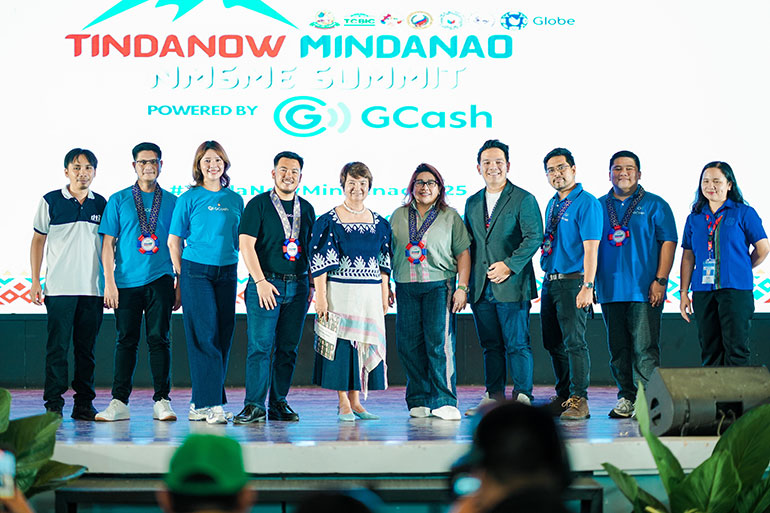 From left to right: DTI Division Chief Erick Cezar Elipian; GCash CXM Governance Training Head JJ Pacheco; GCash Account Manager Inbound Sales for Mindanao Angela Pupos; GCash Head of Sustainability CJ Alegre; TCCWFI President Alma Lim Uy; GCash Vice-President and Head of Public Sector Cleo Celeste Santos, Fuse Financing, Inc., the lending arm of GCash; GCash Head of B2B lending Kevin Yu; Mindanao Regional Sales Head Abran Tinagan; Mindanao Channel Distribution Manager Mikee Esguerra; and TESDA Senior Specialist Lythelle Ramos
The summit was attended by key officials led TCCWFI President Alma Lim Uy, City Councilor Arthur Ong, City Councilor Vreni Gem Caasi, DTI Division Chief Erick Cezar Elipian, together with GCash Vice-President and Head of Public Sector Cleo Celeste Santos, GCash Head of Sustainability CJ Alegre, Fuse Financing, Inc., the lending arm of GCash, Head of B2B lending Kevin Yu, and CXM Governance Training Head JJ Pacheco.
“This summit with GCash is more than just an event; it is a commitment to ensure that every community in Tagum that no matter how small the enterprise is, becomes part of our growing digital and economic landscape,” Mayor Rey Uy said in his message delivered by Councilor Uloy Ong, the Committee Chairperson for Tourism, Sisterhood Ties, and International Relations.
“As we embrace digitalization in partnership with GCash, we are opening doors to new opportunities: wider markets, faster transactions, safer payments, and more efficient business operations. Digital tools empower even the smallest enterprises to compete and to shine,” he added.
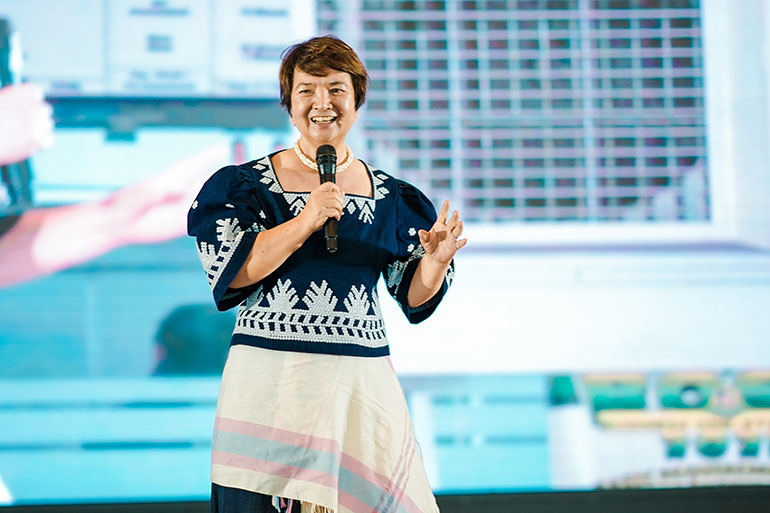 TCCWFI President Alma Uy stressed the importance of digitalization to thrive and scale sustainably, especially for NMSMEs.
TCCWFI President Alma Uy stressed that digital transformation is vital to empower the entrepreneurs to sustain business and strengthen business resilience to adapt in modern times. “This initiative reinforces our advocacy for digital and financial inclusion, empowering entrepreneurs to embrace digital payment systems, online business tools, and financial innovation, especially since Gcash has tools tailored to NMSME,” Ms. Uy said.
DTI Undersecretary Blesila Lantayona said in her message delivered by Davao del Norte Division Chief Erick Cezar Elipian that this summit is an opportunity for NMSMEs to expand their horizons, embrace digital transformation, and explore new pathways for growth and competitiveness in an increasingly dynamic and globalized economy.
She added that the initiative of GCash is aligned with the DTI MSME Development Plan 2023-2028, which emphasizes digital adoption, technological innovation, and business resilience to strengthen entrepreneurial capacity.
Transforming community stores to upgraded financial hubs
A pivotal moment of the summit was the introduction of the new GCash Pera Outlet Plus Dagdag Kabuhayan Program. This upgraded initiative offers small store owners a clear pathway to generate significant supplementary income by establishing their shops as essential community financial hubs.
During her speech, Ms. Santos highlighted that this initiative is part of the work of GCash in supporting community enterprises and extending financial progress to underserved sectors.
“We aim to give every community entrepreneur the tools and confidence to grow through practical financial education and safe, accessible digital solutions,” Ms. Santos said.
GCash for Business (G4B) also introduced digital solutions like SoundPay and Pocket Pay that streamline payment collection, boost operational efficiency, and help businesses formalize and scale.
 Attendees had the chance to learn more about the new GCash Pera Outlet Plus and engage in financial literacy sessions.
Highlighting the importance of digital adoption, the summit featured financial literacy lessons on money management, online safety, and using digital finance to build long-term resilience for small businesses.
“At GCash, we are dedicated to supporting every Filipino, ensuring they have the tools to start, grow, and expand their businesses through digitalization. Our financial literacy program is specially designed for small businesses, equipping them with the knowledge they need to thrive. We make it simple, accessible, and seamless for them to implement these insights through our innovative digital products,” Mr. Alegre noted.
Meanwhile, Mr. Yu led a session on responsible capital access, outlining loan options that help entrepreneurs restock, expand, and reach new markets. He emphasized how accessible credit can bridge long-standing gaps for NMSMEs that often face financing barriers and are traditionally sidelined by other formal institutions.
Through the strategic convergence of financial literacy education, accessible platforms like the new GCash Pera Outlet Plus and GCash for Business, and responsible lending from Fuse, GCash is fundamentally equipping entrepreneurs with the knowledge and tools required to adapt, thrive, and sustain their operations.
For more information, please visit www.gcash.com.
Spotlight is BusinessWorld’s sponsored section that allows advertisers to amplify their brand and connect with BusinessWorld’s audience by publishing their stories on the BusinessWorld Web site. For more information, send an email to [email protected].
Join us on Viber at https://bit.ly/3hv6bLA to get more updates and subscribe to BusinessWorld’s titles and get exclusive content through www.bworld-x.com.
You May Also Like

Crucial ETH Unstaking Period: Vitalik Buterin’s Unwavering Defense for Network Security

XRP holders hit new high, but THIS keeps pressure on price
