Author: Nancy, PANews The UAE, nestled in the desert, is quietly emerging as a crypto oasis. From ubiquitous crypto payments on the streets to the involvement of sovereign wealth funds and a clear and transparent regulatory framework, the UAE has rapidly risen to become a crypto hub connecting East and West. In particular, Abu Dhabi is becoming a new crypto hub targeted by the world, with crypto giants such as Binance, Tether, Circle, and Ripple recently gathering there. With key licenses secured, Binance will establish its governance center in Abu Dhabi. Abu Dhabi is rapidly emerging as a compliance hub for the global crypto industry. On December 8th, shortly after the conclusion of Dubai Blockchain Week, Binance announced a major development: it has obtained full regulatory authorization from the Abu Dhabi Global Market (ADGM) Financial Services Regulatory Authority (FSRA), becoming the first crypto centralized exchange to obtain a global license under this framework. According to the new regulations, starting January 5, 2026, Binance will be split into three separately licensed entities, covering its three key businesses: exchange, clearinghouse, and brokerage. To cope with regulatory pressure, Binance adopted a headquartersless strategy for a long time, traveling to various countries to seek policy flexibility. As the industry moves towards full compliance, Binance has begun actively seeking a physical base. Abu Dhabi is the most favored candidate, not only because co-CEO Richard Teng comes from the ADGM regulatory system and is familiar with the local environment, but also because of the close capital ties. In March of this year, Binance announced that it had received a $2 billion investment from Abu Dhabi-based investment firm MGX, marking its first investment from an external institution since its inception. Given MGX's close ties with the Abu Dhabi royal family and government, and the widespread belief that Binance's valuation was low at this round, this investment is seen as Binance's "pledge of allegiance" to Abu Dhabi. In an interview with Fortune, Richard Teng did not explicitly state whether Abu Dhabi would become Binance's global headquarters, but he emphasized that regulators are more concerned with where Binance is regulated and stated that ADGM will become the governance center of Binance's global platform. Binance's move sends a strong signal to the world that Abu Dhabi may become a new benchmark for global crypto compliance. Crypto institutions flock to This trend extends far beyond Binance. A growing number of crypto giants are flocking to Abu Dhabi to expand their ecosystems. Also on December 8th, Tether announced that its stablecoin USDT had received "Fiat Reference Token" certification from the ADGM, meaning that USDT-related trading, custody, and other businesses can be conducted compliantly within the regulatory framework. Furthermore, USDT's supporting network has expanded to a wider on-chain ecosystem, including Aptos, Celo, Cosmos, Near, TON, and TRON. Another stablecoin giant, Circle, has also announced that it has successfully passed the approval process and is officially authorized to operate as a money service provider within ADGM. Dr. Saeeda Jaffar, Managing Director of East and Africa, will accelerate the adoption of trusted digital dollars and on-chain payment solutions in the UAE and Middle East and Africa markets. Ripple has also accelerated its expansion in the UAE this year. In May, Ripple announced it had obtained the first blockchain payment license from the Dubai Financial Services Authority (DFSA), partnered with Zand Bank and Mamo in the UAE, and its acquired Ripple Prime announced the opening of a new office in Abu Dhabi. Recently, Ripple's stablecoin RLUSD received local regulatory approval for use in compliant payments and fund management. In addition, crypto organizations/projects such as Bybit, Kraken, Animoca Brands, eToro, TON Foundation, Paxos, and Aptos are also continuously expanding into Abu Dhabi and have successively obtained approval to conduct various crypto businesses there. From policy to the streets, the UAE is embracing the crypto economy. The UAE's embrace of the crypto economy is not a spur-of-the-moment decision, but rather a key move in its strategy for the post-oil era. Faced with the long-term trend of declining global demand for fossil fuels, the UAE is proactively reducing its reliance on a single resource and shifting its growth focus from traditional energy infrastructure to high-tech and the digital economy. This strategy has yielded significant results, with non-oil industries now accounting for over 70% of the UAE's GDP. Today, the UAE has quietly become one of the countries with the highest crypto penetration rate in the world, and it is moving from simple investment and speculation to penetrating into real-world scenarios such as payments and consumption, with crypto payments becoming ubiquitous in daily life. A recent study by ApeX Protocol shows that 25.3% of the local population holds cryptocurrency, with overall adoption increasing by over 210% in recent years. Chainalysis' latest "Global Crypto Geography Report 2025" indicates that between 2024 and 2025, the UAE will see over $56 billion in crypto inflows, maintaining its position as the second-largest crypto market in the MENA (Middle East and North Africa) region. This growth is primarily driven by institutional trading, which increased by 54.7% year-on-year. Meanwhile, small and large retail transactions in the country also grew by 88.1% and 83.6%, respectively. Among the seven emirates, Dubai and Abu Dhabi are the UAE's two major crypto hubs. Dubai has gained global recognition for its keen business acumen, even overshadowing the UAE itself. It was also the first to attract global institutions, with 70% of the Fortune Global 500 companies having established regional headquarters there. As early as 2022, Dubai established VARA (Dubai Virtual Asset Regulatory Authority), the world's first independent regulatory body specifically for virtual assets, quickly attracting global crypto companies. Although the FTX collapse cast doubt on its initial licensing system, the VARA 2.0 upgrade strengthened the regulatory framework. Abu Dhabi, known for its stability, has become the preferred choice for institutions seeking long-term security due to its stronger government backing and financial strength. At the same time, contributing more than two-thirds of the national GDP and possessing 94% of the oil reserves, Abu Dhabi itself is the economic backbone of the UAE and needs to break free from its oil-dependent comfort zone, possessing the necessary financial power for transformation. In 2018, the Abu Dhabi Financial Free Zone (ADGM) launched one of the world's earliest comprehensive crypto regulatory systems. ADGM has an independent court system that directly follows the common law system, placing its legal enforceability and regulatory transparency among the best globally. It has been described as "more detailed than the EU's MiCA and more coherent than the US's." Abu Dhabi's competitive advantage also stems from the government's direct involvement, using national credit and capital as an accelerator to drive industry development. For example, the UAE National Bank, wholly owned by the Dubai government, provides cryptocurrency services through its subsidiary banks; three major institutions, including Abu Dhabi's sovereign wealth fund ADQ, plan to launch a stablecoin called the Dirham; the Royal Group, closely linked to the Abu Dhabi ruling family, has propelled the UAE to become one of the world's leading sovereign Bitcoin holders through a state-backed Bitcoin mining program; and Abu Dhabi's sovereign wealth fund, Mubadala Investment Company, has already allocated Bitcoin. An excellent location connecting the east and west If Dubai or Abu Dhabi is taken as the center, two-thirds of the world's population can be reached within 8 hours. Meanwhile, its strategic location at the gateway to the Persian Gulf and proximity to the Strait of Hormuz make the UAE a crucial link between the Asia-Pacific and European economic spheres. The GMT+4 time zone allows local financial institutions seamlessly connect to both Asian and European markets. For Western companies, it serves as a bridgehead into the Middle East; for Eastern companies, it is the preferred offshore headquarters location with legal transparency and manageable risks. The UAE’s unique geographical advantages make it a golden hub connecting East and West, enhancing its appeal to the crypto industry. More importantly, the rapid maturation of the UAE's crypto industry is attributed to its two-tiered framework, with the federal government and individual emirates operating in parallel. This framework ensures both unified regulation and allows for differentiated experimentation by cities. This governance approach is clearly evident in some of this year's crypto policies, which both define boundaries and provide space for experimentation. For example, the Dubai Financial Services Authority launched a tokenization regulatory sandbox, opening a channel for RWA testing for the first time; and the UAE's latest Federal Decree No. 6 incorporates DeFi, stablecoins, DEXs, and cross-chain bridges into the central bank's regulatory framework. For the crypto industry, this means a clearer compliance path while still allowing room for innovation to grow. It can be said that the rise of crypto in the UAE began as a geopolitical hub, was achieved through compliance systems, and flourished through innovative strategies. With its strong sovereign wealth fund, lenient tax system, abundant long-term fiscal reserves, and favorable business and tax environment, the UAE has won the favor of global capital. According to data from Henley & Partners, in 2025 alone, approximately 9,800 millionaires moved to the UAE, making it the world's largest net inflow of capital. Familiar figures in the crypto world, such as CZ and Pavel Durov, are based there. Previously, Telegram founder Durov recommended Dubai on X as the most livable city in his opinion, describing it as "zero tax rate, pure ambition," a dream country for libertarians. The recent Bitcoin MENA 2025 conference has made Abu Dhabi a focal point for the global crypto community. In the lead-up to the conference, giant billboards in Abu Dhabi prominently displayed a quote from Bitcoin staunch advocate Michael Saylor: "Bitcoin is digital energy, superior to all other assets," perhaps reflecting the city's message to the world. Currently, the UAE's crypto narrative is expanding from the desert to the globe. Whether, as Michael Saylor envisions, the Middle East, by embracing Bitcoin, could become the "Switzerland of the 21st century," the UAE may provide its own answer through action.Author: Nancy, PANews The UAE, nestled in the desert, is quietly emerging as a crypto oasis. From ubiquitous crypto payments on the streets to the involvement of sovereign wealth funds and a clear and transparent regulatory framework, the UAE has rapidly risen to become a crypto hub connecting East and West. In particular, Abu Dhabi is becoming a new crypto hub targeted by the world, with crypto giants such as Binance, Tether, Circle, and Ripple recently gathering there. With key licenses secured, Binance will establish its governance center in Abu Dhabi. Abu Dhabi is rapidly emerging as a compliance hub for the global crypto industry. On December 8th, shortly after the conclusion of Dubai Blockchain Week, Binance announced a major development: it has obtained full regulatory authorization from the Abu Dhabi Global Market (ADGM) Financial Services Regulatory Authority (FSRA), becoming the first crypto centralized exchange to obtain a global license under this framework. According to the new regulations, starting January 5, 2026, Binance will be split into three separately licensed entities, covering its three key businesses: exchange, clearinghouse, and brokerage. To cope with regulatory pressure, Binance adopted a headquartersless strategy for a long time, traveling to various countries to seek policy flexibility. As the industry moves towards full compliance, Binance has begun actively seeking a physical base. Abu Dhabi is the most favored candidate, not only because co-CEO Richard Teng comes from the ADGM regulatory system and is familiar with the local environment, but also because of the close capital ties. In March of this year, Binance announced that it had received a $2 billion investment from Abu Dhabi-based investment firm MGX, marking its first investment from an external institution since its inception. Given MGX's close ties with the Abu Dhabi royal family and government, and the widespread belief that Binance's valuation was low at this round, this investment is seen as Binance's "pledge of allegiance" to Abu Dhabi. In an interview with Fortune, Richard Teng did not explicitly state whether Abu Dhabi would become Binance's global headquarters, but he emphasized that regulators are more concerned with where Binance is regulated and stated that ADGM will become the governance center of Binance's global platform. Binance's move sends a strong signal to the world that Abu Dhabi may become a new benchmark for global crypto compliance. Crypto institutions flock to This trend extends far beyond Binance. A growing number of crypto giants are flocking to Abu Dhabi to expand their ecosystems. Also on December 8th, Tether announced that its stablecoin USDT had received "Fiat Reference Token" certification from the ADGM, meaning that USDT-related trading, custody, and other businesses can be conducted compliantly within the regulatory framework. Furthermore, USDT's supporting network has expanded to a wider on-chain ecosystem, including Aptos, Celo, Cosmos, Near, TON, and TRON. Another stablecoin giant, Circle, has also announced that it has successfully passed the approval process and is officially authorized to operate as a money service provider within ADGM. Dr. Saeeda Jaffar, Managing Director of East and Africa, will accelerate the adoption of trusted digital dollars and on-chain payment solutions in the UAE and Middle East and Africa markets. Ripple has also accelerated its expansion in the UAE this year. In May, Ripple announced it had obtained the first blockchain payment license from the Dubai Financial Services Authority (DFSA), partnered with Zand Bank and Mamo in the UAE, and its acquired Ripple Prime announced the opening of a new office in Abu Dhabi. Recently, Ripple's stablecoin RLUSD received local regulatory approval for use in compliant payments and fund management. In addition, crypto organizations/projects such as Bybit, Kraken, Animoca Brands, eToro, TON Foundation, Paxos, and Aptos are also continuously expanding into Abu Dhabi and have successively obtained approval to conduct various crypto businesses there. From policy to the streets, the UAE is embracing the crypto economy. The UAE's embrace of the crypto economy is not a spur-of-the-moment decision, but rather a key move in its strategy for the post-oil era. Faced with the long-term trend of declining global demand for fossil fuels, the UAE is proactively reducing its reliance on a single resource and shifting its growth focus from traditional energy infrastructure to high-tech and the digital economy. This strategy has yielded significant results, with non-oil industries now accounting for over 70% of the UAE's GDP. Today, the UAE has quietly become one of the countries with the highest crypto penetration rate in the world, and it is moving from simple investment and speculation to penetrating into real-world scenarios such as payments and consumption, with crypto payments becoming ubiquitous in daily life. A recent study by ApeX Protocol shows that 25.3% of the local population holds cryptocurrency, with overall adoption increasing by over 210% in recent years. Chainalysis' latest "Global Crypto Geography Report 2025" indicates that between 2024 and 2025, the UAE will see over $56 billion in crypto inflows, maintaining its position as the second-largest crypto market in the MENA (Middle East and North Africa) region. This growth is primarily driven by institutional trading, which increased by 54.7% year-on-year. Meanwhile, small and large retail transactions in the country also grew by 88.1% and 83.6%, respectively. Among the seven emirates, Dubai and Abu Dhabi are the UAE's two major crypto hubs. Dubai has gained global recognition for its keen business acumen, even overshadowing the UAE itself. It was also the first to attract global institutions, with 70% of the Fortune Global 500 companies having established regional headquarters there. As early as 2022, Dubai established VARA (Dubai Virtual Asset Regulatory Authority), the world's first independent regulatory body specifically for virtual assets, quickly attracting global crypto companies. Although the FTX collapse cast doubt on its initial licensing system, the VARA 2.0 upgrade strengthened the regulatory framework. Abu Dhabi, known for its stability, has become the preferred choice for institutions seeking long-term security due to its stronger government backing and financial strength. At the same time, contributing more than two-thirds of the national GDP and possessing 94% of the oil reserves, Abu Dhabi itself is the economic backbone of the UAE and needs to break free from its oil-dependent comfort zone, possessing the necessary financial power for transformation. In 2018, the Abu Dhabi Financial Free Zone (ADGM) launched one of the world's earliest comprehensive crypto regulatory systems. ADGM has an independent court system that directly follows the common law system, placing its legal enforceability and regulatory transparency among the best globally. It has been described as "more detailed than the EU's MiCA and more coherent than the US's." Abu Dhabi's competitive advantage also stems from the government's direct involvement, using national credit and capital as an accelerator to drive industry development. For example, the UAE National Bank, wholly owned by the Dubai government, provides cryptocurrency services through its subsidiary banks; three major institutions, including Abu Dhabi's sovereign wealth fund ADQ, plan to launch a stablecoin called the Dirham; the Royal Group, closely linked to the Abu Dhabi ruling family, has propelled the UAE to become one of the world's leading sovereign Bitcoin holders through a state-backed Bitcoin mining program; and Abu Dhabi's sovereign wealth fund, Mubadala Investment Company, has already allocated Bitcoin. An excellent location connecting the east and west If Dubai or Abu Dhabi is taken as the center, two-thirds of the world's population can be reached within 8 hours. Meanwhile, its strategic location at the gateway to the Persian Gulf and proximity to the Strait of Hormuz make the UAE a crucial link between the Asia-Pacific and European economic spheres. The GMT+4 time zone allows local financial institutions seamlessly connect to both Asian and European markets. For Western companies, it serves as a bridgehead into the Middle East; for Eastern companies, it is the preferred offshore headquarters location with legal transparency and manageable risks. The UAE’s unique geographical advantages make it a golden hub connecting East and West, enhancing its appeal to the crypto industry. More importantly, the rapid maturation of the UAE's crypto industry is attributed to its two-tiered framework, with the federal government and individual emirates operating in parallel. This framework ensures both unified regulation and allows for differentiated experimentation by cities. This governance approach is clearly evident in some of this year's crypto policies, which both define boundaries and provide space for experimentation. For example, the Dubai Financial Services Authority launched a tokenization regulatory sandbox, opening a channel for RWA testing for the first time; and the UAE's latest Federal Decree No. 6 incorporates DeFi, stablecoins, DEXs, and cross-chain bridges into the central bank's regulatory framework. For the crypto industry, this means a clearer compliance path while still allowing room for innovation to grow. It can be said that the rise of crypto in the UAE began as a geopolitical hub, was achieved through compliance systems, and flourished through innovative strategies. With its strong sovereign wealth fund, lenient tax system, abundant long-term fiscal reserves, and favorable business and tax environment, the UAE has won the favor of global capital. According to data from Henley & Partners, in 2025 alone, approximately 9,800 millionaires moved to the UAE, making it the world's largest net inflow of capital. Familiar figures in the crypto world, such as CZ and Pavel Durov, are based there. Previously, Telegram founder Durov recommended Dubai on X as the most livable city in his opinion, describing it as "zero tax rate, pure ambition," a dream country for libertarians. The recent Bitcoin MENA 2025 conference has made Abu Dhabi a focal point for the global crypto community. In the lead-up to the conference, giant billboards in Abu Dhabi prominently displayed a quote from Bitcoin staunch advocate Michael Saylor: "Bitcoin is digital energy, superior to all other assets," perhaps reflecting the city's message to the world. Currently, the UAE's crypto narrative is expanding from the desert to the globe. Whether, as Michael Saylor envisions, the Middle East, by embracing Bitcoin, could become the "Switzerland of the 21st century," the UAE may provide its own answer through action.

The UAE, the “new Switzerland” for crypto giants

2025/12/10 17:09

Author: Nancy, PANews

The UAE, nestled in the desert, is quietly emerging as a crypto oasis.

From ubiquitous crypto payments on the streets to the involvement of sovereign wealth funds and a clear and transparent regulatory framework, the UAE has rapidly risen to become a crypto hub connecting East and West.

In particular, Abu Dhabi is becoming a new crypto hub targeted by the world, with crypto giants such as Binance, Tether, Circle, and Ripple recently gathering there.

With key licenses secured, Binance will establish its governance center in Abu Dhabi.

Abu Dhabi is rapidly emerging as a compliance hub for the global crypto industry.

On December 8th, shortly after the conclusion of Dubai Blockchain Week, Binance announced a major development: it has obtained full regulatory authorization from the Abu Dhabi Global Market (ADGM) Financial Services Regulatory Authority (FSRA), becoming the first crypto centralized exchange to obtain a global license under this framework. According to the new regulations, starting January 5, 2026, Binance will be split into three separately licensed entities, covering its three key businesses: exchange, clearinghouse, and brokerage.

To cope with regulatory pressure, Binance adopted a headquartersless strategy for a long time, traveling to various countries to seek policy flexibility. As the industry moves towards full compliance, Binance has begun actively seeking a physical base. Abu Dhabi is the most favored candidate, not only because co-CEO Richard Teng comes from the ADGM regulatory system and is familiar with the local environment, but also because of the close capital ties.

In March of this year, Binance announced that it had received a $2 billion investment from Abu Dhabi-based investment firm MGX, marking its first investment from an external institution since its inception. Given MGX's close ties with the Abu Dhabi royal family and government, and the widespread belief that Binance's valuation was low at this round, this investment is seen as Binance's "pledge of allegiance" to Abu Dhabi.

In an interview with Fortune, Richard Teng did not explicitly state whether Abu Dhabi would become Binance's global headquarters, but he emphasized that regulators are more concerned with where Binance is regulated and stated that ADGM will become the governance center of Binance's global platform.

Binance's move sends a strong signal to the world that Abu Dhabi may become a new benchmark for global crypto compliance.

Crypto institutions flock to

This trend extends far beyond Binance. A growing number of crypto giants are flocking to Abu Dhabi to expand their ecosystems.

Also on December 8th, Tether announced that its stablecoin USDT had received "Fiat Reference Token" certification from the ADGM, meaning that USDT-related trading, custody, and other businesses can be conducted compliantly within the regulatory framework. Furthermore, USDT's supporting network has expanded to a wider on-chain ecosystem, including Aptos, Celo, Cosmos, Near, TON, and TRON.

Another stablecoin giant, Circle, has also announced that it has successfully passed the approval process and is officially authorized to operate as a money service provider within ADGM. Dr. Saeeda Jaffar, Managing Director of East and Africa, will accelerate the adoption of trusted digital dollars and on-chain payment solutions in the UAE and Middle East and Africa markets.

Ripple has also accelerated its expansion in the UAE this year. In May, Ripple announced it had obtained the first blockchain payment license from the Dubai Financial Services Authority (DFSA), partnered with Zand Bank and Mamo in the UAE, and its acquired Ripple Prime announced the opening of a new office in Abu Dhabi. Recently, Ripple's stablecoin RLUSD received local regulatory approval for use in compliant payments and fund management.

In addition, crypto organizations/projects such as Bybit, Kraken, Animoca Brands, eToro, TON Foundation, Paxos, and Aptos are also continuously expanding into Abu Dhabi and have successively obtained approval to conduct various crypto businesses there.

From policy to the streets, the UAE is embracing the crypto economy.

The UAE's embrace of the crypto economy is not a spur-of-the-moment decision, but rather a key move in its strategy for the post-oil era.

Faced with the long-term trend of declining global demand for fossil fuels, the UAE is proactively reducing its reliance on a single resource and shifting its growth focus from traditional energy infrastructure to high-tech and the digital economy. This strategy has yielded significant results, with non-oil industries now accounting for over 70% of the UAE's GDP.

Today, the UAE has quietly become one of the countries with the highest crypto penetration rate in the world, and it is moving from simple investment and speculation to penetrating into real-world scenarios such as payments and consumption, with crypto payments becoming ubiquitous in daily life.

A recent study by ApeX Protocol shows that 25.3% of the local population holds cryptocurrency, with overall adoption increasing by over 210% in recent years. Chainalysis' latest "Global Crypto Geography Report 2025" indicates that between 2024 and 2025, the UAE will see over $56 billion in crypto inflows, maintaining its position as the second-largest crypto market in the MENA (Middle East and North Africa) region. This growth is primarily driven by institutional trading, which increased by 54.7% year-on-year. Meanwhile, small and large retail transactions in the country also grew by 88.1% and 83.6%, respectively.

Among the seven emirates, Dubai and Abu Dhabi are the UAE's two major crypto hubs. Dubai has gained global recognition for its keen business acumen, even overshadowing the UAE itself. It was also the first to attract global institutions, with 70% of the Fortune Global 500 companies having established regional headquarters there. As early as 2022, Dubai established VARA (Dubai Virtual Asset Regulatory Authority), the world's first independent regulatory body specifically for virtual assets, quickly attracting global crypto companies. Although the FTX collapse cast doubt on its initial licensing system, the VARA 2.0 upgrade strengthened the regulatory framework.

Abu Dhabi, known for its stability, has become the preferred choice for institutions seeking long-term security due to its stronger government backing and financial strength. At the same time, contributing more than two-thirds of the national GDP and possessing 94% of the oil reserves, Abu Dhabi itself is the economic backbone of the UAE and needs to break free from its oil-dependent comfort zone, possessing the necessary financial power for transformation.

In 2018, the Abu Dhabi Financial Free Zone (ADGM) launched one of the world's earliest comprehensive crypto regulatory systems. ADGM has an independent court system that directly follows the common law system, placing its legal enforceability and regulatory transparency among the best globally. It has been described as "more detailed than the EU's MiCA and more coherent than the US's."

Abu Dhabi's competitive advantage also stems from the government's direct involvement, using national credit and capital as an accelerator to drive industry development. For example, the UAE National Bank, wholly owned by the Dubai government, provides cryptocurrency services through its subsidiary banks; three major institutions, including Abu Dhabi's sovereign wealth fund ADQ, plan to launch a stablecoin called the Dirham; the Royal Group, closely linked to the Abu Dhabi ruling family, has propelled the UAE to become one of the world's leading sovereign Bitcoin holders through a state-backed Bitcoin mining program; and Abu Dhabi's sovereign wealth fund, Mubadala Investment Company, has already allocated Bitcoin.

An excellent location connecting the east and west

If Dubai or Abu Dhabi is taken as the center, two-thirds of the world's population can be reached within 8 hours.

Meanwhile, its strategic location at the gateway to the Persian Gulf and proximity to the Strait of Hormuz make the UAE a crucial link between the Asia-Pacific and European economic spheres. The GMT+4 time zone allows local financial institutions seamlessly connect to both Asian and European markets. For Western companies, it serves as a bridgehead into the Middle East; for Eastern companies, it is the preferred offshore headquarters location with legal transparency and manageable risks.

The UAE’s unique geographical advantages make it a golden hub connecting East and West, enhancing its appeal to the crypto industry.

More importantly, the rapid maturation of the UAE's crypto industry is attributed to its two-tiered framework, with the federal government and individual emirates operating in parallel. This framework ensures both unified regulation and allows for differentiated experimentation by cities. This governance approach is clearly evident in some of this year's crypto policies, which both define boundaries and provide space for experimentation. For example, the Dubai Financial Services Authority launched a tokenization regulatory sandbox, opening a channel for RWA testing for the first time; and the UAE's latest Federal Decree No. 6 incorporates DeFi, stablecoins, DEXs, and cross-chain bridges into the central bank's regulatory framework. For the crypto industry, this means a clearer compliance path while still allowing room for innovation to grow.

It can be said that the rise of crypto in the UAE began as a geopolitical hub, was achieved through compliance systems, and flourished through innovative strategies.

With its strong sovereign wealth fund, lenient tax system, abundant long-term fiscal reserves, and favorable business and tax environment, the UAE has won the favor of global capital. According to data from Henley & Partners, in 2025 alone, approximately 9,800 millionaires moved to the UAE, making it the world's largest net inflow of capital. Familiar figures in the crypto world, such as CZ and Pavel Durov, are based there.

Previously, Telegram founder Durov recommended Dubai on X as the most livable city in his opinion, describing it as "zero tax rate, pure ambition," a dream country for libertarians.

The recent Bitcoin MENA 2025 conference has made Abu Dhabi a focal point for the global crypto community. In the lead-up to the conference, giant billboards in Abu Dhabi prominently displayed a quote from Bitcoin staunch advocate Michael Saylor: "Bitcoin is digital energy, superior to all other assets," perhaps reflecting the city's message to the world.

Currently, the UAE's crypto narrative is expanding from the desert to the globe. Whether, as Michael Saylor envisions, the Middle East, by embracing Bitcoin, could become the "Switzerland of the 21st century," the UAE may provide its own answer through action.

Market Opportunity
Everclear Logo
Everclear Price(CLEAR)
$0,00359
$0,00359$0,00359
-%3,75
USD
Everclear (CLEAR) Live Price Chart
Disclaimer: The articles reposted on this site are sourced from public platforms and are provided for informational purposes only. They do not necessarily reflect the views of MEXC. All rights remain with the original authors. If you believe any content infringes on third-party rights, please contact [email protected] for removal. MEXC makes no guarantees regarding the accuracy, completeness, or timeliness of the content and is not responsible for any actions taken based on the information provided. The content does not constitute financial, legal, or other professional advice, nor should it be considered a recommendation or endorsement by MEXC.

You May Also Like

Bitcoin ETF Investors React to Fed’s Decision
Bitcoin ETF Investors React to Fed’s Decision

The post Bitcoin ETF Investors React to Fed’s Decision appeared on BitcoinEthereumNews.com. In a surprise move, spot Bitcoin ETFs experienced their first significant daily outflows in over a week, following the Federal Reserve’s adjusted policy outlook. This shift reflects the market’s readiness to respond to any hint of change on the regulatory landscape, as well as its sensitivity to central bank cues. Continue Reading:Bitcoin ETF Investors React to Fed’s Decision Source: https://en.bitcoinhaber.net/bitcoin-etf-investors-react-to-feds-decision
Share
BitcoinEthereumNews2025/09/18 18:51
US Senators Introduce SAFE Crypto Act to Target Rising Crypto Scams
US Senators Introduce SAFE Crypto Act to Target Rising Crypto Scams

The post US Senators Introduce SAFE Crypto Act to Target Rising Crypto Scams appeared first on Coinpedia Fintech News Crypto scams are getting faster, smarter and
Share
CoinPedia2025/12/17 18:33
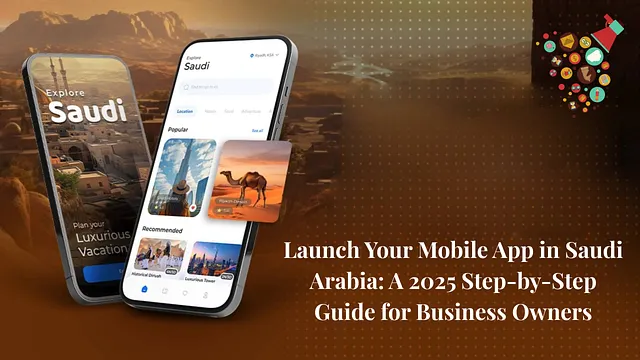
From Idea to App Store: The Complete Guide to Mobile App Development in Saudi Arabia

From Idea to App Store: The Complete Guide to Mobile App Development in Saudi Arabia

Saudi Arabia is at the forefront of digital transformation. With Vision 2030 driving innovation and a rapidly growing population of tech-savvy users, mobile apps have become a core driver of business growth in the Kingdom. From e-commerce and fintech to healthcare, logistics, and on-demand services, Saudi businesses are embracing mobile apps to connect with customers and scale faster. But how do you take a mobile app idea and turn it into a successful launch on the App Store or Google Play? This guide breaks down the complete mobile app development process in Saudi Arabia — step by step. Step 1: Validate Your App Idea for the Saudi Market Before you start building, ask: What problem does my app solve for Saudi users? Is there a cultural or market gap my app can fill? How do local competitors approach the same challenge? For example, apps related to digital payments, e-learning, delivery services, and healthcare are in high demand across Saudi Arabia. Conducting market research and aligning your app idea with local user behavior is critical. Step 2: Plan Features with Local Needs in Mind Your app should start with an MVP (Minimum Viable Product) — a core version that solves the main problem. Later, you can scale with advanced features. In Saudi Arabia, consider adding: Arabic language support (essential for user adoption) Integration with local payment gateways like STC Pay, Mada, or Apple Pay Regulatory compliance (especially for fintech and health apps) Localization for user preferences (Hijri calendar, cultural UI elements) Step 3: Select the Right Development Approach You can choose: Native Apps (Swift for iOS, Kotlin for Android) — Great for scalability and performance. Cross-Platform Apps (Flutter, React Native) — Cost-effective for startups targeting both iOS and Android simultaneously. Hybrid Apps — Suitable for simpler apps with limited features. For Saudi startups and enterprises, cross-platform development is often preferred to reach a wider audience quickly and efficiently. Step 4: Design With a Local Touch The design must balance global usability standards with local cultural relevance. UI (User Interface): Clean, modern visuals that align with Saudi branding. UX (User Experience): Simple navigation, clear Arabic text support, and intuitive flows. Wireframing & Prototyping: Test early with Saudi users to ensure adoption. A user-friendly design is one of the top reasons apps succeed in the Kingdom’s competitive market. Step 5: Develop Your Mobile App Once the design is ready, the coding begins. Saudi app development companies often follow Agile methodology, ensuring flexibility and faster delivery. Front-End Development: Interface and user interactions. Back-End Development: Databases, servers, and APIs. Integration: Secure connections between front-end and back-end. Strong collaboration between developers, designers, and business analysts ensures your app aligns with Saudi market needs. Step 6: Testing Across Devices and Networks Saudi users rely on different devices and network speeds. That’s why rigorous testing is critical: Functionality Testing: Features work as expected. Performance Testing: The app runs smoothly on both 4G and 5G networks. Localization Testing: Arabic text displays correctly, without alignment issues. Security Testing: Data protection compliance with Saudi cybersecurity standards. Step 7: App Store & Google Play Launch in Saudi Arabia To publish your app: Apple App Store (iOS): Requires an Apple Developer account and strict guideline compliance. Google Play Store (Android): Faster approval but still requires detailed app info. You’ll also need metadata in both English and Arabic — titles, descriptions, and screenshots — to maximize visibility among Saudi users. Step 8: Market Your App in Saudi Arabia Launching an app is only the beginning. You need a marketing strategy tailored to the Kingdom: App Store Optimization (ASO): Use Arabic and English keywords. Social Media Campaigns: Leverage platforms like Snapchat, Twitter (X), and Instagram, which are highly popular in Saudi Arabia. Influencer Marketing: Collaborate with Saudi influencers for early traction. Paid Ads: Google Ads and Saudi-focused Facebook/Instagram ads. Partnerships: Collaborate with local businesses to reach a wider audience. Step 9: Gather Feedback and Optimize Once your app is live, monitor: User reviews on app stores Analytics on engagement, retention, and churn rates Suggestions from Saudi users for culturally relevant features Continuous updates and improvements are vital to stay competitive. Step 10: Scale With Advanced Features Once your MVP gains traction, you can expand with advanced features such as: AI and machine learning for personalization Blockchain-based payments for fintech apps AR/VR features for retail and gaming apps IoT integration for smart home and mobility solutions Saudi Arabia’s digital ecosystem is growing rapidly — apps that adapt quickly will thrive. Conclusion Mobile app development in Saudi Arabia is not just about building an app — it’s about aligning with Vision 2030, cultural needs, and user expectations. By following a clear process — from idea validation to launch and beyond — you can transform your concept into a profitable digital product. Whether you’re a startup or an enterprise in Saudi Arabia, the opportunity is massive. With the right strategy, you can move from idea to App Store and create an app that truly resonates with Saudi users. From Idea to App Store: The Complete Guide to Mobile App Development in Saudi Arabia was originally published in Coinmonks on Medium, where people are continuing the conversation by highlighting and responding to this story
Share
Medium2025/09/18 14:46