The post U.S. Lawmaker Pushes CBDC Ban Into NDAA After ‘Broken Promises’ Claim appeared first on Coinpedia Fintech News A new debate has begun in Washington today after U.S. lawmaker Keith Self revealed that he has formally submitted an amendment to add a ban on Central Bank Digital Currencies (CBDCs) to the National Defense Authorization Act (NDAA).  He now says those promises were not kept, which is why he is taking matters into his …The post U.S. Lawmaker Pushes CBDC Ban Into NDAA After ‘Broken Promises’ Claim appeared first on Coinpedia Fintech News A new debate has begun in Washington today after U.S. lawmaker Keith Self revealed that he has formally submitted an amendment to add a ban on Central Bank Digital Currencies (CBDCs) to the National Defense Authorization Act (NDAA).  He now says those promises were not kept, which is why he is taking matters into his …

U.S. Lawmaker Pushes CBDC Ban Into NDAA After ‘Broken Promises’ Claim
2025/12/10 18:48
4 min read
South Africa CBDC decision

The post U.S. Lawmaker Pushes CBDC Ban Into NDAA After ‘Broken Promises’ Claim appeared first on Coinpedia Fintech News

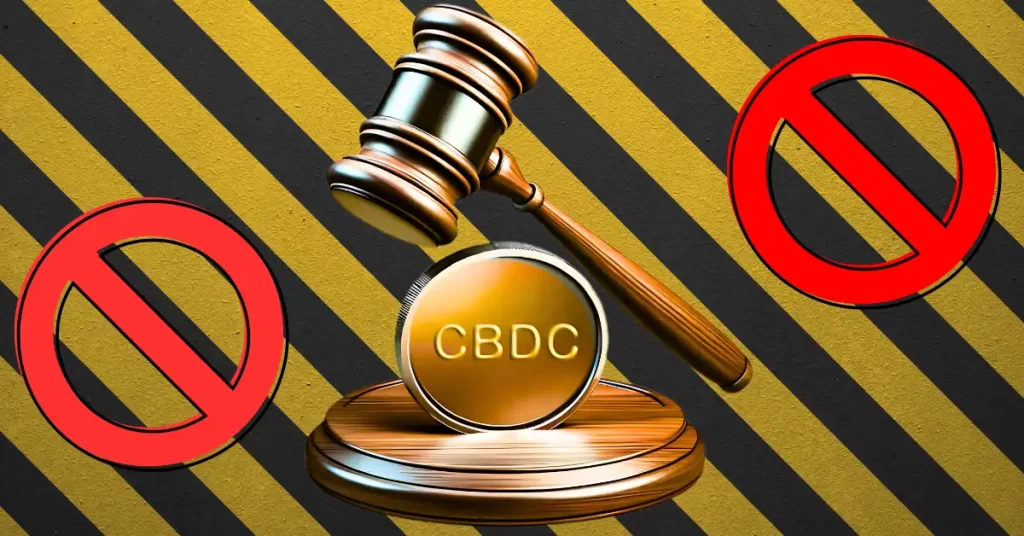
A new debate has begun in Washington today after U.S. lawmaker Keith Self revealed that he has formally submitted an amendment to add a ban on Central Bank Digital Currencies (CBDCs) to the National Defense Authorization Act (NDAA). 

He now says those promises were not kept, which is why he is taking matters into his own hands. His amendment, he explains, is meant to “fix the bill.”

Rep. Keith Introduces CBDC Ban Amendment Before NDAA Vote

On 9th Dec, Rep. Keith Self revealed that he has formally submitted an amendment titled “Anti-CBDC Surveillance State” to the National Defense Authorization Act (NDAA) that goes beyond just banning a digital dollar. 

Self said, It aims to stop the Federal Reserve from creating, testing, or supporting any digital asset that works like a CBDC, even under a different name. However, the proposal also blocks Federal Reserve banks from offering accounts or financial services directly to individuals

Meanwhile, the amendment was filed just as the House Rules Committee prepared to decide whether the bill would move to a full vote.

Self said the move was needed because lawmakers were promised a CBDC ban in the NDAA, but it was later removed.

  • Also Read :
  •   Will the Fed Interest Rate Decision Trigger a Crypto Santa Rally or Santa Dump?
  •   ,

Why Republicans Are Pushing Back on CBDCs

The CBDC issue has caused frustration among several Republican lawmakers. They believe a government-backed digital currency could allow authorities to track spending, limit purchases, or control how people use their money.

Therefore, lawmakers have made it clear that while they support crypto and blockchain innovation, they do not support any system where the government can control how Americans use their money.

For him, this issue is not just about technology; it’s about basic freedom. And, he argues that a major bill like the NDAA must protect citizens from this kind of financial control.

House Rules Committee to Decide the Next Step

The most important moment is coming later today. The House Rules Committee will meet and decide whether Rep. Self’s amendment should move forward for a full vote on the House floor.

This decision will determine whether Congress gets the chance to officially debate, and possibly ban, a U.S. CBDC.

Rep. Self made it clear that he hopes the committee “does the right thing,” especially after what he says were broken commitments earlier in the process.

Trump’s Executive Order Adds Pressure

Earlier this year, President Donald Trump signed an executive order banning federal agencies from promoting or creating CBDCs. The order cited risks to privacy, financial stability, and national control.

Lawmakers now argue that an executive order is not enough and that a permanent legal ban is needed.

Never Miss a Beat in the Crypto World!

Stay ahead with breaking news, expert analysis, and real-time updates on the latest trends in Bitcoin, altcoins, DeFi, NFTs, and more.

bell icon Subscribe to News

FAQs

What is the amendment Keith Self introduced about a CBDC ban?

He filed an “Anti‑CBDC Surveillance State” amendment to the NDAA to prohibit Federal Reserve banks from issuing, testing, or supporting any central bank digital currency — even under a different name.

Why do some U.S. lawmakers want to ban a CBDC?

They argue a CBDC could give the government excessive control — enabling surveillance, spending restrictions, or account freezes — which threatens financial privacy and freedom.

How does this relate to existing legislation on CBDCs in 2025?

The amendment builds on efforts like Anti‑CBDC Surveillance State Act (H.R. 1919), which was introduced earlier in 2025 to block any central‑bank digital currency issuance by the Fed.

What happens next could be the CBDC ban become law via the NDAA?

It depends: the amendment must first pass through the House Rules Committee, then clear a full House vote — only then could it be added to the final NDAA and become law if signed by the President.

Market Opportunity
Union Logo
Union Price(U)
$0.001181
$0.001181$0.001181
+1.19%
USD
Union (U) Live Price Chart
Disclaimer: The articles reposted on this site are sourced from public platforms and are provided for informational purposes only. They do not necessarily reflect the views of MEXC. All rights remain with the original authors. If you believe any content infringes on third-party rights, please contact [email protected] for removal. MEXC makes no guarantees regarding the accuracy, completeness, or timeliness of the content and is not responsible for any actions taken based on the information provided. The content does not constitute financial, legal, or other professional advice, nor should it be considered a recommendation or endorsement by MEXC.

You May Also Like

Circle unveils CCTP V2 for seamless USDC crosschain transfers with Stellar

Circle unveils CCTP V2 for seamless USDC crosschain transfers with Stellar

The post Circle unveils CCTP V2 for seamless USDC crosschain transfers with Stellar appeared on BitcoinEthereumNews.com. Key Takeaways Circle’s CCTP V2 now supports the Stellar blockchain, allowing direct USDC transfers between Stellar and other networks. CCTP V2 eliminates the need for wrapped tokens or traditional bridges, reducing security risks in cross-chain transactions. Circle’s Cross-Chain Transfer Protocol Version 2 (CCTP V2) now supports Stellar, the decentralized blockchain platform designed for cross-border payments. Today’s integration enables seamless USDC transfers between Stellar and other blockchain networks. CCTP V2 allows users to move USD Coin, the stablecoin pegged 1:1 to the US dollar, across different blockchains without requiring wrapped tokens or traditional bridges that can introduce security risks. Source: https://cryptobriefing.com/circle-unveils-cctp-v2-for-usdc-crosschain-transfers-with-stellar/
Share
BitcoinEthereumNews2025/09/19 01:52
Crypto whale loses $6M to sneaky phishing scheme targeting staked Ethereum

Crypto whale loses $6M to sneaky phishing scheme targeting staked Ethereum

The post Crypto whale loses $6M to sneaky phishing scheme targeting staked Ethereum appeared on BitcoinEthereumNews.com. A crypto whale lost more than $6 million in staked Ethereum (stETH) and Aave-wrapped Bitcoin (aEthWBTC) after approving malicious signatures in a phishing scheme on Sept. 18, according to blockchain security firm Scam Sniffer. According to the firm, the attackers disguised their move as a routine wallet confirmation through “Permit” signatures, which tricked the victim into authorizing fund transfers without triggering obvious red flags. Yu Xian, founder of blockchain security company SlowMist, noted that the victim did not recognize the danger because the transaction required no gas fees. He wrote: “From the victim’s perspective, he just clicked a few times to confirm the wallet’s pop-up signature requests, didn’t spend a single penny of gas, and $6.28 million was gone.” How Permit exploits work Permit approvals were originally designed to simplify token transfers. Instead of submitting an on-chain approval and paying fees, a user can sign an off-chain message authorizing a spender. That efficiency, however, has created a new attack surface for malicious players. Once a user signs such a permit, attackers can combine two functions—Permit and TransferFrom—to drain assets directly. Because the authorization takes place off-chain, wallet dashboards show no unusual activity until the funds move. As a result, the assets are gone when the approval executes on-chain, and tokens are redirected to the attacker’s wallet. This loophole has made permit exploits increasingly attractive for malicious actors, who can siphon millions without needing complex hacks or high-cost gas wars. Phishing losses The latest theft highlights a wider trend of escalating phishing campaigns. Scam Sniffer reported that in August alone, attackers stole $12.17 million from more than 15,200 victims. That figure represented a 72% jump in losses compared with July. According to the firm, the most significant share of August’s damages came from three large accounts that accounted for nearly half…
Share
BitcoinEthereumNews2025/09/19 02:31
Scaramucci Says Trump Memecoins Drained Altcoin Market, Yet Sees Bitcoin Reaching $150,000 by Year-End

Scaramucci Says Trump Memecoins Drained Altcoin Market, Yet Sees Bitcoin Reaching $150,000 by Year-End

Anthony Scaramucci, stated that the introduction of Trump coins in January 2025 had a negative impact on the cryptocurrency revolution.
Share
Coinstats2026/02/16 01:57