The post Is the Bitcoin Four-Year Cycle Breaking Down? Analysts Question Old Market Rules appeared first on Coinpedia Fintech News For years, crypto investors haveThe post Is the Bitcoin Four-Year Cycle Breaking Down? Analysts Question Old Market Rules appeared first on Coinpedia Fintech News For years, crypto investors have

Is the Bitcoin Four-Year Cycle Breaking Down? Analysts Question Old Market Rules
2025/12/18 20:59
4 min read
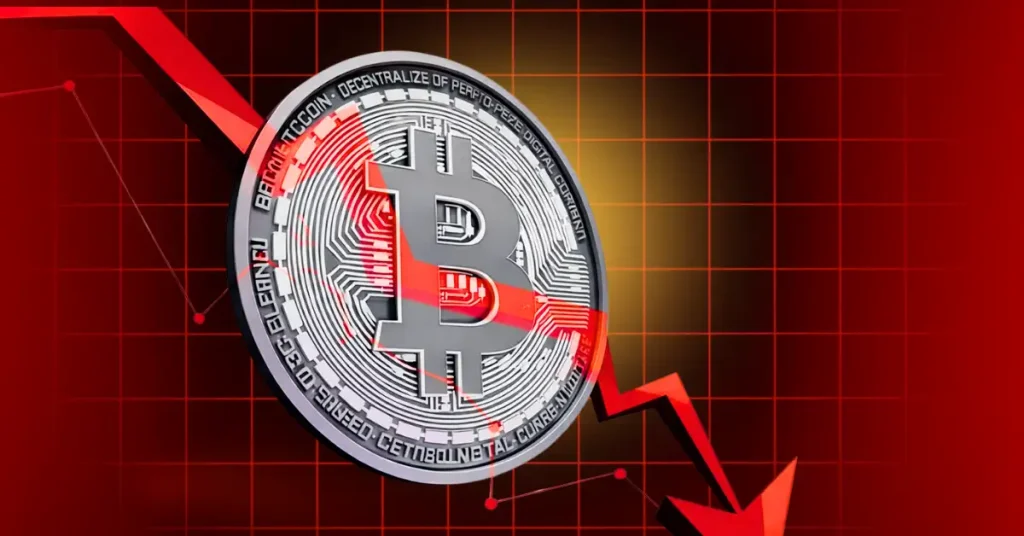
Bitcoin Price Crash

The post Is the Bitcoin Four-Year Cycle Breaking Down? Analysts Question Old Market Rules appeared first on Coinpedia Fintech News

For years, crypto investors have relied on one idea more than almost any other: the Bitcoin four-year cycle. Buy after the crash, wait for the halving, sell into the bull market, repeat. Simple. Predictable. Almost like a cheat code.

Popular crypto analyst Lark Davis recently revisited this idea and raised an uncomfortable question: What if the four-year cycle was never as real as we thought?

Why the Four-Year Cycle Made Sense for So Long

The four-year cycle theory comes from one real event: the Bitcoin halving.

Every four years, Bitcoin’s new supply gets cut in half. Early on, this mattered a lot. Bitcoin started at zero supply, so reducing new coins had a huge effect. Less supply, growing demand, higher prices, the logic was easy to understand.

And for a long time, it seemed to work perfectly. Big rallies followed halvings. Big crashes followed peaks.

The Problem No One Likes to Talk About

Here’s the uncomfortable part.

More than 95% of all Bitcoin that will ever exist has already been mined. What’s left will be released slowly over more than a century. Today, Bitcoin’s supply grows by only about 1% per year, which is actually less than gold.

At this point, cutting that already tiny supply in half doesn’t change much.

So the big question becomes: If the halving barely changes supply anymore, why should it still move price the same way?

What Really Drove Bitcoin’s Big Moves

When you zoom out, Bitcoin’s major highs and lows line up surprisingly well with global liquidity and business cycles, not just halvings.

  • 2017: Economic expansion and easy money
  • 2020–2021: Massive money printing and stimulus
  • 2024: Spot Bitcoin ETFs brought in huge new capital

In fact, Bitcoin reached a new all-time high before the 2024 halving — something that had never happened before. That alone suggests the old rules are changing.

  • Also Read :
  •   Bitcoin Price Today Holds Near $86,600 Amid Thin Liquidity and Market Uncertainty
  •   ,

Bitcoin also shows a strong connection to global money supply and economic activity. When liquidity rises, Bitcoin tends to do well. When it tightens, Bitcoin struggles.

Another strange detail: the most recent Bitcoin all-time high came with almost no excitement. That doesn’t mean the cycle disappeared completely, it means it may be weaker, diluted, and less reliable than before.

Where That Leaves Bitcoin Now

Right now, Bitcoin looks technically weak, and sentiment is low. Attention has shifted to AI, robotics, and tech stocks. At the same time, the macro picture is shifting. Interest rates are coming down. Liquidity is slowly returning. The environment that once pushed Bitcoin higher may be setting up again.

That doesn’t guarantee a rally tomorrow. But it shows the story isn’t over.

Never Miss a Beat in the Crypto World!

Stay ahead with breaking news, expert analysis, and real-time updates on the latest trends in Bitcoin, altcoins, DeFi, NFTs, and more.

bell icon Subscribe to News

FAQs

What is the Bitcoin price prediction for 2025?

Most forecasts expect Bitcoin to stay bullish in 2025, with potential highs around $175K if strong demand, ETF inflows, and adoption continue.

Will Bitcoin hit $1 million by 2030?

While some long-term forecasts are extremely bullish, reaching $1 million by 2030 is speculative. Current credible estimates suggest a potential high around $900,000 by 2030.

Is Bitcoin a good hedge against inflation?

Yes, Bitcoin is increasingly viewed as a digital inflation hedge. Its fixed supply contrasts with expanding fiat currencies, attracting investors seeking to preserve purchasing power.

How much will Bitcoin be in 10 years?

Bitcoin could trade significantly higher in 10 years, with some forecasts expecting it to reach several hundred thousand dollars if adoption keeps growing.

Market Opportunity
Moonveil Logo
Moonveil Price(MORE)
$0.0006449
$0.0006449$0.0006449
+6.01%
USD
Moonveil (MORE) Live Price Chart
Disclaimer: The articles reposted on this site are sourced from public platforms and are provided for informational purposes only. They do not necessarily reflect the views of MEXC. All rights remain with the original authors. If you believe any content infringes on third-party rights, please contact [email protected] for removal. MEXC makes no guarantees regarding the accuracy, completeness, or timeliness of the content and is not responsible for any actions taken based on the information provided. The content does not constitute financial, legal, or other professional advice, nor should it be considered a recommendation or endorsement by MEXC.

You May Also Like

Canada Canadian Portfolio Investment in Foreign Securities rose from previous $9.04B to $17.41B in July

Canada Canadian Portfolio Investment in Foreign Securities rose from previous $9.04B to $17.41B in July

The post Canada Canadian Portfolio Investment in Foreign Securities rose from previous $9.04B to $17.41B in July appeared on BitcoinEthereumNews.com. Information on these pages contains forward-looking statements that involve risks and uncertainties. Markets and instruments profiled on this page are for informational purposes only and should not in any way come across as a recommendation to buy or sell in these assets. You should do your own thorough research before making any investment decisions. FXStreet does not in any way guarantee that this information is free from mistakes, errors, or material misstatements. It also does not guarantee that this information is of a timely nature. Investing in Open Markets involves a great deal of risk, including the loss of all or a portion of your investment, as well as emotional distress. All risks, losses and costs associated with investing, including total loss of principal, are your responsibility. The views and opinions expressed in this article are those of the authors and do not necessarily reflect the official policy or position of FXStreet nor its advertisers. The author will not be held responsible for information that is found at the end of links posted on this page. If not otherwise explicitly mentioned in the body of the article, at the time of writing, the author has no position in any stock mentioned in this article and no business relationship with any company mentioned. The author has not received compensation for writing this article, other than from FXStreet. FXStreet and the author do not provide personalized recommendations. The author makes no representations as to the accuracy, completeness, or suitability of this information. FXStreet and the author will not be liable for any errors, omissions or any losses, injuries or damages arising from this information and its display or use. Errors and omissions excepted. The author and FXStreet are not registered investment advisors and nothing in this article is intended…
Share
BitcoinEthereumNews2025/09/18 02:38
A 3821% surge in 20 years: Why are Pokémon cards valuable investments?

A 3821% surge in 20 years: Why are Pokémon cards valuable investments?

By David Unyime Nkanta Compiled by: TechFlow The Pokémon trading card game is extremely popular around the world, especially in Japan. These cards are very valuable, especially the rare ones. (Image source: Twitter / FADA Pack Magic @FadaPackMagic) Pokémon trading cards have gone from amusement park items to one of the world's hottest alternative investments. According to data from analytics firm Card Ladder, the Pokémon card market has grown 3,821% in value since 2004, far outpacing the S&P 500's 483% increase and Meta Platforms' 1,844% growth. From hobby to high-yield asset Pokémon trading cards, launched by Nintendo in 1996, have become a popular investment, traded across platforms including eBay, TCGplayer, and international expos. The market has seen explosive growth during the pandemic, as stimulus policies and lockdowns have driven collectors toward alternative assets. For some, the investment has yielded life-changing returns. Lucas Shaw, a 27-year-old account manager in Ohio, said the profits from selling the cards helped him pay for his wedding rings and celebrations. Similarly, Justin Wilson, a 32-year-old advertising manager in Oklahoma City, estimates the total value of his collection of 500 cards and 100 sealed items at about $100,000. He considers Pokémon cards part of his investment portfolio, alongside his Roth IRA and securities accounts. The appeal of Pokémon cards lies not only in financial gain but also in their emotional resonance. "You have to collect them all," Wilson said, referencing the series's classic slogan. For many, the cards represent both childhood nostalgia and speculative opportunity. Where does the value of rare Pokémon cards come from? A classic Poké Ball toy with matching Pokémon trading cards. Zapdos, Ninetales, and a trainer card are clearly visible. Image credit: Thimo Pedersen/Unsplash Unlike stocks, Pokémon cards don't generate dividends; their value depends on their rarity, condition, and cultural significance. Cards graded as perfect PSA 10 by the Professional Sports Authenticator (PSA) often fetch exorbitant prices. The most dramatic example occurred in 2022, when influencer Logan Paul purchased a near-perfect "Pikachu Illustrator" card for $5.3 million, setting a Guinness World Record for the most expensive Pokémon card ever sold privately. This event further ignited market interest and highlighted the speculative potential of high-level cards. Risks of the Pokémon Card Market Financial advisors warn against considering collectibles as the core of a portfolio. Card prices are extremely volatile, influenced by hype, media coverage, and collector sentiment. Counterfeit cards also remain a potential threat, with scams frequently occurring. Image source: Flickr/c0rnnibblets Still, the resilience of the Pokémon brand provides some stability to the market. Pokémon spans video games, movies, and merchandise, and unlike sports trading cards, the characters are immune to scandals, making them a safer investment for some collectors. The Future of Collectibles Investing The rapid rise of Pokémon cards reflects a broader shift in people's perception of value. As digital assets like Bitcoin face regulatory scrutiny and tech stocks undergo a market correction, tangible collectibles offer a nostalgic and potentially profitable haven. While the sustainability of its value remains uncertain, the 3,821% growth over the past 20 years has established Pokémon trading cards as the most vivid example of how a childhood hobby can transform into a multi-million dollar investment.
Share
PANews2025/09/18 18:00
Liberty All-Star® Growth Fund, Inc. January 2026 Monthly Update

Liberty All-Star® Growth Fund, Inc. January 2026 Monthly Update

BOSTON–(BUSINESS WIRE)–Below is the January 2026 Monthly Update for the Liberty All-Star Growth Fund, Inc. (NYSE: ASG). Liberty All-Star Growth Fund, Inc. Ticker
Share
AI Journal2026/02/14 09:00