MaGGIe introduces the I-HIM50K and M-HIM2K datasets, featuring over 180,000 synthesized human masks to evaluate instance matting robustness.MaGGIe introduces the I-HIM50K and M-HIM2K datasets, featuring over 180,000 synthesized human masks to evaluate instance matting robustness.

Synthesizing Multi-Instance Human Matting Data with MaskRCNN and BG20K

Abstract and 1. Introduction

  1. Related Works

  2. MaGGIe

    3.1. Efficient Masked Guided Instance Matting

    3.2. Feature-Matte Temporal Consistency

  3. Instance Matting Datasets

    4.1. Image Instance Matting and 4.2. Video Instance Matting

  4. Experiments

    5.1. Pre-training on image data

    5.2. Training on video data

  5. Discussion and References

\ Supplementary Material

  1. Architecture details

  2. Image matting

    8.1. Dataset generation and preparation

    8.2. Training details

    8.3. Quantitative details

    8.4. More qualitative results on natural images

  3. Video matting

    9.1. Dataset generation

    9.2. Training details

    9.3. Quantitative details

    9.4. More qualitative results

8. Image matting

This section expands on the image matting process, providing additional insights into dataset generation and comprehensive comparisons with existing methods. We delve into the creation of I-HIM50K and M-HIM2K datasets, offer detailed quantitative analyses, and present further qualitative results to underscore the effectiveness of our approach.

8.1. Dataset generation and preparation

The I-HIM50K dataset was synthesized from the HHM50K [50] dataset, which is known for its extensive collection of human image mattes. We employed a MaskRCNN [14] Resnet-50 FPN 3x model, trained on the COCO dataset, to filter out single-person images, resulting in a subset of 35,053 images. Following the InstMatt [49] methodology, these images were composited against diverse backgrounds from the BG20K [29] dataset, creating multi-instance scenarios with 2-5 subjects per image. The subjects were resized and positioned to maintain a realistic scale and avoid excessive overlap, as indicated by instance IoUs not exceeding 30%. This process yielded 49,737 images, averaging 2.28 instances per image. During training, guidance masks were generated by binarizing the alpha mattes and applying random dropout, dilation, and erosion operations. Sample images from I-HIM50K are displayed in Fig. 10.

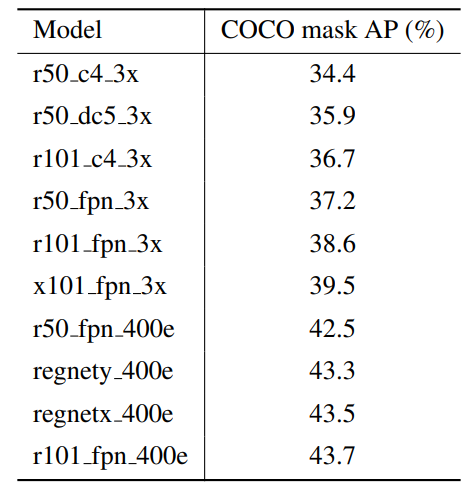
\ The M-HIM2K dataset was designed to test model robustness against varying mask qualities. It comprises ten masks per instance, generated using various MaskRCNN models. More information about models used for this generation process is shown in Table 8. The masks were matched to instances based on the highest IoU with the ground truth alpha mattes, ensuring a minimum IoU threshold of 70%. Masks that did not meet this threshold were artificially generated from ground truth. This process resulted in a comprehensive set of 134,240 masks, with 117,660 for composite and 16,600 for natural images, providing a robust benchmark for evaluating masked guided instance matting. The full dataset I-HIM50K and M-HIM2K will be released after the acceptance of this work.

\ Figure 10. Examples of I-HIM50K dataset. (Best viewed in color).

\ Table 8. Ten models with vary mask quality are used in MHIM2K. The MaskRCNN models are from detectron2 trained on COCO with different settings.

\

:::info Authors:

(1) Chuong Huynh, University of Maryland, College Park ([email protected]);

(2) Seoung Wug Oh, Adobe Research (seoh,[email protected]);

(3) Abhinav Shrivastava, University of Maryland, College Park ([email protected]);

(4) Joon-Young Lee, Adobe Research ([email protected]).

:::


:::info This paper is available on arxiv under CC by 4.0 Deed (Attribution 4.0 International) license.

:::

\

Market Opportunity
Multichain Logo
Multichain Price(MULTI)
$0.03883
$0.03883$0.03883
+1.30%
USD
Multichain (MULTI) Live Price Chart
Disclaimer: The articles reposted on this site are sourced from public platforms and are provided for informational purposes only. They do not necessarily reflect the views of MEXC. All rights remain with the original authors. If you believe any content infringes on third-party rights, please contact [email protected] for removal. MEXC makes no guarantees regarding the accuracy, completeness, or timeliness of the content and is not responsible for any actions taken based on the information provided. The content does not constitute financial, legal, or other professional advice, nor should it be considered a recommendation or endorsement by MEXC.

You May Also Like

Trump’s Crypto Gains Risk Backlash Post-Presidency, Ethereum Veteran Advises Urgency

Trump’s Crypto Gains Risk Backlash Post-Presidency, Ethereum Veteran Advises Urgency

The post Trump’s Crypto Gains Risk Backlash Post-Presidency, Ethereum Veteran Advises Urgency appeared on BitcoinEthereumNews.com. President Trump’s administration
Share
BitcoinEthereumNews2025/12/21 01:29
China Blocks Nvidia’s RTX Pro 6000D as Local Chips Rise

China Blocks Nvidia’s RTX Pro 6000D as Local Chips Rise

The post China Blocks Nvidia’s RTX Pro 6000D as Local Chips Rise appeared on BitcoinEthereumNews.com. China Blocks Nvidia’s RTX Pro 6000D as Local Chips Rise China’s internet regulator has ordered the country’s biggest technology firms, including Alibaba and ByteDance, to stop purchasing Nvidia’s RTX Pro 6000D GPUs. According to the Financial Times, the move shuts down the last major channel for mass supplies of American chips to the Chinese market. Why Beijing Halted Nvidia Purchases Chinese companies had planned to buy tens of thousands of RTX Pro 6000D accelerators and had already begun testing them in servers. But regulators intervened, halting the purchases and signaling stricter controls than earlier measures placed on Nvidia’s H20 chip. Image: Nvidia An audit compared Huawei and Cambricon processors, along with chips developed by Alibaba and Baidu, against Nvidia’s export-approved products. Regulators concluded that Chinese chips had reached performance levels comparable to the restricted U.S. models. This assessment pushed authorities to advise firms to rely more heavily on domestic processors, further tightening Nvidia’s already limited position in China. China’s Drive Toward Tech Independence The decision highlights Beijing’s focus on import substitution — developing self-sufficient chip production to reduce reliance on U.S. supplies. “The signal is now clear: all attention is focused on building a domestic ecosystem,” said a representative of a leading Chinese tech company. Nvidia had unveiled the RTX Pro 6000D in July 2025 during CEO Jensen Huang’s visit to Beijing, in an attempt to keep a foothold in China after Washington restricted exports of its most advanced chips. But momentum is shifting. Industry sources told the Financial Times that Chinese manufacturers plan to triple AI chip production next year to meet growing demand. They believe “domestic supply will now be sufficient without Nvidia.” What It Means for the Future With Huawei, Cambricon, Alibaba, and Baidu stepping up, China is positioning itself for long-term technological independence. Nvidia, meanwhile, faces…
Share
BitcoinEthereumNews2025/09/18 01:37
Academic Publishing and Fairness: A Game-Theoretic Model of Peer-Review Bias

Academic Publishing and Fairness: A Game-Theoretic Model of Peer-Review Bias

Exploring how biases in the peer-review system impact researchers' choices, showing how principles of fairness relate to the production of scientific knowledge based on topic importance and hardness.
Share
Hackernoon2025/09/17 23:15