A CIO recently shared with me that their biggest challenge with AI isn’t deploying it – it’s discovering it when it’s been deployed by someone else. Despite havingA CIO recently shared with me that their biggest challenge with AI isn’t deploying it – it’s discovering it when it’s been deployed by someone else. Despite having

Revealing the Invisible: Why CIOs Must Act Now on AI Sprawl

A CIO recently shared with me that their biggest challenge with AI isn’t deploying it – it’s discovering it when it’s been deployed by someone else. Despite having clear policies in place, the company had uncovered dozens of unapproved AI tools in use across finance, HR, sales and marketing. Most were unsanctioned, few were documented, and several handled sensitive data that should never have been processed outside the company’s control.    

This invisible layer of “shadow AI” is quickly becoming every CIO’s nightmare: AI sprawl

AI sprawl describes what happens when undocumented, unchecked, and unmanaged AI tools spread across an organisation. Employees today adopt AI impulsively, often “vibe subscribing” tools based on a LinkedIn post, a peer recommendation, or for a quick workaround. They use company expense cards, personal cards or freemium services – none of which are approved. Freemium tools are often the most risky, enabling uncontrolled data exfiltration, processing and the training of external AI models. All outside the company’s visibility or consent. 

The result is a fragmented and unregulated digital environment that expands out of sight. For enterprises, this creates not just a technology burden, but a governance crisis, one that will define the role of the CIO going forward. 

AI Blind Spots 

As everyone knows, AI adoption is exploding. Innovation is welcome and can help create competitive advantages, but the pace of uptake and lack of coordination is creating visibility gaps that IT and compliance teams are struggling to close.

There are several factors driving this trend: 

  • Flood of easy-access tools: From generative AI assistants to low-code AI analytics platforms, there’s almost no friction involved in adopting new tools. If an employee can start a free trial with a credit card, they likely will. 
  • Decentralised procurement: Business units bypass IT to source their own AI solutions, leaving them unaccounted for and entirely disconnected from central identity management. This “shadow AI” mirrors the shadow IT issues of a decade ago, but with higher stakes, as AI tools not only store but also process and analyse sensitive corporate data. 
  • Experimentation culture: Enterprises reward innovation but often lack guardrails. POCs and pilots and evaluations multiply rapidly, becoming operational without undergoing formal review. 

When all of these factors come together, they result in critical blind spots where AI is in use, but IT teams, or those working in conjunction with the CIO, can’t see it measure it, or secure it. And then come the risks.  

The Risks CIOs Can’t Ignore 

CIOs today must weigh three categories of risk most heavily: 

  1. Security vulnerabilities

AI tools, particularly generative models, ingest and process sensitive information. When employees use unvetted tools, data will inadvertently leave the secure perimeter. Metomic research shows 64% of enterprises have deployed at least one AI application with critical vulnerabilities – and a third only discovered the issue after an incident.  

  1. Rising cost and inefficiency

The average enterprise now juggles 125 different SaaS applications and relies on five or more data discovery and security tools. This kind of software bloat can be costly, with overlapping license fees, duplicated features, and additional management overhead for tools that can often be unfit for purpose. Worse, sprawling stacks lower ROI by dispersing investments across fragmented initiatives instead of scaling enterprise-wide capabilities. 

  1. Compliance exposure

AI regulation is beginning to take shape across the world, giving organisations a clearer idea of where their compliance requirements lie. In Europe, with the EU AI Act now in place, firms face fines up to 35,000,000 EUR or 7% of turnover for Article 5 violations, and up to 15,000,000 EUR or 3% for other violations. Without clear ownership of every AI process, CIOs cannot guarantee alignment with policies, exposing the enterprise to existential fines. 

What CIOs can do to combat AI Sprawl 

If left unchecked, AI sprawl could define enterprise dysfunction by the end of this decade. Imagine a 2030 organisation where AI tools outnumber employees, with no clear record of which models influence business outcomes, where sensitive data flows, and how bias or errors enter decision-making. In such an environment, operational risk eclipses competitive advantage. AI ceases to be a driver of innovation and instead becomes an unmanageable liability. But thankfully we are still in the nascent stages of AI adoption. CIOs have the chance to seize control before sprawl becomes entropy. Decisive leadership can reverse this trend. 

CIOs should focus on three strategic interventions: 

  • Establish strong discovery and monitoring frameworks: Deploy tooling that illuminates every AI tool in use, whether centralised or shadow. It is impossible to govern what you cannot see. 
  • Balance innovation with accountability: Draft and communicate policies that set clear expectations. Ensure employees understand what is approved, what requires review, and what is prohibited. Importantly, reinforce that governance is not a blocker but an enabler of sustainable innovation. 
  • Engage and educate teams: Employees rarely adopt shadow AI maliciously; they’re looking for opportunities. CIOs should position governance as collaborative, rather than punitive. Incentives, workshops, and transparent approval processes can bring hidden usage into the open. 

This approach transforms governance from restriction into empowerment – a way of showing employees that AI use is welcome, but under clear, safe, and value-driven conditions. 

Revealing the invisible 

AI sprawl is the modern embodiment of the ‘move fast and breaks things’ philosophy. It creeps in through enthusiasm and experimentation, only to surface later as cost, complexity, and compliance exposure. For CIOs, managing AI is not enough – their mandate now is to reveal the invisible

CIOs who act decisively now will unlock real, scalable innovation. Those who don’t address the problem of AI sprawl now in their enterprise may find that the surging adoption of AI agents will only metastasise the problem. 

Market Opportunity
WHY Logo
WHY Price(WHY)
$0.00000001619
$0.00000001619$0.00000001619
+12.97%
USD
WHY (WHY) Live Price Chart
Disclaimer: The articles reposted on this site are sourced from public platforms and are provided for informational purposes only. They do not necessarily reflect the views of MEXC. All rights remain with the original authors. If you believe any content infringes on third-party rights, please contact [email protected] for removal. MEXC makes no guarantees regarding the accuracy, completeness, or timeliness of the content and is not responsible for any actions taken based on the information provided. The content does not constitute financial, legal, or other professional advice, nor should it be considered a recommendation or endorsement by MEXC.

You May Also Like

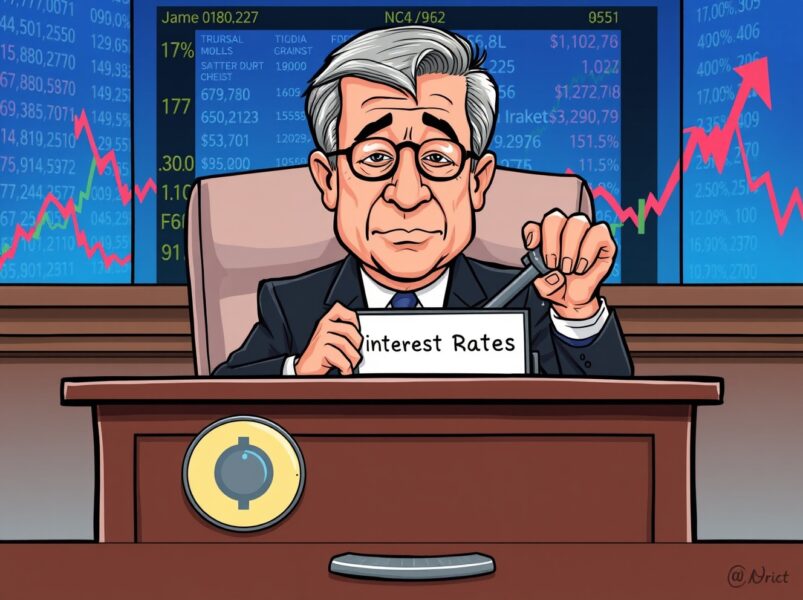
Crucial Fed Rate Cut: Powell’s Bold Risk Management Move Explained

Crucial Fed Rate Cut: Powell’s Bold Risk Management Move Explained

BitcoinWorld Crucial Fed Rate Cut: Powell’s Bold Risk Management Move Explained In a significant development for global financial markets, Federal Reserve Chair Jerome Powell recently described the latest Fed rate cut as a critical risk management measure. This statement immediately captured the attention of investors, economists, and especially those in the dynamic cryptocurrency space. Understanding Powell’s rationale and the potential implications of this move is essential for navigating today’s complex economic landscape. What Exactly is a Fed Rate Cut and Why Does it Matter? A Fed rate cut refers to the Federal Reserve lowering the target range for the federal funds rate. This is the interest rate at which commercial banks borrow and lend their excess reserves to each other overnight. When the Fed lowers this rate, it typically makes borrowing cheaper across the entire economy. This decision impacts everything from mortgage rates to business loans. The Fed uses interest rates as a primary tool to influence economic activity, aiming to achieve maximum employment and stable prices. A lower rate often stimulates spending and investment, but it can also signal concerns about economic slowdown. Key reasons for a rate cut often include: Slowing economic growth or recession fears. Low inflation or deflationary pressures. Global economic instability impacting domestic markets. A desire to provide more liquidity to the financial system. Powell’s emphasis on ‘risk management’ suggests a proactive approach. The Fed is not just reacting to current data but also anticipating potential future challenges. They are essentially trying to prevent a worse economic outcome by adjusting policy now. How Does a Fed Rate Cut Influence the Broader Economy? When the Federal Reserve implements a Fed rate cut, it sends ripples throughout the financial world. For traditional markets, lower interest rates generally mean: Boost for Stocks: Companies can borrow more cheaply, potentially increasing profits and stock valuations. Investors might also move money from lower-yielding bonds into equities. Cheaper Borrowing: Consumers and businesses enjoy lower rates on loans, from mortgages to credit cards, encouraging spending and investment. Weaker Dollar: Lower rates can make a country’s currency less attractive to foreign investors, potentially leading to a weaker dollar. Bond Market Shifts: Existing bonds with higher yields become more attractive, while newly issued bonds will have lower yields. This shift in monetary policy aims to inject confidence and liquidity into the system, countering potential economic headwinds. However, there’s always a delicate balance to strike, as too much stimulus can lead to inflationary pressures down the line. What Does This Fed Rate Cut Mean for Cryptocurrency Investors? The impact of a Fed rate cut on the cryptocurrency market is often a topic of intense discussion. While crypto assets operate independently of central banks, they are not immune to broader macroeconomic forces. Here’s how a rate cut can play out: Increased Risk Appetite: With traditional savings and bond yields potentially lower, investors might seek higher returns in riskier assets, including cryptocurrencies like Bitcoin and Ethereum. Inflation Hedge Narrative: Some view cryptocurrencies, particularly Bitcoin, as a hedge against inflation and traditional currency debasement. If a rate cut leads to concerns about inflation, this narrative could gain traction. Liquidity Influx: A more accommodative monetary policy can increase overall liquidity in the financial system, some of which may flow into digital assets. Dollar Weakness: A weaker dollar, a potential consequence of rate cuts, can sometimes make dollar-denominated assets like crypto more appealing to international investors. However, it’s crucial to remember that the crypto market also has its unique drivers, including technological developments, regulatory news, and market sentiment. While a Fed rate cut can provide a tailwind, it’s not the sole determinant of crypto performance. Navigating the New Landscape: Actionable Insights for Crypto Investors Given the Federal Reserve’s stance on risk management through a Fed rate cut, what steps can crypto investors consider? Stay Informed: Keep a close watch on further Fed announcements and economic data. Understanding the broader macroeconomic picture is vital. Diversify Your Portfolio: While a rate cut might favor risk assets, a balanced portfolio that includes a mix of traditional and digital assets can help mitigate volatility. Long-Term Perspective: Focus on the fundamental value and long-term potential of your chosen cryptocurrencies rather than short-term fluctuations driven by macro news. Assess Risk Tolerance: Re-evaluate your personal risk tolerance in light of potential market shifts. Lower rates can encourage speculation, but prudence remains key. Powell’s description of the Fed rate cut as a risk management measure highlights the central bank’s commitment to maintaining economic stability. For cryptocurrency enthusiasts, this move underscores the increasing interconnectedness of traditional finance and the digital asset world. While a rate cut can create opportunities, a thoughtful and informed approach is always the best strategy. Frequently Asked Questions (FAQs) What exactly is a Fed rate cut? A Fed rate cut is when the Federal Reserve lowers its target for the federal funds rate, which is the benchmark interest rate banks charge each other for overnight lending. This action makes borrowing cheaper across the economy, aiming to stimulate economic activity. Why did Powell emphasize “risk management” for this Fed rate cut? Jerome Powell emphasized “risk management” to indicate that the Fed was proactively addressing potential economic slowdowns or other future challenges. It suggests a preventative measure to safeguard against adverse economic conditions rather than merely reacting to existing problems. How does a Fed rate cut typically affect the crypto market? A Fed rate cut can make traditional investments less attractive due to lower yields, potentially driving investors towards higher-risk, higher-reward assets like cryptocurrencies. It can also increase overall market liquidity and strengthen the narrative of crypto as an inflation hedge. Should crypto investors change their strategy after a rate cut? While a rate cut can influence market dynamics, crypto investors should primarily focus on their long-term strategy, fundamental research, and risk tolerance. It’s wise to stay informed about macroeconomic trends but avoid making impulsive decisions based solely on a single policy change. What are the potential downsides of a Fed rate cut? Potential downsides include increased inflationary pressures if the economy overheats, a weaker national currency, and the possibility of creating asset bubbles as investors chase higher returns in riskier markets. It can also signal underlying concerns about economic health. Did you find this article insightful? Share your thoughts and help others understand the implications of the Fed’s latest move! Follow us on social media for more real-time updates and expert analysis. To learn more about the latest crypto market trends, explore our article on key developments shaping Bitcoin’s price action. This post Crucial Fed Rate Cut: Powell’s Bold Risk Management Move Explained first appeared on BitcoinWorld.
Share
Coinstats2025/09/18 16:40
Motive Files Registration Statement for Proposed Initial Public Offering

Motive Files Registration Statement for Proposed Initial Public Offering

SAN FRANCISCO–(BUSINESS WIRE)–Motive Technologies, Inc., the AI platform for physical operations, today announced that it has filed a registration statement on
Share
AI Journal2025/12/24 07:00
New Gold Protocol's NGP token was exploited and attacked, resulting in a loss of approximately $2 million.

New Gold Protocol's NGP token was exploited and attacked, resulting in a loss of approximately $2 million.

PANews reported on September 18th that according to Paidun monitoring, New Gold Protocol's NGP token was exploited in an attack, resulting in a loss of approximately $2 million. The NGP token plummeted 88% in an hour, and the attacker deposited the stolen funds (443.8 ETH) into TornadoCash.
Share
PANews2025/09/18 11:10