Digital asset users are raising concerns about filing crypto taxes as the volume of on-chain activity continues to grow. These issues come amid a regulatory shiftDigital asset users are raising concerns about filing crypto taxes as the volume of on-chain activity continues to grow. These issues come amid a regulatory shift

The Hidden Cost of Crypto Profits: Why Investors Struggle to File Their Taxes

2026/01/08 07:00
3 min read

Digital asset users are raising concerns about filing crypto taxes as the volume of on-chain activity continues to grow.

These issues come amid a regulatory shift marked by the adoption of the Crypto-Asset Reporting Framework (CARF) across various countries. This aims to address long-standing gaps in cryptocurrency tax oversight.

IRS Crypto Tax Reporting Requirements in the US

For context, the Internal Revenue Service (IRS) treats digital assets as property, requiring the reporting of income and capital gains from transactions, such as sales, service payments, staking, airdrops, and more.

It is worth noting that simply holding cryptocurrency does not result in a gain or loss and is therefore not subject to tax. Taxation occurs only when the asset is sold, and cash or another cryptocurrency is received. At that point, the gains are considered “realized,” creating a taxable event.

For the 2025 tax year, the standard IRS filing deadline is April 15, 2026, unless the date falls on a weekend or holiday. Taxpayers may request an extension until October 15, 2026, but this extension applies only to filing, not to payment.

Investors Highlight Challenges in Filing Crypto Taxes Amid High-Volume Transactions

While tax guidance is quite clear, execution remains complex. For investors with high transaction volumes, reconciling activity across centralized exchanges, decentralized exchanges, bridges, liquidity pools, derivatives platforms, and multiple wallets has become a significant challenge. 

Errors in transaction classification or cost basis calculation can materially affect reported gains and losses. 

These challenges are most evident among high-frequency traders. In one shared case, an investor known as “Crypto Safe” reported executing more than 17,000 transactions across multiple blockchains in 2025. 

The user added that existing tax software could collect transaction histories but was unable to calculate taxes accurately without extensive manual review.

According to the user, this approach could result in an estimated overpayment of $15,000 to $ 30,000 compared to the actual tax liability. This situation has drawn attention from other investors.

Pseudonymous investor “Snooper” shared that filing crypto taxes, especially at high transaction volumes, requires advanced tax tools, familiarity with blockchain explorers, and manual data imports. Even with these tools, the process remains complex.

The case illustrates that proper compliance increasingly requires technical expertise beyond standard accounting practices.

Global Crypto Tax Reporting Enters a New Phase

Meanwhile, 2026 marked a major shift in global crypto tax regulation across many jurisdictions. As of January 1, 2026, 48 jurisdictions have implemented CARF.

This framework requires in-scope service providers to collect expanded customer data, verify users’ tax residency, and submit annual reports detailing account balances and transaction activity to domestic tax authorities.

That data will then be shared across borders under existing international information-exchange agreements. While the first automatic international exchanges of this information are scheduled for January 1, 2026, this date serves as the effective date for jurisdictions to implement the necessary legal frameworks and reporting systems.

The initiative includes the UK, Germany, France, Japan, South Korea, Brazil, and many EU nations. The United States, Canada, Australia, and Singapore are scheduled to join later. 

Overall, 75 jurisdictions have committed to CARF. However, the move has attracted substantial criticism from the community.

These developments underline a widening gap between regulatory expectations and the practical ability of investors to comply. While governments are building reporting infrastructure, many investors continue to rely on tools that struggle to handle high-volume, multi-chain activity.

As tax policies tighten globally, high-frequency crypto users face growing pressure to develop sophisticated compliance workflows or risk inaccurate filings, higher tax costs, and potential disputes with tax authorities.

Market Opportunity
Belong Logo
Belong Price(LONG)
$0.002484
$0.002484$0.002484
-0.48%
USD
Belong (LONG) Live Price Chart
Disclaimer: The articles reposted on this site are sourced from public platforms and are provided for informational purposes only. They do not necessarily reflect the views of MEXC. All rights remain with the original authors. If you believe any content infringes on third-party rights, please contact [email protected] for removal. MEXC makes no guarantees regarding the accuracy, completeness, or timeliness of the content and is not responsible for any actions taken based on the information provided. The content does not constitute financial, legal, or other professional advice, nor should it be considered a recommendation or endorsement by MEXC.

You May Also Like

Ethereum unveils roadmap focusing on scaling, interoperability, and security at Japan Dev Conference
Ethereum unveils roadmap focusing on scaling, interoperability, and security at Japan Dev Conference

The post Ethereum unveils roadmap focusing on scaling, interoperability, and security at Japan Dev Conference appeared on BitcoinEthereumNews.com. Key Takeaways Ethereum’s new roadmap was presented by Vitalik Buterin at the Japan Dev Conference. Short-term priorities include Layer 1 scaling and raising gas limits to enhance transaction throughput. Vitalik Buterin presented Ethereum’s development roadmap at the Japan Dev Conference today, outlining the blockchain platform’s priorities across multiple timeframes. The short-term goals focus on scaling solutions and increasing Layer 1 gas limits to improve transaction capacity. Mid-term objectives target enhanced cross-Layer 2 interoperability and faster network responsiveness to create a more seamless user experience across different scaling solutions. The long-term vision emphasizes building a secure, simple, quantum-resistant, and formally verified minimalist Ethereum network. This approach aims to future-proof the platform against emerging technological threats while maintaining its core functionality. The roadmap presentation comes as Ethereum continues to compete with other blockchain platforms for market share in the smart contract and decentralized application space. Source: https://cryptobriefing.com/ethereum-roadmap-scaling-interoperability-security-japan/
Share
BitcoinEthereumNews2025/09/18 00:25
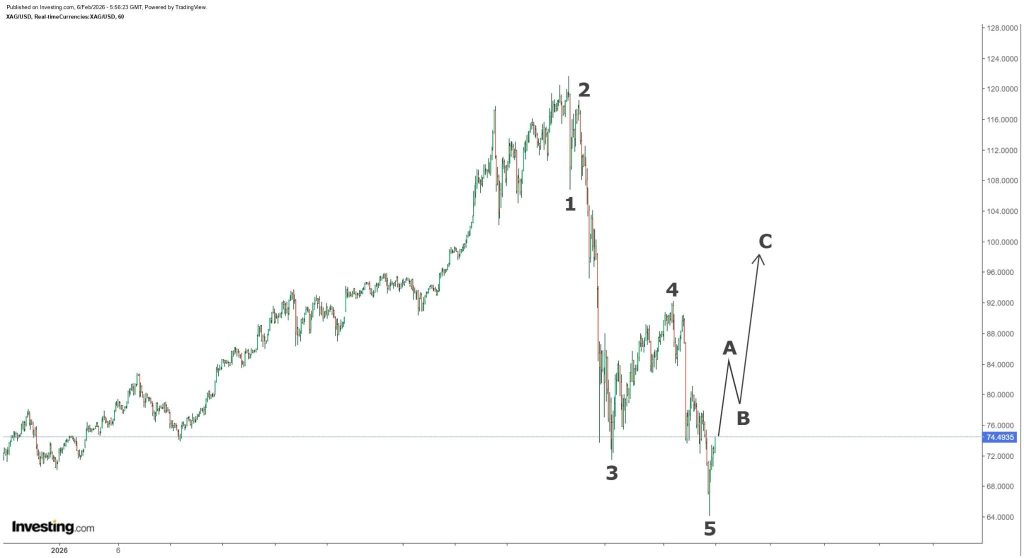
Silver Price Crash Is Over “For Real This Time,” Analyst Predicts a Surge Back Above $90

Silver Price Crash Is Over “For Real This Time,” Analyst Predicts a Surge Back Above $90

Silver has been taking a beating lately, and the Silver price hasn’t exactly been acting like a safe haven. After running up into the highs, the whole move reversed
Share
Captainaltcoin2026/02/07 03:15
Tapzi is Investors’ 1000x Pick in Volatile Market

Tapzi is Investors’ 1000x Pick in Volatile Market

The post Tapzi is Investors’ 1000x Pick in Volatile Market appeared on BitcoinEthereumNews.com. Crypto News 18 September 2025 | 00:05 Bitcoin swings after CPI data release as Tapzi’s presale gains momentum, emerging as a top crypto project in 2025. The crypto market moved sharply last week after the release of US Consumer Price Index (CPI) data. Bitcoin, the largest digital asset, reacted within minutes of the announcement, recording rapid swings before settling back near earlier levels.  At the same time, presale projects continued to attract investors, with Tapzi emerging as one of the most-watched tokens this month. It is being picked by investors as the next crypto to explode due to its high-growth potential in Tier 1 and Tier 2 countries, with Web3 gaming’s increasing adoption. Tapzi Presale Draws Attention While Bitcoin reacted to economic data, Tapzi’s presale has become a focal point among both retail and larger investors. Tapzi is a Web3 gaming platform designed to merge competitive gameplay with blockchain-based settlements. Players stake TAPZI tokens in head-to-head matches of chess, checkers, rock-paper-scissors, and tic-tac-toe. Winners receive tokens directly from prize pools funded by players, not by inflationary rewards. Don’t Watch the Wave – Ride It With $TAPZI! The presale opened with tokens priced at $0.0035. More than 27 million tokens have already been sold, with prices set to increase in each new stage. Analysts following the sale point to potential gains of around 300% once TAPZI lists on exchanges later this year. Liquidity locks and vesting schedules are in place to reduce the risks of sharp sell-offs after launch. This has placed Tapzi on the radar of investors searching for the best crypto to buy now. Bitcoin Price Reacts to CPI Last week, Bitcoin climbed toward $114,000 before jumping to $114,500, its highest level in weeks. The gains were short-lived as the price quickly dropped by $1,000. At press time, Bitcoin…
Share
BitcoinEthereumNews2025/09/18 06:26