The post Should Politicians Be Able to Use Prediction Markets? House Bill Proposes Ban appeared on BitcoinEthereumNews.com. In brief Rep. Torres proposed the PublicThe post Should Politicians Be Able to Use Prediction Markets? House Bill Proposes Ban appeared on BitcoinEthereumNews.com. In brief Rep. Torres proposed the Public

Should Politicians Be Able to Use Prediction Markets? House Bill Proposes Ban

4 min read

In brief

  • Rep. Torres proposed the Public Integrity in Financial Prediction Markets Act to keep federal officials off prediction markets.
  • The bill follows controversy over a Polymarket trader winning a bet on Venezuelan President Nicolás Maduro’s removal, placed mere hours before his capture.
  • Former House Speaker Nancy Pelosi is among 30 House members supporting the bill alongside Torres.

Rep. Ritchie Torres (D-NY) and 30 of his House of Representatives colleagues, including Former House Speaker Nancy Pelosi (D-CA), are making a push to ban government officials from accessing prediction markets.

The lawmakers introduced new legislation, the Public Integrity in Financial Prediction Markets Act of 2026, on Friday morning.

The bill would stop lawmakers and their staff from participating in prediction markets. In the context of the bill, that would include all federal elected officials, political appointees, and employees of the House of Representatives, Senate, and other executive agencies.

The bill argues that D.C. insiders should be blocked from participating in markets when they possess “material non-public information” about a market or the ability to influence its outcome.

The term is borrowed from securities law and is used to stop people with insider information about a company from trading securities. Prediction markets and the companies that offer them, like Kalshi and Polymarket, have so far been exclusively regulated by the Commodities and Futures Trading Commission.

Earlier this week, Polymarket faced scrutiny after a trader won more than $400,000 on a bet that Venezuelan President Nicolás Maduro would be removed from office before the end of the month. Criticism focused on the timing of the bet, which appeared just hours before U.S. special forces apprehended Maduro.

“The most corrupt corner of Washington, D.C. may well be the intersection of prediction markets and the federal government—where insider trading and self-dealing are no longer imagined risks but demonstrated dangers,” said Rep. Torres, in a statement. “We ignore this plain-sight corruption at our own peril.”

Torres, Pelosi, and their House colleagues aren’t the only ones crying foul over what appears to be unfair predictions placed by people with insider knowledge in D.C..

Sen. Chris Murphy (D-CT) included a clip of a recent White House press conference in his own criticism of allowing elected officials access to bet on markets that they can directly influence.

The clip shows the last 30 seconds of a White House press conference, and a timer showing that the event concluded right before it had lasted 1 hour and 5 minutes—which created a huge windfall for predictors who bet against the press conference lasting 65 minutes.

“Who cares about the length of a press conference? What idiot is betting on that?” he wrote on X. “But we should definitely care that there are markets that give incentives to people with power to change outcomes so they or people they know can get rich on a big bet. It’s insane we allow this.”

Loxley Fernandes, the CEO and co-founder of Dastan—which owns prediction protocol Myriad and also an editorially independent Decrypt—argued that participation from insiders is more of a feature than a bug.

“Academically speaking, prediction markets are one of the most effective tools for rooting out inside information and maximizing the efficiency and speed of information transmission,” he said earlier this week.

While he does consider insider trading to be a problem, he does take issue with the comparison between prediction markets and traditional gambling. “To date, we have looked at modern prediction markets as alternative casinos—and I believe this framing is incorrect,” he added.

Daily Debrief Newsletter

Start every day with the top news stories right now, plus original features, a podcast, videos and more.

Source: https://decrypt.co/354167/should-politicians-use-prediction-markets-house-bill-proposes-ban

Market Opportunity
Housecoin Logo
Housecoin Price(HOUSE)
$0.0007641
$0.0007641$0.0007641
-4.30%
USD
Housecoin (HOUSE) Live Price Chart
Disclaimer: The articles reposted on this site are sourced from public platforms and are provided for informational purposes only. They do not necessarily reflect the views of MEXC. All rights remain with the original authors. If you believe any content infringes on third-party rights, please contact [email protected] for removal. MEXC makes no guarantees regarding the accuracy, completeness, or timeliness of the content and is not responsible for any actions taken based on the information provided. The content does not constitute financial, legal, or other professional advice, nor should it be considered a recommendation or endorsement by MEXC.

You May Also Like

Three dormant wallets, suspected to belong to the same entity, purchased 5,970 ETH eight hours ago.

Three dormant wallets, suspected to belong to the same entity, purchased 5,970 ETH eight hours ago.

PANews reported on February 4 that, according to Lookonchain monitoring, three wallets that had been dormant for four years (likely controlled by the same entity
Share
PANews2026/02/04 11:36
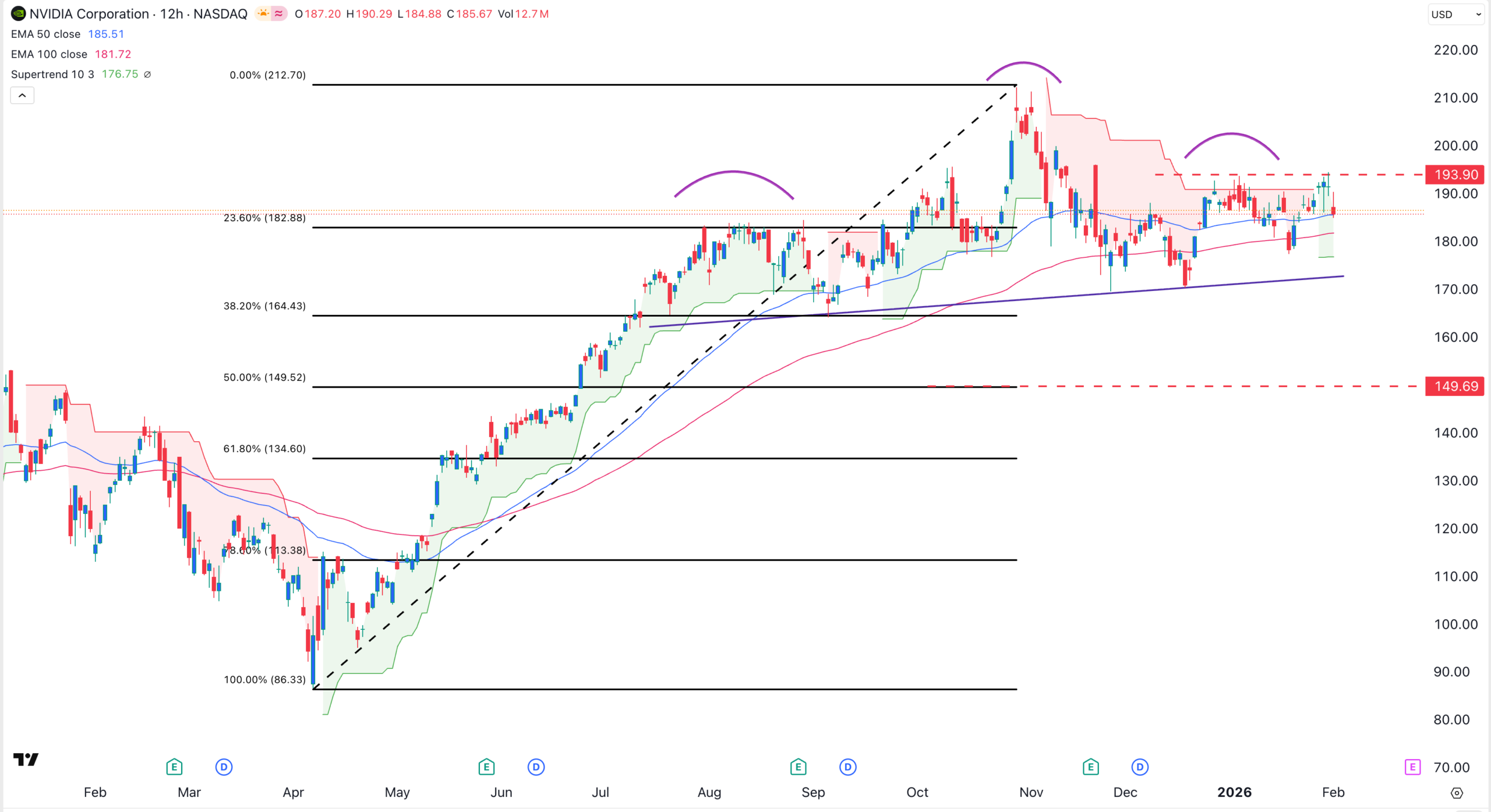
NVIDIA Stock Price Analysis as OpenAI Issues Concerns About its Chips

NVIDIA Stock Price Analysis as OpenAI Issues Concerns About its Chips

Key Insights NVIDIA stock started the week in the red. It crashed by over 2%. Meanwhile, the S&P 500, Dow Jones, and Nasdaq 100 moved close to their all-time highs
Share
Themarketperiodical2026/02/04 11:27
Ondo Finance Launches USDY Yieldcoin on Stellar, Bringing Tokenized U.S. Treasuries to Users

Ondo Finance Launches USDY Yieldcoin on Stellar, Bringing Tokenized U.S. Treasuries to Users

Ondo Finance, a U.S.-based digital asset firm specializing in bringing traditional financial products on-chain through tokenization, is expanding its yieldcoin USDY to the Stellar network. This lates update marks a step forward in merging tokenized real-world assets with a global payments infrastructure, unlocking new opportunities for users worldwide. The announcement was made at the Stellar Meridian event in Copacabana, Rio de Janeiro, on September 17. USDY Joins the Stellar Ecosystem Ondo Finance, a recognized leader in tokenized real-world assets, announced the deployment of United States Dollar Yield (USDY) on Stellar, the payments-focused blockchain known for speed and low transaction costs. USDY is the most widely available “yieldcoin,” offering investors access to onchain assets backed by U.S. Treasuries. This launch allows Stellar’s global user base to tap into permissionless, yield-bearing assets tied to one of the safest financial instruments in the world. It also aligns with Stellar’s mission of driving fast, affordable cross-border payments. Combining Yield with Payments Infrastructure “Stablecoins unlocked global access to the U.S. dollar. With USDY, we’re taking the next step by bringing U.S. Treasuries onchain in a form that combines stability, liquidity, and yield,” said Ian De Bode, Chief Strategy Officer at Ondo Finance. “Fast, affordable cross-border payments are at the center of what Stellar was designed to do. The global reach of the Stellar ecosystem combined with a yield-bearing asset like USDY levels up what is possible onchain, allowing wallets and businesses to offer yield opportunities to their users,” said Denelle Dixon, CEO of the Stellar Development Foundation. Ondo claims by pairing USDY with Stellar’s infrastructure, new possibilities open up in treasury management, collateralization, and everyday financial applications. Unlocking Institutional and Retail Use Cases USDY currently manages over $650 million in total value locked (TVL) across nine blockchains and offers a 5.3% APY. By launching on Stellar, Ondo Finance extends these benefits to global retail and institutional users. The firm explains balances on Stellar can now become productive, supporting use cases such as onchain savings, institutional treasury strategies, cost-efficient collateral for DeFi protocols, and remittance flows that carry yield rather than remaining static. A Milestone for Tokenized Treasuries With the integration of USDY, Stellar users gain more than just access to stable-value assets—they gain access to institutional-grade yield. For investors outside the U.S., the launch represents a new way to combine the safety of Treasuries with the accessibility of blockchain technology. As tokenization accelerates globally, Ondo Finance’s decision to deploy USDY on Stellar reinforces the narrative that blockchain is not just about speculation, but about reimagining the global financial system through secure, yield-bearing digital assets
Share
CryptoNews2025/09/18 00:46