Ethereum Co-Founder Vitalik Buterin Calls for Restoration of Core Principles by 2026 Vitalik Buterin, the co-founder of Ethereum, has issued a call to action forEthereum Co-Founder Vitalik Buterin Calls for Restoration of Core Principles by 2026 Vitalik Buterin, the co-founder of Ethereum, has issued a call to action for

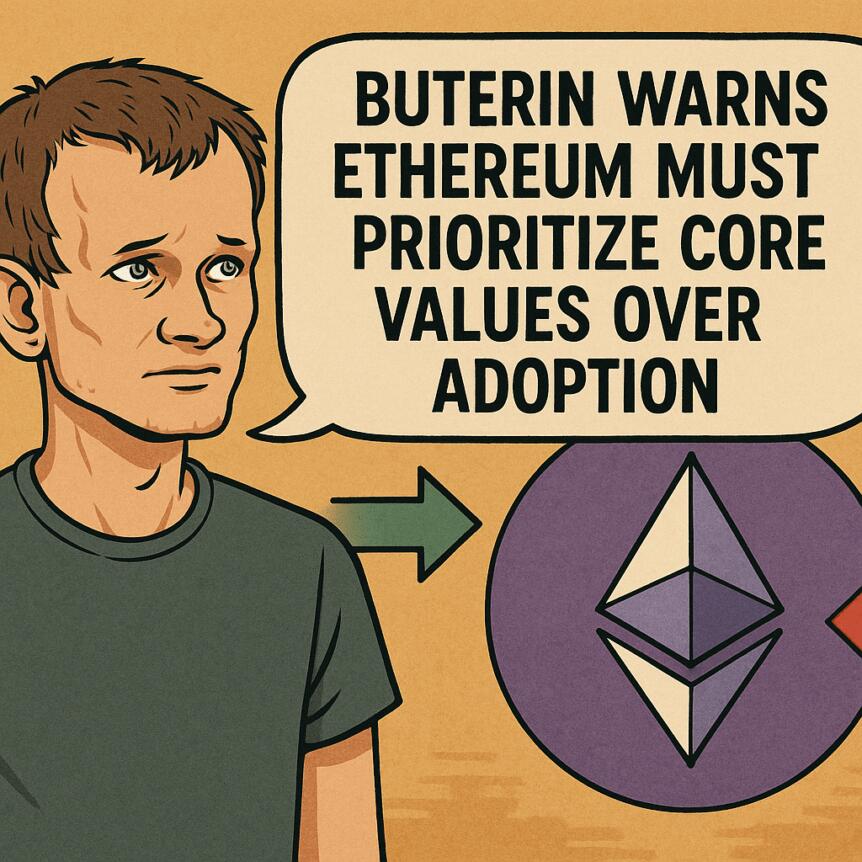
Buterin Warns Ethereum Must Prioritize Core Values Over Adoption
3 min read
Buterin Warns Ethereum Must Prioritize Core Values Over Adoption

Ethereum Co-Founder Vitalik Buterin Calls for Restoration of Core Principles by 2026

Vitalik Buterin, the co-founder of Ethereum, has issued a call to action for the blockchain community, urging a refocus on the platform’s foundational values of decentralization, privacy, and self-sovereignty. In a recent post on X, Buterin emphasized the importance of reversing the trend of compromising these principles in pursuit of mainstream adoption.

He declared, “2026 is the year that we take back lost ground in terms of self-sovereignty and trustlessness.” He highlighted that recent years have seen Ethereum sacrificing core ideals for broader reach, including increased centralization risks and reduced user control. Buterin advocates for crucial upgrades to address these issues, including enhancements in private payments, lowering barriers to running full nodes, and enabling decentralized applications that do not rely on centralized servers.

Buterin also stressed the importance of user control over on-chain data and better social recovery wallets that safeguard funds when seed phrases are lost or compromised. Over the past decade, he noted, the Ethereum ecosystem has regressed in many of these areas—nodes have become harder to operate, and DApps have evolved into complex structures that leak user data to numerous servers.

Upcoming protocol upgrades, such as the Kohaku release and the Glamsterdam fork, are meant to address many of these issues. Buterin remains optimistic about Ethereum’s future, stating that these improvements will help elevate the ecosystem to a greater prominence in the blockchain universe.

Focus on Self-Sustainability and Future Resilience

Earlier this week, Buterin emphasized the importance of Ethereum passing the “walkaway test,” which means the network should be able to operate independently of ongoing developer influence over decades. He expressed a vision for Ethereum’s protocols to be cryptographically secure for at least a hundred years, asserting that such durability is an essential goal for future-proofing the network.

Among the critical features Buterin considers vital for Ethereum’s longevity are quantum resistance, scalable architecture, and a block-building model resistant to centralization pressures. These advancements are necessary to ensure Ethereum remains a resilient and independent ecosystem capable of serving global users well into the future.

Decentralized Stablecoins and Broader Financial Sovereignty

Buterin also highlighted the need for more innovative decentralized stablecoins. He called for collateralized stablecoins backed by diversified baskets of assets and currencies, moving away from reliance on single-national currencies like the US dollar. Such a shift aims to provide users with greater independence from government-controlled monetary systems.

This article was originally published as Buterin Warns Ethereum Must Prioritize Core Values Over Adoption on Crypto Breaking News – your trusted source for crypto news, Bitcoin news, and blockchain updates.

Disclaimer: The articles reposted on this site are sourced from public platforms and are provided for informational purposes only. They do not necessarily reflect the views of MEXC. All rights remain with the original authors. If you believe any content infringes on third-party rights, please contact [email protected] for removal. MEXC makes no guarantees regarding the accuracy, completeness, or timeliness of the content and is not responsible for any actions taken based on the information provided. The content does not constitute financial, legal, or other professional advice, nor should it be considered a recommendation or endorsement by MEXC.

You May Also Like

XRP Enters ‘Washout Zone,’ Then Targets $30, Crypto Analyst Says
XRP Enters ‘Washout Zone,’ Then Targets $30, Crypto Analyst Says

XRP has entered what Korean Certified Elliott Wave Analyst XForceGlobal (@XForceGlobal) calls a “washout” phase inside a broader Elliott Wave corrective structure
Share
NewsBTC2026/02/05 08:00
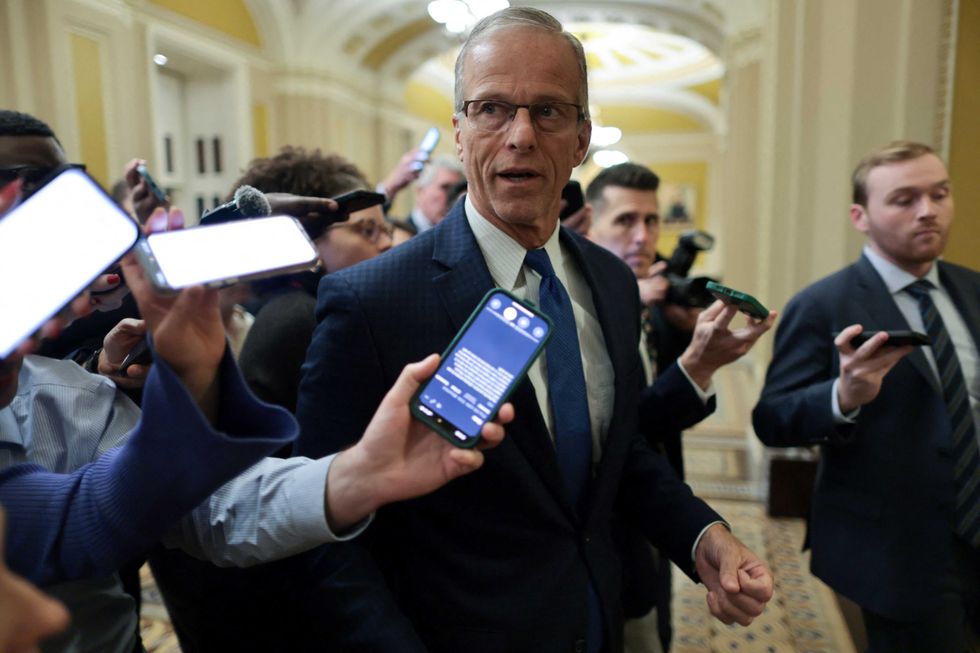
Republicans are 'very concerned about Texas' turning blue: GOP senator

Republicans are 'very concerned about Texas' turning blue: GOP senator

While Republicans in the U.S. House of Representatives have a razor-thin with just a four-seat advantage, their six-seat advantage in the U.S. Senate is seen as
Share
Alternet2026/02/05 08:38
Headwind Helps Best Wallet Token

Headwind Helps Best Wallet Token

The post Headwind Helps Best Wallet Token appeared on BitcoinEthereumNews.com. Google has announced the launch of a new open-source protocol called Agent Payments Protocol (AP2) in partnership with Coinbase, the Ethereum Foundation, and 60 other organizations. This allows AI agents to make payments on behalf of users using various methods such as real-time bank transfers, credit and debit cards, and, most importantly, stablecoins. Let’s explore in detail what this could mean for the broader cryptocurrency markets, and also highlight a presale crypto (Best Wallet Token) that could explode as a result of this development. Google’s Push for Stablecoins Agent Payments Protocol (AP2) uses digital contracts known as ‘Intent Mandates’ and ‘Verifiable Credentials’ to ensure that AI agents undertake only those payments authorized by the user. Mandates, by the way, are cryptographically signed, tamper-proof digital contracts that act as verifiable proof of a user’s instruction. For example, let’s say you instruct an AI agent to never spend more than $200 in a single transaction. This instruction is written into an Intent Mandate, which serves as a digital contract. Now, whenever the AI agent tries to make a payment, it must present this mandate as proof of authorization, which will then be verified via the AP2 protocol. Alongside this, Google has also launched the A2A x402 extension to accelerate support for the Web3 ecosystem. This production-ready solution enables agent-based crypto payments and will help reshape the growth of cryptocurrency integration within the AP2 protocol. Google’s inclusion of stablecoins in AP2 is a massive vote of confidence in dollar-pegged cryptocurrencies and a huge step toward making them a mainstream payment option. This widens stablecoin usage beyond trading and speculation, positioning them at the center of the consumption economy. The recent enactment of the GENIUS Act in the U.S. gives stablecoins more structure and legal support. Imagine paying for things like data crawls, per-task…
Share
BitcoinEthereumNews2025/09/18 01:27