Last December, Economics for Health launched the fourth edition of its Cigarette Tax Scorecard, which studied cigarette tax policies in 171 countries, based on Last December, Economics for Health launched the fourth edition of its Cigarette Tax Scorecard, which studied cigarette tax policies in 171 countries, based on

Sustaining our gains in tobacco taxation

2026/01/26 00:03
4 min read

Last December, Economics for Health launched the fourth edition of its Cigarette Tax Scorecard, which studied cigarette tax policies in 171 countries, based on indicators including the absolute price of cigarettes, change in cigarette affordability, share of taxes in retail price, and tax structure.

The study found that most governments are failing to implement best practices in tobacco taxation, as the 2024 global average cigarette tax score of 2.01 points out of five has not changed significantly since 2022 when it was 2.02. Economics for Health, formerly known as Tobacconomics, noted that governments are not sufficiently raising taxes or updating them for inflation and real income growth.

The Philippines, however, is maintaining its position as a global leader in cigarette taxation, as reflected in the 2024 version of the scorecard: the Philippines had the fourth highest overall cigarette tax score in the world and the highest cigarette tax score in Asia, with 3.75 out of five, only trailing behind the UK (4.13), Finland (4.00), and Belgium (3.88).

Although the Philippines has not legislated higher excise taxes on cigarettes since the last tax scorecard in 2022 (the last cigarette tax reform was in 2019), it is the country whose score improved the most (+2.50) in the two-year time frame, thanks to a perfect score of five in the change in affordability and tax structure categories. The perfect score implies that cigarette prices are higher relative to income. Meanwhile, the high score in the tax structure category could be because in 2024, the 5% annual automatic indexation to inflation of cigarette excise taxes kicked in, a feature of the tobacco tax reform of 2019 or Republic Act (RA) 11346.

These wins and accolades are a result of more than a decade of hard-won tobacco tax reforms, starting with the Sin Tax Reform of 2012 or RA 10351, and sustained by two more tobacco tax increases during the Duterte administration.

While our past reforms allow us to excel on the global stage, local data shows that our cigarette taxes are failing to curb consumption.

In 2023, National Nutrition Survey (NNS) data from the Department of Science and Technology – Food and Nutrition Research Institute (DoST-FNRI) showed that smoking prevalence is on the rise again for the first time in a decade, jumping from 19% in 2021 to 24.4% in 2023.

The tobacco industry blames this increase in smoking prevalence on illicit tobacco trade, using this increase in prevalence to argue that tobacco taxes are ineffective in reducing consumption and that tobacco taxes should be lowered. But health advocates disagree: if smoking prevalence is going up, tobacco taxes should be raised even further to effectively curb consumption. A study done by Action for Economic Reforms in 2024 showed that illicit tobacco trade is as low as less than 1% in Metro Manila cities, and the high illicit trade in Mindanao cities is an outlier due to geographical factors and weak local enforcement.

The industry’s narrative on illicit trade is concerning, given the fact that in 2025, industry-aligned politicians of the 19th Congress tried to lower tobacco taxes through House Bill 11360. In the 20th Congress, industry-aligned politicians once again are filing a bill proposing to lower excise taxes, this time on vape products, a move that advocates are calling misguided and deadly for the youth.

Protecting the gains of tobacco taxes doesn’t only imply resisting a rollback and advocating for higher taxes on cigarette products — it also means pushing for stronger regulation and taxation on newer products like vapes and heated tobacco products (HTPs), products I’ve seen children as young as five years old using in our community in Quezon City. Nicotine addiction is now being peddled to children in shiny, attractive packages and flavors, and our legislators are pushing to make them even more accessible to the next generation. The call to action of civil society is clear: raise vape and HTP taxes now.

Pia Rodrigo is AER’s strategic communication officer.

Disclaimer: The articles reposted on this site are sourced from public platforms and are provided for informational purposes only. They do not necessarily reflect the views of MEXC. All rights remain with the original authors. If you believe any content infringes on third-party rights, please contact [email protected] for removal. MEXC makes no guarantees regarding the accuracy, completeness, or timeliness of the content and is not responsible for any actions taken based on the information provided. The content does not constitute financial, legal, or other professional advice, nor should it be considered a recommendation or endorsement by MEXC.

You May Also Like

HitPaw API is Integrated by Comfy for Professional Image and Video Enhancement to Global Creators

HitPaw API is Integrated by Comfy for Professional Image and Video Enhancement to Global Creators

SAN FRANCISCO, Feb. 7, 2026 /PRNewswire/ — HitPaw, a leader in AI-powered visual enhancement solutions, announced Comfy, a global content creation platform, is
Share
AI Journal2026/02/08 09:15
Journalist gives brutal review of Melania movie: 'Not a single person in the theater'
Journalist gives brutal review of Melania movie: 'Not a single person in the theater'

A Journalist gave a brutal review of the new Melania documentary, which has been criticized by those who say it won't make back the huge fees spent to make it,
Share
Rawstory2026/02/08 09:08
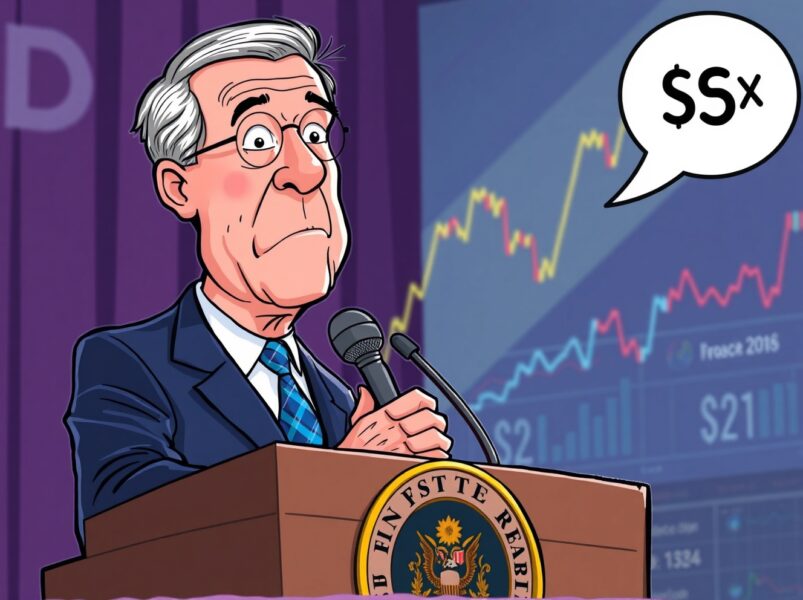
Jerome Powell’s Press Conference: Crucial Insights Unveiled for the Market’s Future

Jerome Powell’s Press Conference: Crucial Insights Unveiled for the Market’s Future

BitcoinWorld Jerome Powell’s Press Conference: Crucial Insights Unveiled for the Market’s Future The financial world, including the dynamic cryptocurrency market, often hangs on every word from the Federal Reserve. Recently, Jerome Powell’s press conference following the Federal Open Market Committee (FOMC) meeting concluded, leaving investors and analysts dissecting his remarks for clues about the future economic direction. This event is always a pivotal moment, shaping expectations for inflation, interest rates, and the overall stability of global markets. What Were the Key Takeaways from Jerome Powell’s Press Conference? During Jerome Powell’s press conference, the Fed Chair provided an update on the central bank’s monetary policy decisions and its economic outlook. His statements often reiterate the Fed’s dual mandate: achieving maximum employment and stable prices. This time was no different, with a strong emphasis on managing persistent inflation. Key points from the recent discussion included: Inflation Control: Powell emphasized the Fed’s unwavering commitment to bringing inflation back down to its 2% target. He reiterated that the fight against rising prices remains the top priority, even if it entails some economic slowdown. Interest Rate Policy: While the Fed’s stance on future interest rate adjustments was discussed, the path remains data-dependent. Powell indicated that decisions would continue to be made meeting-by-meeting, based on incoming economic data. Economic Projections: The updated Summary of Economic Projections (SEP) offered insights into the Fed’s forecasts for GDP growth, unemployment, and inflation. These projections help market participants gauge the central bank’s expectations for the economy’s trajectory. Quantitative Tightening (QT): The ongoing process of reducing the Fed’s balance sheet, known as quantitative tightening, was also a topic. This reduction in liquidity in the financial system has broad implications for asset prices. How Did Jerome Powell’s Remarks Impact Cryptocurrency Markets? The conclusion of Jerome Powell’s press conference often sends ripples through traditional financial markets, and cryptocurrencies are increasingly sensitive to these macroeconomic shifts. Digital assets, once thought to be uncorrelated, now frequently react to the Fed’s monetary policy signals. Higher interest rates, for instance, tend to make riskier assets like cryptocurrencies less attractive. This is because investors might prefer safer, interest-bearing investments. Consequently, we often see increased volatility in Bitcoin (BTC) and Ethereum (ETH) prices immediately following such announcements. The tightening of financial conditions, driven by the Fed, reduces overall liquidity in the system, which can put downward pressure on asset valuations across the board. However, some argue that this growing correlation signifies crypto’s increasing integration into the broader financial ecosystem. It suggests that institutional investors and mainstream finance are now paying closer attention to digital assets, treating them more like other risk-on investments. Navigating the Economic Landscape After Jerome Powell’s Press Conference For cryptocurrency investors, understanding the implications of Jerome Powell’s press conference is crucial for making informed decisions. The Fed’s policy trajectory directly influences the availability of capital and investor sentiment, which are key drivers for crypto valuations. Here are some actionable insights for navigating this environment: Stay Informed: Regularly monitor Fed announcements and economic data releases. Understanding the macroeconomic backdrop is as important as analyzing individual crypto projects. Assess Risk Tolerance: In periods of economic uncertainty and tighter monetary policy, a reassessment of personal risk tolerance is wise. Diversification within your crypto portfolio and across different asset classes can mitigate potential downsides. Focus on Fundamentals: While market sentiment can be swayed by macro news, projects with strong fundamentals, clear use cases, and robust development teams tend to perform better in the long run. Long-Term Perspective: Cryptocurrency markets are known for their volatility. Adopting a long-term investment horizon can help weather short-term fluctuations driven by macro events like Fed meetings. The challenges include potential continued volatility and reduced liquidity. However, opportunities may arise from market corrections, allowing strategic investors to accumulate assets at lower prices. In summary, Jerome Powell’s press conference provides essential guidance on the Fed’s economic strategy. Its conclusions have a profound impact on financial markets, including the dynamic world of cryptocurrencies. Staying informed, understanding the nuances of monetary policy, and maintaining a strategic investment approach are paramount for navigating the evolving economic landscape. The Fed’s actions underscore the interconnectedness of traditional finance and the burgeoning digital asset space. Frequently Asked Questions (FAQs) Q1: What is the Federal Open Market Committee (FOMC)? A1: The FOMC is the monetary policy-making body of the Federal Reserve System. It sets the federal funds rate target and directs open market operations, influencing the availability of money and credit in the U.S. economy. Q2: How do the Fed’s interest rate decisions typically affect cryptocurrency markets? A2: Generally, when the Fed raises interest rates, it makes borrowing more expensive and reduces liquidity in the financial system. This often leads investors to shy away from riskier assets like cryptocurrencies, potentially causing prices to decline. Conversely, lower rates can stimulate investment in riskier assets. Q3: What does “data-dependent” mean in the context of Fed policy? A3: “Data-dependent” means that the Federal Reserve’s future monetary policy decisions, such as interest rate adjustments, will primarily be based on the latest economic data. This includes inflation reports, employment figures, and GDP growth, rather than a predetermined schedule. Q4: Should I change my cryptocurrency investment strategy based on Jerome Powell’s press conference? A4: While it’s crucial to be aware of the macroeconomic environment shaped by Jerome Powell’s press conference, drastic changes to a well-researched investment strategy may not always be necessary. It’s recommended to review your portfolio, assess your risk tolerance, and consider if your strategy aligns with the current economic outlook, focusing on long-term fundamentals. If you found this analysis helpful, please consider sharing it with your network! Your insights and shares help us reach more readers interested in the intersection of traditional finance and the exciting world of cryptocurrencies. Spread the word! To learn more about the latest crypto market trends, explore our article on key developments shaping Bitcoin price action. This post Jerome Powell’s Press Conference: Crucial Insights Unveiled for the Market’s Future first appeared on BitcoinWorld.
Share
Coinstats2025/09/18 16:25
