In-depth analysis of the intergenerational asset migration behind Tether's increase of 27 tons of gold holdings
Author: Max.s
Just yesterday, Hong Kong's Secretary for Financial Services and the Treasury, Christopher Hui, announced a ambitious plan to transform Hong Kong into a globally trusted gold storage location within three years, with a target capacity exceeding 2,000 tons. Meanwhile, across the Pacific, stablecoin giant Tether revealed in its recently released Q4 2025 financial report that it had added approximately 27 tons of gold to its holdings.
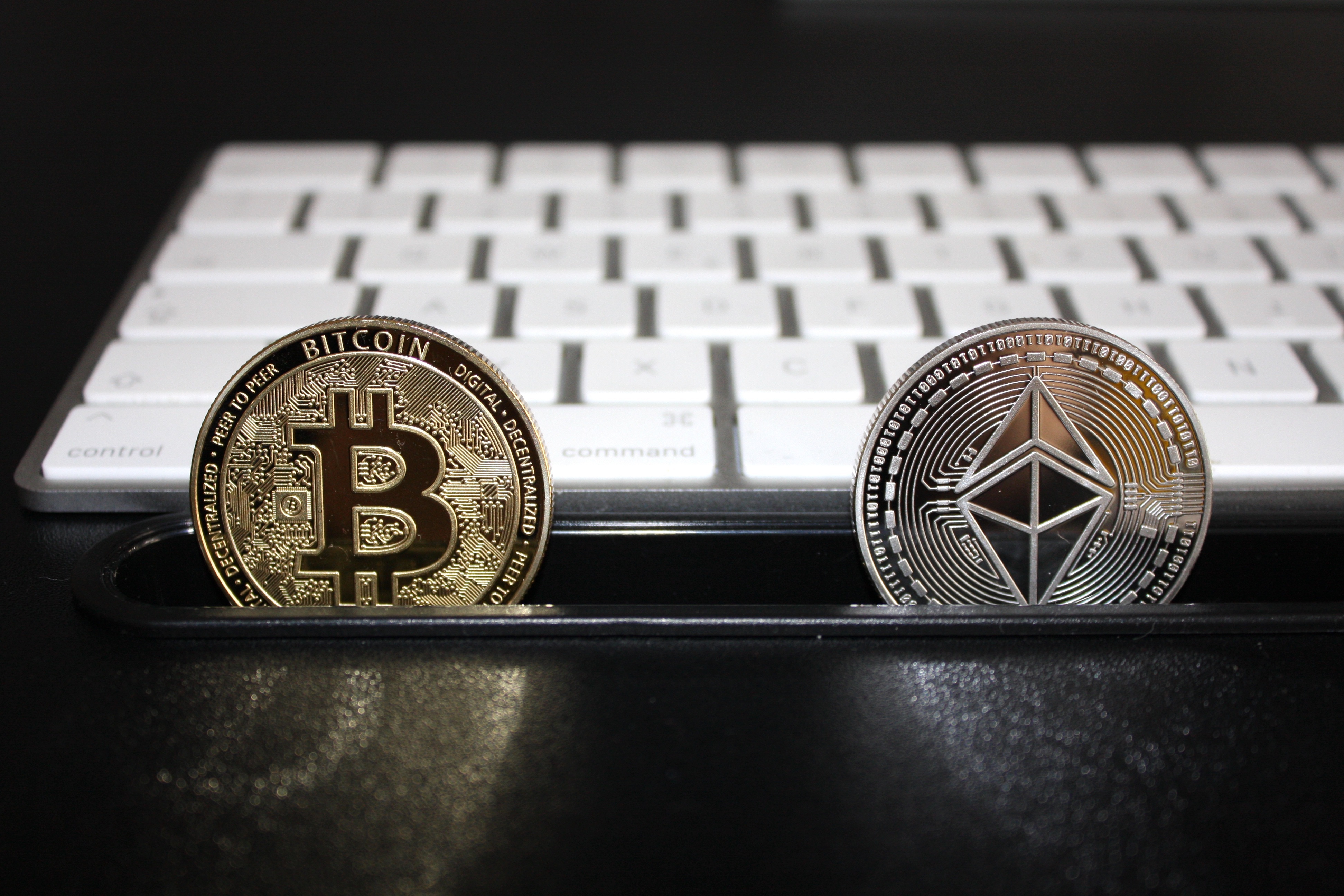
On the surface, this appears to be an era of "gold renaissance." From central banks of sovereign nations to Tether, the "central bank" of the crypto world, everyone seems to be frantically buying up precious metals.
However, beneath this apparent prosperity, a more profound and brutal intergenerational transfer of assets is underway. As OKX Star stated, "Gold solves the trust problem of the past, while Bitcoin solves the trust problem of the future. Betting on gold in 2026 is similar to defecting to the Nationalist army in 1949."
This statement, though sharp, precisely exposes the false prosperity of the current financial markets: while the old world is still discussing how to build more robust vaults, the real future has already completed trillions of dollars in settlements on the blockchain.
By the end of 2025, the circulating supply of USDT issued by Tether had reached a staggering $187 billion. To support this vast digital financial empire , Tether has stockpiled $12.9 billion worth of gold on its balance sheet, equivalent to approximately 104 tons. This reserve is comparable to that of some sovereign central banks. In comparison, the Polish central bank only increased its gold holdings by 35 tons in the fourth quarter of last year.
Why is Tether buying gold? Many people mistakenly believe it's because Tether is optimistic about gold's future. No, it's precisely a compromise and a "downward strike" by Tether against the old world.
Tether is essentially using gold—an old-world totem—to back the new-world "fiat currency" (USDT). This is a transitional strategy. If you look closely at the data, you'll find a highly ironic phenomenon: Tether's gold token, XAUT, currently has a circulating market capitalization of only $270 million, a mere drop in the ocean of its vast empire.
What does this mean? It means that the market doesn't need "digital gold." Although XAUT is backed 1:1 by 16.2 tons of physical gold, accounting for 60% of the global gold stablecoin supply, it is still a negligible marginal product compared to USDT, which has a total supply of 187 billion.
People use USDT for high-frequency trading, lending, and payments via smart contracts on the blockchain, to enter the vast world of DeFi (decentralized finance). Gold, whether lying in London's underground vaults or tokenized as XAUT, remains static and sluggish. Its sole purpose is as collateral, appeasing regulators and traditional institutions who haven't fully grasped the concept of "code is law."
Star's statement, "Betting on gold in 2026 is similar to defecting to the Nationalist army in 1949," uses a metaphor with great historical tension to reveal the clash of civilizations behind asset choices.
The historical turning point of 1949 was not merely a change of regime, but a reconstruction of the operational logic of grassroots society. At that time, even if you retreated to an island with a chest full of gold bars, you only took away the "old values," but lost the right to participate in the future of the "new world."
The situation will be remarkably similar in 2026.
Gold is a trust model based on physical properties and the backing of force . Its value depends on: your belief that the vault is secure enough, your belief that the government guarding the vault will not confiscate it, and your belief that the auditor's report is not falsified. Hong Kong's attempt to establish 2,000 tons of gold reserves within three years is essentially an attempt to attract capital by strengthening "physical security" and "institutional credibility." This is a typical industrial-age mindset—building a moat by piling up resources from the atomic world.
Bitcoin, on the other hand, is a trust model based on mathematics and cryptography . It requires no vault, no guards, and no auditors. Every transaction and every UTXO (Unspent Transaction Output) is verified by the entire network's computing power and is eternally etched on the distributed ledger.
While the world is still discussing how to store gold, the real future is already running on the blockchain. Bitcoin is more than just an asset; it is the foundational protocol for the next-generation internet of value.
In 2026, if we're still talking about "gold as a safe haven," we're actually talking about an outdated hedging logic. This logic assumes that future crises can be weathered by hiding in bunkers. But in reality, in today's digital age, the real crisis is being systematically removed from new financial networks .
Data doesn't lie; it only reveals trends.
We can see that although Tether holds a large amount of gold, the growth of its core business depends entirely on the expansion of the crypto ecosystem. The $187 billion USDT circulation represents the global demand for an "on-chain dollar." This demand is not because the dollar itself is so good, but because of the efficiency of the "on-chain" medium.
If we consider Bitcoin as "digital gold," its efficiency is billions of times greater than that of physical gold. In 2026, transporting $100 million worth of physical gold from London to Hong Kong would involve cumbersome procedures such as insurance, transportation, customs clearance, and inspection, taking days or even weeks, and incurring enormous transaction costs.
Transferring $1 billion worth of Bitcoin would only take 10 minutes and could not be frozen or intercepted.
In the current macroeconomic environment, escalating geopolitical conflicts and increasingly stringent capital controls are weaponizing the traditional SWIFT system. This exposes gold, an asset heavily reliant on physical delivery and centralized custody, to an unprecedented "liquidity trap." In extreme circumstances, whether your gold is held in Hong Kong, London, or New York may not be entirely up to you.
Conversely, Bitcoin's private keys are in the hands of the users, and its liquidity does not depend on any single sovereign nation. This is the true "sense of security" in 2026.
Returning to the news of building gold storage facilities in Hong Kong, this is undoubtedly a very sound decision from a traditional financial perspective, which will solidify Hong Kong's position as a traditional wealth management center. However, in a larger historical narrative, it seems more like building a tomb for the financial system of a previous era.
We respect gold's status as the king of currencies throughout human history, just as we respect the contribution of horse-drawn carriages to the history of transportation. However, in an era where automobiles are widespread, continuing to heavily invest in horse farms and hay is clearly not a wise investment. Today, we see more than just Tether's balance sheet or Hong Kong's infrastructure plans; we see a stark stratification between the old and new worlds.
Some people choose to believe in atoms in the physical world, believing that heavy metal blocks can withstand inflation; others choose to believe in bits in the digital world, believing that immutable code can reshape contracts.
While Star's views are radical, they point out the most fundamental logic of investing: returns come from accurate predictions of the future, not from excessive attachment to the past.
If financial history is a long river, then in the early spring of 2026, we are standing at a delicate fork in the river.
Gold is a trust model based on physical properties and the backing of force . Its value depends on: your belief that the vault is secure enough, your belief that the government guarding the vault will not confiscate it, and your belief that the auditor's report is not falsified. Hong Kong's attempt to establish 2,000 tons of gold reserves within three years is essentially an attempt to attract capital by strengthening "physical security" and "institutional credibility." This is a typical industrial-age mindset—building a moat by piling up resources from the atomic world.
Bitcoin, on the other hand, is a trust model based on mathematics and cryptography . It requires no vault, no guards, and no auditors. Every transaction and every UTXO (Unspent Transaction Output) is verified by the entire network's computing power and is eternally etched on the distributed ledger.
While the world is still discussing how to store gold, the real future is already running on the blockchain. Bitcoin is more than just an asset; it is the foundational protocol for the next-generation internet of value.
In 2026, if we're still talking about "gold as a safe haven," we're actually talking about an outdated hedging logic. This logic assumes that future crises can be weathered by hiding in bunkers. But in reality, in today's digital age, the real crisis is being systematically removed from new financial networks .
Data doesn't lie; it only reveals trends.
We can see that although Tether holds a large amount of gold, the growth of its core business depends entirely on the expansion of the crypto ecosystem. The $187 billion USDT circulation represents the global demand for an "on-chain dollar." This demand is not because the dollar itself is so good, but because of the efficiency of the "on-chain" medium.
If we consider Bitcoin as "digital gold," its efficiency is billions of times greater than that of physical gold. In 2026, transporting $100 million worth of physical gold from London to Hong Kong would involve cumbersome procedures such as insurance, transportation, customs clearance, and inspection, taking days or even weeks, and incurring enormous transaction costs.
Transferring $1 billion worth of Bitcoin would only take 10 minutes and could not be frozen or intercepted.
In the current macroeconomic environment, escalating geopolitical conflicts and increasingly stringent capital controls are weaponizing the traditional SWIFT system. This exposes gold, an asset heavily reliant on physical delivery and centralized custody, to an unprecedented "liquidity trap." In extreme circumstances, whether your gold is held in Hong Kong, London, or New York may not be entirely up to you.
Conversely, Bitcoin's private keys are in the hands of the users, and its liquidity does not depend on any single sovereign nation. This is the true "sense of security" in 2026.
Returning to the news of building gold storage facilities in Hong Kong, this is undoubtedly a very sound decision from a traditional financial perspective, which will solidify Hong Kong's position as a traditional wealth management center. However, in a larger historical narrative, it seems more like building a tomb for the financial system of a previous era.
We respect gold's status as the king of currencies throughout human history, just as we respect the contribution of horse-drawn carriages to the history of transportation. However, in an era where automobiles are widespread, continuing to heavily invest in horse farms and hay is clearly not a wise investment. Today, we see more than just Tether's balance sheet or Hong Kong's infrastructure plans; we see a stark stratification between the old and new worlds.
Some people choose to believe in atoms in the physical world, believing that heavy metal blocks can withstand inflation; others choose to believe in bits in the digital world, believing that immutable code can reshape contracts.
While Star's views are radical, they point out the most fundamental logic of investing: returns come from accurate predictions of the future, not from excessive attachment to the past.
If financial history is a long river, then in the early spring of 2026, we are standing at a delicate fork in the river.
You May Also Like
Galaxy Digital Authorizes $200M Share Buyback as Stock Rebounds

Whales Dump 200 Million XRP in Just 2 Weeks – Is XRP’s Price on the Verge of Collapse?