Chúng ta đang đứng trước một ngưỡng cửa lịch sử của tiền tệ. Nếu như thập kỷ trước, tiền mã [...] The post Tương Lai Tài Chính 2026: Khi “Ví Tiền” Trở Thành Hệ Chúng ta đang đứng trước một ngưỡng cửa lịch sử của tiền tệ. Nếu như thập kỷ trước, tiền mã [...] The post Tương Lai Tài Chính 2026: Khi “Ví Tiền” Trở Thành Hệ

Tương Lai Tài Chính 2026: Khi “Ví Tiền” Trở Thành Hệ Điều Hành Của Nền Kinh Tế Số – Nhận Định Từ Chuyên Gia Bitget

2026/02/05 16:36
7 min read

Chúng ta đang đứng trước một ngưỡng cửa lịch sử của tiền tệ. Nếu như thập kỷ trước, tiền mã hóa (Crypto) được định nghĩa bởi những cơn sóng đầu cơ dữ dội, thì năm 2026 đang vẽ nên một bức tranh hoàn toàn khác. Hoạt động trên chuỗi (Onchain) giờ đây không còn bị chi phối bởi lòng tham hay nỗi sợ hãi, mà được định hình bởi những hành vi tài chính thường nhật: thanh toán, tiết kiệm, quản lý tài sản và chuyển tiền xuyên biên giới.

Trong bối cảnh đó, chiếc ví điện tử (Wallet) đang âm thầm tiến hóa từ một công cụ lưu trữ đơn thuần trở thành một “hệ điều hành tài chính” toàn năng. Để giải mã sự dịch chuyển cấu trúc này, chúng tôi đã có cuộc trao đổi sâu với ông Ryan Lee, Trưởng bộ phận Phân tích tại Bitget Research, về ba động lực chính đang thay đổi cách thế giới giao dịch trên nền tảng Bitget.com và hệ sinh thái Web3.

Sự “Vô Hình” Hóa Của Thanh Toán Và Kỷ Nguyên Stablecoin

Mở đầu buổi trò chuyện, ông Ryan Lee chỉ tay vào những con số biết nói trong báo cáo năm 2025. Theo ông, sự thay đổi lớn nhất không nằm ở giá Bitcoin, mà nằm ở sự trỗi dậy thầm lặng nhưng mạnh mẽ của Stablecoin.

“Hãy nhìn vào dữ liệu: Vốn hóa thị trường Stablecoin đã tăng từ 205 tỷ USD lên 308 tỷ USD chỉ trong một năm. Quan trọng hơn, giá trị thanh toán on-chain đạt mốc 33 nghìn tỷ USD. Đây không phải là tiền ảo, đây là mạch máu của kinh tế thực,” ông Ryan Lee nhận định.

Ông phân tích rằng, sự tăng trưởng này đến từ “nhu cầu sử dụng” (Usage) chứ không phải đầu cơ. Stablecoin đã len lỏi vào các hệ thống thanh toán tức thì địa phương như PIX tại Brazil hay các mạng lưới thẻ toàn cầu như Visa và Mastercard. Đặc biệt, việc các khung pháp lý như Đạo luật GENIUS của Mỹ hay MiCA của Châu Âu đi vào hiệu lực đã mang lại sự chính danh cần thiết.

Tuy nhiên, điều thú vị nhất mà chuyên gia của Bitget chỉ ra là xu hướng “vô hình hóa” (Invisibility). “Trong năm 2026, người dùng sẽ không cần quan tâm họ đang trả bằng USDT hay USDC. Các ví điện tử sẽ đóng vai trò là lớp định tuyến (routing layer), tự động quyết định loại tiền tệ và cách thức thanh toán ở phía sau hậu trường (back-end). Người dùng chỉ thấy giao dịch hoàn tất trong tích tắc. Tại Bitget, chúng tôi gọi đó là trải nghiệm không ma sát,” ông Ryan Lee chia sẻ.

Khi AI Trở Thành Một “Chủ Thể Kinh Tế” (Economic Actor)

Nếu thanh toán là nền móng, thì Trí tuệ nhân tạo (AI) chính là kiến trúc sư mới của ngôi nhà tài chính. Trong phần tiếp theo của cuộc thảo luận, ông Ryan Lee đưa ra một nhận định táo bạo: “Tác nhân kinh tế lớn tiếp theo trên chuỗi không phải là con người, mà là máy móc.”

Ông giải thích rằng, trước đây AI chỉ dừng lại ở việc đưa ra lời khuyên. Nhưng với sự ra đời của các giao thức thanh toán gốc máy (machine-native payment protocols) như x402 trong năm 2025, các tác nhân AI (AI Agents) giờ đây đã có thể trực tiếp thực hiện thanh toán Stablecoin.

“Hãy tưởng tượng một tương lai gần, nơi trợ lý AI của bạn tự động đàm phán mua dữ liệu, thuê năng lực tính toán hoặc trả phí dịch vụ mà không cần bạn phê duyệt từng lệnh. Điều này tạo ra một mô hình tin cậy mới mà chúng tôi gọi là ‘Know Your Agent’ (KYA – Hiểu đại lý của bạn),” ông Lee hào hứng mô tả.

Trong bối cảnh đó, vai trò của chiếc ví thay đổi hoàn toàn. Nó không chỉ giữ tiền, mà trở thành “người gác cổng”. Ví sẽ quản lý quyền hạn cho các AI Agents, giám sát xem chúng đang làm gì, chi tiêu bao nhiêu và kích hoạt các biện pháp bảo vệ rủi ro. Theo ông Ryan Lee, Bitget Wallet đang đi tiên phong trong việc biến tầm nhìn này thành hiện thực, trở thành lớp quản trị cho cả con người và máy móc.

Thị Trường Tái Cân Bằng Về Giá Trị Thực (Functional Assets)

Mảnh ghép cuối cùng trong bức tranh tài chính 2026 mà ông Ryan Lee nhấn mạnh là sự dịch chuyển của dòng vốn. Đầu cơ không biến mất, nhưng thanh khoản đang chảy mạnh về các tài sản có chức năng tài chính rõ ràng (Functional Assets).

Ông dẫn chứng: “Giá trị Tài sản Thế giới thực (RWA) đã tăng gấp đôi lên 37,7 tỷ USD. Các thị trường dự đoán (Prediction Markets) vượt mốc 40 tỷ USD. Điều này cho thấy người dùng đang tìm kiếm sự tiếp xúc với cổ phiếu, trái phiếu và các sự kiện vĩ mô ngay trên chuỗi, thay vì phụ thuộc vào các mô hình lưu ký truyền thống.”

Nhận định về xu hướng này, ông Ryan Lee cho rằng các sàn giao dịch phi tập trung (Perpetual DEXs) như Hyperliquid hay các nền tảng tích hợp như Bitget.com đang thu hẹp khoảng cách với tài chính truyền thống. “Người dùng ngày nay không muốn mở 5 ứng dụng cho 5 loại tài sản. Họ muốn một giao diện duy nhất nơi họ có thể giao dịch tất cả: từ Crypto, RWA đến các hợp đồng phái sinh. Sự hội tụ là tất yếu.”

Fintech 3.0: Ví Là Điểm Hội Tụ

Kết thúc buổi phỏng vấn, khi được hỏi về định nghĩa của kỷ nguyên tài chính mới, ông Ryan Lee đã đúc kết bằng khái niệm “Fintech 3.0”.

Nếu Fintech 1.0 đưa ngân hàng lên trực tuyến, Fintech 2.0 đưa tài chính lên di động, thì Fintech 3.0 chính là đưa tài chính lên chuỗi (Onchain). Trong giai đoạn này, Blockchain không chỉ là bản nâng cấp giao diện, mà là lớp thanh toán (settlement layer) nền tảng.

“Tài chính on-chain thường nhật (Everyday Onchain Finance) không phải là thay thế hệ thống cũ sau một đêm. Nó là việc xây dựng một lớp tài chính song song – mở, toàn cầu và do người dùng làm chủ. Và chiếc ví chính là nơi tương lai đó thành hình. Tại Bitget, chúng tôi không chỉ xây dựng một sàn giao dịch, chúng tôi đang xây dựng một hệ điều hành tài chính cho cuộc sống hàng ngày của bạn,” ông Ryan Lee khẳng định.

Kết Luận

Những nhận định của ông Ryan Lee đã vẽ nên một lộ trình rõ ràng cho năm 2026 và xa hơn nữa. Chúng ta đang chứng kiến sự chuyển mình của ví điện tử từ một công cụ thụ động sang một trung tâm điều hành tài chính chủ động.

Khi thanh toán trở nên vô hình, khi AI bắt đầu tham gia nền kinh tế, và khi ranh giới giữa tài sản thực và ảo bị xóa nhòa, người dùng cần một đối tác tin cậy để điều hướng trong thế giới mới này. Với tầm nhìn chiến lược và hạ tầng công nghệ vững chắc, Bitget đang chứng minh họ sẵn sàng dẫn dắt xu hướng Fintech 3.0.

Đừng để mình đứng ngoài cuộc cách mạng này. Hãy bắt đầu trải nghiệm tài chính on-chain thế hệ mới ngay hôm nay.

🚀 Khám phá hệ sinh thái tài chính toàn diện và mở ví Bitget của bạn tại: Bitget.com

The post Tương Lai Tài Chính 2026: Khi “Ví Tiền” Trở Thành Hệ Điều Hành Của Nền Kinh Tế Số – Nhận Định Từ Chuyên Gia Bitget appeared first on vneconomics.com.

Market Opportunity
LayerAI Logo
LayerAI Price(LAI)
$0.00002861
$0.00002861$0.00002861
+1.34%
USD
LayerAI (LAI) Live Price Chart
Disclaimer: The articles reposted on this site are sourced from public platforms and are provided for informational purposes only. They do not necessarily reflect the views of MEXC. All rights remain with the original authors. If you believe any content infringes on third-party rights, please contact [email protected] for removal. MEXC makes no guarantees regarding the accuracy, completeness, or timeliness of the content and is not responsible for any actions taken based on the information provided. The content does not constitute financial, legal, or other professional advice, nor should it be considered a recommendation or endorsement by MEXC.

You May Also Like

Fan Token Firm Chiliz Acquires 2-Time ‘Dota 2’ Champions, OG Esports

Fan Token Firm Chiliz Acquires 2-Time ‘Dota 2’ Champions, OG Esports

The post Fan Token Firm Chiliz Acquires 2-Time ‘Dota 2’ Champions, OG Esports appeared on BitcoinEthereumNews.com. In brief The Chiliz Group has acquired a controlling stake in OG Esports, a prominent competitive gaming organization. OG Esports unveiled its own fan token on Chiliz’s Socios.com platform back in 2020. It recently hit an all-time high price. Chiliz has teased various future team-related benefits for OG token holders, along with a new Web3-related project. The Chiliz Group, which operates the Socios.com crypto fan token platform, announced Tuesday that it has acquired a 51% controlling stake in OG Esports, the competitive gaming organization founded in 2015 by Dota 2 legends Johan “nOtail” Sundstein and Sébastien “Ceb” Debs. OG made history as the first team to win consecutive titles at The International—the annual, high-profile Dota 2 world championship tournament—in 2018 and 2019, and has since expanded into multiple games including Counter-Strike, Honor of Kings, and Marvel Rivals. The team was also the first esports organization to join the Socios platform with the 2020 debut of its own fan token, which Chiliz said recently became the first esports team token to exceed a $100 million market capitalization. OG was recently priced at $16.88, up nearly 9% on the day following the announcement. The token’s price peaked at a new all-time high of $24.78 last week ahead of The International 2025, where OG did not compete this year. Following the acquisition, Xavier Oswald will assume the CEO role, while the co-founders will turn their attention to “a new strategic project consolidating the team’s competitive foundation [and] driving innovation at the intersection of esports and Web3,” per a press release. No further details were provided regarding that project. “Bringing OG into the Chiliz Group is a major step toward further strengthening fan experiences, one where the community doesn’t just watch from the sidelines but gets to shape the journey,” Chiliz CEO Alex Dreyfus…
Share
BitcoinEthereumNews2025/09/18 09:40
Health Insurers To Cover Covid Vaccines Despite RFK, Jr. Moves
Health Insurers To Cover Covid Vaccines Despite RFK, Jr. Moves

The post Health Insurers To Cover Covid Vaccines Despite RFK, Jr. Moves appeared on BitcoinEthereumNews.com. The nation’s biggest health insurance companies will continue to cover vaccinations – including those against Covid-19 and seasonal flu – previously recommended by a federal advisory committee, America’s Health Insurance Plans said Wednesday, Sept. 17, 2025. In this photo is a free flu and Covid-19 vaccine shots available sign, CVS, Queens, New York. (Photo by: Lindsey Nicholson/Universal Images Group via Getty Images) UCG/Universal Images Group via Getty Images The nation’s biggest health insurance companies will continue to cover vaccinations – including those against Covid-19 and seasonal flu – previously recommended by a federal advisory committee. The announcement by America’s Health Insurance Plans (AHIP), which includes CVS Health’s Aetna, Humana, Cigna, Centene and an array of Blue Cross and Blue Shield plans as members, comes ahead of the first meeting of the reconstituted Advisory Committee on Immunization Practices, which now has new members chosen by U.S. Health and Human Services Secretary Robert F. Kennedy Jr., a vaccine critic. “Health plans are committed to maintaining and ensuring affordable access to vaccines,” AHIP said in a statement Wednesday. “Health plan coverage decisions for immunizations are grounded in each plan’s ongoing, rigorous review of scientific and clinical evidence, and continual evaluation of multiple sources of data.” The move by AHIP is good news for millions of Americans at a time of year when they flock to drugstores, pharmacies, physician’s offices and outpatient clinics to get their seasonal flu and Covid shots. Kennedy’s changes to U.S. vaccine policy have created confusion across the country over whether certain vaccines long covered by insurance would continue to be. AHIP has now provided some clarity for millions of Americans. “Health plans will continue to cover all ACIP-recommended immunizations that were recommended as of September 1, 2025, including updated formulations of the COVID-19 and influenza vaccines, with no cost-sharing…
Share
BitcoinEthereumNews2025/09/18 03:11
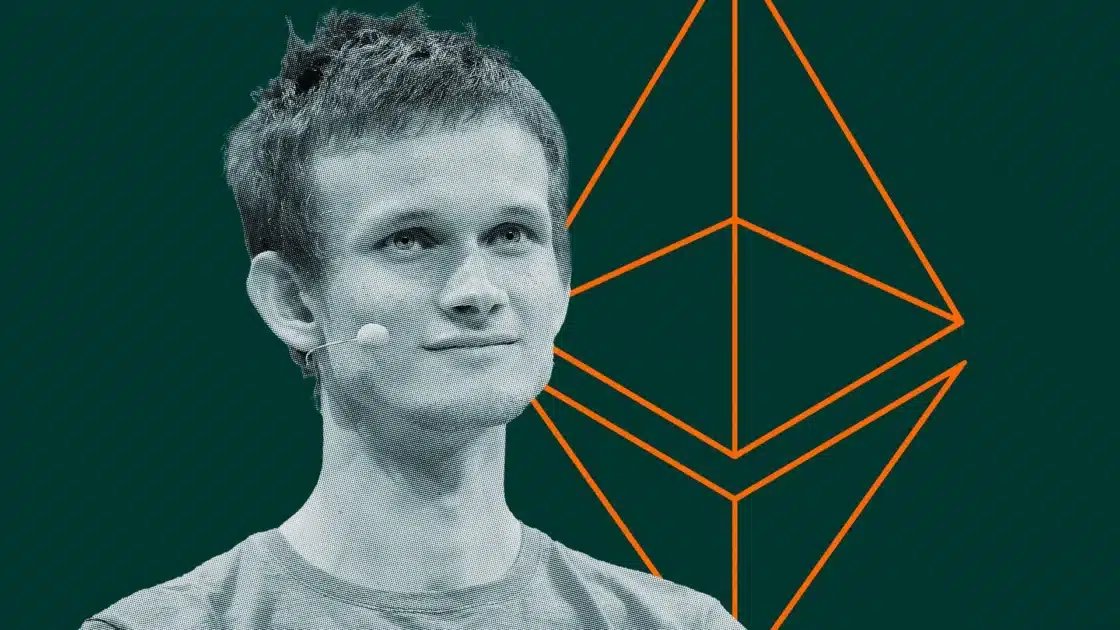
Vitalik Buterin Reveals Ethereum’s Bold Plan to Stay Quantum-Secure and Simple!

Vitalik Buterin Reveals Ethereum’s Bold Plan to Stay Quantum-Secure and Simple!

Buterin unveils Ethereum’s strategy to tackle quantum security challenges ahead. Ethereum focuses on simplifying architecture while boosting security for users. Ethereum’s market stability grows as Buterin’s roadmap gains investor confidence. Ethereum founder Vitalik Buterin has unveiled his long-term vision for the blockchain, focusing on making Ethereum quantum-secure while maintaining its simplicity for users. Buterin presented his roadmap at the Japanese Developer Conference, and splits the future of Ethereum into three phases: short-term, mid-term, and long-term. Buterin’s most ambitious goal for Ethereum is to safeguard the blockchain against the threats posed by quantum computing.  The danger of such future developments is that the future may call into question the cryptographic security of most blockchain systems, and Ethereum will be able to remain ahead thanks to more sophisticated mathematical techniques to ensure the safety and integrity of its protocols. Buterin is committed to ensuring that Ethereum evolves in a way that not only meets today’s security challenges but also prepares for the unknowns of tomorrow. Also Read: Ethereum Giant The Ether Machine Takes Major Step Toward Going Public! However, in spite of such high ambitions, Buterin insisted that Ethereum also needed to simplify its architecture. An important aspect of this vision is to remove unnecessary complexity and make Ethereum more accessible and maintainable without losing its strong security capabilities. Security and simplicity form the core of Buterin’s strategy, as they guarantee that the users of Ethereum experience both security and smooth processes. Focus on Speed and Efficiency in the Short-Term In the short term, Buterin aims to enhance Ethereum’s transaction efficiency, a crucial step toward improving scalability and reducing transaction costs. These advantages are attributed to the fact that, within the mid-term, Ethereum is planning to enhance the speed of transactions in layer-2 networks. According to Butterin, this is part of Ethereum’s expansion, particularly because there is still more need to use blockchain technology to date. The other important aspect of Ethereum’s development is the layer-2 solutions. Buterin supports an approach in which the layer-2 networks are dependent on layer-1 to perform some essential tasks like data security, proof, and censorship resistance. This will enable the layer-2 systems of Ethereum to be concerned with verifying and sequencing transactions, which will improve the overall speed and efficiency of the network. Ethereum’s Market Stability Reflects Confidence in Long-Term Strategy Ethereum’s market performance has remained solid, with the cryptocurrency holding steady above $4,000. Currently priced at $4,492.15, Ethereum has experienced a slight 0.93% increase over the last 24 hours, while its trading volume surged by 8.72%, reaching $34.14 billion. These figures point to growing investor confidence in Ethereum’s long-term vision. The crypto community remains optimistic about Ethereum’s future, with many predicting the price could rise to $5,500 by mid-October. Buterin’s clear, forward-thinking strategy continues to build trust in Ethereum as one of the most secure and scalable blockchain platforms in the market. Also Read: Whales Dump 200 Million XRP in Just 2 Weeks – Is XRP’s Price on the Verge of Collapse? The post Vitalik Buterin Reveals Ethereum’s Bold Plan to Stay Quantum-Secure and Simple! appeared first on 36Crypto.
Share
Coinstats2025/09/18 01:22