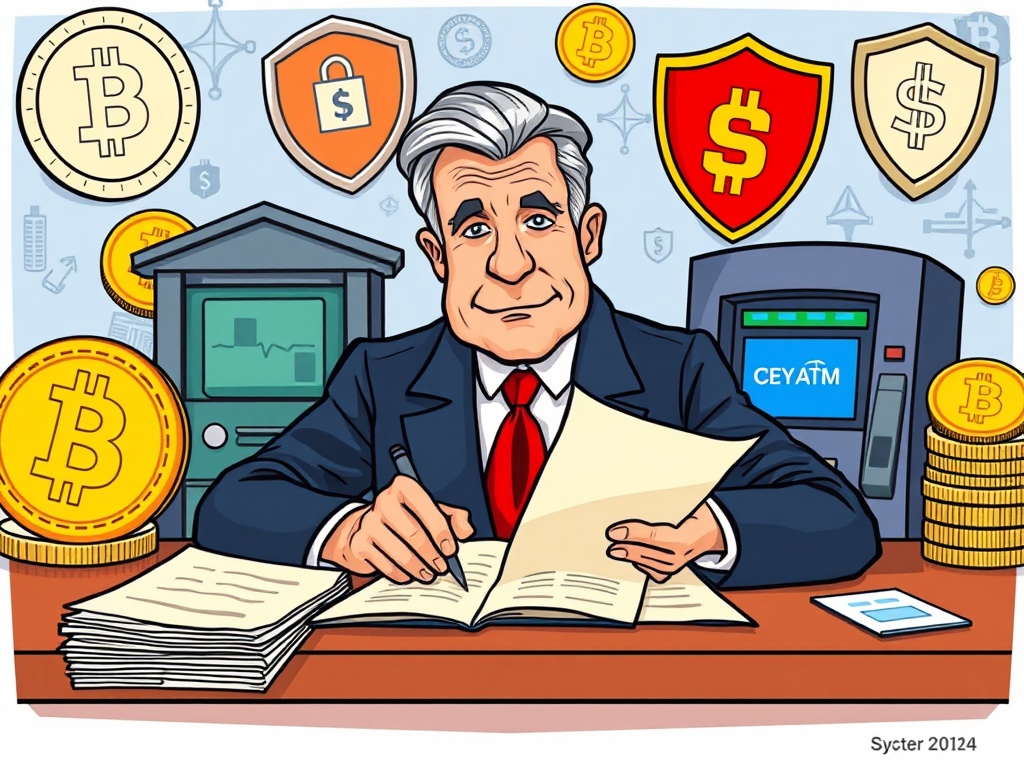
BitcoinWorld Crucial Crypto Consumer Protections: Illinois Enacts Groundbreaking Laws The digital asset landscape is constantly evolving, bringing both exciting opportunities and new challenges. For a long time, the crypto world operated with minimal oversight, leading to concerns about investor safety. However, a significant shift is underway, particularly in Illinois, where groundbreaking efforts are strengthening crypto consumer protections. This move marks a pivotal moment, setting a precedent for how states can safeguard their citizens in the rapidly expanding digital economy. Why Are Crypto Consumer Protections So Important? In the past, the lack of clear regulations in the crypto space often left consumers vulnerable. Fraud, hacks, and insufficient recourse for victims were common issues. This created an environment where trust could be easily eroded. Therefore, robust crypto consumer protections are not just about compliance; they are about building a secure and trustworthy ecosystem where individuals can engage with digital assets confidently. These new laws aim to bridge the gap between traditional financial safeguards and the innovative world of cryptocurrency. Governor JB Pritzker of Illinois recently took a decisive step, signing two crucial bills into law. These legislative actions reflect a commitment to creating a safer environment for anyone interacting with digital assets, ensuring that Illinois residents benefit from the innovation of crypto without facing undue risks. This progressive stance contrasts sharply with previous federal approaches that favored deregulation, signaling a clear direction for the state’s financial future. Unpacking the Digital Assets and Consumer Protection Act One of the cornerstone pieces of legislation is the Digital Assets and Consumer Protection Act (DACPA). This act grants significant authority to the Illinois Department of Financial and Professional Regulation (IDFPR) over crypto exchanges and businesses operating within the state. The goal is to bring these digital asset firms in line with the standards expected of traditional financial institutions. Key provisions of DACPA include: Financial Safeguards: Firms must maintain adequate financial reserves to protect customer funds. Cybersecurity Measures: Strict protocols are required to prevent data breaches and unauthorized access. Anti-Fraud Measures: Companies must implement robust systems to detect and prevent fraudulent activities. Risk Disclosure: Businesses must clearly inform consumers about the inherent risks associated with crypto investments. Customer Service Standards: Companies are expected to provide responsive and effective customer support, mirroring traditional finance. This comprehensive approach to crypto consumer protections ensures that firms are accountable and that consumers have clear avenues for assistance and recourse. Regulating Crypto ATMs: The Digital Asset Kiosk Act Beyond exchanges, the second bill, the Digital Asset Kiosk Act, specifically targets the growing number of crypto ATMs. These kiosks, while convenient, have sometimes been exploited for scams, leaving victims with little recourse. Illinois is now stepping up to regulate this segment, enhancing crypto consumer protections at the point of transaction. The new regulations for crypto ATMs include: Operator Registration: All crypto ATM operators must register with the state, increasing transparency. Refund Obligations: Operators are now mandated to provide refunds to victims of scams facilitated through their kiosks. Fee Cap: A significant measure is the 18% fee cap on transactions, preventing exorbitant charges. Daily Transaction Limit: For new users, a $2,500 daily transaction limit is imposed, acting as a safeguard against large, potentially fraudulent transactions. These measures are designed to curb illicit activities and ensure fair practices for individuals using crypto ATMs, making them a safer entry point into the digital asset world. What Do These Crypto Consumer Protections Mean for You? For residents of Illinois, these new laws bring a much-needed layer of security and trust to the crypto landscape. Whether you are an experienced investor or new to digital assets, you can now interact with greater confidence, knowing that specific safeguards are in place. The state’s proactive stance on crypto consumer protections serves as a model for other jurisdictions considering how to regulate this dynamic industry effectively. Governor Pritzker emphasized that these are “common-sense protections for investors and consumers.” This legislation highlights a growing recognition among policymakers that while innovation is vital, it must be balanced with robust oversight to prevent harm. As the crypto market continues to mature, such regulatory frameworks will play a crucial role in fostering broader adoption and ensuring long-term stability. Summary of Enhanced Security Illinois has truly set a benchmark with its comprehensive approach to digital asset regulation. By signing the Digital Assets and Consumer Protection Act and the Digital Asset Kiosk Act, Governor Pritzker has championed significant crypto consumer protections. These laws not only provide clarity for businesses but also empower consumers with greater security, transparency, and recourse. This proactive legislative action is a testament to Illinois’ commitment to fostering a responsible and secure digital economy for everyone. Frequently Asked Questions (FAQs) What are the two new crypto bills signed in Illinois? Illinois Governor JB Pritzker signed two bills: the Digital Assets and Consumer Protection Act and the Digital Asset Kiosk Act. Both aim to enhance crypto consumer protections within the state. What does the Digital Assets and Consumer Protection Act cover? This act grants the Illinois Department of Financial and Professional Regulation (IDFPR) authority over crypto exchanges and businesses. It requires them to maintain financial safeguards, adopt cybersecurity and anti-fraud measures, disclose investment risks, and follow customer service standards similar to traditional finance. How does the Digital Asset Kiosk Act protect consumers? The Digital Asset Kiosk Act regulates crypto ATMs. It mandates operator registration, requires refund obligations for scam victims, sets an 18% fee cap, and imposes a $2,500 daily transaction limit for new users. What is the fee cap for crypto ATMs in Illinois? The Digital Asset Kiosk Act introduces an 18% fee cap on transactions conducted at crypto ATMs in Illinois, aiming to prevent excessive charges. Why did Illinois enact these laws? Illinois enacted these laws to provide common-sense protections for investors and consumers in the digital asset space. The aim is to create a more secure and trustworthy environment for interacting with cryptocurrencies, addressing previous vulnerabilities and risks. Did you find this information helpful? Share this article with your friends and on social media to spread awareness about these important new crypto consumer protections in Illinois! To learn more about the latest crypto market trends, explore our article on key developments shaping Bitcoin price action. This post Crucial Crypto Consumer Protections: Illinois Enacts Groundbreaking Laws first appeared on BitcoinWorld and is written by Editorial TeamBitcoinWorld Crucial Crypto Consumer Protections: Illinois Enacts Groundbreaking Laws The digital asset landscape is constantly evolving, bringing both exciting opportunities and new challenges. For a long time, the crypto world operated with minimal oversight, leading to concerns about investor safety. However, a significant shift is underway, particularly in Illinois, where groundbreaking efforts are strengthening crypto consumer protections. This move marks a pivotal moment, setting a precedent for how states can safeguard their citizens in the rapidly expanding digital economy. Why Are Crypto Consumer Protections So Important? In the past, the lack of clear regulations in the crypto space often left consumers vulnerable. Fraud, hacks, and insufficient recourse for victims were common issues. This created an environment where trust could be easily eroded. Therefore, robust crypto consumer protections are not just about compliance; they are about building a secure and trustworthy ecosystem where individuals can engage with digital assets confidently. These new laws aim to bridge the gap between traditional financial safeguards and the innovative world of cryptocurrency. Governor JB Pritzker of Illinois recently took a decisive step, signing two crucial bills into law. These legislative actions reflect a commitment to creating a safer environment for anyone interacting with digital assets, ensuring that Illinois residents benefit from the innovation of crypto without facing undue risks. This progressive stance contrasts sharply with previous federal approaches that favored deregulation, signaling a clear direction for the state’s financial future. Unpacking the Digital Assets and Consumer Protection Act One of the cornerstone pieces of legislation is the Digital Assets and Consumer Protection Act (DACPA). This act grants significant authority to the Illinois Department of Financial and Professional Regulation (IDFPR) over crypto exchanges and businesses operating within the state. The goal is to bring these digital asset firms in line with the standards expected of traditional financial institutions. Key provisions of DACPA include: Financial Safeguards: Firms must maintain adequate financial reserves to protect customer funds. Cybersecurity Measures: Strict protocols are required to prevent data breaches and unauthorized access. Anti-Fraud Measures: Companies must implement robust systems to detect and prevent fraudulent activities. Risk Disclosure: Businesses must clearly inform consumers about the inherent risks associated with crypto investments. Customer Service Standards: Companies are expected to provide responsive and effective customer support, mirroring traditional finance. This comprehensive approach to crypto consumer protections ensures that firms are accountable and that consumers have clear avenues for assistance and recourse. Regulating Crypto ATMs: The Digital Asset Kiosk Act Beyond exchanges, the second bill, the Digital Asset Kiosk Act, specifically targets the growing number of crypto ATMs. These kiosks, while convenient, have sometimes been exploited for scams, leaving victims with little recourse. Illinois is now stepping up to regulate this segment, enhancing crypto consumer protections at the point of transaction. The new regulations for crypto ATMs include: Operator Registration: All crypto ATM operators must register with the state, increasing transparency. Refund Obligations: Operators are now mandated to provide refunds to victims of scams facilitated through their kiosks. Fee Cap: A significant measure is the 18% fee cap on transactions, preventing exorbitant charges. Daily Transaction Limit: For new users, a $2,500 daily transaction limit is imposed, acting as a safeguard against large, potentially fraudulent transactions. These measures are designed to curb illicit activities and ensure fair practices for individuals using crypto ATMs, making them a safer entry point into the digital asset world. What Do These Crypto Consumer Protections Mean for You? For residents of Illinois, these new laws bring a much-needed layer of security and trust to the crypto landscape. Whether you are an experienced investor or new to digital assets, you can now interact with greater confidence, knowing that specific safeguards are in place. The state’s proactive stance on crypto consumer protections serves as a model for other jurisdictions considering how to regulate this dynamic industry effectively. Governor Pritzker emphasized that these are “common-sense protections for investors and consumers.” This legislation highlights a growing recognition among policymakers that while innovation is vital, it must be balanced with robust oversight to prevent harm. As the crypto market continues to mature, such regulatory frameworks will play a crucial role in fostering broader adoption and ensuring long-term stability. Summary of Enhanced Security Illinois has truly set a benchmark with its comprehensive approach to digital asset regulation. By signing the Digital Assets and Consumer Protection Act and the Digital Asset Kiosk Act, Governor Pritzker has championed significant crypto consumer protections. These laws not only provide clarity for businesses but also empower consumers with greater security, transparency, and recourse. This proactive legislative action is a testament to Illinois’ commitment to fostering a responsible and secure digital economy for everyone. Frequently Asked Questions (FAQs) What are the two new crypto bills signed in Illinois? Illinois Governor JB Pritzker signed two bills: the Digital Assets and Consumer Protection Act and the Digital Asset Kiosk Act. Both aim to enhance crypto consumer protections within the state. What does the Digital Assets and Consumer Protection Act cover? This act grants the Illinois Department of Financial and Professional Regulation (IDFPR) authority over crypto exchanges and businesses. It requires them to maintain financial safeguards, adopt cybersecurity and anti-fraud measures, disclose investment risks, and follow customer service standards similar to traditional finance. How does the Digital Asset Kiosk Act protect consumers? The Digital Asset Kiosk Act regulates crypto ATMs. It mandates operator registration, requires refund obligations for scam victims, sets an 18% fee cap, and imposes a $2,500 daily transaction limit for new users. What is the fee cap for crypto ATMs in Illinois? The Digital Asset Kiosk Act introduces an 18% fee cap on transactions conducted at crypto ATMs in Illinois, aiming to prevent excessive charges. Why did Illinois enact these laws? Illinois enacted these laws to provide common-sense protections for investors and consumers in the digital asset space. The aim is to create a more secure and trustworthy environment for interacting with cryptocurrencies, addressing previous vulnerabilities and risks. Did you find this information helpful? Share this article with your friends and on social media to spread awareness about these important new crypto consumer protections in Illinois! To learn more about the latest crypto market trends, explore our article on key developments shaping Bitcoin price action. This post Crucial Crypto Consumer Protections: Illinois Enacts Groundbreaking Laws first appeared on BitcoinWorld and is written by Editorial Team

Crucial Crypto Consumer Protections: Illinois Enacts Groundbreaking Laws

6 min read

BitcoinWorld

Crucial Crypto Consumer Protections: Illinois Enacts Groundbreaking Laws

The digital asset landscape is constantly evolving, bringing both exciting opportunities and new challenges. For a long time, the crypto world operated with minimal oversight, leading to concerns about investor safety. However, a significant shift is underway, particularly in Illinois, where groundbreaking efforts are strengthening crypto consumer protections. This move marks a pivotal moment, setting a precedent for how states can safeguard their citizens in the rapidly expanding digital economy.

Why Are Crypto Consumer Protections So Important?

In the past, the lack of clear regulations in the crypto space often left consumers vulnerable. Fraud, hacks, and insufficient recourse for victims were common issues. This created an environment where trust could be easily eroded. Therefore, robust crypto consumer protections are not just about compliance; they are about building a secure and trustworthy ecosystem where individuals can engage with digital assets confidently. These new laws aim to bridge the gap between traditional financial safeguards and the innovative world of cryptocurrency.

Governor JB Pritzker of Illinois recently took a decisive step, signing two crucial bills into law. These legislative actions reflect a commitment to creating a safer environment for anyone interacting with digital assets, ensuring that Illinois residents benefit from the innovation of crypto without facing undue risks. This progressive stance contrasts sharply with previous federal approaches that favored deregulation, signaling a clear direction for the state’s financial future.

Unpacking the Digital Assets and Consumer Protection Act

One of the cornerstone pieces of legislation is the Digital Assets and Consumer Protection Act (DACPA). This act grants significant authority to the Illinois Department of Financial and Professional Regulation (IDFPR) over crypto exchanges and businesses operating within the state. The goal is to bring these digital asset firms in line with the standards expected of traditional financial institutions.

Key provisions of DACPA include:

  • Financial Safeguards: Firms must maintain adequate financial reserves to protect customer funds.
  • Cybersecurity Measures: Strict protocols are required to prevent data breaches and unauthorized access.
  • Anti-Fraud Measures: Companies must implement robust systems to detect and prevent fraudulent activities.
  • Risk Disclosure: Businesses must clearly inform consumers about the inherent risks associated with crypto investments.
  • Customer Service Standards: Companies are expected to provide responsive and effective customer support, mirroring traditional finance.

This comprehensive approach to crypto consumer protections ensures that firms are accountable and that consumers have clear avenues for assistance and recourse.

Regulating Crypto ATMs: The Digital Asset Kiosk Act

Beyond exchanges, the second bill, the Digital Asset Kiosk Act, specifically targets the growing number of crypto ATMs. These kiosks, while convenient, have sometimes been exploited for scams, leaving victims with little recourse. Illinois is now stepping up to regulate this segment, enhancing crypto consumer protections at the point of transaction.

The new regulations for crypto ATMs include:

  • Operator Registration: All crypto ATM operators must register with the state, increasing transparency.
  • Refund Obligations: Operators are now mandated to provide refunds to victims of scams facilitated through their kiosks.
  • Fee Cap: A significant measure is the 18% fee cap on transactions, preventing exorbitant charges.
  • Daily Transaction Limit: For new users, a $2,500 daily transaction limit is imposed, acting as a safeguard against large, potentially fraudulent transactions.

These measures are designed to curb illicit activities and ensure fair practices for individuals using crypto ATMs, making them a safer entry point into the digital asset world.

What Do These Crypto Consumer Protections Mean for You?

For residents of Illinois, these new laws bring a much-needed layer of security and trust to the crypto landscape. Whether you are an experienced investor or new to digital assets, you can now interact with greater confidence, knowing that specific safeguards are in place. The state’s proactive stance on crypto consumer protections serves as a model for other jurisdictions considering how to regulate this dynamic industry effectively.

Governor Pritzker emphasized that these are “common-sense protections for investors and consumers.” This legislation highlights a growing recognition among policymakers that while innovation is vital, it must be balanced with robust oversight to prevent harm. As the crypto market continues to mature, such regulatory frameworks will play a crucial role in fostering broader adoption and ensuring long-term stability.

Summary of Enhanced Security

Illinois has truly set a benchmark with its comprehensive approach to digital asset regulation. By signing the Digital Assets and Consumer Protection Act and the Digital Asset Kiosk Act, Governor Pritzker has championed significant crypto consumer protections. These laws not only provide clarity for businesses but also empower consumers with greater security, transparency, and recourse. This proactive legislative action is a testament to Illinois’ commitment to fostering a responsible and secure digital economy for everyone.

Frequently Asked Questions (FAQs)

What are the two new crypto bills signed in Illinois?

Illinois Governor JB Pritzker signed two bills: the Digital Assets and Consumer Protection Act and the Digital Asset Kiosk Act. Both aim to enhance crypto consumer protections within the state.

What does the Digital Assets and Consumer Protection Act cover?

This act grants the Illinois Department of Financial and Professional Regulation (IDFPR) authority over crypto exchanges and businesses. It requires them to maintain financial safeguards, adopt cybersecurity and anti-fraud measures, disclose investment risks, and follow customer service standards similar to traditional finance.

How does the Digital Asset Kiosk Act protect consumers?

The Digital Asset Kiosk Act regulates crypto ATMs. It mandates operator registration, requires refund obligations for scam victims, sets an 18% fee cap, and imposes a $2,500 daily transaction limit for new users.

What is the fee cap for crypto ATMs in Illinois?

The Digital Asset Kiosk Act introduces an 18% fee cap on transactions conducted at crypto ATMs in Illinois, aiming to prevent excessive charges.

Why did Illinois enact these laws?

Illinois enacted these laws to provide common-sense protections for investors and consumers in the digital asset space. The aim is to create a more secure and trustworthy environment for interacting with cryptocurrencies, addressing previous vulnerabilities and risks.

Did you find this information helpful? Share this article with your friends and on social media to spread awareness about these important new crypto consumer protections in Illinois!

To learn more about the latest crypto market trends, explore our article on key developments shaping Bitcoin price action.

This post Crucial Crypto Consumer Protections: Illinois Enacts Groundbreaking Laws first appeared on BitcoinWorld and is written by Editorial Team

Disclaimer: The articles reposted on this site are sourced from public platforms and are provided for informational purposes only. They do not necessarily reflect the views of MEXC. All rights remain with the original authors. If you believe any content infringes on third-party rights, please contact [email protected] for removal. MEXC makes no guarantees regarding the accuracy, completeness, or timeliness of the content and is not responsible for any actions taken based on the information provided. The content does not constitute financial, legal, or other professional advice, nor should it be considered a recommendation or endorsement by MEXC.
Tags:

You May Also Like

VanEck Targets Stablecoins & Next-Gen ICOs

VanEck Targets Stablecoins & Next-Gen ICOs

The post VanEck Targets Stablecoins & Next-Gen ICOs appeared on BitcoinEthereumNews.com. Welcome to the US Crypto News Morning Briefing—your essential rundown of the most important developments in crypto for the day ahead. Grab a coffee because the firms shaping crypto’s future are not just building products, but also trying to reshape how capital flows. Crypto News of the Day: VanEck Maps Next Frontier of Crypto Venture Investing VanEck, a Wall Street player known for financial “firsts,” is pushing that legacy into Web3. The firsts include pioneering US gold funds and launching one of the earliest spot Bitcoin ETFs. Sponsored Sponsored “Financial instruments have always been a kind of tokenization. From seashells to traveler’s checks, from relational databases to today’s on-chain assets. You could even joke that VanEck’s first gold mutual funds were the original ‘tokenized gold,’” Juan C. Lopez, General Partner at VanEck Ventures, told BeInCrypto. That same instinct drives the firm’s venture bets. Lopez said VanEck goes beyond writing checks and brings the full weight of the firm. This extends from regulatory proximity to product experiments to founders building the next phase of crypto infrastructure. Asked about key investment priorities, Lopez highlighted stablecoins. “We care deeply about three questions: How do we accelerate stablecoin ubiquity? What will users want to do with them once highly distributed? And what net new assets can we construct now that we have sophisticated market infrastructure?” Lopez added. However, VanEck is not limiting itself to the hottest narrative, acknowledging that decentralized finance (DeFi) is having a renaissance. The VanEck executive also noted that success will depend on new approaches to identity and programmable compliance layered on public blockchains. Backing Legion With A New Model for ICOs Sponsored Sponsored That compliance-first angle explains VanEck Ventures’ recent co-lead of Legion’s $5 million seed round alongside Brevan Howard. Legion aims to reinvent token fundraising by making early-stage access…
Share
BitcoinEthereumNews2025/09/18 03:52
Whales Dump 200 Million XRP in Just 2 Weeks – Is XRP’s Price on the Verge of Collapse?

Whales Dump 200 Million XRP in Just 2 Weeks – Is XRP’s Price on the Verge of Collapse?

Whales offload 200 million XRP leaving market uncertainty behind. XRP faces potential collapse as whales drive major price shifts. Is XRP’s future in danger after massive sell-off by whales? XRP’s price has been under intense pressure recently as whales reportedly offloaded a staggering 200 million XRP over the past two weeks. This massive sell-off has raised alarms across the cryptocurrency community, as many wonder if the market is on the brink of collapse or just undergoing a temporary correction. According to crypto analyst Ali (@ali_charts), this surge in whale activity correlates directly with the price fluctuations seen in the past few weeks. XRP experienced a sharp spike in late July and early August, but the price quickly reversed as whales began to sell their holdings in large quantities. The increased volume during this period highlights the intensity of the sell-off, leaving many traders to question the future of XRP’s value. Whales have offloaded around 200 million $XRP in the last two weeks! pic.twitter.com/MiSQPpDwZM — Ali (@ali_charts) September 17, 2025 Also Read: Shiba Inu’s Price Is at a Tipping Point: Will It Break or Crash Soon? Can XRP Recover or Is a Bigger Decline Ahead? As the market absorbs the effects of the whale offload, technical indicators suggest that XRP may be facing a period of consolidation. The Relative Strength Index (RSI), currently sitting at 53.05, signals a neutral market stance, indicating that XRP could move in either direction. This leaves traders uncertain whether the XRP will break above its current resistance levels or continue to fall as more whales sell off their holdings. Source: Tradingview Additionally, the Bollinger Bands, suggest that XRP is nearing the upper limits of its range. This often points to a potential slowdown or pullback in price, further raising concerns about the future direction of the XRP. With the price currently around $3.02, many are questioning whether XRP can regain its footing or if it will continue to decline. The Aftermath of Whale Activity: Is XRP’s Future in Danger? Despite the large sell-off, XRP is not yet showing signs of total collapse. However, the market remains fragile, and the price is likely to remain volatile in the coming days. With whales continuing to influence price movements, many investors are watching closely to see if this trend will reverse or intensify. The coming weeks will be critical for determining whether XRP can stabilize or face further declines. The combination of whale offloading and technical indicators suggest that XRP’s price is at a crossroads. Traders and investors alike are waiting for clear signals to determine if the XRP will bounce back or continue its downward trajectory. Also Read: Metaplanet’s Bold Move: $15M U.S. Subsidiary to Supercharge Bitcoin Strategy The post Whales Dump 200 Million XRP in Just 2 Weeks – Is XRP’s Price on the Verge of Collapse? appeared first on 36Crypto.
Share
Coinstats2025/09/17 23:42
Foreigner’s Lou Gramm Revisits The Band’s Classic ‘4’ Album, Now Reissued

Foreigner’s Lou Gramm Revisits The Band’s Classic ‘4’ Album, Now Reissued

The post Foreigner’s Lou Gramm Revisits The Band’s Classic ‘4’ Album, Now Reissued appeared on BitcoinEthereumNews.com. American-based rock band Foreigner performs onstage at the Rosemont Horizon, Rosemont, Illinois, November 8, 1981. Pictured are, from left, Mick Jones, on guitar, and vocalist Lou Gramm. (Photo by Paul Natkin/Getty Images) Getty Images Singer Lou Gramm has a vivid memory of recording the ballad “Waiting for a Girl Like You” at New York City’s Electric Lady Studio for his band Foreigner more than 40 years ago. Gramm was adding his vocals for the track in the control room on the other side of the glass when he noticed a beautiful woman walking through the door. “She sits on the sofa in front of the board,” he says. “She looked at me while I was singing. And every now and then, she had a little smile on her face. I’m not sure what that was, but it was driving me crazy. “And at the end of the song, when I’m singing the ad-libs and stuff like that, she gets up,” he continues. “She gives me a little smile and walks out of the room. And when the song ended, I would look up every now and then to see where Mick [Jones] and Mutt [Lange] were, and they were pushing buttons and turning knobs. They were not aware that she was even in the room. So when the song ended, I said, ‘Guys, who was that woman who walked in? She was beautiful.’ And they looked at each other, and they went, ‘What are you talking about? We didn’t see anything.’ But you know what? I think they put her up to it. Doesn’t that sound more like them?” “Waiting for a Girl Like You” became a massive hit in 1981 for Foreigner off their album 4, which peaked at number one on the Billboard chart for 10 weeks and…
Share
BitcoinEthereumNews2025/09/18 01:26