Robinhood has publicly acknowledged Ripple’s growing involvement in real-world asset (RWA) tokenization, showing significant activity on the XRP Ledger (XRPL). Robinhood has publicly acknowledged Ripple’s growing involvement in real-world asset (RWA) tokenization, showing significant activity on the XRP Ledger (XRPL).

Robinhood Reveals Ripple’s Role in XRP Ledger’s Latest Milestone

2026/02/12 09:00
4 min read

Robinhood has publicly acknowledged Ripple’s growing involvement in real-world asset (RWA) tokenization, showing significant activity on the XRP Ledger (XRPL). The announcement appears in a detailed policy-focused document that explains the company’s perspective on blockchain-based asset representation and the growing regulatory landscape surrounding tokenization.

The memo is dated January 2025 but formally submitted to the U.S. Securities and Exchange Commission on February 11. It provides insight into how large financial platforms assess tokenization as an emerging financial infrastructure. 

In this document, Robinhood confirms that Ripple has facilitated the tokenization of hundreds of millions of dollars in assets directly on the XRP Ledger, reinforcing XRPL’s growing relevance in institutional-grade blockchain applications.

Robinhood describes tokenization as the conversion of ownership rights in real-world assets into digital representations recorded on a blockchain. The firm lists out several categories within this space, including stablecoins, tokenized securities, real estate-backed tokens, and non-fungible assets. 

According to Robinhood, blockchain-based tokenization has the potential to modernize settlement processes, reduce reliance on intermediaries, and improve access to traditionally non-liquid markets.

Ripple’s Institutional Footprint

As part of this discussion, the company draws attention to Ripple’s efforts, placing it among established financial institutions actively participating in tokenization initiatives. Ripple’s work on XRPL is presented alongside comparable programs launched by firms such as BlackRock and Goldman Sachs, showing recognition of Ripple’s institutional footprint rather than positioning it as a purely crypto-native actor.

Robinhood’s memo states that Ripple has already enabled the tokenization of assets valued in the hundreds of millions of dollars through the XRP Ledger. These efforts have been carried out in collaboration with firms including Ctrl Alt, Ondo Finance, and Securitize. The inclusion of these partnerships highlights the enterprise-facing use of XRPL rather than speculative or retail-focused deployment.

This acknowledgment places Ripple within a broader trend of financial incumbents exploring blockchain-based asset issuance. BlackRock’s launch of its BUIDL fund in March 2024 and Goldman Sachs’ experiments with tokenized real estate and money market instruments are seen as parallel developments shaping the sector.

Independent data from RWA.xyz indicates that the XRP Ledger currently supports approximately $1.8 billion in tokenized real-world assets when stablecoins are excluded. This ranking places XRPL sixth among blockchains by RWA value. When stablecoins are included, the total value hosted on the network rises to $2.18 billion.

A breakdown of the data shows that commodities account for roughly $1.1 billion of the total. Private credit instruments represent $322.7 million, while tokenized U.S. Treasury debt contributes $180.6 million. Stablecoins collectively add $424 million, with Ripple’s RLUSD comprising $348 million of that figure.

Growth metrics further show XRPL’s recent expansion. Over 30 days, the network recorded a 159% increase in tokenized asset value, outperforming Solana’s 46% growth and Ethereum’s 15.49% increase during the same timeframe. Notably, XRPL surpassed the $1 billion RWA milestone only weeks earlier.

Robinhood also references research from McKinsey & Company, which projects that tokenized funds, excluding cryptocurrencies and stablecoins, could approach $2 trillion in value by 2030. 

This estimate reflects rising institutional confidence in blockchain-based financial infrastructure and supports the view that tokenization is transitioning from experimentation to scaled deployment.

U.S Regulatory Limitations 

Despite these advancements, Robinhood emphasizes that regulatory limitations in the United States continue to restrict progress. The firm notes that existing securities laws often require tokenized assets to adhere to traditional compliance structures, limiting accessibility for retail investors. The absence of a dedicated framework for blockchain-native issuance further hinders adoption.

On the other hand, Robinhood points to faster-moving jurisdictions. The European Union’s Markets in Crypto-Assets regulation, along with initiatives in Hong Kong, Singapore, and Abu Dhabi, demonstrates a more proactive approach to integrating blockchain technologies into financial markets.

The memo released by Robinhood Markets positions Ripple and the XRP Ledger as significant contributors to the growing real-world asset tokenization sector, while also highlighting the regulatory challenges that could shape its trajectory in the coming years.

Disclaimer: This content is meant to inform and should not be considered financial advice. The views expressed in this article may include the author’s personal opinions and do not represent Times Tabloid’s opinion. Readers are urged to do in-depth research before making any investment decisions. Any action taken by the reader is strictly at their own risk. Times Tabloid is not responsible for any financial losses.


Follow us on Twitter, Facebook, Telegram, and Google News

The post Robinhood Reveals Ripple’s Role in XRP Ledger’s Latest Milestone appeared first on Times Tabloid.

Market Opportunity
XRP Logo
XRP Price(XRP)
$1.3789
$1.3789$1.3789
+1.80%
USD
XRP (XRP) Live Price Chart
Disclaimer: The articles reposted on this site are sourced from public platforms and are provided for informational purposes only. They do not necessarily reflect the views of MEXC. All rights remain with the original authors. If you believe any content infringes on third-party rights, please contact [email protected] for removal. MEXC makes no guarantees regarding the accuracy, completeness, or timeliness of the content and is not responsible for any actions taken based on the information provided. The content does not constitute financial, legal, or other professional advice, nor should it be considered a recommendation or endorsement by MEXC.

You May Also Like

UK and US Seal $42 Billion Tech Pact Driving AI and Energy Future
UK and US Seal $42 Billion Tech Pact Driving AI and Energy Future

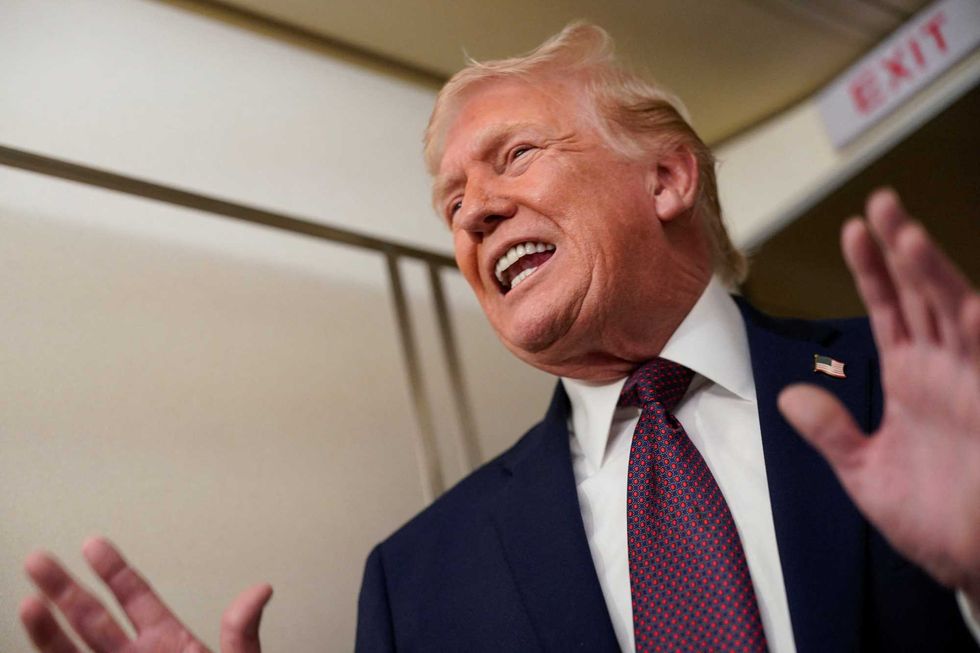
The post UK and US Seal $42 Billion Tech Pact Driving AI and Energy Future appeared on BitcoinEthereumNews.com. Key Highlights Microsoft and Google pledge billions as part of UK US tech partnership Nvidia to deploy 120,000 GPUs with British firm Nscale in Project Stargate Deal positions UK as an innovation hub rivaling global tech powers UK and US Seal $42 Billion Tech Pact Driving AI and Energy Future The UK and the US have signed a “Technological Prosperity Agreement” that paves the way for joint projects in artificial intelligence, quantum computing, and nuclear energy, according to Reuters. Donald Trump and King Charles review the guard of honour at Windsor Castle, 17 September 2025. Image: Kirsty Wigglesworth/Reuters The agreement was unveiled ahead of U.S. President Donald Trump’s second state visit to the UK, marking a historic moment in transatlantic technology cooperation. Billions Flow Into the UK Tech Sector As part of the deal, major American corporations pledged to invest $42 billion in the UK. Microsoft leads with a $30 billion investment to expand cloud and AI infrastructure, including the construction of a new supercomputer in Loughton. Nvidia will deploy 120,000 GPUs, including up to 60,000 Grace Blackwell Ultra chips—in partnership with the British company Nscale as part of Project Stargate. Google is contributing $6.8 billion to build a data center in Waltham Cross and expand DeepMind research. Other companies are joining as well. CoreWeave announced a $3.4 billion investment in data centers, while Salesforce, Scale AI, BlackRock, Oracle, and AWS confirmed additional investments ranging from hundreds of millions to several billion dollars. UK Positions Itself as a Global Innovation Hub British Prime Minister Keir Starmer said the deal could impact millions of lives across the Atlantic. He stressed that the UK aims to position itself as an investment hub with lighter regulations than the European Union. Nvidia spokesman David Hogan noted the significance of the agreement, saying it would…
Share
BitcoinEthereumNews2025/09/18 02:22
Trump caves on his own snubs as retaliation ploy against Dem governors backfires
Trump caves on his own snubs as retaliation ploy against Dem governors backfires

President Donald Trump on Wednesday walked back a snub he gave to two Democratic Governors. Last week, Trump notably did not invite Democratic governors Wes Moore
Share
Rawstory2026/02/12 10:29
Bitcoin devs cheer block reconstruction stats, ignore security budget concerns

Bitcoin devs cheer block reconstruction stats, ignore security budget concerns

The post Bitcoin devs cheer block reconstruction stats, ignore security budget concerns appeared on BitcoinEthereumNews.com. This morning, Bitcoin Core developers celebrated improved block reconstruction statistics for node operators while conveniently ignoring the reason for these statistics — the downward trend in fees for Bitcoin’s security budget. Reacting with heart emojis and thumbs up to a green chart showing over 80% “successful compact block reconstructions without any requested transactions,” they conveniently omitted red trend lines of the fees that Bitcoin users pay for mining security which powered those green statistics. Block reconstructions occur when a node requests additional information about transactions within a compact block. Although compact blocks allow nodes to quickly relay valid bundles of transactions across the internet, the more frequently that nodes can reconstruct without extra, cumbersome transaction requests from their peers is a positive trend. Because so many nodes switched over in August to relay transactions bidding 0.1 sat/vB across their mempools, nodes now have to request less transaction data to reconstruct blocks containing sub-1 sat/vB transactions. After nodes switched over in August to accept and relay pending transactions bidding less than 1 sat/vB, disparate mempools became harmonized as most nodes had a better view of which transactions would likely join upcoming blocks. As a result, block reconstruction times improved, as nodes needed less information about these sub-1 sat/vB transactions. In July, several miners admitted that user demand for Bitcoin blockspace had persisted at such a low that they were willing to accept transaction fees of just 0.1 satoshi per virtual byte — 90% lower than their prior 1 sat/vB minimum. With so many blocks partially empty, they succumbed to the temptation to accept at least something — even 1 billionth of one bitcoin (BTC) — rather than $0 to fill up some of the excess blockspace. Read more: Bitcoin’s transaction fees have fallen to a multi-year low Green stats for block reconstruction after transaction fees crash After…
Share
BitcoinEthereumNews2025/09/18 04:07