Author: Jake Nyquist , founder of Hook Protocol Compiled by: Blockchain Knight In 2026, major institutions launched new prediction markets. The competition betweenAuthor: Jake Nyquist , founder of Hook Protocol Compiled by: Blockchain Knight In 2026, major institutions launched new prediction markets. The competition between

2026 Forecast Market: A Battle of Titans – 7 Differentiated Breakthrough Strategies for New Players

2026/02/12 15:19
4 min read

Author: Jake Nyquist , founder of Hook Protocol

Compiled by: Blockchain Knight

2026 Forecast Market: A Battle of Titans – 7 Differentiated Breakthrough Strategies for New Players

In 2026, major institutions launched new prediction markets.

The competition between NFT and perpetual contract exchanges over the past five years has made it clear that differentiated products can quickly seize market share.

While existing leading platforms possess advantages in liquidity and regulation, they are burdened with heavy product and technology debt, making it difficult for them to flexibly respond to the impact of new players.

So how should new entrants compete? In my view, predicting differentiated competition in the market revolves around seven key dimensions:

1. Product quality

The founding team can differentiate themselves in areas such as front-end user experience, API stability, development documentation, market structure, and fee structure.

Currently, most established platforms have obvious shortcomings: unreasonable tier settings, opaque fee rules, slow and unstable APIs, and limited order types.

A superior product experience, especially services for API programmatic traders, is a lasting core advantage that allows them to stand firm even against competitors with stronger channel capabilities.

2. Asset Classes and Market Selection

Currently, trading volume in the prediction market is mainly concentrated in sports betting and the crypto-native market.

The new exchange can launch exclusive marketplaces that other platforms cannot offer, and this advantage will be further amplified when combined with a vertical market strategy (point 7).

3. Capital efficiency

Capital efficiency determines the effectiveness of a trader's use of collateral, and there are currently two core focuses:

First, interest-bearing collateral: Instead of allowing idle funds to only earn government bond yields, it provides higher returns, similar to Lighter's support for using LP deposits as collateral and HyENA's USDE margin perpetual contract model.

Second, the margin mechanism. Due to gap risk, the market generally underestimates the leverage value of the forecast market, but the platform can provide limited leverage for continuous markets or implement portfolio margin for hedging positions.

Exchanges can also subsidize lending pools or act as market makers to internalize gap risk, rather than having users share the losses.

4. Oracles and Market Settlement

Oracle reliability remains a systemic weakness in the industry; settlement delays and incorrect results can significantly amplify trading risks.

In addition to improving stability, the platform can implement innovative oracle mechanisms such as human-machine hybrid systems, zero-knowledge proof-based solutions, and context-based AI-driven oracles, unlocking entirely new markets that traditional oracles cannot support.

5. Liquidity Supply

Exchanges cannot survive without liquidity. Feasible paths include: paying professional market makers, incentivizing ordinary users to provide liquidity with tokens, and adopting Hyperliquid's HLP aggregated liquidity model.

Some platforms can also fully internalize liquidity, emulating FTX's model of relying on Alameda as its internal trading team.

6. Regulatory compliance

Kalshi, leveraging its US compliance qualifications, has achieved embedded distribution with Robinhood and Coinbase, capturing retail traffic that Polymarket cannot reach.

There are still a large number of jurisdictions and regulatory frameworks available for deployment, and the compliance prediction market can unlock similar channels, such as adapting to the gaming regulatory rules of various states in the United States.

7. Vertical Strategy vs. Horizontal Strategy

Horizontal strategy: Similar to Hyperliquid in the perpetual contract field, it focuses on building top-level underlying trading infrastructure, inviting third parties to build front-ends and vertical scenarios, and encouraging ecosystem builders to add new markets and develop revenue-generating front-ends (such as Phantom) through proposals.

Vertical strategy: Represented by Lighter, it independently controls the front end, launches mobile applications, and creates a full-process user experience, focusing on integrated experience and direct connection with users.

Polymarket's resistance to deep embedded collaborations and Kalshi's open attitude are a direct reflection of the two strategic choices.

Market Opportunity
Major Logo
Major Price(MAJOR)
$0.0827
$0.0827$0.0827
+2.74%
USD
Major (MAJOR) Live Price Chart
Disclaimer: The articles reposted on this site are sourced from public platforms and are provided for informational purposes only. They do not necessarily reflect the views of MEXC. All rights remain with the original authors. If you believe any content infringes on third-party rights, please contact [email protected] for removal. MEXC makes no guarantees regarding the accuracy, completeness, or timeliness of the content and is not responsible for any actions taken based on the information provided. The content does not constitute financial, legal, or other professional advice, nor should it be considered a recommendation or endorsement by MEXC.

You May Also Like

Satoshi-Era Mt. Gox’s 1,000 Bitcoin Wallet Suddenly Reactivated
Satoshi-Era Mt. Gox’s 1,000 Bitcoin Wallet Suddenly Reactivated

The post Satoshi-Era Mt. Gox’s 1,000 Bitcoin Wallet Suddenly Reactivated appeared on BitcoinEthereumNews.com. X account @SaniExp, which belongs to the founder of the Timechain Index explorer, has published data showing that a dormant BTC wallet was activated after hibernating for six years. However, it was set up 13 years ago, according to the tweet — the time when Satoshi Nakamoto’s shadow was still casting itself around, so to speak. The X post states that the tweet belongs to infamous early Bitcoin exchange Mt. Gox, which suffered from a major hack in the early 2010s, and last year it began paying out compensation to clients who lost their crypto in that hack. The deadline was eventually extended to October 2025. Mt. Gox’s wallet with 1,000 BTC reactivated The above-mentioned data source shared a screenshot from the Timechain Index explorer, showing multiple transactions marked as confirmed and moving a total of 1,000 Bitcoins. This amount of crypto is valued at $116,195,100 at the time of the initiated transaction. Last year, Mt. Gox began to move the remains of its gargantuan funds to pay out compensations to its creditors. Earlier this year, it also made several massive transactions to partner exchanges to distribute funds to Mt. Gox investors. All of the compensations were promised to be paid out by Oct. 31, 2025. The aforementioned transaction is likely preparation for another payout. The exchange was hacked for several years due to multiple unnoticed security breaches, and in 2014, when the site went offline, 744,408 Bitcoins were reported stolen. Source: https://u.today/satoshi-era-mtgoxs-1000-bitcoin-wallet-suddenly-reactivated
Share
BitcoinEthereumNews2025/09/18 10:18
Bitcoin Holds $115K Support as Fed Cuts Rates by 25 Basis Points

Bitcoin Holds $115K Support as Fed Cuts Rates by 25 Basis Points

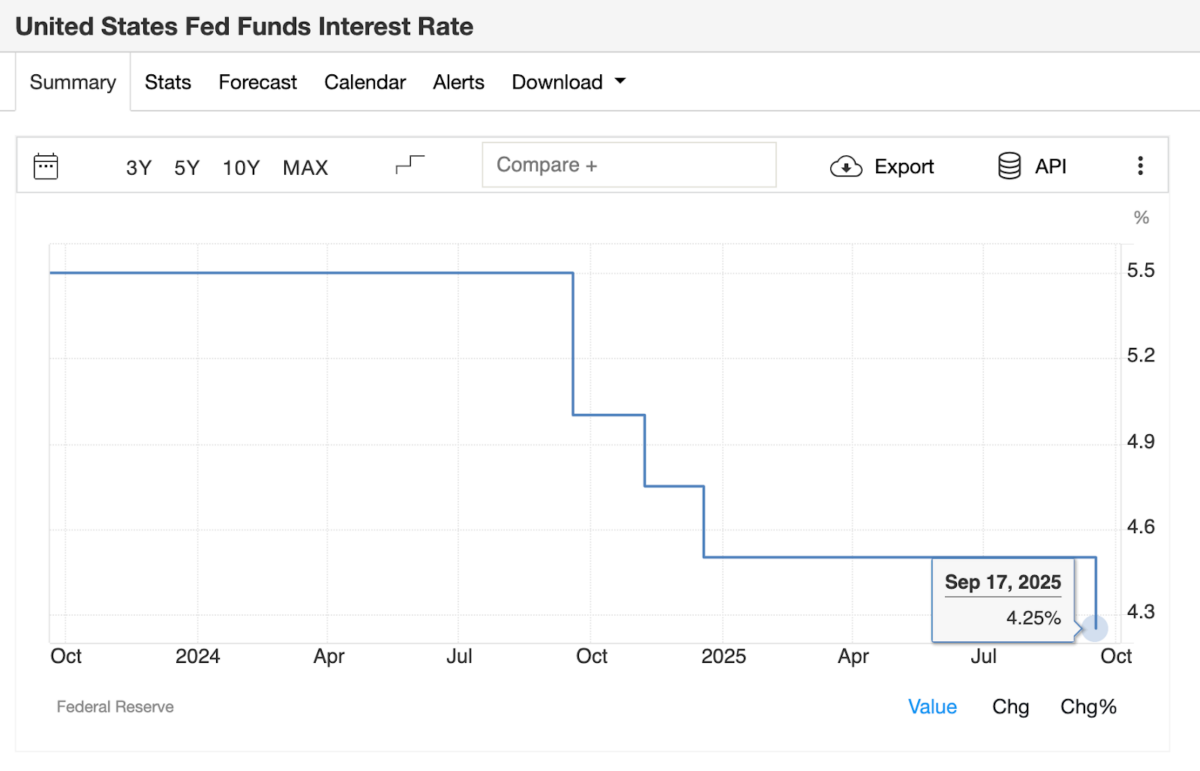
Bitcoin maintained support above $115,000 following the Federal Reserve's 25 basis point rate cut, which fell short of the widely anticipated 50bp reduction. The post Bitcoin Holds $115K Support as Fed Cuts Rates by 25 Basis Points appeared first on Coinspeaker.
Share
Coinspeaker2025/09/18 07:44
MoonBull, Brett, and Dogwifhat Compared

MoonBull, Brett, and Dogwifhat Compared

The post MoonBull, Brett, and Dogwifhat Compared appeared on BitcoinEthereumNews.com. Crypto News 18 September 2025 | 05:15 Explore MoonBull Whitelist, Brett token, and Dogwifhat price action. Learn why MoonBull’s best crypto whitelist is live now with big FOMO potential. Ever wondered why meme coins stir so much hype in the crypto jungle? Traders, students, and even seasoned blockchain builders keep chasing the next peanut pile of gains, hoping their bags turn into bull-sized fortunes overnight. In today’s scene, names like Brett and Dogwifhat grab the spotlight, while MoonBull lights up conversations with its whitelist buzz. Each of these projects carries its own flavor, yet the energy they generate reveals how meme culture keeps shaking financial markets. Brett became a crowd darling by spinning internet humor into tokenomics. Dogwifhat turned playful memes into market waves, pulling traders in with viral appeal. Both show how lighthearted memes can fuel serious capital flow. Yet the chatter doesn’t stop with them. MoonBull now appears, sparking urgency with its whitelist, creating noise louder than a hippo splash in shallow waters. MoonBull’s whitelist offering exclusive early perks, the crypto crowd feels the tug of FOMO stronger than ever. This first-come, first-served invite could be a rare second shot at a moonshot. MoonBull Whitelist is Live: Your Chance to Join the Best Crypto Whitelist MoonBull ($MOBU) has entered the arena not as just another meme coin but as a project built with the precision of Ethereum’s secure backbone. Designed for those chasing explosive upside, MoonBull stacks its chips on elite staking rewards and secret token drops. Its whitelist isn’t simply a sign-up form; it’s a ticket into Stage One of the presale, where entry comes at the lowest price possible and doors swing open to bonus allocations. Being whitelisted is like being a penguin in the front row of a bull stampede. Whitelist members aren’t just joining…
Share
BitcoinEthereumNews2025/09/18 10:17