Like the broader cryptocurrency market, XRP has witnessed a shift in market structure to the downside ever since October 2025. Year to date XRP is down nearly -Like the broader cryptocurrency market, XRP has witnessed a shift in market structure to the downside ever since October 2025. Year to date XRP is down nearly -

Can XRP Community Day 2026 Ignite the Next Price Surge?

2026/02/13 17:25
5 min read

Like the broader cryptocurrency market, XRP has witnessed a shift in market structure to the downside ever since October 2025. Year to date XRP is down nearly -26% putting it on par with drawdowns witnessed by other large caps. Against this backdrop, attention has recently turned to XRP’s Community Day 2026, Ripple’s global virtual gathering that brings together developers, institutions and ecosystem leaders to discuss the next growth phase for XRP. 

Held on February 11-12, 2026, the event took place across three regional X Spaces sessions covering EMEA, the Americas and APAC audiences. Ripple CEO Brad Garlinghouse, President Monica Long and XRPL co-creator David Schwartz were accompanied by representatives from major crypto and fintech companies like Grayscale and Gemini. The central themes throughout the event spanned across regulated financial products, ETFs, wrapped XRP, DeFi application, cross-chain liquidity and the expanding role of XRP in capital markets and real-world payments. The sessions also included live Q&As with Ripple’s leadership team and highlighted the company’s priorities for 2026 around institutional adoption and on-chain infrastructure. 

Events like these in the crypto space often come with price volatility, sometimes even before the event begins, as expectations build around potential announcements, partnerships and ecosystem updates. XRP entered Community day in a consolidation phase after a volatile move to the downside and currently hovering around the key technical support level of around $1.35. 

So far, the broader macro uncertainty and risk off sentiment that is coming down on the crypto market have outweighed the immediate impact of the announcements from the event. That said, optimism from such events often requires time to materialize and typically depends on whether the developments signal actual, structural demand rather than short-lived sentiment. 

Event Optimism Building Within the Community

Despite price not reacting to the event from the get go, there was a clear message that came out from Community Day 2026. Throughout the event, the idea of the XRP Ledger being more than just a payments network and as an infrastructure for regulated finance came through. Institutional adoption, cross chain expansion and new developer tooling to strengthen XRPL’s role in tokenized assets were the core themes covered during the two day event. There were also discussions around its roadmap with emphasis being placed on programmability updates, compliance-friendly features and continued investment in the developer ecosystem. The themes and talking points ultimately showed a long term strategy focused on expanding enterprise and institutional use cases. 

A major partnership was also announced during the event between Ripple and Aviva Investors, the global asset management wing of Aviva plc. The partnership aims to explore the tokenization of traditional fund structures on the XRP Ledger.  This marks Ripple’s first partnership with a European investment manager and highlights a deeper push into tokenized finance. For Aviva investors, the initiative represents its first step toward incorporating on-chain fund structures. This partnership once again exemplifies the long term narrative of XRP becoming a key player bridging traditional finance and blockchain-based infra. 

Historical Impact of Major XRP Events 

History often suggests that crypto events can play into the “buy the rumor, sell the news” dynamic and this has been observed in previous XRP events as well. For example, Ripple’s annual Swell conference has acted as a short term price catalyst in the past. Take Swell 2023 for instance, XRP rallied by nearly 50% for four weeks leading up to the conference, only to be followed by profit taking. 

However, news around regulatory clarity had a much more long term impact and momentum to price. The news around the U.S. SEC dropping the long standing Ripple lawsuit in March 2025 not only had an immediate impact on price but saw a durable momentum all the way up to August of the same year when the case was officially closed. During this period XRP’s price rallied by nearly 46%. 

Market Structure Remaining the Deciding Factor 

Even though the Community Day might’ve brought in fresh narratives, the broader macro environment continues to influence market structure and sentiment across asset classes including crypto. The entire crypto sector remains heavily influenced by global liquidity conditions, interest rate expectations and risk appetite. 

Currently, global uncertainty is impacting the crypto market. Economic unpredictability is at unprecedented levels and this is indicative by looking at the World Uncertainty Index. This index is used as a barometer to judge global economic uncertainty by tracking how frequently uncertainty related terms appear on economic and policy reports across the globe. For perspective, this index is now higher than levels seen during both the pandemic and the 2008-2009 financial crisis. 

Ultimately, this level of fragility in the macroeconomic environment makes it extremely difficult for any sort of event-driven news to gain traction. Global sentiment and external macro forces currently remain the key parameters to keep close eyes on for a momentum shift in XRP and the broader market. 

Levels Traders are Watching

After breaking the April 2025 lows of $1.61 on February 1st, price has dropped by another 15% and is now testing a key support zone between the $1.30 to $1.35. Traders are watching this level because this coincides with a cluster of price activity all the way back to August-October 2021. Zones with repeated historical reactions often become important battlegrounds between buyers and sellers. 

Derivatives positioning also highlights similar areas of interest and where we could potentially see volatility. When we look at XRP’s three-month liquidation heatmap, a large portion of long liquidations has already been cleared by the recent decline. However, a pocket of long leverage still sits below the current market price, particularly in the $1.30 to $1.25 region. At the same, significant short liquidation clusters are emerging between $1.50 and $1.63. 

Market Opportunity
XRP Logo
XRP Price(XRP)
$1,4851
$1,4851$1,4851
+%0,74
USD
XRP (XRP) Live Price Chart
Disclaimer: The articles reposted on this site are sourced from public platforms and are provided for informational purposes only. They do not necessarily reflect the views of MEXC. All rights remain with the original authors. If you believe any content infringes on third-party rights, please contact [email protected] for removal. MEXC makes no guarantees regarding the accuracy, completeness, or timeliness of the content and is not responsible for any actions taken based on the information provided. The content does not constitute financial, legal, or other professional advice, nor should it be considered a recommendation or endorsement by MEXC.

You May Also Like

Yunfeng Financial appoints Jiang Guofei as Chairman of Web3 Development Committee
Yunfeng Financial appoints Jiang Guofei as Chairman of Web3 Development Committee

PANews reported on September 19th that the South China Morning Post reported that Jack Ma-backed Yunfeng Financial Group has appointed former Ant Group executive Geoff Jiang Guofei as Chairman of its Web3 Development Committee, further clarifying its strategic layout in the Web3 space. Jiang Guofei previously led Ant Group's blockchain project, Trusple , and served as Director of the DAMO Academy's Fintech Lab. Yunfeng recently completed its first real-world asset ( RWA ) tokenization project and purchased 10,000 Ethereum (ETH) for $ 44 million as a strategic reserve, with plans to promote tokenized solutions across multiple asset classes.
Share
PANews2025/09/19 18:01
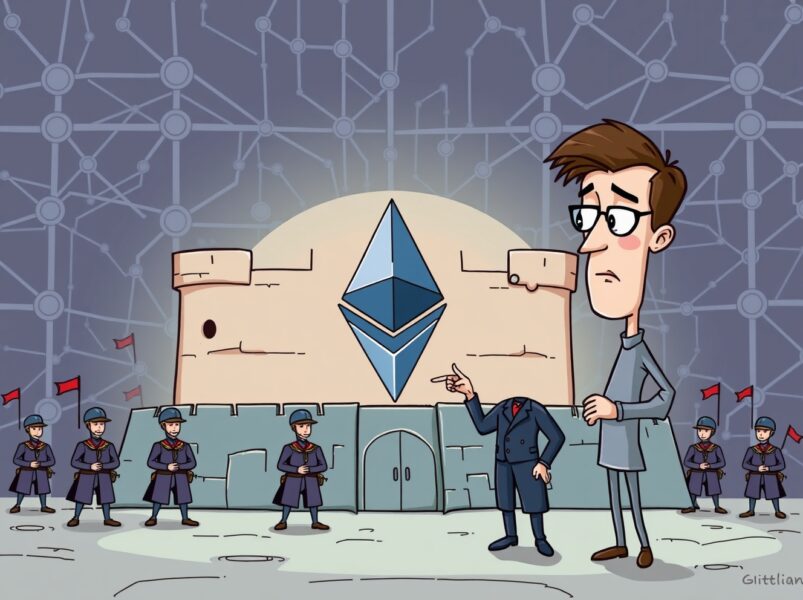
Crucial ETH Unstaking Period: Vitalik Buterin’s Unwavering Defense for Network Security

Crucial ETH Unstaking Period: Vitalik Buterin’s Unwavering Defense for Network Security

BitcoinWorld Crucial ETH Unstaking Period: Vitalik Buterin’s Unwavering Defense for Network Security Ever wondered why withdrawing your staked Ethereum (ETH) isn’t an instant process? It’s a question that often sparks debate within the crypto community. Ethereum founder Vitalik Buterin recently stepped forward to defend the network’s approximately 45-day ETH unstaking period, asserting its crucial role in safeguarding the network’s integrity. This lengthy waiting time, while sometimes seen as an inconvenience, is a deliberate design choice with profound implications for security. Why is the ETH Unstaking Period a Vital Security Measure? Vitalik Buterin’s defense comes amidst comparisons to other networks, like Solana, which boast significantly shorter unstaking times. He drew a compelling parallel to military operations, explaining that an army cannot function effectively if its soldiers can simply abandon their posts at a moment’s notice. Similarly, a blockchain network requires a stable and committed validator set to maintain its security. The current ETH unstaking period isn’t merely an arbitrary delay. It acts as a critical buffer, providing the network with sufficient time to detect and respond to potential malicious activities. If validators could instantly exit, it would open doors for sophisticated attacks, jeopardizing the entire system. Currently, Ethereum boasts over one million active validators, collectively staking approximately 35.6 million ETH, representing about 30% of the total supply. This massive commitment underpins the network’s robust security model, and the unstaking period helps preserve this stability. Network Security: Ethereum’s Paramount Concern A shorter ETH unstaking period might seem appealing for liquidity, but it introduces significant risks. Imagine a scenario where a large number of validators, potentially colluding, could quickly withdraw their stake after committing a malicious act. Without a substantial delay, the network would have limited time to penalize them or mitigate the damage. This “exit queue” mechanism is designed to prevent sudden validator exodus, which could lead to: Reduced decentralization: A rapid drop in active validators could concentrate power among fewer participants. Increased vulnerability to attacks: A smaller, less stable validator set is easier to compromise. Network instability: Frequent and unpredictable changes in validator numbers can lead to performance issues and consensus failures. Therefore, the extended period is not a bug; it’s a feature. It’s a calculated trade-off between immediate liquidity for stakers and the foundational security of the entire Ethereum ecosystem. Ethereum vs. Solana: Different Approaches to Unstaking When discussing the ETH unstaking period, many point to networks like Solana, which offers a much quicker two-day unstaking process. While this might seem like an advantage for stakers seeking rapid access to their funds, it reflects fundamental differences in network architecture and security philosophies. Solana’s design prioritizes speed and immediate liquidity, often relying on different consensus mechanisms and validator economics to manage security risks. Ethereum, on the other hand, with its proof-of-stake evolution from proof-of-work, has adopted a more cautious approach to ensure its transition and long-term stability are uncompromised. Each network makes design choices based on its unique goals and threat models. Ethereum’s substantial value and its role as a foundational layer for countless dApps necessitate an extremely robust security posture, making the current unstaking duration a deliberate and necessary component. What Does the ETH Unstaking Period Mean for Stakers? For individuals and institutions staking ETH, understanding the ETH unstaking period is crucial for managing expectations and investment strategies. It means that while staking offers attractive rewards, it also comes with a commitment to the network’s long-term health. Here are key considerations for stakers: Liquidity Planning: Stakers should view their staked ETH as a longer-term commitment, not immediately liquid capital. Risk Management: The delay inherently reduces the ability to react quickly to market volatility with staked assets. Network Contribution: By participating, stakers contribute directly to the security and decentralization of Ethereum, reinforcing its value proposition. While the current waiting period may not be “optimal” in every sense, as Buterin acknowledged, simply shortening it without addressing the underlying security implications would be a dangerous gamble for the network’s reliability. In conclusion, Vitalik Buterin’s defense of the lengthy ETH unstaking period underscores a fundamental principle: network security cannot be compromised for the sake of convenience. It is a vital mechanism that protects Ethereum’s integrity, ensuring its stability and trustworthiness as a leading blockchain platform. This deliberate design choice, while requiring patience from stakers, ultimately fortifies the entire ecosystem against potential threats, paving the way for a more secure and reliable decentralized future. Frequently Asked Questions (FAQs) Q1: What is the main reason for Ethereum’s long unstaking period? A1: The primary reason is network security. A lengthy ETH unstaking period prevents malicious actors from quickly withdrawing their stake after an attack, giving the network time to detect and penalize them, thus maintaining stability and integrity. Q2: How long is the current ETH unstaking period? A2: The current ETH unstaking period is approximately 45 days. This duration can fluctuate based on network conditions and the number of validators in the exit queue. Q3: How does Ethereum’s unstaking period compare to other blockchains? A3: Ethereum’s unstaking period is notably longer than some other networks, such as Solana, which has a two-day period. This difference reflects varying network architectures and security priorities. Q4: Does the unstaking period affect ETH stakers? A4: Yes, it means stakers need to plan their liquidity carefully, as their staked ETH is not immediately accessible. It encourages a longer-term commitment to the network, aligning staker interests with Ethereum’s stability. Q5: Could the ETH unstaking period be shortened in the future? A5: While Vitalik Buterin acknowledged the current period might not be “optimal,” any significant shortening would likely require extensive research and network upgrades to ensure security isn’t compromised. For now, the focus remains on maintaining robust network defenses. Found this article insightful? Share it with your friends and fellow crypto enthusiasts on social media to spread awareness about the critical role of the ETH unstaking period in Ethereum’s security! To learn more about the latest Ethereum trends, explore our article on key developments shaping Ethereum’s institutional adoption. This post Crucial ETH Unstaking Period: Vitalik Buterin’s Unwavering Defense for Network Security first appeared on BitcoinWorld.
Share
Coinstats2025/09/18 15:30
XRP holders hit new high, but THIS keeps pressure on price

XRP holders hit new high, but THIS keeps pressure on price

The post XRP holders hit new high, but THIS keeps pressure on price appeared on BitcoinEthereumNews.com. Ripple [XRP] remains one of the top five cryptocurrencies
Share
BitcoinEthereumNews2026/02/17 08:49
