The post Don’t rule out a larger and more persistent impact of tariffs on inflation appeared on BitcoinEthereumNews.com. In an interview with Bloomberg on Friday, Federal Reserve Bank (Fed) of Boston President Susan Collins said that the overall economic fundamentals in the United States are relatively solid, per Reuters. Key takeaways “We cannot wait for all of the uncertainty to be behind us.” “Focused on how downside risks are evolving.” “We hear a lot about inflation in discussions around Boston Fed district.” “Don’t rule out a larger and more persistent impact of tariffs on inflation.” “Not a done deal in terms of what we do at next meeting.” “Dual mandate risks are in rough balance.” “Not that worried about inflation expectations moving up.” “We can’t wait for all uncertainty to be resolved before we make our decisions.” Market reaction These comments received a hawkish score of 6.4 from FXStreet Speech Tracker. Meanwhile, FXStreet Fed Sentiment Index stays near 104.00, pointing to a neutral stance. The US Dollar Index stays in its daily range above 98.50 as investors refrain from taking large positions ahead of Fed Chair Jerome Powell’s speech at the annual Jackson Hole Symposium. Fed FAQs Monetary policy in the US is shaped by the Federal Reserve (Fed). The Fed has two mandates: to achieve price stability and foster full employment. Its primary tool to achieve these goals is by adjusting interest rates. When prices are rising too quickly and inflation is above the Fed’s 2% target, it raises interest rates, increasing borrowing costs throughout the economy. This results in a stronger US Dollar (USD) as it makes the US a more attractive place for international investors to park their money. When inflation falls below 2% or the Unemployment Rate is too high, the Fed may lower interest rates to encourage borrowing, which weighs on the Greenback. The Federal Reserve (Fed) holds eight policy meetings a year,… The post Don’t rule out a larger and more persistent impact of tariffs on inflation appeared on BitcoinEthereumNews.com. In an interview with Bloomberg on Friday, Federal Reserve Bank (Fed) of Boston President Susan Collins said that the overall economic fundamentals in the United States are relatively solid, per Reuters. Key takeaways “We cannot wait for all of the uncertainty to be behind us.” “Focused on how downside risks are evolving.” “We hear a lot about inflation in discussions around Boston Fed district.” “Don’t rule out a larger and more persistent impact of tariffs on inflation.” “Not a done deal in terms of what we do at next meeting.” “Dual mandate risks are in rough balance.” “Not that worried about inflation expectations moving up.” “We can’t wait for all uncertainty to be resolved before we make our decisions.” Market reaction These comments received a hawkish score of 6.4 from FXStreet Speech Tracker. Meanwhile, FXStreet Fed Sentiment Index stays near 104.00, pointing to a neutral stance. The US Dollar Index stays in its daily range above 98.50 as investors refrain from taking large positions ahead of Fed Chair Jerome Powell’s speech at the annual Jackson Hole Symposium. Fed FAQs Monetary policy in the US is shaped by the Federal Reserve (Fed). The Fed has two mandates: to achieve price stability and foster full employment. Its primary tool to achieve these goals is by adjusting interest rates. When prices are rising too quickly and inflation is above the Fed’s 2% target, it raises interest rates, increasing borrowing costs throughout the economy. This results in a stronger US Dollar (USD) as it makes the US a more attractive place for international investors to park their money. When inflation falls below 2% or the Unemployment Rate is too high, the Fed may lower interest rates to encourage borrowing, which weighs on the Greenback. The Federal Reserve (Fed) holds eight policy meetings a year,…

Don’t rule out a larger and more persistent impact of tariffs on inflation

3 min read

In an interview with Bloomberg on Friday, Federal Reserve Bank (Fed) of Boston President Susan Collins said that the overall economic fundamentals in the United States are relatively solid, per Reuters.

Key takeaways

“We cannot wait for all of the uncertainty to be behind us.”

“Focused on how downside risks are evolving.”

“We hear a lot about inflation in discussions around Boston Fed district.”

“Don’t rule out a larger and more persistent impact of tariffs on inflation.”

“Not a done deal in terms of what we do at next meeting.”

“Dual mandate risks are in rough balance.”

“Not that worried about inflation expectations moving up.”

“We can’t wait for all uncertainty to be resolved before we make our decisions.”

Market reaction

These comments received a hawkish score of 6.4 from FXStreet Speech Tracker. Meanwhile, FXStreet Fed Sentiment Index stays near 104.00, pointing to a neutral stance.

The US Dollar Index stays in its daily range above 98.50 as investors refrain from taking large positions ahead of Fed Chair Jerome Powell’s speech at the annual Jackson Hole Symposium.

Fed FAQs

Monetary policy in the US is shaped by the Federal Reserve (Fed). The Fed has two mandates: to achieve price stability and foster full employment. Its primary tool to achieve these goals is by adjusting interest rates.
When prices are rising too quickly and inflation is above the Fed’s 2% target, it raises interest rates, increasing borrowing costs throughout the economy. This results in a stronger US Dollar (USD) as it makes the US a more attractive place for international investors to park their money.
When inflation falls below 2% or the Unemployment Rate is too high, the Fed may lower interest rates to encourage borrowing, which weighs on the Greenback.

The Federal Reserve (Fed) holds eight policy meetings a year, where the Federal Open Market Committee (FOMC) assesses economic conditions and makes monetary policy decisions.
The FOMC is attended by twelve Fed officials – the seven members of the Board of Governors, the president of the Federal Reserve Bank of New York, and four of the remaining eleven regional Reserve Bank presidents, who serve one-year terms on a rotating basis.

In extreme situations, the Federal Reserve may resort to a policy named Quantitative Easing (QE). QE is the process by which the Fed substantially increases the flow of credit in a stuck financial system.
It is a non-standard policy measure used during crises or when inflation is extremely low. It was the Fed’s weapon of choice during the Great Financial Crisis in 2008. It involves the Fed printing more Dollars and using them to buy high grade bonds from financial institutions. QE usually weakens the US Dollar.

Quantitative tightening (QT) is the reverse process of QE, whereby the Federal Reserve stops buying bonds from financial institutions and does not reinvest the principal from the bonds it holds maturing, to purchase new bonds. It is usually positive for the value of the US Dollar.

Source: https://www.fxstreet.com/news/feds-collins-dont-rule-out-a-larger-and-more-persistent-impact-of-tariffs-on-inflation-202508221318

Market Opportunity
NEAR Logo
NEAR Price(NEAR)
$1.052
$1.052$1.052
-0.84%
USD
NEAR (NEAR) Live Price Chart
Disclaimer: The articles reposted on this site are sourced from public platforms and are provided for informational purposes only. They do not necessarily reflect the views of MEXC. All rights remain with the original authors. If you believe any content infringes on third-party rights, please contact [email protected] for removal. MEXC makes no guarantees regarding the accuracy, completeness, or timeliness of the content and is not responsible for any actions taken based on the information provided. The content does not constitute financial, legal, or other professional advice, nor should it be considered a recommendation or endorsement by MEXC.

You May Also Like

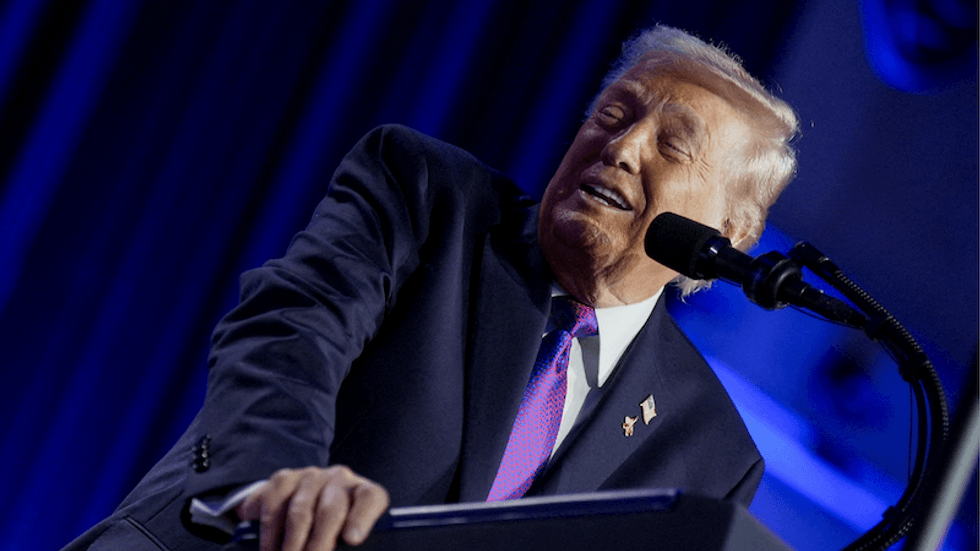
Trump roasts Mike Johnson for saying grace at prayer event: 'Excuse me, it's lunch!'

Trump roasts Mike Johnson for saying grace at prayer event: 'Excuse me, it's lunch!'

President Donald Trump in a speech at this year's National Prayer Breakfast roasted House Speaker Mike Johnson (R-LA) for saying grace at meals.The 79-year-old
Share
Rawstory2026/02/05 23:11
Where Can You Turn $1,000 Into $5,000 This Week? Experts Point Towards Remittix As The Best Option

Where Can You Turn $1,000 Into $5,000 This Week? Experts Point Towards Remittix As The Best Option

Cryptocurrency markets are again showing that opportunities can emerge when fundamentals, timing and demand intersect. Amid sideways price action in many major
Share
Techbullion2026/02/05 23:13
UK Looks to US to Adopt More Crypto-Friendly Approach

UK Looks to US to Adopt More Crypto-Friendly Approach

The post UK Looks to US to Adopt More Crypto-Friendly Approach appeared on BitcoinEthereumNews.com. The UK and US are reportedly preparing to deepen cooperation on digital assets, with Britain looking to copy the Trump administration’s crypto-friendly stance in a bid to boost innovation.  UK Chancellor Rachel Reeves and US Treasury Secretary Scott Bessent discussed on Tuesday how the two nations could strengthen their coordination on crypto, the Financial Times reported on Tuesday, citing people familiar with the matter.  The discussions also involved representatives from crypto companies, including Coinbase, Circle Internet Group and Ripple, with executives from the Bank of America, Barclays and Citi also attending, according to the report. The agreement was made “last-minute” after crypto advocacy groups urged the UK government on Thursday to adopt a more open stance toward the industry, claiming its cautious approach to the sector has left the country lagging in innovation and policy.  Source: Rachel Reeves Deal to include stablecoins, look to unlock adoption Any deal between the countries is likely to include stablecoins, the Financial Times reported, an area of crypto that US President Donald Trump made a policy priority and in which his family has significant business interests. The Financial Times reported on Monday that UK crypto advocacy groups also slammed the Bank of England’s proposal to limit individual stablecoin holdings to between 10,000 British pounds ($13,650) and 20,000 pounds ($27,300), claiming it would be difficult and expensive to implement. UK banks appear to have slowed adoption too, with around 40% of 2,000 recently surveyed crypto investors saying that their banks had either blocked or delayed a payment to a crypto provider.  Many of these actions have been linked to concerns over volatility, fraud and scams. The UK has made some progress on crypto regulation recently, proposing a framework in May that would see crypto exchanges, dealers, and agents treated similarly to traditional finance firms, with…
Share
BitcoinEthereumNews2025/09/18 02:21