BitcoinWorld CFTC Digital Asset Regulation: Urgent Call as Commissioner Johnson Departs The landscape of CFTC digital asset regulation is at a pivotal juncture. Commissioner Kristin Johnson, a significant voice at the U.S. Commodity Futures Trading Commission (CFTC), will step down on September 3. Her departure marks a critical moment for the agency, especially as it navigates its evolving role in overseeing the rapidly expanding digital assets sector. Johnson’s exit leaves Acting Chair Caroline Pham as the sole leader, raising questions about the future direction of crypto oversight and the agency’s capacity to manage it effectively. What Does Commissioner Johnson’s Departure Mean for CFTC Digital Asset Regulation? Kristin Johnson’s role as the sole Democratic commissioner provided a crucial perspective within the CFTC. Her upcoming departure on September 3, as reported by Bloomberg, signifies a shift in the agency’s internal dynamics. This transition leaves Acting Chair Caroline Pham to lead the commission alone, at least temporarily. The immediate implication is a potential impact on the CFTC’s approach to various regulatory matters, including its growing responsibilities concerning digital assets. Johnson’s statement announcing her resignation highlighted a key concern: the CFTC needs more support to fulfill its expanded mandate. This includes its increasingly vital role in regulating the complex world of digital assets. Her call underscores the immense pressure and the significant resources required for effective oversight in this innovative, yet often volatile, market. Why is Enhanced CFTC Digital Asset Regulation So Crucial? The call for greater support for the CFTC’s expanded role, particularly in CFTC digital asset regulation, is not without merit. The digital asset space, encompassing cryptocurrencies, stablecoins, and NFTs, continues to grow in sophistication and market capitalization. Without clear and robust regulatory frameworks, investors and markets face heightened risks. Johnson’s advocacy emphasizes the need for proactive, well-resourced oversight to protect consumers and maintain market integrity. Effective regulation can offer several benefits: Investor Protection: Safeguarding individuals from fraud, manipulation, and opaque practices. Market Stability: Establishing clear rules helps prevent systemic risks and fosters a more predictable environment. Innovation Growth: A well-defined regulatory perimeter can actually encourage responsible innovation by providing certainty for businesses. Global Competitiveness: Clear frameworks can position the U.S. as a leader in the digital economy. The challenges in this area are substantial, ranging from defining which digital assets fall under CFTC jurisdiction to developing appropriate enforcement mechanisms for novel technologies. These complexities demand a well-supported and knowledgeable regulatory body. Navigating the Future of CFTC Digital Asset Regulation As the CFTC moves forward, the focus on CFTC digital asset regulation will undoubtedly intensify. Industry stakeholders, policymakers, and market participants will closely monitor how the agency adapts to this new leadership structure and addresses Johnson’s concerns. The dialogue around legislative clarity for digital assets is ongoing, and the CFTC’s stance will play a significant role in shaping these discussions. Actionable insights for the industry include: Staying informed about evolving CFTC guidance and enforcement actions. Engaging with regulators to provide constructive feedback on proposed rules. Prioritizing robust internal compliance frameworks that anticipate future regulatory demands. The agency’s capacity to effectively regulate digital assets depends not only on its internal leadership but also on the support it receives from Congress and the broader government to secure necessary funding and legislative authority. This period of transition highlights the urgent need for a cohesive and well-supported strategy for digital asset oversight. Conclusion: Commissioner Kristin Johnson’s impending departure from the CFTC underscores a critical juncture for CFTC digital asset regulation. Her final call for increased support for the agency’s expanded role in overseeing digital assets serves as a powerful reminder of the challenges and opportunities ahead. As the CFTC navigates this transition under Acting Chair Caroline Pham, the crypto industry and policymakers must recognize the imperative of robust, well-resourced regulation to foster a secure and innovative digital economy. The future of digital asset markets hinges on these crucial decisions. Frequently Asked Questions About CFTC Digital Asset Regulation Who is Kristin Johnson and what was her role at the CFTC?Kristin Johnson served as a Democratic Commissioner at the U.S. Commodity Futures Trading Commission (CFTC), a key agency overseeing derivatives markets, including certain digital assets. Why is Commissioner Johnson stepping down?Commissioner Johnson is stepping down on September 3. While her specific reasons for resignation were not fully detailed in the report, her departure statement emphasized the need for more support for the CFTC’s expanded role, particularly in digital asset regulation. What is the CFTC’s role in digital asset regulation?The CFTC primarily regulates commodity derivatives markets. It has asserted jurisdiction over certain digital assets deemed commodities, like Bitcoin and Ethereum, when they are traded in futures or other derivatives markets. What does her departure mean for the future of crypto regulation?Her departure leaves Acting Chair Caroline Pham as the sole leader, potentially impacting the agency’s internal dynamics and approach to digital asset oversight. It also highlights the ongoing need for increased resources and legislative clarity for effective CFTC digital asset regulation. Who will lead the CFTC after her departure?Upon Kristin Johnson’s departure, Acting Chair Caroline Pham will temporarily lead the U.S. Commodity Futures Trading Commission as the sole remaining commissioner. If you found this article insightful, please consider sharing it with your network on social media to spread awareness about the evolving landscape of digital asset regulation! To learn more about the latest crypto market trends, explore our article on key developments shaping digital assets regulatory frameworks. This post CFTC Digital Asset Regulation: Urgent Call as Commissioner Johnson Departs first appeared on BitcoinWorld and is written by Editorial TeamBitcoinWorld CFTC Digital Asset Regulation: Urgent Call as Commissioner Johnson Departs The landscape of CFTC digital asset regulation is at a pivotal juncture. Commissioner Kristin Johnson, a significant voice at the U.S. Commodity Futures Trading Commission (CFTC), will step down on September 3. Her departure marks a critical moment for the agency, especially as it navigates its evolving role in overseeing the rapidly expanding digital assets sector. Johnson’s exit leaves Acting Chair Caroline Pham as the sole leader, raising questions about the future direction of crypto oversight and the agency’s capacity to manage it effectively. What Does Commissioner Johnson’s Departure Mean for CFTC Digital Asset Regulation? Kristin Johnson’s role as the sole Democratic commissioner provided a crucial perspective within the CFTC. Her upcoming departure on September 3, as reported by Bloomberg, signifies a shift in the agency’s internal dynamics. This transition leaves Acting Chair Caroline Pham to lead the commission alone, at least temporarily. The immediate implication is a potential impact on the CFTC’s approach to various regulatory matters, including its growing responsibilities concerning digital assets. Johnson’s statement announcing her resignation highlighted a key concern: the CFTC needs more support to fulfill its expanded mandate. This includes its increasingly vital role in regulating the complex world of digital assets. Her call underscores the immense pressure and the significant resources required for effective oversight in this innovative, yet often volatile, market. Why is Enhanced CFTC Digital Asset Regulation So Crucial? The call for greater support for the CFTC’s expanded role, particularly in CFTC digital asset regulation, is not without merit. The digital asset space, encompassing cryptocurrencies, stablecoins, and NFTs, continues to grow in sophistication and market capitalization. Without clear and robust regulatory frameworks, investors and markets face heightened risks. Johnson’s advocacy emphasizes the need for proactive, well-resourced oversight to protect consumers and maintain market integrity. Effective regulation can offer several benefits: Investor Protection: Safeguarding individuals from fraud, manipulation, and opaque practices. Market Stability: Establishing clear rules helps prevent systemic risks and fosters a more predictable environment. Innovation Growth: A well-defined regulatory perimeter can actually encourage responsible innovation by providing certainty for businesses. Global Competitiveness: Clear frameworks can position the U.S. as a leader in the digital economy. The challenges in this area are substantial, ranging from defining which digital assets fall under CFTC jurisdiction to developing appropriate enforcement mechanisms for novel technologies. These complexities demand a well-supported and knowledgeable regulatory body. Navigating the Future of CFTC Digital Asset Regulation As the CFTC moves forward, the focus on CFTC digital asset regulation will undoubtedly intensify. Industry stakeholders, policymakers, and market participants will closely monitor how the agency adapts to this new leadership structure and addresses Johnson’s concerns. The dialogue around legislative clarity for digital assets is ongoing, and the CFTC’s stance will play a significant role in shaping these discussions. Actionable insights for the industry include: Staying informed about evolving CFTC guidance and enforcement actions. Engaging with regulators to provide constructive feedback on proposed rules. Prioritizing robust internal compliance frameworks that anticipate future regulatory demands. The agency’s capacity to effectively regulate digital assets depends not only on its internal leadership but also on the support it receives from Congress and the broader government to secure necessary funding and legislative authority. This period of transition highlights the urgent need for a cohesive and well-supported strategy for digital asset oversight. Conclusion: Commissioner Kristin Johnson’s impending departure from the CFTC underscores a critical juncture for CFTC digital asset regulation. Her final call for increased support for the agency’s expanded role in overseeing digital assets serves as a powerful reminder of the challenges and opportunities ahead. As the CFTC navigates this transition under Acting Chair Caroline Pham, the crypto industry and policymakers must recognize the imperative of robust, well-resourced regulation to foster a secure and innovative digital economy. The future of digital asset markets hinges on these crucial decisions. Frequently Asked Questions About CFTC Digital Asset Regulation Who is Kristin Johnson and what was her role at the CFTC?Kristin Johnson served as a Democratic Commissioner at the U.S. Commodity Futures Trading Commission (CFTC), a key agency overseeing derivatives markets, including certain digital assets. Why is Commissioner Johnson stepping down?Commissioner Johnson is stepping down on September 3. While her specific reasons for resignation were not fully detailed in the report, her departure statement emphasized the need for more support for the CFTC’s expanded role, particularly in digital asset regulation. What is the CFTC’s role in digital asset regulation?The CFTC primarily regulates commodity derivatives markets. It has asserted jurisdiction over certain digital assets deemed commodities, like Bitcoin and Ethereum, when they are traded in futures or other derivatives markets. What does her departure mean for the future of crypto regulation?Her departure leaves Acting Chair Caroline Pham as the sole leader, potentially impacting the agency’s internal dynamics and approach to digital asset oversight. It also highlights the ongoing need for increased resources and legislative clarity for effective CFTC digital asset regulation. Who will lead the CFTC after her departure?Upon Kristin Johnson’s departure, Acting Chair Caroline Pham will temporarily lead the U.S. Commodity Futures Trading Commission as the sole remaining commissioner. If you found this article insightful, please consider sharing it with your network on social media to spread awareness about the evolving landscape of digital asset regulation! To learn more about the latest crypto market trends, explore our article on key developments shaping digital assets regulatory frameworks. This post CFTC Digital Asset Regulation: Urgent Call as Commissioner Johnson Departs first appeared on BitcoinWorld and is written by Editorial Team

CFTC Digital Asset Regulation: Urgent Call as Commissioner Johnson Departs

2025/08/27 05:00
5 min read

BitcoinWorld

CFTC Digital Asset Regulation: Urgent Call as Commissioner Johnson Departs

The landscape of CFTC digital asset regulation is at a pivotal juncture. Commissioner Kristin Johnson, a significant voice at the U.S. Commodity Futures Trading Commission (CFTC), will step down on September 3. Her departure marks a critical moment for the agency, especially as it navigates its evolving role in overseeing the rapidly expanding digital assets sector. Johnson’s exit leaves Acting Chair Caroline Pham as the sole leader, raising questions about the future direction of crypto oversight and the agency’s capacity to manage it effectively.

What Does Commissioner Johnson’s Departure Mean for CFTC Digital Asset Regulation?

Kristin Johnson’s role as the sole Democratic commissioner provided a crucial perspective within the CFTC. Her upcoming departure on September 3, as reported by Bloomberg, signifies a shift in the agency’s internal dynamics. This transition leaves Acting Chair Caroline Pham to lead the commission alone, at least temporarily. The immediate implication is a potential impact on the CFTC’s approach to various regulatory matters, including its growing responsibilities concerning digital assets.

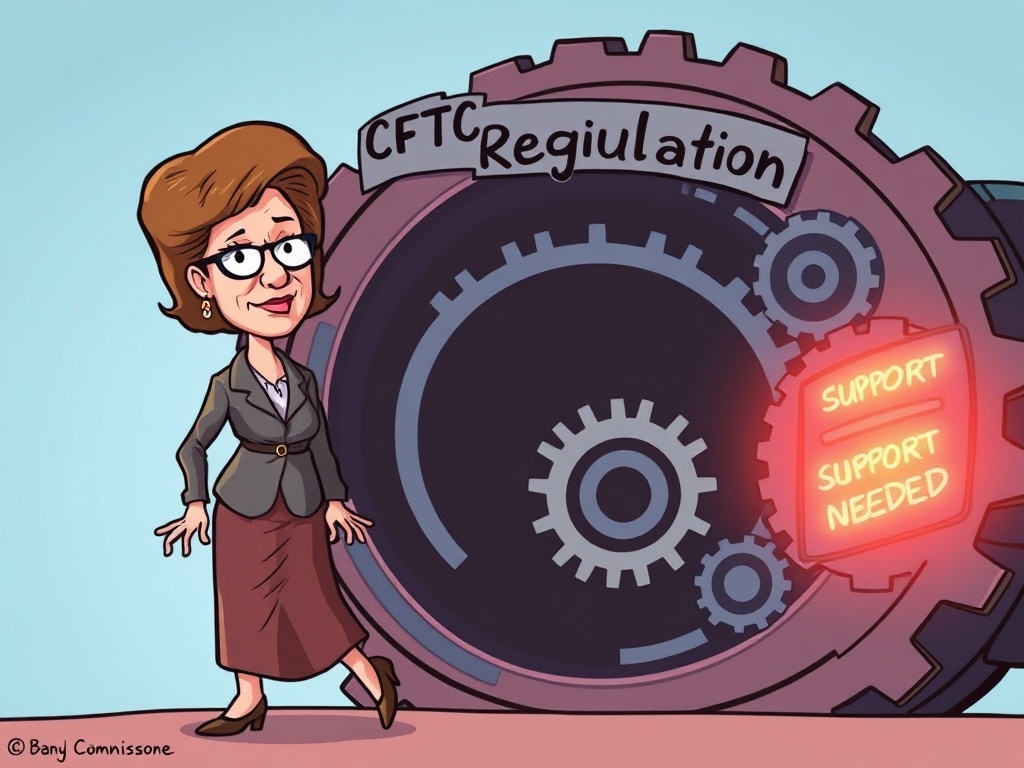
Johnson’s statement announcing her resignation highlighted a key concern: the CFTC needs more support to fulfill its expanded mandate. This includes its increasingly vital role in regulating the complex world of digital assets. Her call underscores the immense pressure and the significant resources required for effective oversight in this innovative, yet often volatile, market.

Why is Enhanced CFTC Digital Asset Regulation So Crucial?

The call for greater support for the CFTC’s expanded role, particularly in CFTC digital asset regulation, is not without merit. The digital asset space, encompassing cryptocurrencies, stablecoins, and NFTs, continues to grow in sophistication and market capitalization. Without clear and robust regulatory frameworks, investors and markets face heightened risks. Johnson’s advocacy emphasizes the need for proactive, well-resourced oversight to protect consumers and maintain market integrity.

Effective regulation can offer several benefits:

  • Investor Protection: Safeguarding individuals from fraud, manipulation, and opaque practices.
  • Market Stability: Establishing clear rules helps prevent systemic risks and fosters a more predictable environment.
  • Innovation Growth: A well-defined regulatory perimeter can actually encourage responsible innovation by providing certainty for businesses.
  • Global Competitiveness: Clear frameworks can position the U.S. as a leader in the digital economy.

The challenges in this area are substantial, ranging from defining which digital assets fall under CFTC jurisdiction to developing appropriate enforcement mechanisms for novel technologies. These complexities demand a well-supported and knowledgeable regulatory body.

As the CFTC moves forward, the focus on CFTC digital asset regulation will undoubtedly intensify. Industry stakeholders, policymakers, and market participants will closely monitor how the agency adapts to this new leadership structure and addresses Johnson’s concerns. The dialogue around legislative clarity for digital assets is ongoing, and the CFTC’s stance will play a significant role in shaping these discussions.

Actionable insights for the industry include:

  • Staying informed about evolving CFTC guidance and enforcement actions.
  • Engaging with regulators to provide constructive feedback on proposed rules.
  • Prioritizing robust internal compliance frameworks that anticipate future regulatory demands.

The agency’s capacity to effectively regulate digital assets depends not only on its internal leadership but also on the support it receives from Congress and the broader government to secure necessary funding and legislative authority. This period of transition highlights the urgent need for a cohesive and well-supported strategy for digital asset oversight.

Conclusion: Commissioner Kristin Johnson’s impending departure from the CFTC underscores a critical juncture for CFTC digital asset regulation. Her final call for increased support for the agency’s expanded role in overseeing digital assets serves as a powerful reminder of the challenges and opportunities ahead. As the CFTC navigates this transition under Acting Chair Caroline Pham, the crypto industry and policymakers must recognize the imperative of robust, well-resourced regulation to foster a secure and innovative digital economy. The future of digital asset markets hinges on these crucial decisions.

Frequently Asked Questions About CFTC Digital Asset Regulation

  • Who is Kristin Johnson and what was her role at the CFTC?
    Kristin Johnson served as a Democratic Commissioner at the U.S. Commodity Futures Trading Commission (CFTC), a key agency overseeing derivatives markets, including certain digital assets.
  • Why is Commissioner Johnson stepping down?
    Commissioner Johnson is stepping down on September 3. While her specific reasons for resignation were not fully detailed in the report, her departure statement emphasized the need for more support for the CFTC’s expanded role, particularly in digital asset regulation.
  • What is the CFTC’s role in digital asset regulation?
    The CFTC primarily regulates commodity derivatives markets. It has asserted jurisdiction over certain digital assets deemed commodities, like Bitcoin and Ethereum, when they are traded in futures or other derivatives markets.
  • What does her departure mean for the future of crypto regulation?
    Her departure leaves Acting Chair Caroline Pham as the sole leader, potentially impacting the agency’s internal dynamics and approach to digital asset oversight. It also highlights the ongoing need for increased resources and legislative clarity for effective CFTC digital asset regulation.
  • Who will lead the CFTC after her departure?
    Upon Kristin Johnson’s departure, Acting Chair Caroline Pham will temporarily lead the U.S. Commodity Futures Trading Commission as the sole remaining commissioner.

If you found this article insightful, please consider sharing it with your network on social media to spread awareness about the evolving landscape of digital asset regulation!

To learn more about the latest crypto market trends, explore our article on key developments shaping digital assets regulatory frameworks.

This post CFTC Digital Asset Regulation: Urgent Call as Commissioner Johnson Departs first appeared on BitcoinWorld and is written by Editorial Team

Market Opportunity
Brainedge Logo
Brainedge Price(LEARN)
$0.006365
$0.006365$0.006365
+8.04%
USD
Brainedge (LEARN) Live Price Chart
Disclaimer: The articles reposted on this site are sourced from public platforms and are provided for informational purposes only. They do not necessarily reflect the views of MEXC. All rights remain with the original authors. If you believe any content infringes on third-party rights, please contact [email protected] for removal. MEXC makes no guarantees regarding the accuracy, completeness, or timeliness of the content and is not responsible for any actions taken based on the information provided. The content does not constitute financial, legal, or other professional advice, nor should it be considered a recommendation or endorsement by MEXC.

You May Also Like

Trump’s 'desperate' push to rename landmarks for himself is a 'growing problem': analysis

Trump’s 'desperate' push to rename landmarks for himself is a 'growing problem': analysis

President Donald Trump's fixation on adding his name to major landmarks is presenting numerous problems both for himself and his party.That's according to a Friday
Share
Alternet2026/02/07 05:30
Can XRP Repeat Its 300% Surge and Reach $5? Analysts Weigh In

Can XRP Repeat Its 300% Surge and Reach $5? Analysts Weigh In

The post Can XRP Repeat Its 300% Surge and Reach $5? Analysts Weigh In appeared on BitcoinEthereumNews.com. One of the most notable outcomes of the bull run has been the 300% price increase of XRP this year. Investors are wondering if XRP may reach $5 in 2025, given the pace driven by ecosystem improvements, institutional interest, and legal clarity. Numerous analysts hold this view, pointing to significant demand stimulants such as the impending approval of the XRP ETF and the introduction of XRP options on CME. Beyond conjecture, the fundamentals of XRPL are more solid than ever. In just a few months, the network’s TVL increased from $20 million to over $100 million, and cross-chain DeFi applications are becoming more accessible because to EVM compatibility. XRPL is changing into a center for liquidity and intelligent financial solutions as a result of this innovation surge. As the native DEX that XRPL has long required, DeXRP is becoming more and more popular. DeXRP is getting ready to launch as the focal point of XRPL’s new DeFi economy, having already generated over $6.6 million in presale and attracted over 9,500 investors. What is DeXRP?  As the first decentralized exchange (DEX) based on XRPL, DeXRP is taking center stage as XRP continues to solidify its place in the global market. Massive expectation has been generated by the combination of DeXRP’s ambition for an advanced trading platform and XRPL’s established infrastructure, which is renowned for its quick transactions, cheap fees, and institutional-ready capabilities. In contrast to a lot of speculative presales, DeXRP’s development shows both institutional interest and community-driven momentum. Its early achievement of the $6.4 million milestone demonstrates how rapidly investors are realizing its potential. DeXRP Presale Success More than 9,300 distinct wallets have already joined the DeXRP presale, indicating a high level of interest from around the world. A crucial aspect is highlighted by the volume and variety of participation:…
Share
BitcoinEthereumNews2025/09/19 20:01
Crypto Investor Loses $6.28M to Sophisticated Phishing Permit Scam

Crypto Investor Loses $6.28M to Sophisticated Phishing Permit Scam

A cryptocurrency investor recently lost $6.28 million to a sophisticated phishing scam that exploited malicious signature approvals. The incident serves as a significant reminder of the increasing prevalence of “permit phishing” schemes, which pose a serious threat to users in the DeFi ecosystem. Attacker Steals $6.28 Million   The attack began when the victim received a targeted phishing message that appeared to be a legitimate update from a decentralized finance (DeFi) platform. Tempted by offers of better returns, the investor connected their wallet to a fake website. There, they signed an EIP-2612, which includes a feature that allows token approvals without gas fees. However, it can also unintentionally give scammers unlimited spending access to a smart contract.  The theft occurred shortly after the approvals were granted. The scammer quickly executed a contract that drained 3,200 stETH and a matching amount of aEthWBTC from the victim’s wallet. The loot, which was traced to a mixer address, revealed a calculated plan to conceal the trail.  The entire theft took less than 12 minutes, using automated scripts for speed. Scam Sniffer noted that the victim’s portfolio, which was worth over $10 million before the attack, lost half its value immediately. The rapid process allowed no time for intervention, as blockchain transactions cannot be reversed once completed. On-chain analysis indicated that the assets were unlikely to be recovered, as they were likely laundered through exchanges. Not New   Following the exploit, some users on X have expressed shock, wondering how the victim unwittingly signed malicious token approvals. However, this subtle trap has long troubled the crypto space. For instance, earlier this month, a user of Venus Protocol lost $13.5 million. The victim fell prey to a phishing scam by approving a transaction from a malicious Core Pool Comptroller contract, which granted the attacker access to their funds. Once permission was given, the hacker quickly drained stablecoins and wrapped tokens from the trader’s wallet.  Surprisingly, though, a few hours after the incident, the Venus team tracked the stolen funds by force-liquidating the hackers’ trade positions. The team fully recovered the stolen funds afterwards, leaving the thief with nothing. The post Crypto Investor Loses $6.28M to Sophisticated Phishing Permit Scam appeared first on Cointab.
Share
Coinstats2025/09/19 01:35