Blood testing has moved well beyond the annual physical. A growing segment of health-conscious consumers now test biomarkers quarterly, monthly, or on demand, treatingBlood testing has moved well beyond the annual physical. A growing segment of health-conscious consumers now test biomarkers quarterly, monthly, or on demand, treating

Blood Testing at Home vs. Lab: Costs, Accuracy, and What Matters

2026/03/18 02:42
4 min read
For feedback or concerns regarding this content, please contact us at [email protected]

Blood testing has moved well beyond the annual physical. A growing segment of health-conscious consumers now test biomarkers quarterly, monthly, or on demand, treating results more like a continuous feedback loop than a one-time diagnostic event.

That shift raises a practical question. Traditional labs work. At-home testing has improved significantly. The differences come down to use case, frequency, and how the data is used.
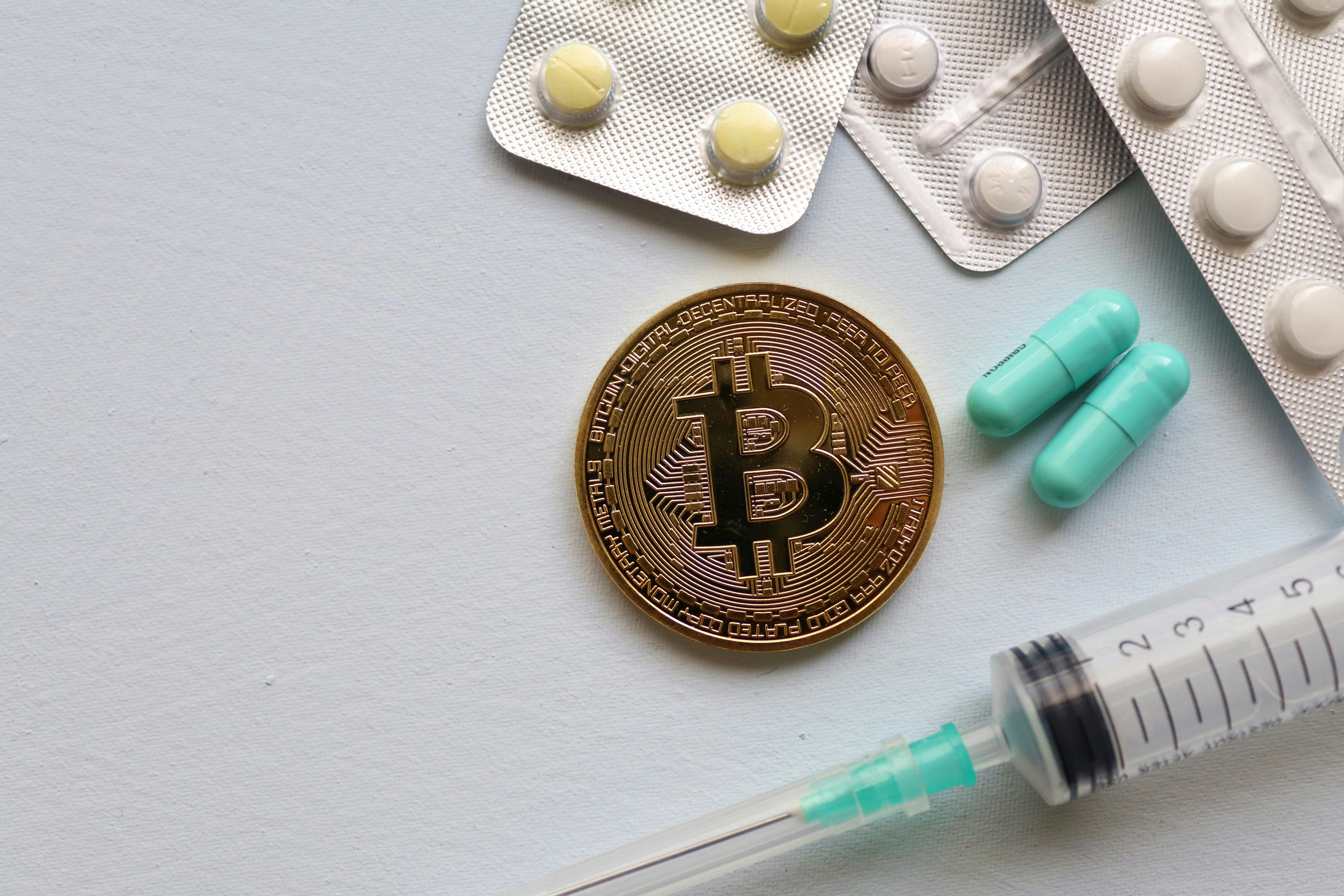
Blood Testing at Home vs. Lab: Costs, Accuracy, and What Matters

The Three Ways People Test Today

The most common route remains the traditional lab draw. You book an appointment at Labcorp, Quest, or a similar facility, provide a venous blood sample, and receive results within a few days through a portal.

Doctor-ordered testing follows the same process but is typically constrained by insurance coverage and limited to what is clinically requested.

At-home testing works differently. A kit is shipped to your home, blood is collected using a finger prick or upper arm device, and the sample is mailed to a CLIA-certified lab. Companies like SiPhox Health use a painless upper arm collector that takes about five minutes, with same-day FedEx return and results delivered digitally, often with trend data and built-in interpretation.

Are At-Home Blood Tests Accurate?

The primary concern with at-home testing is whether results match a traditional draw. For most routine biomarkers, including lipids, thyroid markers, hormones, and metabolic indicators, they do, provided the sample is processed in a CLIA-certified lab.

Processing quality matters more than collection location.

There are still constraints. Venous draws support a wider range of tests. Some biomarkers are more sensitive to collection and handling. User error can affect sample quality. For diagnostic workups, traditional labs remain the standard. For routine monitoring, at-home testing is generally sufficient.

Why Frequency Matters

A single result is a snapshot. Most biomarkers fluctuate based on sleep, diet, stress, and training load. Without repeated measurements, it is difficult to distinguish signal from noise.

At-home testing changes the economics and logistics of frequency. When friction drops, testing becomes repeatable. Monthly or quarterly panels generate longitudinal data that makes trends visible and decisions more grounded.

Cost

Traditional labs are often partially covered by insurance, but expanded panels can become expensive, and each test is typically a one-time transaction.

At-home platforms are usually structured as subscriptions or bundled panels. While upfront costs may be higher without insurance, the cost per test decreases with repeated use and most are HSA and FSA eligible. SiPhox Health, for example, structures membership around multiple panel types covering hormones, thyroid, and metabolic health, with flexible testing intervals and the option to expand to broader biomarker coverage as needed.

For anyone testing more than once or twice per year, the economics tend to favor at-home models.

What to Evaluate

Not all testing options are equivalent. The baseline requirement is CLIA-certified lab processing. Beyond that, the meaningful variables are panel depth, flexibility in what you test and how often, and what you actually receive with your results. The gap between testing and action is increasingly defined by software. Platforms that layer in trend tracking, external lab uploads, and wearable integrations compress the distance between a data point and a decision.

When to Use Each

Traditional labs remain the better choice for diagnostic testing, physician-led evaluations, and complex panels. At-home testing is better suited for ongoing monitoring, optimization, and building a consistent data history over time.

The two approaches are complementary, but they are not interchangeable. One answers a clinical question. The other builds the baseline that makes that question worth asking.

Comments
Market Opportunity
LAB Logo
LAB Price(LAB)
$0,2111
$0,2111$0,2111
+%5,65
USD
LAB (LAB) Live Price Chart
Disclaimer: The articles reposted on this site are sourced from public platforms and are provided for informational purposes only. They do not necessarily reflect the views of MEXC. All rights remain with the original authors. If you believe any content infringes on third-party rights, please contact [email protected] for removal. MEXC makes no guarantees regarding the accuracy, completeness, or timeliness of the content and is not responsible for any actions taken based on the information provided. The content does not constitute financial, legal, or other professional advice, nor should it be considered a recommendation or endorsement by MEXC.

You May Also Like

Is Doge Losing Steam As Traders Choose Pepeto For The Best Crypto Investment?

Is Doge Losing Steam As Traders Choose Pepeto For The Best Crypto Investment?

The post Is Doge Losing Steam As Traders Choose Pepeto For The Best Crypto Investment? appeared on BitcoinEthereumNews.com. Crypto News 17 September 2025 | 17:39 Is dogecoin really fading? As traders hunt the best crypto to buy now and weigh 2025 picks, Dogecoin (DOGE) still owns the meme coin spotlight, yet upside looks capped, today’s Dogecoin price prediction says as much. Attention is shifting to projects that blend culture with real on-chain tools. Buyers searching “best crypto to buy now” want shipped products, audits, and transparent tokenomics. That frames the true matchup: dogecoin vs. Pepeto. Enter Pepeto (PEPETO), an Ethereum-based memecoin with working rails: PepetoSwap, a zero-fee DEX, plus Pepeto Bridge for smooth cross-chain moves. By fusing story with tools people can use now, and speaking directly to crypto presale 2025 demand, Pepeto puts utility, clarity, and distribution in front. In a market where legacy meme coin leaders risk drifting on sentiment, Pepeto’s execution gives it a real seat in the “best crypto to buy now” debate. First, a quick look at why dogecoin may be losing altitude. Dogecoin Price Prediction: Is Doge Really Fading? Remember when dogecoin made crypto feel simple? In 2013, DOGE turned a meme into money and a loose forum into a movement. A decade on, the nonstop momentum has cooled; the backdrop is different, and the market is far more selective. With DOGE circling ~$0.268, the tape reads bearish-to-neutral for the next few weeks: hold the $0.26 shelf on daily closes and expect choppy range-trading toward $0.29–$0.30 where rallies keep stalling; lose $0.26 decisively and momentum often bleeds into $0.245 with risk of a deeper probe toward $0.22–$0.21; reclaim $0.30 on a clean daily close and the downside bias is likely neutralized, opening room for a squeeze into the low-$0.30s. Source: CoinMarketcap / TradingView Beyond the dogecoin price prediction, DOGE still centers on payments and lacks native smart contracts; ZK-proof verification is proposed,…
Share
BitcoinEthereumNews2025/09/18 00:14
7 Best Crypto to Invest: One Presale is Breaking Records

7 Best Crypto to Invest: One Presale is Breaking Records

The post 7 Best Crypto to Invest: One Presale is Breaking Records appeared on BitcoinEthereumNews.com. What if the next great financial story isn’t written by Wall Street but by internet memes, culture, and digital tribes? Over the past few years, meme coins have transformed from playful jokes into market juggernauts, spawning billion-dollar valuations seemingly overnight. Dogecoin, Shiba Inu, and Pepe all proved that when community conviction collides with scarcity, even the most satirical token can rewrite portfolios. The hunt is on again in 2025: which contender will rise as the best crypto to invest in this cycle? That’s where BullZilla enters, roaring into the scene with mechanics that dwarf ordinary meme launches. Built on Ethereum, BullZilla ($BZIL) fuses mythic lore with technical brilliance: a progressive price engine, a 24-stage mutation presale, live Roar Burns, staking through the HODL Furnace, and the Roarblood Vault referral system. The BullZilla Presale is live now, and the rules are simple: the price rises every 48 hours or instantly when $100K is raised. This scarcity mechanism turns every stage into a race, rewarding the earliest believers. For anyone asking what is the best crypto to invest, the answer is already roaring. BullZilla has taken its place at the center of Trending Meme Coins 2025. Join early for maximum perks. 1. BullZilla ($BZIL): The Beast Mutates Toward 100x Gains The Bull Zilla Presale is quickly emerging as the top meme coin presale to buy now, drawing massive attention from both retail investors and large holders. Currently in its 3rd Stage fittingly named “404: Whale Signal Detected” the token is priced at $0.00007241. Over $530,000 has been raised, more than 27 billion tokens have been sold, and the presale has attracted over 1,700 holders. The planned listing price of $0.00527 translates into a potential ROI of 7,179.94% for those entering now. Early participants from Stage 3C are already sitting on gains of…
Share
BitcoinEthereumNews2025/09/22 07:20
House Democrat smacks down Trump's rambling ICE threat: 'This man can't win'

House Democrat smacks down Trump's rambling ICE threat: 'This man can't win'

A House Democrat smacked down President Donald Trump's rambling threat to deploy Immigration and Customs Enforcement agents to airports nationwide.Trump wrote on
Share
Rawstory2026/03/22 07:23