US Forces to Remain Stationed Around Iran: Trump’s Decisive Military Posture Announced
BitcoinWorld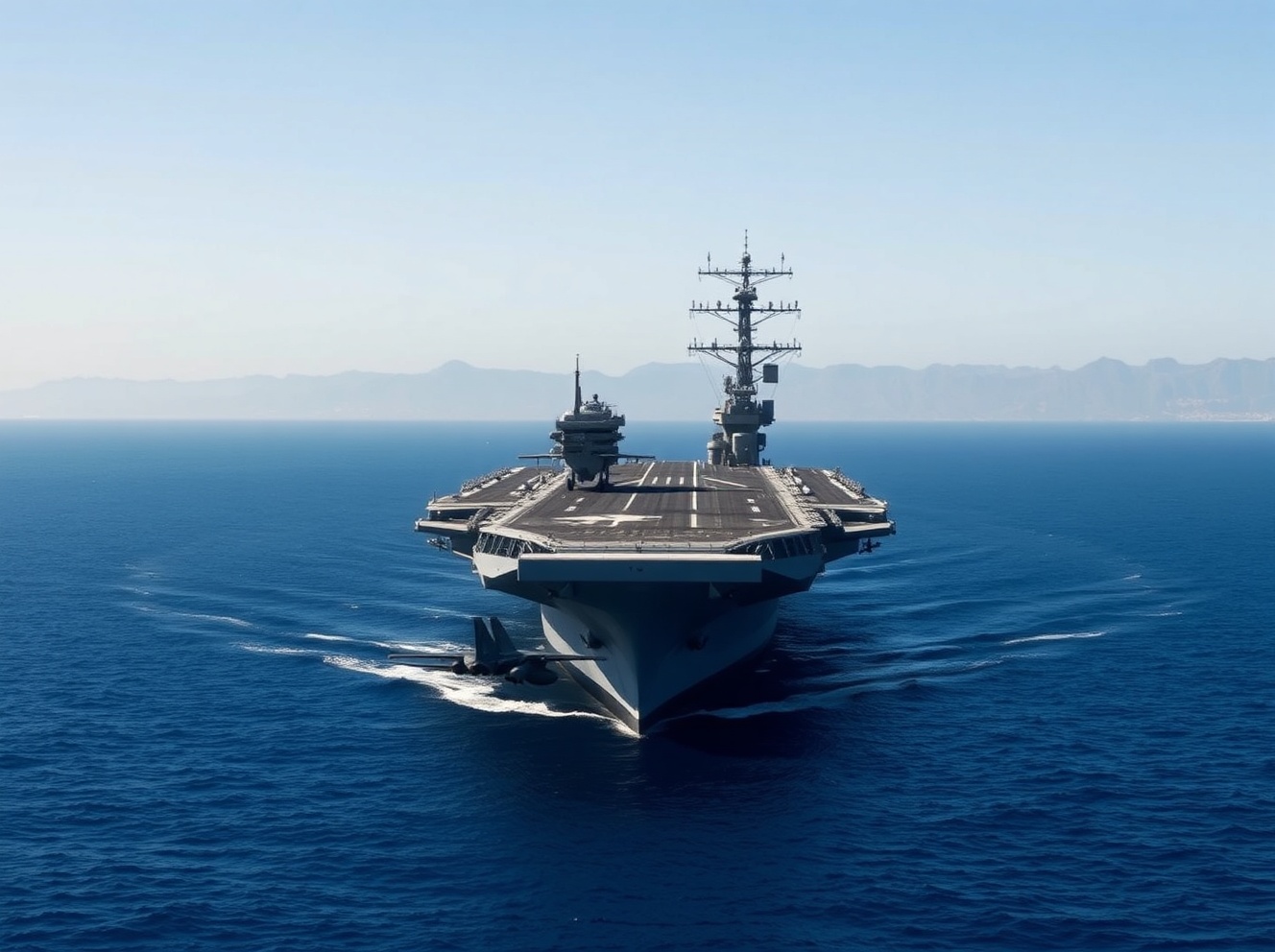
US Forces to Remain Stationed Around Iran: Trump’s Decisive Military Posture Announced
WASHINGTON, D.C. – In a significant development for Middle Eastern security, former President Donald Trump declared via social media that United States military assets will maintain their position in and around Iran. This announcement, made yesterday, confirms the continued deployment of American ships, aircraft, and personnel until the full implementation of an unspecified agreement. Consequently, this decision reinforces the substantial US military footprint in a region marked by prolonged strategic competition.
US Forces to Remain Stationed Around Iran: The Announcement
Former President Trump’s statement outlined a comprehensive military posture. Specifically, he indicated that all American military ships, aircraft, and personnel currently in the region will stay. Furthermore, he noted that these units would receive additional ammunition, weapons, and necessary supplies. The directive lacks a specific endpoint, tying the presence to the fulfillment of an agreement whose details remain undisclosed. This open-ended commitment represents a continuation of a long-standing US policy of maintaining a robust forward presence in the Persian Gulf.
Historically, the US has maintained a significant force in the Middle East for decades. For instance, the US Navy’s Fifth Fleet is headquartered in Bahrain. Similarly, the US Air Force operates from bases in Qatar and the United Arab Emirates. Therefore, this announcement signals an intensification rather than a withdrawal. Regional experts immediately began analyzing the potential triggers and implications. Moreover, the statement arrives amid ongoing diplomatic efforts concerning Iran’s nuclear program.
Strategic Context of the Persian Gulf Deployment
The Persian Gulf serves as a critical global chokepoint for oil shipments. Approximately 20% of the world’s petroleum passes through the Strait of Hormuz. Consequently, US naval presence aims to ensure freedom of navigation. Additionally, it counters perceived threats from Iranian naval forces. The US Central Command (CENTCOM) oversees all military operations in this area. Its area of responsibility spans 20 nations, including Iran.
Military Assets and Regional Balance of Power
A typical US carrier strike group in the region includes formidable assets. For example, it features one Nimitz-class aircraft carrier, which carries around 60-70 aircraft. It also includes several guided-missile cruisers and destroyers. Furthermore, one or two attack submarines often support the group. This concentration of power projects US influence directly along Iran’s coastline. Iranian forces, in response, have developed asymmetric warfare tactics. These include swarms of fast attack craft and extensive anti-ship missile batteries along its coast.
The following table outlines common US and Iranian naval assets in the Gulf:
| US Naval Assets | Iranian Naval Assets |
|---|---|
| Aircraft Carriers (Nimitz/Ford class) | Fast Attack Craft (e.g., Boghammar) |
| Guided-Missile Destroyers (Arleigh Burke class) | Small Submarines (Ghadir class) |
| Attack Submarines (Virginia/Los Angeles class) | Anti-Ship Missile Batteries (Coastal) |
| Littoral Combat Ships | Mine-Laying Capabilities |
This military standoff creates a persistent risk of miscalculation. Incidents have occurred previously, such as the seizure of commercial vessels. Similarly, confrontations between fast boats and US warships are not uncommon. The extended presence announced by Trump therefore maintains a high-alert environment. Diplomats often describe the situation as a ‘tinderbox.’
Historical Timeline of US-Iran Military Tensions
Understanding the current announcement requires historical context. The relationship has been adversarial since the 1979 Iranian Revolution. Key events have shaped the military dynamic:
- 1980s: US Navy escorts Kuwaiti tankers during the ‘Tanker War’ segment of the Iran-Iraq War.
- 1988: Operation Praying Mantis sees the US Navy sink several Iranian naval vessels.
- 2000s: US accuses Iran’s Islamic Revolutionary Guard Corps (IRGC) of attacking coalition forces in Iraq.
- 2010s: Tensions spike over Iran’s nuclear program, leading to the Joint Comprehensive Plan of Action (JCPOA) in 2015.
- 2019-2020: Series of incidents including attacks on oil tankers and the US drone strike killing IRGC Quds Force commander Qasem Soleimani.
Each event has reinforced the perceived need for a US deterrent force. The Trump administration previously deployed additional assets following the 2019 tanker attacks. Therefore, yesterday’s statement aligns with a consistent policy thread. However, the condition of an ‘agreement’ introduces a new variable. Analysts are scrutinizing what agreement might be referenced.
Potential Agreements and Diplomatic Implications
The ‘unspecified agreement’ mentioned by Trump could refer to several possibilities. First, it might relate to ongoing nuclear negotiations. World powers have engaged Iran in fits and starts regarding its nuclear program. Second, it could involve regional security arrangements. Some Gulf Cooperation Council (GCC) states seek stronger US security guarantees. Third, it might concern detainee exchanges or other bilateral issues.
Regional allies like Israel and Saudi Arabia likely welcome a sustained US presence. They view Iran as a primary regional threat. Conversely, the Iranian government consistently condemns the US military footprint as illegal and provocative. Iranian officials label US forces in the Gulf as ‘occupiers.’ They argue the presence destabilizes the region. This fundamental disagreement ensures continued friction.
Economic and Global Security Impacts
A prolonged US military commitment carries economic weight. Maintaining a carrier strike group costs millions of dollars per day. These costs include fuel, salaries, maintenance, and logistics. Furthermore, it affects global oil markets. Any sign of conflict in the Strait of Hormuz can spike oil prices. Insurance premiums for shipping also increase. Therefore, the business community monitors these developments closely.
From a global security perspective, the deployment supports international norms. The US frames its mission as protecting the ‘rules-based international order.’ This includes ensuring merchant vessels can transit freely. Many nations, including those in Europe and Asia, rely on this security. However, critics argue it fosters dependency and reduces impetus for regional diplomatic solutions.
Conclusion
Former President Trump’s announcement that US forces will remain stationed around Iran underscores a enduring strategic reality. The Persian Gulf remains a focal point of American military planning and global energy security. The open-ended nature of the deployment, tied to an unspecified agreement, leaves room for diplomatic maneuvering but also for continued uncertainty. Ultimately, the presence of substantial US military power near Iran’s shores will continue to shape the geopolitical landscape, affecting regional alliances, global markets, and the delicate balance of power in one of the world’s most volatile regions.
FAQs
Q1: What exactly did President Trump announce regarding US forces and Iran?
Former President Trump announced via social media that all US military ships, aircraft, and personnel currently in and around Iran will remain stationed there. He stated they would stay, along with additional supplies, until an unspecified agreement is fully implemented.
Q2: How long has the US maintained a military presence in the Persian Gulf?
The US has maintained a significant naval presence in the Persian Gulf for decades, with a consistent deployment since the 1980s. The US Navy’s Fifth Fleet has been headquartered in Bahrain since 1995, providing a permanent base for operations.
Q3: Why is the US military presence around Iran considered strategically important?
The presence is considered vital for ensuring freedom of navigation through the Strait of Hormuz, a critical chokepoint for global oil shipments. It also serves as a deterrent against regional adversaries and provides rapid response capability for crises.
Q4: What kind of US military assets are typically deployed in the region?
Deployments often include a carrier strike group built around a nuclear-powered aircraft carrier, several guided-missile cruisers and destroyers, attack submarines, and support ships. The US Air Force also operates from bases in Qatar, the UAE, and other Gulf states.
Q5: How has Iran responded to the US military presence in the past?
Iran has consistently condemned the US presence as illegal and provocative. It has developed asymmetric naval tactics, such as using swarms of small fast-attack boats and coastal anti-ship missile batteries, to counter the superior conventional power of the US Navy.
This post US Forces to Remain Stationed Around Iran: Trump’s Decisive Military Posture Announced first appeared on BitcoinWorld.


Ayrıca Şunları da Beğenebilirsiniz

Telegram & xAI Seal $300M Deal to Integrate GRO72P AI — What This Means for Crypto

Why your form completion rate is below 30 percent