Ethereum’s Fusaka upgrade will activate on the blockchain’s mainnet on December 3, according to the Ethereum Foundation.The goal? To enable Ethereum to handle the large transaction traffic from its layer 2 chains, blockchains with a $47 billion on-chain economy built on top of Ethereum. Those chains inherit the base layer’s security architecture while offering faster and cheaper transactions.“Fusaka’s biggest impact comes from improvements to data availability through PeerDAS, which should make rollups cheaper and more scalable,” Nick Johnson, founder and lead developer of Ethereum Naming Service, ENS, told DL News.Fusaka is the latest checkpoint in Ethereum’s development plan. Developers are attempting to scale the $410 billion blockchain so that it can handle 100,000 transactions per second, a massive increase from its current maximum of 30 transactions per second. It follows the Pectra upgrade that the developers released in May.Data loadPeerDAS is one of 12 changes to the blockchain included in the Fusaka upgrade package. It targets the data load needed for verifying transactions from layer 2 blockchains.Layer 2 chains bundle thousands of transactions and submit summaries, called blobs, to the Ethereum base layer. Nodes running on the base layer currently have to download the entire blob data to check for validity.That process becomes more expensive for nodes as layer 2 transactions soar. It also creates a data traffic jam on the base layer.PeerDAS solves the problem by reducing the data load for nodes when verifying layer 2 transactions. Instead of downloading the whole blob, nodes only need to check random samples within the blob data to verify transactions.Leo Fan, co-founder of Cysic, a zero-knowledge-based blockchain, describes Fusaka as a “deep infrastructural shift” for Ethereum, which could increase the chain’s throughput eightfold.The reduced data load could result in a significant reduction in bandwidth costs for nodes. Experts like Shiv Shankar, CEO of Boundless, a zero-knowledge scalability protocol, said that this could help improve Ethereum’s efficiency.“It lets Ethereum handle more activity, which is good for developers building apps,” Shankar told DL News.However, Fusaka doesn’t aim to supercharge Ethereum’s layer 2 chains alone. It also includes improvements that directly impact the base layer.The 12 EIPs include two upgrades that directly aim to stretch the base layer’s block and data limits. EIPs, or Ethereum Improvement Proposals, are blueprints vetted by Ethereum developers that codify changes to the blockchain.These upgrades allow for more transaction processing capacity and increase the number of blobs that layer 2 chains can submit to the main chain.Osato Avan-Nomayo is our Nigeria-based DeFi correspondent. He covers DeFi and tech. Got a tip? Please contact him at [email protected].Ethereum’s Fusaka upgrade will activate on the blockchain’s mainnet on December 3, according to the Ethereum Foundation.The goal? To enable Ethereum to handle the large transaction traffic from its layer 2 chains, blockchains with a $47 billion on-chain economy built on top of Ethereum. Those chains inherit the base layer’s security architecture while offering faster and cheaper transactions.“Fusaka’s biggest impact comes from improvements to data availability through PeerDAS, which should make rollups cheaper and more scalable,” Nick Johnson, founder and lead developer of Ethereum Naming Service, ENS, told DL News.Fusaka is the latest checkpoint in Ethereum’s development plan. Developers are attempting to scale the $410 billion blockchain so that it can handle 100,000 transactions per second, a massive increase from its current maximum of 30 transactions per second. It follows the Pectra upgrade that the developers released in May.Data loadPeerDAS is one of 12 changes to the blockchain included in the Fusaka upgrade package. It targets the data load needed for verifying transactions from layer 2 blockchains.Layer 2 chains bundle thousands of transactions and submit summaries, called blobs, to the Ethereum base layer. Nodes running on the base layer currently have to download the entire blob data to check for validity.That process becomes more expensive for nodes as layer 2 transactions soar. It also creates a data traffic jam on the base layer.PeerDAS solves the problem by reducing the data load for nodes when verifying layer 2 transactions. Instead of downloading the whole blob, nodes only need to check random samples within the blob data to verify transactions.Leo Fan, co-founder of Cysic, a zero-knowledge-based blockchain, describes Fusaka as a “deep infrastructural shift” for Ethereum, which could increase the chain’s throughput eightfold.The reduced data load could result in a significant reduction in bandwidth costs for nodes. Experts like Shiv Shankar, CEO of Boundless, a zero-knowledge scalability protocol, said that this could help improve Ethereum’s efficiency.“It lets Ethereum handle more activity, which is good for developers building apps,” Shankar told DL News.However, Fusaka doesn’t aim to supercharge Ethereum’s layer 2 chains alone. It also includes improvements that directly impact the base layer.The 12 EIPs include two upgrades that directly aim to stretch the base layer’s block and data limits. EIPs, or Ethereum Improvement Proposals, are blueprints vetted by Ethereum developers that codify changes to the blockchain.These upgrades allow for more transaction processing capacity and increase the number of blobs that layer 2 chains can submit to the main chain.Osato Avan-Nomayo is our Nigeria-based DeFi correspondent. He covers DeFi and tech. Got a tip? Please contact him at [email protected].

What will Ethereum’s Fusaka upgrade mean for the $410bn blockchain

2025/11/08 23:14

Ethereum’s Fusaka upgrade will activate on the blockchain’s mainnet on December 3, according to the Ethereum Foundation.

The goal? To enable Ethereum to handle the large transaction traffic from its layer 2 chains, blockchains with a $47 billion on-chain economy built on top of Ethereum. Those chains inherit the base layer’s security architecture while offering faster and cheaper transactions.

“Fusaka’s biggest impact comes from improvements to data availability through PeerDAS, which should make rollups cheaper and more scalable,” Nick Johnson, founder and lead developer of Ethereum Naming Service, ENS, told DL News.

Fusaka is the latest checkpoint in Ethereum’s development plan. Developers are attempting to scale the $410 billion blockchain so that it can handle 100,000 transactions per second, a massive increase from its current maximum of 30 transactions per second. It follows the Pectra upgrade that the developers released in May.

Data load

PeerDAS is one of 12 changes to the blockchain included in the Fusaka upgrade package. It targets the data load needed for verifying transactions from layer 2 blockchains.

Layer 2 chains bundle thousands of transactions and submit summaries, called blobs, to the Ethereum base layer. Nodes running on the base layer currently have to download the entire blob data to check for validity.

That process becomes more expensive for nodes as layer 2 transactions soar. It also creates a data traffic jam on the base layer.

PeerDAS solves the problem by reducing the data load for nodes when verifying layer 2 transactions. Instead of downloading the whole blob, nodes only need to check random samples within the blob data to verify transactions.

Leo Fan, co-founder of Cysic, a zero-knowledge-based blockchain, describes Fusaka as a “deep infrastructural shift” for Ethereum, which could increase the chain’s throughput eightfold.

The reduced data load could result in a significant reduction in bandwidth costs for nodes. Experts like Shiv Shankar, CEO of Boundless, a zero-knowledge scalability protocol, said that this could help improve Ethereum’s efficiency.

“It lets Ethereum handle more activity, which is good for developers building apps,” Shankar told DL News.

However, Fusaka doesn’t aim to supercharge Ethereum’s layer 2 chains alone. It also includes improvements that directly impact the base layer.

The 12 EIPs include two upgrades that directly aim to stretch the base layer’s block and data limits. EIPs, or Ethereum Improvement Proposals, are blueprints vetted by Ethereum developers that codify changes to the blockchain.

These upgrades allow for more transaction processing capacity and increase the number of blobs that layer 2 chains can submit to the main chain.

Osato Avan-Nomayo is our Nigeria-based DeFi correspondent. He covers DeFi and tech. Got a tip? Please contact him at [email protected].

Piyasa Fırsatı
Solayer Logosu
Solayer Fiyatı(LAYER)
$0.1813
$0.1813$0.1813
-1.57%
USD
Solayer (LAYER) Canlı Fiyat Grafiği
Sorumluluk Reddi: Bu sitede yeniden yayınlanan makaleler, halka açık platformlardan alınmıştır ve yalnızca bilgilendirme amaçlıdır. MEXC'nin görüşlerini yansıtmayabilir. Tüm hakları telif sahiplerine aittir. Herhangi bir içeriğin üçüncü taraf haklarını ihlal ettiğini düşünüyorsanız, kaldırılması için lütfen [email protected] ile iletişime geçin. MEXC, içeriğin doğruluğu, eksiksizliği veya güncelliği konusunda hiçbir garanti vermez ve sağlanan bilgilere dayalı olarak alınan herhangi bir eylemden sorumlu değildir. İçerik, finansal, yasal veya diğer profesyonel tavsiye niteliğinde değildir ve MEXC tarafından bir tavsiye veya onay olarak değerlendirilmemelidir.

Ayrıca Şunları da Beğenebilirsiniz

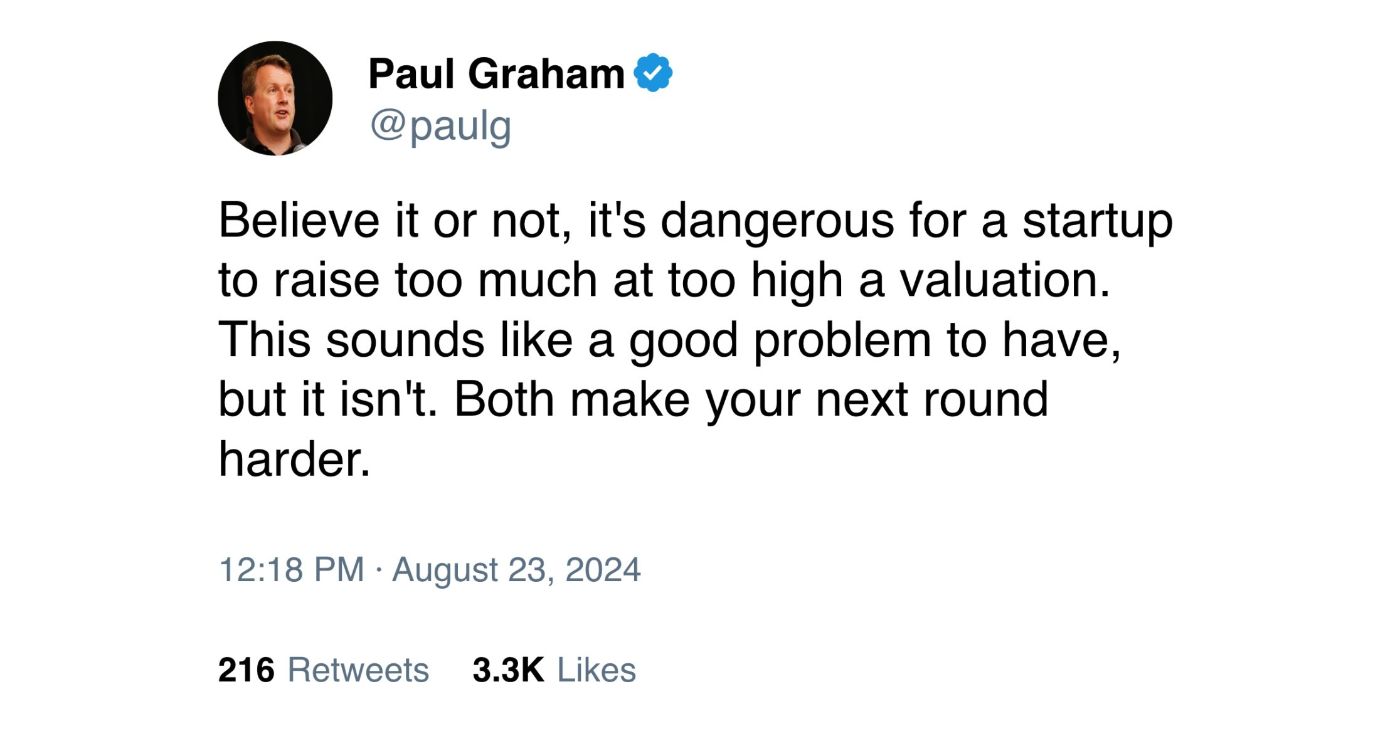
AI Startup Surge Risks Repeating Tech’s Last Funding Mania
AI Startup Surge Risks Repeating Tech’s Last Funding Mania

The AI startup frenzy and FOMO are inflating round sizes and valuations. Yes, the potential is huge. But too much capital too early often leads to mediocre outcomes. Remake of 2020–22?
Paylaş
Hackernoon2025/09/19 12:14
Bitcoin ETFs Revive with $241 Million Inflow, Ethereum ETFs Report Lowest Trading Value of the Week

Bitcoin ETFs Revive with $241 Million Inflow, Ethereum ETFs Report Lowest Trading Value of the Week

The post Bitcoin ETFs Revive with $241 Million Inflow, Ethereum ETFs Report Lowest Trading Value of the Week appeared first on Coinpedia Fintech News On September 24, the US spot Bitcoin ETF saw a combined inflow of $241.00 million, while Ethereum ETFs continued their day 3 streak of outflow. It recorded a total net outflow of $79.36 million, as per the SoSoValue report.  Bitcoin ETF Breakdown  After two consecutive days of experiencing huge sell-offs, Bitcoin ETFs finally managed to record an inflow of $241.00 million. BlackRock IBIT led with $128.90 million, and Ark and 21Shares ARKB followed with $37.72 million.  Additional gains were made by Fidelity FBTC, Bitwise BITB, and Grayscale BTC of $29.70 million, $24.69 million, and $13.56 million, respectively. VanEck HODL also made a smaller addition of $6.42 million in inflows.  Despite the inflows, the total trading value of the Bitcoin ETF dropped to $2.58 billion, with total net assets $149.74 billion. This marks 6.62% of Bitcoin market cap, slightly higher than the previous day.  Ethereum ETF Breakdown  Ethereum ETFs saw a total outflow of $79.36 million, with Fidelity’s FETH leading with $33.26 million. BlackRock ETHA also experienced heavy selling pressure of $26.47 million, followed by Grayscale’s ETHE $8.91 million. 21Shares TETH and Bitwise ETHW also posted smaller withdrawals of $6.24 million and $4.48 million, respectively.  The total trading value of Ethereum ETFs dropped below a billion, reaching $971.79 million. Net assets came in at $27.42 billion, representing 5.45% of the Ethereum market cap.  Ethereum ETF Market Context  Bitcoin is trading at $111,766, signalling a 4.6% drop compared to a week ago. Its market cap has also dipped to $2.225 trillion. Its daily trading volume has reached $49.837 billion, showing mild progress there.  Ethereum is priced at $4,011.92, with a market cap of $483.822 billion, showing a sharp decline. Its trading volume has also slipped to $37.680 billion, reflecting a slow market.  Due to heavy outflow this week, Bitcoin and Ethereum’s prices are experiencing price swings. Crypto analysts from Bloomberg warn the market to brace for further volatility.  
Paylaş
Coinstats2025/09/25 18:40
Son of filmmaker Rob Reiner charged with homicide for death of his parents

Son of filmmaker Rob Reiner charged with homicide for death of his parents

FILE PHOTO: Rob Reiner, director of "The Princess Bride," arrives for a special 25th anniversary viewing of the film during the New York Film Festival in New York
Paylaş
Rappler2025/12/16 09:59