The post Kevin O’Leary Predicts U.S. Regulations May Favor Only Bitcoin and Ethereum in Crypto Future appeared on BitcoinEthereumNews.com. Kevin O’Leary warns that most altcoins are useless and predicts only Bitcoin and Ethereum will survive under new U.S. regulations. He foresees a market cleansing that favors established assets, pushing institutions to allocate primarily to BTC and ETH for their proven utility and stability. Kevin O’Leary emphasizes regulatory changes will reshape crypto, limiting survival to Bitcoin and Ethereum. New rules like the Genius Act standardize stablecoins, reducing altcoins’ role in payments. Institutions plan 3-5% portfolio allocations to BTC and ETH, capturing 90% of market performance per recent data. Kevin O’Leary on altcoins: Most are useless, only BTC and ETH will thrive amid U.S. regulations. Discover the regulatory shift and institutional focus driving crypto’s future. Stay informed on Bitcoin and Ethereum dominance. What Does Kevin O’Leary Say About Altcoins? Kevin O’Leary has declared that most altcoins are useless and anticipates that only Bitcoin (BTC) and Ethereum (ETH) will endure in the evolving cryptocurrency landscape. In recent statements, he highlighted how U.S. regulatory reforms are steering the market toward consolidation around these two dominant assets. This shift, he argues, stems from clearer rules on digital assets that prioritize stability and utility, sidelining speculative smaller tokens. How Will U.S. Regulations Impact Bitcoin and Ethereum? U.S. regulations are poised to strengthen Bitcoin and Ethereum by providing a structured framework for institutional involvement. The Commodity Futures Trading Commission (CFTC) has advanced about 30% of its oversight plans, focusing on derivatives and settlement systems that align with BTC and ETH’s established infrastructures. According to reports from financial analysts, this partial implementation has already influenced market dynamics, with BTC and ETH showing resilience in recent trading sessions. The Genius Act, passed to regulate stablecoins, mandates backing with short-term U.S. Treasuries, effectively turning them into reliable digital cash equivalents. Kevin O’Leary noted in interviews that this development diminished… The post Kevin O’Leary Predicts U.S. Regulations May Favor Only Bitcoin and Ethereum in Crypto Future appeared on BitcoinEthereumNews.com. Kevin O’Leary warns that most altcoins are useless and predicts only Bitcoin and Ethereum will survive under new U.S. regulations. He foresees a market cleansing that favors established assets, pushing institutions to allocate primarily to BTC and ETH for their proven utility and stability. Kevin O’Leary emphasizes regulatory changes will reshape crypto, limiting survival to Bitcoin and Ethereum. New rules like the Genius Act standardize stablecoins, reducing altcoins’ role in payments. Institutions plan 3-5% portfolio allocations to BTC and ETH, capturing 90% of market performance per recent data. Kevin O’Leary on altcoins: Most are useless, only BTC and ETH will thrive amid U.S. regulations. Discover the regulatory shift and institutional focus driving crypto’s future. Stay informed on Bitcoin and Ethereum dominance. What Does Kevin O’Leary Say About Altcoins? Kevin O’Leary has declared that most altcoins are useless and anticipates that only Bitcoin (BTC) and Ethereum (ETH) will endure in the evolving cryptocurrency landscape. In recent statements, he highlighted how U.S. regulatory reforms are steering the market toward consolidation around these two dominant assets. This shift, he argues, stems from clearer rules on digital assets that prioritize stability and utility, sidelining speculative smaller tokens. How Will U.S. Regulations Impact Bitcoin and Ethereum? U.S. regulations are poised to strengthen Bitcoin and Ethereum by providing a structured framework for institutional involvement. The Commodity Futures Trading Commission (CFTC) has advanced about 30% of its oversight plans, focusing on derivatives and settlement systems that align with BTC and ETH’s established infrastructures. According to reports from financial analysts, this partial implementation has already influenced market dynamics, with BTC and ETH showing resilience in recent trading sessions. The Genius Act, passed to regulate stablecoins, mandates backing with short-term U.S. Treasuries, effectively turning them into reliable digital cash equivalents. Kevin O’Leary noted in interviews that this development diminished…

Kevin O’Leary Predicts U.S. Regulations May Favor Only Bitcoin and Ethereum in Crypto Future

2025/12/07 19:52
  • Kevin O’Leary emphasizes regulatory changes will reshape crypto, limiting survival to Bitcoin and Ethereum.

  • New rules like the Genius Act standardize stablecoins, reducing altcoins’ role in payments.

  • Institutions plan 3-5% portfolio allocations to BTC and ETH, capturing 90% of market performance per recent data.

Kevin O’Leary on altcoins: Most are useless, only BTC and ETH will thrive amid U.S. regulations. Discover the regulatory shift and institutional focus driving crypto’s future. Stay informed on Bitcoin and Ethereum dominance.

What Does Kevin O’Leary Say About Altcoins?

Kevin O’Leary has declared that most altcoins are useless and anticipates that only Bitcoin (BTC) and Ethereum (ETH) will endure in the evolving cryptocurrency landscape. In recent statements, he highlighted how U.S. regulatory reforms are steering the market toward consolidation around these two dominant assets. This shift, he argues, stems from clearer rules on digital assets that prioritize stability and utility, sidelining speculative smaller tokens.

How Will U.S. Regulations Impact Bitcoin and Ethereum?

U.S. regulations are poised to strengthen Bitcoin and Ethereum by providing a structured framework for institutional involvement. The Commodity Futures Trading Commission (CFTC) has advanced about 30% of its oversight plans, focusing on derivatives and settlement systems that align with BTC and ETH’s established infrastructures. According to reports from financial analysts, this partial implementation has already influenced market dynamics, with BTC and ETH showing resilience in recent trading sessions.

The Genius Act, passed to regulate stablecoins, mandates backing with short-term U.S. Treasuries, effectively turning them into reliable digital cash equivalents. Kevin O’Leary noted in interviews that this development diminished Bitcoin’s edge in payments, coinciding with a market correction following the bill’s enactment. Data from market trackers indicates stablecoin volumes surged by over 20% in the ensuing months, underscoring the act’s immediate effects.

Additionally, the forthcoming Clarity Act, anticipated in early 2025, is expected to unlock large-scale institutional participation. Experts from regulatory bodies suggest it will clarify classification of digital assets, enabling pension funds and endowments to invest confidently. O’Leary predicts these entities will direct 3% to 5% of their portfolios to BTC and ETH, based on historical asset allocation models in traditional finance. This selective approach could capture approximately 90% of the crypto market’s total performance, as evidenced by portfolio simulations from the past eight weeks where BTC-ETH focused strategies outperformed diversified ones by 15-20%.

Frequently Asked Questions

Why does Kevin O’Leary believe most altcoins are useless?

Kevin O’Leary views most altcoins as lacking real-world utility and sufficient marketing resources to compete in a regulated environment. He argues that without genuine use cases, such as scalable payments or smart contracts beyond what Ethereum offers, these tokens will fail during the upcoming market cleansing. Recent performance data supports this, showing altcoin-heavy portfolios underperforming BTC and ETH by significant margins over the last two months.

What role will institutions play in Bitcoin and Ethereum’s survival?

Institutions will drive Bitcoin and Ethereum’s dominance by allocating substantial capital to these assets once regulations provide clarity. With the Clarity Act on the horizon, large funds can integrate BTC and ETH into portfolios at scale, focusing on their liquidity and security. This influx, estimated at trillions in potential AUM, will marginalize altcoins, as institutional strategies prioritize high-conviction, low-risk holdings for long-term stability.

Key Takeaways

  • Regulatory Overhaul: U.S. laws like the Genius and Clarity Acts are standardizing crypto, favoring Bitcoin and Ethereum while weeding out unviable altcoins.
  • Institutional Focus: Major investors will target BTC and ETH for 3-5% allocations, leveraging their 90% market performance capture based on recent analytics.
  • Market Cleansing: Altcoins must demonstrate utility and visibility to survive; otherwise, capital rotation will consolidate the sector around proven leaders.

Conclusion

Kevin O’Leary’s perspective on altcoins underscores a pivotal regulatory transformation in the U.S. that bolsters Bitcoin and Ethereum as the cornerstones of the crypto ecosystem. With milestones like the CFTC’s framework and stablecoin legislation solidifying their positions, the industry faces a selective evolution where utility trumps speculation. As institutions prepare to enter, investors should monitor these developments closely, positioning for a more mature and concentrated market in the coming years.

Source: https://en.coinotag.com/kevin-oleary-predicts-u-s-regulations-may-favor-only-bitcoin-and-ethereum-in-crypto-future

Piyasa Fırsatı
Union Logosu
Union Fiyatı(U)
$0.003218
$0.003218$0.003218
+0.12%
USD
Union (U) Canlı Fiyat Grafiği
Sorumluluk Reddi: Bu sitede yeniden yayınlanan makaleler, halka açık platformlardan alınmıştır ve yalnızca bilgilendirme amaçlıdır. MEXC'nin görüşlerini yansıtmayabilir. Tüm hakları telif sahiplerine aittir. Herhangi bir içeriğin üçüncü taraf haklarını ihlal ettiğini düşünüyorsanız, kaldırılması için lütfen [email protected] ile iletişime geçin. MEXC, içeriğin doğruluğu, eksiksizliği veya güncelliği konusunda hiçbir garanti vermez ve sağlanan bilgilere dayalı olarak alınan herhangi bir eylemden sorumlu değildir. İçerik, finansal, yasal veya diğer profesyonel tavsiye niteliğinde değildir ve MEXC tarafından bir tavsiye veya onay olarak değerlendirilmemelidir.

Ayrıca Şunları da Beğenebilirsiniz

BitGo expands its presence in Europe

BitGo expands its presence in Europe

The post BitGo expands its presence in Europe appeared on BitcoinEthereumNews.com. BitGo, global leader in digital asset infrastructure, announces a significant expansion of its presence in Europe. The company, through its subsidiary BitGo Europe GmbH, has obtained an extension of the license from BaFin (German Federal Financial Supervisory Authority), allowing it to offer regulated cryptocurrency trading services directly from Frankfurt, Germany. This move marks a decisive step for the European digital asset market, offering institutional investors the opportunity to access secure, regulated cryptocurrency trading integrated with advanced custody and management services. A comprehensive offering for European institutional investors With the extension of the license according to the MiCA (Markets in Crypto-Assets) regulation, initially obtained in May 2025, BitGo Europe expands the range of services available for European investors. Now, in addition to custody, staking, and transfer of digital assets, the platform also offers a spot trading service on thousands of cryptocurrencies and stablecoins. Institutional investors can now leverage BitGo’s OTC desk and a high-performance electronic trading platform, designed to ensure fast, secure, and transparent transactions. Aggregated access to numerous liquidity sources, including leading market makers and exchanges, allows for trading at competitive prices and high-quality executions. Security and Regulation at the Core of BitGo’s Strategy According to Brett Reeves, Head of European Sales and Go Network at BitGo, the goal is clear: “We are excited to strengthen our European platform and enable our clients to operate smoothly, competitively, and securely.§By combining our institutional custody solution with high-performance trading execution, clients will be able to access deep liquidity with the peace of mind that their assets will remain in cold storage, under regulated custody and compliant with MiCA.” The security of digital assets is indeed one of the cornerstones of BitGo’s offering. All services are designed to ensure that investors’ assets remain protected in regulated cold storage, minimizing operational and counterparty risks.…
Paylaş
BitcoinEthereumNews2025/09/18 04:28
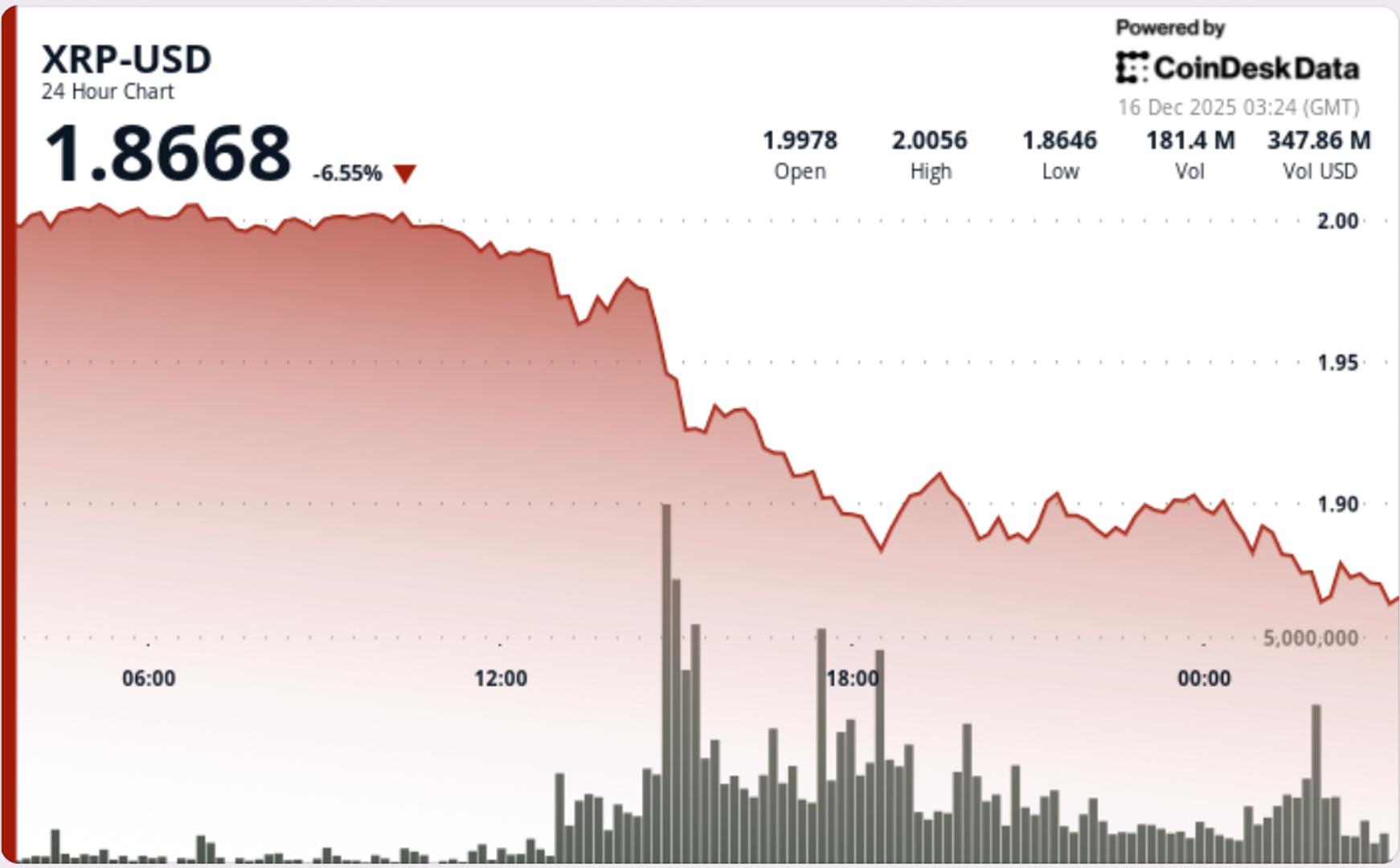
XRP price weakens at critical level, raising risk of deeper pullback

XRP price weakens at critical level, raising risk of deeper pullback

Markets Share Share this article
Copy linkX (Twitter)LinkedInFacebookEmail
XRP price weakens at critical level, raising
Paylaş
Coindesk2025/12/16 11:34
Crucial US Stock Market Update: What Wednesday’s Mixed Close Reveals

Crucial US Stock Market Update: What Wednesday’s Mixed Close Reveals

BitcoinWorld Crucial US Stock Market Update: What Wednesday’s Mixed Close Reveals The financial world often keeps us on our toes, and Wednesday was no exception. Investors watched closely as the US stock market concluded the day with a mixed performance across its major indexes. This snapshot offers a crucial glimpse into current investor sentiment and economic undercurrents, prompting many to ask: what exactly happened? Understanding the Latest US Stock Market Movements On Wednesday, the closing bell brought a varied picture for the US stock market. While some indexes celebrated gains, others registered slight declines, creating a truly mixed bag for investors. The Dow Jones Industrial Average showed resilience, climbing by a notable 0.57%. This positive movement suggests strength in some of the larger, more established companies. Conversely, the S&P 500, a broader benchmark often seen as a barometer for the overall market, experienced a modest dip of 0.1%. The technology-heavy Nasdaq Composite also saw a slight retreat, sliding by 0.33%. This particular index often reflects investor sentiment towards growth stocks and the tech sector. These divergent outcomes highlight the complex dynamics currently at play within the American economy. It’s not simply a matter of “up” or “down” for the entire US stock market; rather, it’s a nuanced landscape where different sectors and company types are responding to unique pressures and opportunities. Why Did the US Stock Market See Mixed Results? When the US stock market delivers a mixed performance, it often points to a tug-of-war between various economic factors. Several elements could have contributed to Wednesday’s varied closings. For instance, positive corporate earnings reports from certain industries might have bolstered the Dow. At the same time, concerns over inflation, interest rate policies by the Federal Reserve, or even global economic uncertainties could have pressured growth stocks, affecting the S&P 500 and Nasdaq. Key considerations often include: Economic Data: Recent reports on employment, manufacturing, or consumer spending can sway market sentiment. Corporate Announcements: Strong or weak earnings forecasts from influential companies can significantly impact their respective sectors. Interest Rate Expectations: The prospect of higher or lower interest rates directly influences borrowing costs for businesses and consumer spending, affecting future profitability. Geopolitical Events: Global tensions or trade policies can introduce uncertainty, causing investors to become more cautious. Understanding these underlying drivers is crucial for anyone trying to make sense of daily market fluctuations in the US stock market. Navigating Volatility in the US Stock Market A mixed close, while not a dramatic downturn, serves as a reminder that market volatility is a constant companion for investors. For those involved in the US stock market, particularly individuals managing their portfolios, these days underscore the importance of a well-thought-out strategy. It’s important not to react impulsively to daily movements. Instead, consider these actionable insights: Diversification: Spreading investments across different sectors and asset classes can help mitigate risk when one area underperforms. Long-Term Perspective: Focusing on long-term financial goals rather than short-term gains can help weather daily market swings. Stay Informed: Keeping abreast of economic news and company fundamentals provides context for market behavior. Consult Experts: Financial advisors can offer personalized guidance based on individual risk tolerance and objectives. Even small movements in major indexes can signal shifts that require attention, guiding future investment decisions within the dynamic US stock market. What’s Next for the US Stock Market? Looking ahead, investors will be keenly watching for further economic indicators and corporate announcements to gauge the direction of the US stock market. Upcoming inflation data, statements from the Federal Reserve, and quarterly earnings reports will likely provide more clarity. The interplay of these factors will continue to shape investor confidence and, consequently, the performance of the Dow, S&P 500, and Nasdaq. Remaining informed and adaptive will be key to understanding the market’s trajectory. Conclusion: Wednesday’s mixed close in the US stock market highlights the intricate balance of forces influencing financial markets. While the Dow showed strength, the S&P 500 and Nasdaq experienced slight declines, reflecting a nuanced economic landscape. This reminds us that understanding the ‘why’ behind these movements is as important as the movements themselves. As always, a thoughtful, informed approach remains the best strategy for navigating the complexities of the market. Frequently Asked Questions (FAQs) Q1: What does a “mixed close” mean for the US stock market? A1: A mixed close indicates that while some major stock indexes advanced, others declined. It suggests that different sectors or types of companies within the US stock market are experiencing varying influences, rather than a uniform market movement. Q2: Which major indexes were affected on Wednesday? A2: On Wednesday, the Dow Jones Industrial Average gained 0.57%, while the S&P 500 edged down 0.1%, and the Nasdaq Composite slid 0.33%, illustrating the mixed performance across the US stock market. Q3: What factors contribute to a mixed stock market performance? A3: Mixed performances in the US stock market can be influenced by various factors, including specific corporate earnings, economic data releases, shifts in interest rate expectations, and broader geopolitical events that affect different market segments uniquely. Q4: How should investors react to mixed market signals? A4: Investors are generally advised to maintain a long-term perspective, diversify their portfolios, stay informed about economic news, and avoid impulsive decisions. Consulting a financial advisor can also provide personalized guidance for navigating the US stock market. Q5: What indicators should investors watch for future US stock market trends? A5: Key indicators to watch include upcoming inflation reports, statements from the Federal Reserve regarding monetary policy, and quarterly corporate earnings reports. These will offer insights into the future direction of the US stock market. Did you find this analysis of the US stock market helpful? Share this article with your network on social media to help others understand the nuances of current financial trends! To learn more about the latest stock market trends, explore our article on key developments shaping the US stock market‘s future performance. This post Crucial US Stock Market Update: What Wednesday’s Mixed Close Reveals first appeared on BitcoinWorld.
Paylaş
Coinstats2025/09/18 05:30