HashKey stepped into the Hong Kong stock exchange with a quick 3% lift, but the excitement faded fast as the stock slid 2.1% by press time. The exchange raised $HashKey stepped into the Hong Kong stock exchange with a quick 3% lift, but the excitement faded fast as the stock slid 2.1% by press time. The exchange raised $

HashKey opened with a brief 3% rise but ended the session down 2.1%

HashKey stepped into the Hong Kong stock exchange with a quick 3% lift, but the excitement faded fast as the stock slid 2.1% by press time.

The exchange raised $206 million in the IPO after pricing shares at HK$6.68, close to the top of the HK$5.95–HK$6.95 range.It also pulled in about HK$1.6 billion, a big number in a market where crypto assets have been struggling.

Mainland China’s full crypto ban has not stopped Hong Kong from leaning into digital assets, but investors clearly wanted more from this debut.

The list of early backers was heavy. It included Fidelity, UBS, CDH Investments, and Cithara Fund, while JPMorgan and Guotai Haitong handled bookrunner roles.

HashKey CFO Eric Zhu said, “Our mission is to make digital assets massively accessible, and what we are doing is to create a compliant platform to connect our users with the digital assets industry.” Eric also said:-

That confidence did not show up in the stock chart.

Asia-Pacific markets react to new data

Across the region, markets moved in different directions as investors looked at fresh trade data out of Japan.Japan’s exports for November rose 6.1% year over year, beating the 4.8% forecast from economists.

It also came in above the 3.6% recorded the month before. The Nikkei 225 stayed flat, while the Topix slipped 0.25%. South Korea’s Kospi climbed 0.72%, and the Kosdaq added 0.19%.

Japan also saw a major banking move, with SBI Shinsei Bank jumping more than 12% after a 322 billion yen IPO priced at 1,450 yen per share.

Export data showed a 23.6% rise in goods shipped to Western Europe and an 8.8% rise in exports to the U.S., marking the first U.S. export increase since March. Auto exports fell 4.1% by value, yet shipments to the U.S. grew 1.5% year over year.

Revised GDP numbers showed Japan shrinking 0.6% in Q3 and 2.3% on an annualized basis.Shipments to mainland China dropped 2.4%, while exports to Hong Kong jumped 11.4% compared to last year.

“Foodstuff” exports to China fell 5.9%, adding to a tense month between both countries after Japanese Prime Minister Sanae Takaichi said a Chinese attempt to take Taiwan by force could push Japan’s military to step in.

Beijing reacted by limiting seafood imports.

Imports into Japan rose 1.3%, missing the 2.5% forecast. Even with the trade friction, business sentiment looked better, with the Bank of Japan’s latest Tankan survey showing stronger views among firms, especially small manufacturers.

Regional indexes move as oil jumps on Trump order

Australia’s S&P/ASX 200 slipped 0.25%, while Hong Kong’s Hang Seng Index inched up 0.18% to 25,280.13.The CSI 300 on the mainland dipped slightly.South Korea’s Kospi closed at 4,028.17, up 0.73%.

The Nikkei 225 finished at 49,553.71, rising 0.35%. India’s Nifty 50 sat at 25,860.10 with no change. Shanghai’s market added 0.16% to 3,831.061.

Oil prices moved again after U.S. President Donald Trump posted on Truth Social that he would order a “TOTAL AND COMPLETE BLOCKADE OF ALL SANCTIONED OIL TANKERS” entering and leaving Venezuela.

West Texas Intermediate crude rose more than 1% to $55.96. This came after U.S. crude fell nearly 3% the day before, hitting its lowest level since early 2021 due to concerns about oversupply and possible progress toward a peace deal in Ukraine.

Join Bybit now and claim a $50 bonus in minutes

Piyasa Fırsatı
RISE Logosu
RISE Fiyatı(RISE)
$0,005597
$0,005597$0,005597
-%1,75
USD
RISE (RISE) Canlı Fiyat Grafiği
Sorumluluk Reddi: Bu sitede yeniden yayınlanan makaleler, halka açık platformlardan alınmıştır ve yalnızca bilgilendirme amaçlıdır. MEXC'nin görüşlerini yansıtmayabilir. Tüm hakları telif sahiplerine aittir. Herhangi bir içeriğin üçüncü taraf haklarını ihlal ettiğini düşünüyorsanız, kaldırılması için lütfen [email protected] ile iletişime geçin. MEXC, içeriğin doğruluğu, eksiksizliği veya güncelliği konusunda hiçbir garanti vermez ve sağlanan bilgilere dayalı olarak alınan herhangi bir eylemden sorumlu değildir. İçerik, finansal, yasal veya diğer profesyonel tavsiye niteliğinde değildir ve MEXC tarafından bir tavsiye veya onay olarak değerlendirilmemelidir.

Ayrıca Şunları da Beğenebilirsiniz

Bitcoin ETF Investors React to Fed’s Decision

Bitcoin ETF Investors React to Fed’s Decision

The post Bitcoin ETF Investors React to Fed’s Decision appeared on BitcoinEthereumNews.com. In a surprise move, spot Bitcoin ETFs experienced their first significant daily outflows in over a week, following the Federal Reserve’s adjusted policy outlook. This shift reflects the market’s readiness to respond to any hint of change on the regulatory landscape, as well as its sensitivity to central bank cues. Continue Reading:Bitcoin ETF Investors React to Fed’s Decision Source: https://en.bitcoinhaber.net/bitcoin-etf-investors-react-to-feds-decision
Paylaş
BitcoinEthereumNews2025/09/18 18:51
US Senators Introduce SAFE Crypto Act to Target Rising Crypto Scams
US Senators Introduce SAFE Crypto Act to Target Rising Crypto Scams

The post US Senators Introduce SAFE Crypto Act to Target Rising Crypto Scams appeared first on Coinpedia Fintech News Crypto scams are getting faster, smarter and
Paylaş
CoinPedia2025/12/17 18:33
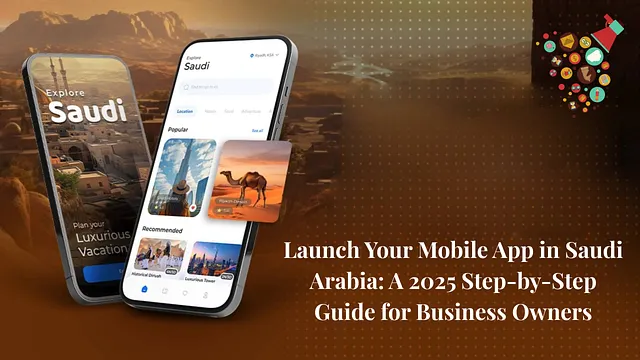
From Idea to App Store: The Complete Guide to Mobile App Development in Saudi Arabia

From Idea to App Store: The Complete Guide to Mobile App Development in Saudi Arabia

Saudi Arabia is at the forefront of digital transformation. With Vision 2030 driving innovation and a rapidly growing population of tech-savvy users, mobile apps have become a core driver of business growth in the Kingdom. From e-commerce and fintech to healthcare, logistics, and on-demand services, Saudi businesses are embracing mobile apps to connect with customers and scale faster. But how do you take a mobile app idea and turn it into a successful launch on the App Store or Google Play? This guide breaks down the complete mobile app development process in Saudi Arabia — step by step. Step 1: Validate Your App Idea for the Saudi Market Before you start building, ask: What problem does my app solve for Saudi users? Is there a cultural or market gap my app can fill? How do local competitors approach the same challenge? For example, apps related to digital payments, e-learning, delivery services, and healthcare are in high demand across Saudi Arabia. Conducting market research and aligning your app idea with local user behavior is critical. Step 2: Plan Features with Local Needs in Mind Your app should start with an MVP (Minimum Viable Product) — a core version that solves the main problem. Later, you can scale with advanced features. In Saudi Arabia, consider adding: Arabic language support (essential for user adoption) Integration with local payment gateways like STC Pay, Mada, or Apple Pay Regulatory compliance (especially for fintech and health apps) Localization for user preferences (Hijri calendar, cultural UI elements) Step 3: Select the Right Development Approach You can choose: Native Apps (Swift for iOS, Kotlin for Android) — Great for scalability and performance. Cross-Platform Apps (Flutter, React Native) — Cost-effective for startups targeting both iOS and Android simultaneously. Hybrid Apps — Suitable for simpler apps with limited features. For Saudi startups and enterprises, cross-platform development is often preferred to reach a wider audience quickly and efficiently. Step 4: Design With a Local Touch The design must balance global usability standards with local cultural relevance. UI (User Interface): Clean, modern visuals that align with Saudi branding. UX (User Experience): Simple navigation, clear Arabic text support, and intuitive flows. Wireframing & Prototyping: Test early with Saudi users to ensure adoption. A user-friendly design is one of the top reasons apps succeed in the Kingdom’s competitive market. Step 5: Develop Your Mobile App Once the design is ready, the coding begins. Saudi app development companies often follow Agile methodology, ensuring flexibility and faster delivery. Front-End Development: Interface and user interactions. Back-End Development: Databases, servers, and APIs. Integration: Secure connections between front-end and back-end. Strong collaboration between developers, designers, and business analysts ensures your app aligns with Saudi market needs. Step 6: Testing Across Devices and Networks Saudi users rely on different devices and network speeds. That’s why rigorous testing is critical: Functionality Testing: Features work as expected. Performance Testing: The app runs smoothly on both 4G and 5G networks. Localization Testing: Arabic text displays correctly, without alignment issues. Security Testing: Data protection compliance with Saudi cybersecurity standards. Step 7: App Store & Google Play Launch in Saudi Arabia To publish your app: Apple App Store (iOS): Requires an Apple Developer account and strict guideline compliance. Google Play Store (Android): Faster approval but still requires detailed app info. You’ll also need metadata in both English and Arabic — titles, descriptions, and screenshots — to maximize visibility among Saudi users. Step 8: Market Your App in Saudi Arabia Launching an app is only the beginning. You need a marketing strategy tailored to the Kingdom: App Store Optimization (ASO): Use Arabic and English keywords. Social Media Campaigns: Leverage platforms like Snapchat, Twitter (X), and Instagram, which are highly popular in Saudi Arabia. Influencer Marketing: Collaborate with Saudi influencers for early traction. Paid Ads: Google Ads and Saudi-focused Facebook/Instagram ads. Partnerships: Collaborate with local businesses to reach a wider audience. Step 9: Gather Feedback and Optimize Once your app is live, monitor: User reviews on app stores Analytics on engagement, retention, and churn rates Suggestions from Saudi users for culturally relevant features Continuous updates and improvements are vital to stay competitive. Step 10: Scale With Advanced Features Once your MVP gains traction, you can expand with advanced features such as: AI and machine learning for personalization Blockchain-based payments for fintech apps AR/VR features for retail and gaming apps IoT integration for smart home and mobility solutions Saudi Arabia’s digital ecosystem is growing rapidly — apps that adapt quickly will thrive. Conclusion Mobile app development in Saudi Arabia is not just about building an app — it’s about aligning with Vision 2030, cultural needs, and user expectations. By following a clear process — from idea validation to launch and beyond — you can transform your concept into a profitable digital product. Whether you’re a startup or an enterprise in Saudi Arabia, the opportunity is massive. With the right strategy, you can move from idea to App Store and create an app that truly resonates with Saudi users. From Idea to App Store: The Complete Guide to Mobile App Development in Saudi Arabia was originally published in Coinmonks on Medium, where people are continuing the conversation by highlighting and responding to this story
Paylaş
Medium2025/09/18 14:46