
USDT vs. USDC: The Definitive Comparison Guide for Traders (2026)
TL;DR (Key Takeaways)
- The Core Difference: USDT (Tether) is the king of liquidity and global trading volume, while USDC (USD Coin) dominates in regulatory compliance and institutional transparency.
- Best For Trading: USDT is preferred for high-frequency trading and arbitrage due to its massive market depth.
- Best For Safety/DeFi: USDC is often favored by risk-averse institutions and regulated DeFi protocols requiring monthly audit attestations.
- Stability: Both assets maintain a $1 peg, but their reserve compositions differ significantly (US Treasuries vs. diversified assets).
- Ecosystem: While USDT exists on more legacy chains (Tron, Omni), USDC is deeply integrated into Western banking rails.
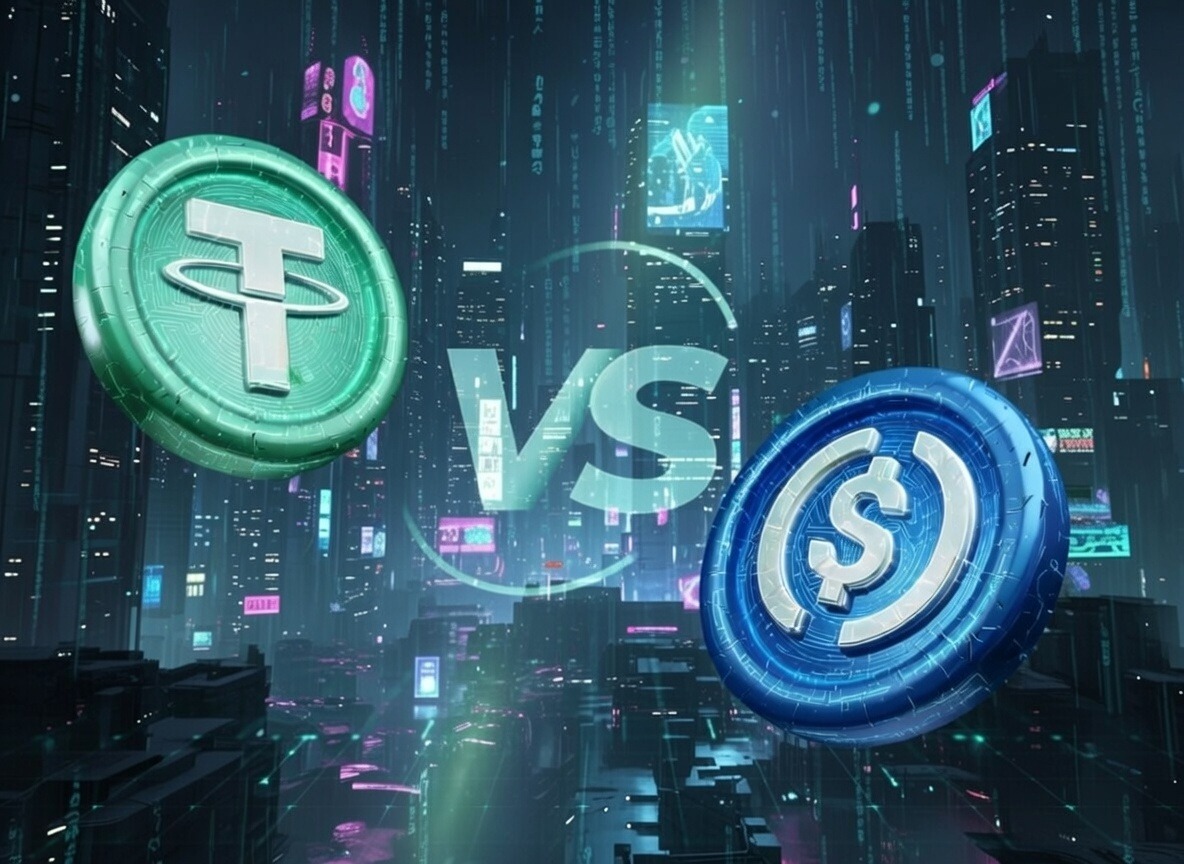
Introduction
1.Core Definitions: What Are USDT and USDC?
1.1What is USDT (Tether)?
- Key Strength: Unmatched liquidity and support on virtually every exchange (CEX) and blockchain.
1.2What is USDC (USD Coin)?
- Key Strength: Trust, regulatory alignment, and seamless integration with the traditional banking system.
2.Origin and Design Philosophy
- USDT (The First Mover): Born to solve the "banking problem" for crypto exchanges. In the early days, exchanges couldn't get bank accounts. USDT allowed traders to move "digital dollars" between exchanges like Binance, OKX, and MEXC instantly, bypassing slow wire transfers.
- USDC (The Regulated Challenger): Born to bridge Wall Street and Crypto. USDC was built from day one to adhere to US money transmission laws, making it the preferred choice for institutions and compliant DeFi protocols.
3.Ecosystem Usage: The Trader’s Dilemma
3.1 Trading Liquidity (Winner: USDT)
- Why it matters: Using USDT minimizes "slippage" (loss of value) when executing large trades.
- Data Insight: USDT typically commands 70%+ of the daily global stablecoin trading volume.
3.2 DeFi and Smart Contracts (Winner: Split)
- USDT: Dominates on Tron (TRC-20) for payments and high-yield farming on older protocols.
- USDC: Dominates on Ethereum (ERC-20) and Layer-2s (like Base/Arbitrum) for lending protocols like Aave and Compound, where collateral quality is paramount.
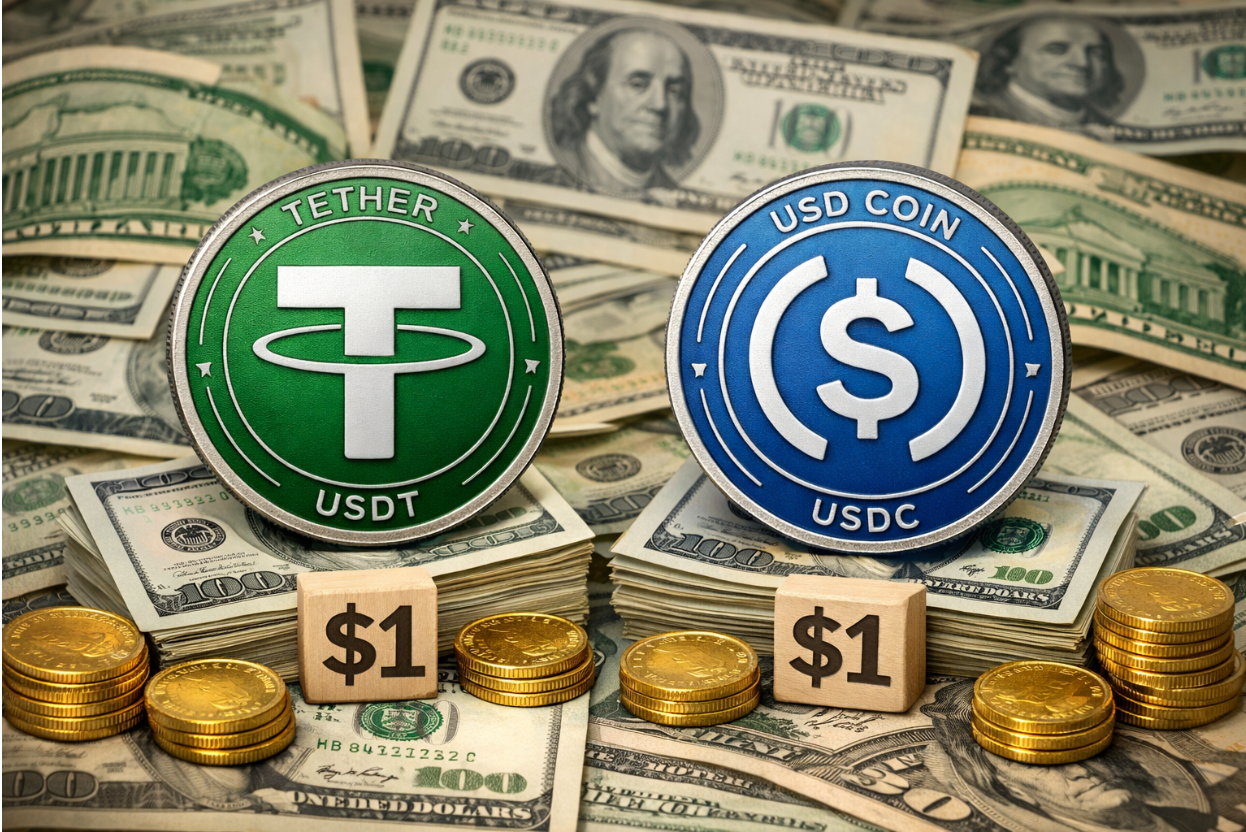
3.3 Cross-Border Transfers and Settlement
4.The "Reserves" Battle: Backing & Transparency
Feature | ||
Primary Reserve Assets | US Treasury Bills, Cash, Gold, Bitcoin, Corporate Bonds | Cash, Short-term US Treasury Bills |
Transparency | Quarterly Attestations (Snapshots) | Monthly Attestations (Detailed) |
Audit Firm | BDO Italia | Deloitte |
Risk Profile | Diversified (Higher yield, slightly higher risk) | Conservative (Lower risk, "Digital Cash" equivalent) |
5.USDT vs USDC: The Final Decision Matrix
If you want to... | Choose... | Why? |
Day Trade Crypto | USDT | It has the most trading pairs and deepest liquidity on MEXC. |
Hold Large Cash Reserves | USDC | Its strictly audited cash/treasury reserves offer higher perceived safety for long-term holding. |
Send Money Cheaply | USDT (TRC-20) | The Tron network offers extremely low fees for P2P transfers. |
Use Regulated DeFi | USDC | Most US-compliant DeFi protocols prefer USDC as collateral. |
Buy Small Cap Alts | USDT | Most small-cap gems are only paired with USDT, not USDC. |
6.Risks and Considerations
- De-pegging Risk: In extreme market panic, both have historically dipped (e.g., to $0.99 or $0.90) briefly before recovering.
- Censorship Risk: Both Tether and Circle are centralized entities. They have the power to freeze addresses at the request of law enforcement. This is a feature, not a bug, for compliance.
7.Frequently Asked Questions (FAQ)
Conclusion
- Choose USDT if you are an active trader looking for speed, deep liquidity, and access to the widest variety of altcoins on MEXC. How to buy usdt on mexc?
- Choose USDC if you are an institutional investor or a long-term holder prioritizing transparency and regulatory safety. How to buy usdc on mexc?
Disclaimer
Popular Articles
Can Stargate (STG) Regain Price Momentum Through veSTG Incentives in 2026?
As the cross-chain interoperability landscape matures in 2026, Stargate Finance (STG) stands at a critical juncture following its acquisition by the LayerZero Foundation. For investors, one question l
StableChain (STABLE) Market Analysis: On-Chain Data vs. Growth Potential
Key TakeawaysInnovation: StableChain eliminates the need for volatile assets like ETH or SOL by using USDT as its native gas token for transaction fees.Bearish Signal: Despite a high-profile December
Is USDT Safe? Tether’s Reserves, Audits & Regulatory Compliance
TL;DR (Key Takeaways)The Core Question: Is USDT safe? Yes, but with caveats. Tether has significantly shifted its reserves to US Treasuries (considered risk-free) to silence critics.The Audit Upgrade:
Understanding USDT Networks: TRC20 vs. ERC20 vs. BEP20 (2026 Guide)
What is the difference between TRC20 and ERC20 USDT? The difference lies in the network infrastructure and transaction fees. TRC20 USDT runs on the Tron network and is preferred for low-cost transfers
Related Articles
Can Stargate (STG) Regain Price Momentum Through veSTG Incentives in 2026?
As the cross-chain interoperability landscape matures in 2026, Stargate Finance (STG) stands at a critical juncture following its acquisition by the LayerZero Foundation. For investors, one question l
StableChain (STABLE) Market Analysis: On-Chain Data vs. Growth Potential
Key TakeawaysInnovation: StableChain eliminates the need for volatile assets like ETH or SOL by using USDT as its native gas token for transaction fees.Bearish Signal: Despite a high-profile December
Is USDT Safe? Tether’s Reserves, Audits & Regulatory Compliance
TL;DR (Key Takeaways)The Core Question: Is USDT safe? Yes, but with caveats. Tether has significantly shifted its reserves to US Treasuries (considered risk-free) to silence critics.The Audit Upgrade:
USDT vs. USDC: The Definitive Comparison Guide for Traders (2026)
TL;DR (Key Takeaways)The Core Difference: USDT (Tether) is the king of liquidity and global trading volume, while USDC (USD Coin) dominates in regulatory compliance and institutional transparency.Best
