Bank of England Governor Andrew Bailey has outlined plans to grant widely used stablecoins access to central bank accounts while warning the tokens could reshape Britain’s financial system. According to a report from the Financial Times, Bailey described stablecoins as a technology that could separate money holding from credit provision, potentially reducing the role of commercial banks in the economy. The governor believes that this shift would require careful management to preserve the link between money and credit creation that underpins economic activity. His intervention coincides with the Bank of England’s preparation to publish a consultation paper on its systemic stablecoin regime, which will set standards for tokens used at scale for everyday payments or for settling tokenized financial markets.Andrew Bailey, Governor of the Bank of England (Source: Semafor) BoE Proposes Access to Central Bank Accounts Amid Deposit Drain Concerns Bailey explained that Britain’s financial system currently combines money holding with credit provision through fractional reserve banking, where commercial bank deposits directly support lending to households and companies. He noted that stablecoins could allow a different arrangement where money and credit provision are partially separated, with banks and stablecoins coexisting while non-banks carry out more lending activity. The central bank has also proposed ownership limits of £10,000 to £20,000 for people and £10 million for businesses on systemic stablecoins. Sasha Mills, the Bank’s executive director for financial market infrastructure, said the limits would “mitigate financial stability risks stemming from large and rapid outflows of deposits from the banking sector”. Bailey particularly stressed that backing assets for stablecoins must be free of credit, interest, and exchange rate risk to ensure value stability, and must be accompanied by insurance schemes and statutory resolution arrangements similar to bank deposits. He added that exchange terms must be known, consistent, and directly convertible into other forms of money rather than dependent on crypto exchanges and their business terms. The governor acknowledged that the technology behind stablecoins is new but poses an old central banking question about ensuring the link between money and credit creation. Crypto Industry Pushes Back Against the Proposed Stablecoin Cap Tom Duff Gordon, vice-president of international policy at Coinbase, told the Financial Times that “imposing caps on stablecoins is bad for UK savers, bad for the City and bad for sterling” and that no other major jurisdiction has deemed caps necessary. Similarly, Simon Jennings, executive director of the UK Cryptoasset Business Council, argued that “limits simply don’t work in practice” because stablecoin issuers cannot monitor token holders in real time. He warned that enforcing caps would require costly new systems such as digital IDs or constant coordination between wallets. Riccardo Tordera-Ricchi, director of policy at The Payments Association, also said, “just as there are no limits on cash, bank accounts, or e-money, there is no reason beyond scepticism to impose limits on stablecoin ownership”. The criticism threatens to deepen tensions between the Bank of England and the Treasury after Chancellor Rachel Reeves committed in her Mansion House speech to “drive forward developments in blockchain technology, including tokenised securities and stablecoins.” Given the ongoing criticism, the Bank of England has clarified that its proposed limits could be “transitional” as the financial system adjusts to the growth of digital money. The global stablecoin market has grown to $298 billion and received a major boost after Congress passed the GENIUS Act in July, introducing a regulatory framework expected to embed stablecoins as a key part of the U.S. financial system. Meanwhile, Coinbase has forecast that the stablecoin market could reach $1.2 trillion by 2028 and has recently published research titled “Beyond the Deposit Debate,” challenging the banking industry’s claims that stablecoins threaten traditional financial stability. The exchange called the “deposit erosion” narrative a myth designed to protect banks’ $187 billion annual payment processing monopoly. Coinbase argues that banks currently park $3.3 trillion in Federal Reserve reserves, earning $176 billion risk-free annually, rather than extending additional loans. Bank of England Governor Andrew Bailey has outlined plans to grant widely used stablecoins access to central bank accounts while warning the tokens could reshape Britain’s financial system. According to a report from the Financial Times, Bailey described stablecoins as a technology that could separate money holding from credit provision, potentially reducing the role of commercial banks in the economy. The governor believes that this shift would require careful management to preserve the link between money and credit creation that underpins economic activity. His intervention coincides with the Bank of England’s preparation to publish a consultation paper on its systemic stablecoin regime, which will set standards for tokens used at scale for everyday payments or for settling tokenized financial markets.Andrew Bailey, Governor of the Bank of England (Source: Semafor) BoE Proposes Access to Central Bank Accounts Amid Deposit Drain Concerns Bailey explained that Britain’s financial system currently combines money holding with credit provision through fractional reserve banking, where commercial bank deposits directly support lending to households and companies. He noted that stablecoins could allow a different arrangement where money and credit provision are partially separated, with banks and stablecoins coexisting while non-banks carry out more lending activity. The central bank has also proposed ownership limits of £10,000 to £20,000 for people and £10 million for businesses on systemic stablecoins. Sasha Mills, the Bank’s executive director for financial market infrastructure, said the limits would “mitigate financial stability risks stemming from large and rapid outflows of deposits from the banking sector”. Bailey particularly stressed that backing assets for stablecoins must be free of credit, interest, and exchange rate risk to ensure value stability, and must be accompanied by insurance schemes and statutory resolution arrangements similar to bank deposits. He added that exchange terms must be known, consistent, and directly convertible into other forms of money rather than dependent on crypto exchanges and their business terms. The governor acknowledged that the technology behind stablecoins is new but poses an old central banking question about ensuring the link between money and credit creation. Crypto Industry Pushes Back Against the Proposed Stablecoin Cap Tom Duff Gordon, vice-president of international policy at Coinbase, told the Financial Times that “imposing caps on stablecoins is bad for UK savers, bad for the City and bad for sterling” and that no other major jurisdiction has deemed caps necessary. Similarly, Simon Jennings, executive director of the UK Cryptoasset Business Council, argued that “limits simply don’t work in practice” because stablecoin issuers cannot monitor token holders in real time. He warned that enforcing caps would require costly new systems such as digital IDs or constant coordination between wallets. Riccardo Tordera-Ricchi, director of policy at The Payments Association, also said, “just as there are no limits on cash, bank accounts, or e-money, there is no reason beyond scepticism to impose limits on stablecoin ownership”. The criticism threatens to deepen tensions between the Bank of England and the Treasury after Chancellor Rachel Reeves committed in her Mansion House speech to “drive forward developments in blockchain technology, including tokenised securities and stablecoins.” Given the ongoing criticism, the Bank of England has clarified that its proposed limits could be “transitional” as the financial system adjusts to the growth of digital money. The global stablecoin market has grown to $298 billion and received a major boost after Congress passed the GENIUS Act in July, introducing a regulatory framework expected to embed stablecoins as a key part of the U.S. financial system. Meanwhile, Coinbase has forecast that the stablecoin market could reach $1.2 trillion by 2028 and has recently published research titled “Beyond the Deposit Debate,” challenging the banking industry’s claims that stablecoins threaten traditional financial stability. The exchange called the “deposit erosion” narrative a myth designed to protect banks’ $187 billion annual payment processing monopoly. Coinbase argues that banks currently park $3.3 trillion in Federal Reserve reserves, earning $176 billion risk-free annually, rather than extending additional loans.

Bank of England Governor Says Stablecoins Could Reduce UK Reliance on Commercial Banks – Could It?

2025/10/02 03:05
4 min read
For feedback or concerns regarding this content, please contact us at [email protected]

Bank of England Governor Andrew Bailey has outlined plans to grant widely used stablecoins access to central bank accounts while warning the tokens could reshape Britain’s financial system.

According to a report from the Financial Times, Bailey described stablecoins as a technology that could separate money holding from credit provision, potentially reducing the role of commercial banks in the economy.

The governor believes that this shift would require careful management to preserve the link between money and credit creation that underpins economic activity.

His intervention coincides with the Bank of England’s preparation to publish a consultation paper on its systemic stablecoin regime, which will set standards for tokens used at scale for everyday payments or for settling tokenized financial markets.
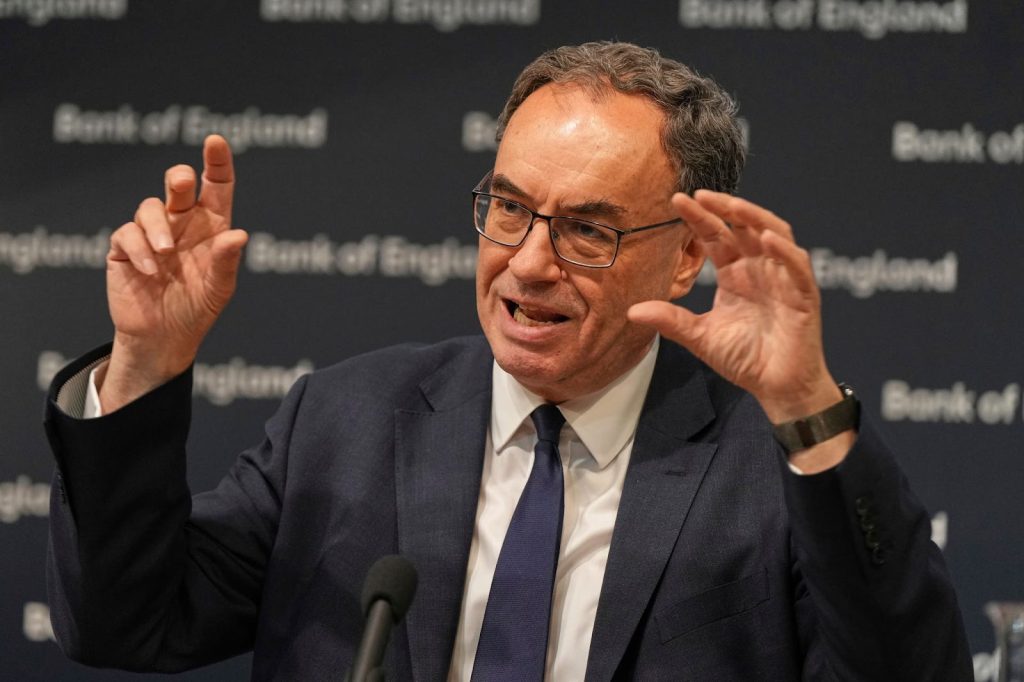
Bank of England Governor Says Stablecoins Could Reduce UK Reliance on Commercial Banks - Could It?Andrew Bailey, Governor of the Bank of England (Source: Semafor)

BoE Proposes Access to Central Bank Accounts Amid Deposit Drain Concerns

Bailey explained that Britain’s financial system currently combines money holding with credit provision through fractional reserve banking, where commercial bank deposits directly support lending to households and companies.

He noted that stablecoins could allow a different arrangement where money and credit provision are partially separated, with banks and stablecoins coexisting while non-banks carry out more lending activity.

The central bank has also proposed ownership limits of £10,000 to £20,000 for people and £10 million for businesses on systemic stablecoins.

Sasha Mills, the Bank’s executive director for financial market infrastructure, said the limits would “mitigate financial stability risks stemming from large and rapid outflows of deposits from the banking sector”.

Bailey particularly stressed that backing assets for stablecoins must be free of credit, interest, and exchange rate risk to ensure value stability, and must be accompanied by insurance schemes and statutory resolution arrangements similar to bank deposits.

He added that exchange terms must be known, consistent, and directly convertible into other forms of money rather than dependent on crypto exchanges and their business terms.

The governor acknowledged that the technology behind stablecoins is new but poses an old central banking question about ensuring the link between money and credit creation.

Crypto Industry Pushes Back Against the Proposed Stablecoin Cap

Tom Duff Gordon, vice-president of international policy at Coinbase, told the Financial Times that “imposing caps on stablecoins is bad for UK savers, bad for the City and bad for sterling” and that no other major jurisdiction has deemed caps necessary.

Similarly, Simon Jennings, executive director of the UK Cryptoasset Business Council, argued that “limits simply don’t work in practice” because stablecoin issuers cannot monitor token holders in real time.

He warned that enforcing caps would require costly new systems such as digital IDs or constant coordination between wallets.

Riccardo Tordera-Ricchi, director of policy at The Payments Association, also said, “just as there are no limits on cash, bank accounts, or e-money, there is no reason beyond scepticism to impose limits on stablecoin ownership”.

The criticism threatens to deepen tensions between the Bank of England and the Treasury after Chancellor Rachel Reeves committed in her Mansion House speech to “drive forward developments in blockchain technology, including tokenised securities and stablecoins.”

Given the ongoing criticism, the Bank of England has clarified that its proposed limits could be “transitional” as the financial system adjusts to the growth of digital money.

The global stablecoin market has grown to $298 billion and received a major boost after Congress passed the GENIUS Act in July, introducing a regulatory framework expected to embed stablecoins as a key part of the U.S. financial system.

Meanwhile, Coinbase has forecast that the stablecoin market could reach $1.2 trillion by 2028 and has recently published research titled “Beyond the Deposit Debate,” challenging the banking industry’s claims that stablecoins threaten traditional financial stability.

The exchange called the “deposit erosion” narrative a myth designed to protect banks’ $187 billion annual payment processing monopoly.

Coinbase argues that banks currently park $3.3 trillion in Federal Reserve reserves, earning $176 billion risk-free annually, rather than extending additional loans.

Market Opportunity
Lorenzo Protocol Logo
Lorenzo Protocol Price(BANK)
$0.03755
$0.03755$0.03755
+0.53%
USD
Lorenzo Protocol (BANK) Live Price Chart
Disclaimer: The articles reposted on this site are sourced from public platforms and are provided for informational purposes only. They do not necessarily reflect the views of MEXC. All rights remain with the original authors. If you believe any content infringes on third-party rights, please contact [email protected] for removal. MEXC makes no guarantees regarding the accuracy, completeness, or timeliness of the content and is not responsible for any actions taken based on the information provided. The content does not constitute financial, legal, or other professional advice, nor should it be considered a recommendation or endorsement by MEXC.

You May Also Like

Ethereum Price Prediction: ETH Targets $10,000 In 2026 But Layer Brett Could Reach $1 From $0.0058

Ethereum Price Prediction: ETH Targets $10,000 In 2026 But Layer Brett Could Reach $1 From $0.0058

Ethereum price predictions are turning heads, with analysts suggesting ETH could climb to $10,000 by 2026 as institutional demand and network upgrades drive growth. While Ethereum remains a blue-chip asset, investors looking for sharper multiples are eyeing Layer Brett (LBRETT). Currently in presale at just $0.0058, the Ethereum Layer 2 meme coin is drawing huge [...] The post Ethereum Price Prediction: ETH Targets $10,000 In 2026 But Layer Brett Could Reach $1 From $0.0058 appeared first on Blockonomi.
Share
Blockonomi2025/09/17 23:45
Best Crypto to Buy as Saylor & Crypto Execs Meet in US Treasury Council

Best Crypto to Buy as Saylor & Crypto Execs Meet in US Treasury Council

The post Best Crypto to Buy as Saylor & Crypto Execs Meet in US Treasury Council appeared on BitcoinEthereumNews.com. Michael Saylor and a group of crypto executives met in Washington, D.C. yesterday to push for the Strategic Bitcoin Reserve Bill (the BITCOIN Act), which would see the U.S. acquire up to 1M $BTC over five years. With Bitcoin being positioned yet again as a cornerstone of national monetary policy, many investors are turning their eyes to projects that lean into this narrative – altcoins, meme coins, and presales that could ride on the same wave. Read on for three of the best crypto projects that seem especially well‐suited to benefit from this macro shift:  Bitcoin Hyper, Best Wallet Token, and Remittix. These projects stand out for having a strong use case and high adoption potential, especially given the push for a U.S. Bitcoin reserve.   Why the Bitcoin Reserve Bill Matters for Crypto Markets The strategic Bitcoin Reserve Bill could mark a turning point for the U.S. approach to digital assets. The proposal would see America build a long-term Bitcoin reserve by acquiring up to one million $BTC over five years. To make this happen, lawmakers are exploring creative funding methods such as revaluing old gold certificates. The plan also leans on confiscated Bitcoin already held by the government, worth an estimated $15–20B. This isn’t just a headline for policy wonks. It signals that Bitcoin is moving from the margins into the core of financial strategy. Industry figures like Michael Saylor, Senator Cynthia Lummis, and Marathon Digital’s Fred Thiel are all backing the bill. They see Bitcoin not just as an investment, but as a hedge against systemic risks. For the wider crypto market, this opens the door for projects tied to Bitcoin and the infrastructure that supports it. 1. Bitcoin Hyper ($HYPER) – Turning Bitcoin Into More Than Just Digital Gold The U.S. may soon treat Bitcoin as…
Share
BitcoinEthereumNews2025/09/18 00:27
One Of Frank Sinatra’s Most Famous Albums Is Back In The Spotlight

One Of Frank Sinatra’s Most Famous Albums Is Back In The Spotlight

The post One Of Frank Sinatra’s Most Famous Albums Is Back In The Spotlight appeared on BitcoinEthereumNews.com. Frank Sinatra’s The World We Knew returns to the Jazz Albums and Traditional Jazz Albums charts, showing continued demand for his timeless music. Frank Sinatra performs on his TV special Frank Sinatra: A Man and his Music Bettmann Archive These days on the Billboard charts, Frank Sinatra’s music can always be found on the jazz-specific rankings. While the art he created when he was still working was pop at the time, and later classified as traditional pop, there is no such list for the latter format in America, and so his throwback projects and cuts appear on jazz lists instead. It’s on those charts where Sinatra rebounds this week, and one of his popular projects returns not to one, but two tallies at the same time, helping him increase the total amount of real estate he owns at the moment. Frank Sinatra’s The World We Knew Returns Sinatra’s The World We Knew is a top performer again, if only on the jazz lists. That set rebounds to No. 15 on the Traditional Jazz Albums chart and comes in at No. 20 on the all-encompassing Jazz Albums ranking after not appearing on either roster just last frame. The World We Knew’s All-Time Highs The World We Knew returns close to its all-time peak on both of those rosters. Sinatra’s classic has peaked at No. 11 on the Traditional Jazz Albums chart, just missing out on becoming another top 10 for the crooner. The set climbed all the way to No. 15 on the Jazz Albums tally and has now spent just under two months on the rosters. Frank Sinatra’s Album With Classic Hits Sinatra released The World We Knew in the summer of 1967. The title track, which on the album is actually known as “The World We Knew (Over and…
Share
BitcoinEthereumNews2025/09/18 00:02
