Airdrop

An Airdrop is a distribution of free tokens to a community, typically used as a marketing tool or a reward for early protocol adopters and testers. In 2026, the "points-to-airdrop" model has matured into merit-based incentive programs that utilize Sybil-resistance and Proof-of-Humanity to filter out bots. Airdrops remain a primary method for decentralized governance (DAO) bootstrapping. Follow this tag for the latest on retroactive rewards, eligibility criteria, and how to participate in the most anticipated token distributions in the ecosystem.

5549 Articles
Created: 2026/02/02 18:52
Updated: 2026/02/02 18:52
Monad crypto price prediction: Early market trends

Monad crypto price prediction: Early market trends

The post Monad crypto price prediction: Early market trends appeared on BitcoinEthereumNews.com. Monad may turn out to be one of 2025’s breakout Layer-1 blockchains — and with the mainnet and token going live today, the market’s attention is sharply focused on its first trading hours. This Monad crypto price prediction is designed to be digestible — exploring the most recent estimates, key influencers, and possible scenarios for MON after launch. Summary Monad’s mainnet and MON token launch today, drawing strong market attention as early trading begins. Token distribution: 10.8% of MON unlocks at launch, while 38.5% for ecosystem development also begins unlocking with the mainnet. Catalysts: successful Coinbase token sale ($269M), today’s airdrop to ~225k users, and launch-day network stability. Price outlook: scenarios range from $0.020–$0.060+, depending on liquidity, adoption speed, and market sentiment in the first days. What is driving the Monad crypto outlook Monad is a high-performance, Ethereum-compatible Layer‑1  blockchain, capable of up to 10,000 TPS,  near-zero gas fees, and almost instant transaction finality. Its parallel execution design boosts throughput without compromising Ethereum smart contract compatibility. MON has a capped supply of 100 billion tokens. Ahead of the mainnet on November 24, 2025, 10.8 billion MON (10.8%) will be unlocked through public sale and airdrops. Distribution is 38.5% for ecosystem development (also scheduled to begin unlocking through the mainnet event), 27% to the team, 19.7% to investors, 7.5% to public sale, 4% to the treasury, and 3.3% to community projects. Crucially, locked tokens won’t be able to stake at launch, ensuring that early rewards aren’t dominated by insiders. Key catalysts that could influence MON price With the mainnet and token launch happening today, several factors are set to drive the first wave of price action. Mainnet launch (today) So, Monad’s mainnet goes live on Nov  24. A smooth launch could boost demand from: developers deploying dApps  users bridging assets  validators / LST…

Author: BitcoinEthereumNews
MEXC’s ENA Extravaganza concludes with 51,000+ participants and $79.7B in trading volume

MEXC’s ENA Extravaganza concludes with 51,000+ participants and $79.7B in trading volume

The initiative attracted 51,261 participants and generated $79.7 billion in futures trading volume. The ENA Extravaganza ran from October 21 to November 20, 2025, featuring a $1 million prize pool. The campaign’s success highlights strong community trust in both MEXC and the Ethena ecosystem. Victoria, Seychelles, November 24, 2025 – MEXC, a leading global cryptocurrency […] The post MEXC’s ENA Extravaganza concludes with 51,000+ participants and $79.7B in trading volume appeared first on CoinJournal.

Author: Coin Journal
Binance recovers illegally obtained Alpha airdrop proceeds and freezes user assets.

Binance recovers illegally obtained Alpha airdrop proceeds and freezes user assets.

PANews reported on November 24th that, according to @cryptobraveHQ, Binance appears to have initiated a crackdown on illegal arbitrage activities during the Alpha airdrop, freezing multiple user accounts. One account had 14,457 USDT frozen, with an outstanding balance of 10,525.77 USDT. Screenshots show Binance stating that users "violated regulations on the Alpha platform and improperly obtained airdrops." Binance co-founder He Yi subsequently responded that "ordinary users are not affected."

Author: PANews
Black Friday Presale Picks for 2025: Why IPO Genie Tops Every Analyst List

Black Friday Presale Picks for 2025: Why IPO Genie Tops Every Analyst List

The post Black Friday Presale Picks for 2025: Why IPO Genie Tops Every Analyst List appeared on BitcoinEthereumNews.com. Crypto Presales A brief Black Friday look at the best crypto presale deals and why IPO Genie leads for 2025. Black Friday – 21st November 2025 to 1st December 2025 Black Friday has become a rare chance for investors to enter the best crypto presale deals at lower entry points and bonus windows that never return again. This short briefing walks through why this year’s Black Friday window is different and why analysts keep pointing to one project. You will see why many investors stay alert from the moment the presale clock opens. You will learn how bonus tokens work, how verified presales reduce risk, and why some events add more value than simple discounts. The crypto market now treats Black Friday (safety measures) as a serious preview period. Prices stay low, bonuses appear, and investor demand rises fast. This briefing shows how the market behaves during these short windows and why some presales stand out due to strong checks and clear on chain records. One presale continues to rise above other emerging crypto projects, and it does so with a one time deal flow boost that investors value. This piece is simple, crisp, and built for quick reading. It also shares my own view as someone who studies early stage crypto entries closely. The aim is clear. Read this before the Black Friday window closes. See how the structure works. Decide if the premium bonus window at IPO Genie $IPO fits your plan. Why Black Friday Matters for Crypto Entries Black Friday is no longer just about gadgets. It now signals an entry point for investors who want early access to structured presales. Prices stay low, bonuses appear, and verified deal flow checks help buyers feel safer. It also brings attention to the best crypto presale deals, since many…

Author: BitcoinEthereumNews
Pump.fun (PUMP) Price: Platform Withdraws $436.5M USDC as Token Falls 24% Weekly

Pump.fun (PUMP) Price: Platform Withdraws $436.5M USDC as Token Falls 24% Weekly

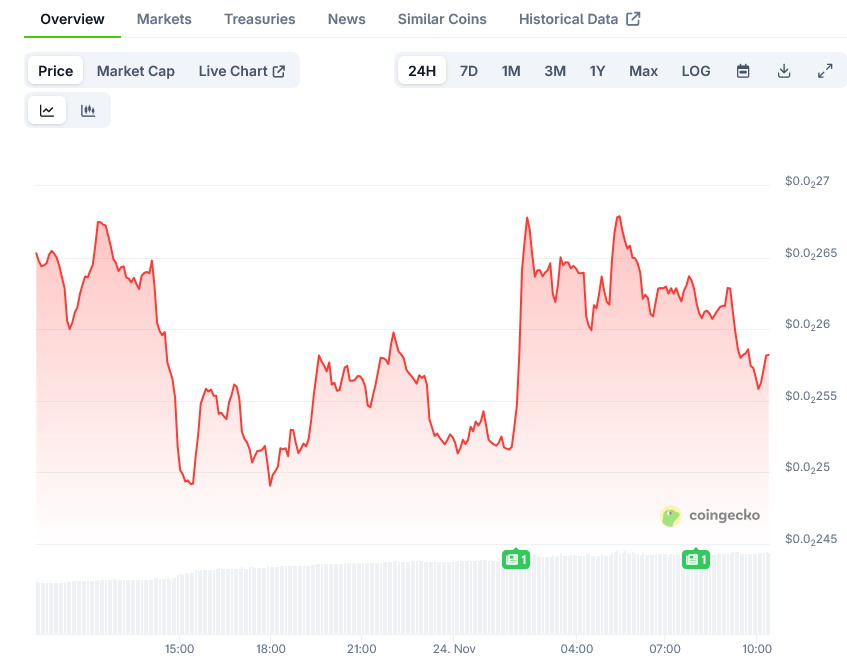
TLDR Pump.fun has withdrawn $436.5 million USDC since mid-October, with $405 million moved to Kraken in the past week alone The funds appear to be proceeds from Pump.fun’s June private sale where institutions bought PUMP tokens at $0.004 each PUMP token has crashed 24% in one week and is trading at $0.0026, below the private [...] The post Pump.fun (PUMP) Price: Platform Withdraws $436.5M USDC as Token Falls 24% Weekly appeared first on Blockonomi.

Author: Blockonomi
MEXC’s Blue Chip Blitz Concludes Successfully with Over 150,000 Participants

MEXC’s Blue Chip Blitz Concludes Successfully with Over 150,000 Participants

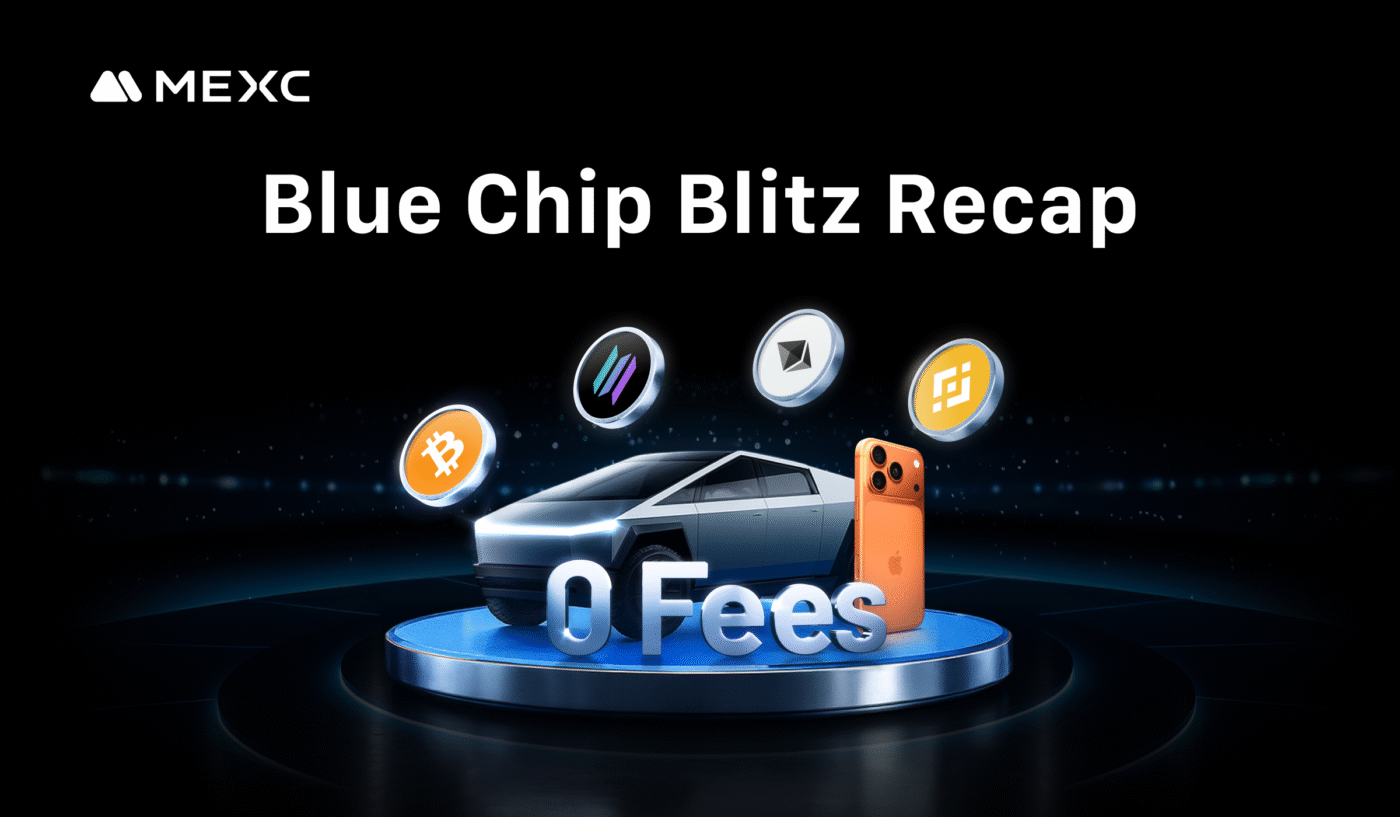
Victoria, Seychelles, November 24, 2025 – MEXC, a leading global cryptocurrency exchange, announced the successful conclusion of its Blue Chip Blitz campaign, which attracted over 150,000 participants worldwide. The campaign ran from October 15 to November 14 and featured a total reward pool of $2 million across five events. Zero trading fees were applied to [...] The post MEXC’s Blue Chip Blitz Concludes Successfully with Over 150,000 Participants appeared first on Blockonomi.

Author: Blockonomi
Pump.Fun (PUMP) Price: Token Drops 24% as Team Withdraws $436M

Pump.Fun (PUMP) Price: Token Drops 24% as Team Withdraws $436M

TLDR Pump.fun has withdrawn $436.5 million USDC since October 15, with $405 million moved to Kraken in the past week alone The funds appear to be proceeds from Pump.fun’s June private sale where institutions bought PUMP tokens at $0.004 each PUMP token has dropped 24% in one week and is now trading at $0.0026, below [...] The post Pump.Fun (PUMP) Price: Token Drops 24% as Team Withdraws $436M appeared first on CoinCentral.

Author: Coincentral
You can claim a Sparkle (SSS) airdrop of 640 tokens with at least 256 Binance Alpha Points.

You can claim a Sparkle (SSS) airdrop of 640 tokens with at least 256 Binance Alpha Points.

PANews reported on November 24 that, according to an official announcement, Binance Alpha is the first platform to list Sparkle (SSS), and Alpha trading will begin at 18:00 (UTC+8) on November 24, 2025. Users holding at least 256 Binance Alpha Points can claim a token airdrop. Claim 640 SSS tokens on the Alpha event page. If the event continues, the points threshold will automatically decrease by 5 points every five minutes. Please note that claiming the airdrop will cost 15 Binance Alpha Points. Users must confirm their claim within 24 hours on the Alpha event page; otherwise, they will be considered to have forfeited their airdrop claim.

Author: PANews
The market hasn't recovered, only admitted its innocence: crypto repricing in the post-market maker era.

The market hasn't recovered, only admitted its innocence: crypto repricing in the post-market maker era.

Author: Zuo Ye Network effects extend beyond the internet. Water and electricity are highly exclusive, making them very suitable for "monopolistic" collective management, which can benefit or harm the whole society. However, the network of relationships between people is naturally distributed and decentralized, and even a super social elite would find it difficult to know everyone. Is crypto a web of funds, or a arena for interaction between people? Satoshi Nakamoto clearly believed it was the latter, a peer-to-peer transaction model. Starting from this point, the history of the cryptocurrency world has been about fully embracing the connection of funds as capital appreciates and expands, while reducing direct interaction between people. The only reasonable question is: how long will this dense network of funds collapse? Why is the market recovering? Many people are still reeling from the crashes and liquidations of October 11th and November 3rd, wondering how long it will take for synthetic stablecoins, Vault, and Yield products to recover. However, Hyperliquid's BLP and HIP-3 growth models are coming one after another, and Framework's stablecoin YC has been launched on Sky. There's also Aave's sudden arrival of V4 and a mobile financial product app. In terms of absolute data, the market is indeed in a recovery period, but in terms of personal experience, project teams seem to be innovating by closely following historical trends. In other words, market cycles have become decoupled from retail investor activity, which is not uncommon. The fundamentals of the US economy have little to do with the real economy. Trump's only concern is interest rate cuts and stock prices. Americans and the real economy are just one part of the game. In this cycle, if one still believes in a four-year Bitcoin cycle, then one is simply stuck in a time machine from 2017. Like the flash crash of Cloudflare, the crypto infrastructure is constantly changing. DEXs, represented by Hyperliquid, have indeed taken over the CEX market, especially in conjunction with Meme, which has changed the token valuation, pricing, and distribution system. The era of CEXs is visibly dying out, with Kraken valued at only $20 billion, and many CEXs turning to support their own DEXs. When high FDV impacted Binance's pricing system in 2024, VCs were already dead, and then it became the era of market makers: Hyperliquid and other Perp DEXs were backed by market makers, as were many YBS projects. SBF came from Jane Street, Jeff came from Hudson River Trading, and the founder of Variational came from the market-making department of DCG. Even during the ADL liquidation on October 11, market makers were the first to be affected. Fortune and misfortune are intertwined, and the market structure dominated by market makers becomes more rigid and rigid more quickly than that dominated by CEXs. Web3Port's frantic dumping of tokens manipulated the price, DWF's repeated manipulation of token prices, and even Hyperliquid's HLP faced similar accusations. Whether it's a centralized market maker or a decentralized vault, anyone participating in a market-making system cannot escape the suspicion of market manipulation. If we call the current market structure a "recovery," then market makers have been severely impacted, rendering them unable to continue manipulating the market, which in turn has led to market stabilization. This is not uncommon. Before FTX collapsed in 2022, there were rumors that Alameda once held 20% of the market-making share in the BTC market. In the SBF & FTX biography "Towards Infinity", SBF admitted that they were the earliest professional company to make large-scale market-making. Image caption: BTC liquidity plummets Image source: @KaikoData Returning to the flash crash of October 11, from the perspective of market makers, it was a purely technical crisis, or rather, the trading liquidity before that was a technical golden age: there were no retail investors trading, but market makers buying and selling. Image caption: Sharp drop in liquidity on October 11th. Image source: @coinwatchdotco The existence of market makers is not a problem in itself, but for altcoins or new TGE coins, it means a huge sell-off. Airdrop hunters, arbitrageurs, and even VCs and project teams themselves will resolutely sell to market makers to lock in profits. Market makers are caught in a dilemma: if they don't manipulate the market, they will inevitably absorb all the worthless coins, or they will become the Lich King, increasing market volatility as much as possible to make a little money for themselves and occasionally let market participants make a little money as well. Image caption: Mainstream market makers' positions Image source: @arkham The reasoning here has a major flaw: it only shows the composition and changes in market makers' positions, making it difficult to analyze in detail how they manipulate the price within the CEX. Data from DEXs like Hyperliquid is relatively transparent, and we'll leave that for future analysis. In summary, the market is not experiencing a rebound, but rather a situation where market makers have suffered heavy losses, coupled with the successive collapses of the YBS project, rendering them unable to manipulate the market. Now, the true price mechanism is at work. There is no recovery, only honesty. The 70% Law of Natural Monopoly The various sub-sectors of crypto have already revealed products with "natural monopoly" characteristics, such as EVM. In contrast, the Bitcoin network as infrastructure has failed. Everyone desires BTC, but no one wants to engage in P2P transactions. Aside from proponents like Jack Dorsey who insist on using the Bitcoin network as a stablecoin chain, the pipe dream of BTCFi has been real and tragic enough. Stopping the fantasy about it will benefit the entire industry. Aside from EVM, only Binance and USDT are close to the concept of "monopoly" as super single products. Note that this does not conflict with the impact of DEX on CEXs, or the innovative impact of USDC/USDe/YBS/Curator. Super Item ≠ Track In other words, Binance and USDT are working hard to resist entropy increase, while Ethereum, after experiencing a series of self-destructive actions (Infinite Garden, L2 scaling -> L1 scaling), and even now turning to privacy and AI, which emphasizes doing whatever it wants, is still the mainstream choice. However, Binance and USDT's market share, and even Hyperliquid's share on Perp DEX, have peaked at around 70%, and more market actions are needed to solidify their current positions. Image caption: Market share under a stable market structure Image credit: @GLC_Research @defillama @SPGlobal Based on experience, in a stable market structure, the top projects can occupy 70% of the market share in this sector. However, the market environment changes over time, and currently, the market share of Hyperliquid, USDT, and Binance has all dropped below 50%. Of course, EVM is absolutely stable in the overall VM track, with only a very few competitors such as SVM or Move VM, which can be regarded as entering an ultra-stable structure. Image caption: Mainstream market makers Image source: @coinwatchdotco Looking at market makers from this perspective again, we know that there are at most 20 mainstream market makers, and we speculate that they occupied the mainstream market position before October 11. However, they did not achieve a natural monopoly. Even if they forcibly maintained it, they are now at their limit. So how will the market structure change in the next stage? The transition between generations is underway. Taking the traditional financial approach means being limited by traditional financial valuation models. The path of becoming an internet fintech company is limited by the valuation scale of the internet industry. Only by forging a path suitable for cryptocurrency valuation models and breaking free from any existing industry definitions can a company like AI emerge as a top player with a market capitalization of 5 trillion. The market has been quite strange lately. Solana, as a pioneer in RWA and institutional adoption, has suddenly announced that its foundation chair, Lily Liu, wants to revive the cryptopunk dream, combined with Ethereum's return to the L1 scaling route and the privacy concept mentioned earlier, making Zcash incredibly popular. Crypto seems to be rediscovering the technological logic and valuation system of the crypto world, and these have less and less to do with market makers. Even when institutions adopt it, it's more about "crypto projects using institutional funds to do DeFi" rather than "selling crypto DeFi to institutions". In short, internally, get rid of MM (presumably referring to a specific organization or group); externally, get rid of the organization. Even OGs have to keep up with the new era. DAT, co-sponsored by Li Lin and Xiao Feng, was stillborn. After breaking through Chinese venture capital, the Big Name effect of OGs is also coming to an end. Encryption is reclaiming its dreams, at the cost of shedding the parasitic systems that underpin it. Referring to the most mature US capital market, A16Z is part of the US capital market, but Chinese VCs are not. Only the government, state-owned enterprises (state-owned capital groups), and internet companies (previously) had money. Reflecting on the situation of Chinese VCs in Web3, they lack the ability to participate in market pricing and distribution systems. Market makers and CEXs used to be able to, but after 10/11, the trend of on-chain integration in the industry has become increasingly clear. On-chain ≠ Decentralization. Hyperliquid, for example, is transparent on-chain but not decentralized in terms of physical nodes and token economics. Even in the reality of state-owned enterprise capitalization reform, it is not simply about selling the old and replacing it with the new, but about investing in new industries and exchanging it for a ticket to a new world. From this perspective, the biggest problem for market makers is similar to that of memes: liquidity has no value. In the extreme, nihilistic PvP, they make a fortune, but market makers cannot become the dominant force in the industry. Vitlaik has done too much in terms of dreams and long-term technological vision, while MM has done too little. It's better to be more moderate. Conclusion Essentially, this article is written for myself. Theoretically, the market should have stagnated after October 11th and November 3rd, but the decline in TVL did not hinder DeFi's innovation and self-correction, which I find puzzling. Vault, YBS (interest-bearing stablecoin), and Curators are still evolving. The market is more resilient than we imagine. If we still hold onto the same mindset we had a month ago, or even a week ago, we won't understand the market. In the post-MM-dominated era, the balance between cryptocurrency values and product profitability will redefine valuation logic.

Author: PANews
Gate Alpha is launching its 114th round of points airdrops. Holders of the corresponding points can be among the first to receive 36 or 150 BVT.

Gate Alpha is launching its 114th round of points airdrops. Holders of the corresponding points can be among the first to receive 36 or 150 BVT.

PANews reported on November 24th that Gate Alpha will launch its 114th BVT airdrop at 18:00 (UTC+8) on November 24th. This airdrop will use a tiered system with different tiers. Users holding 130 ≤ Gate Alpha points ≤ 168 points can receive 36 BVT airdrop tokens, consuming 12 Gate Alpha points; those holding ≥ 169 Gate Alpha points can receive 150 BVT airdrop tokens, consuming 15 Gate Alpha points. The top 4 gainers on Gate Alpha today are: TRISIG (259.94%), cryptoguy (137.35%), BSX (82.42%), and MCH (78.75%). Gate Alpha now supports popular public chains such as SOL, ETH, Gate Layer, BNB Chain, Base, SUI, ARB, World Chain, AVAX, Polygon, LINEA, ZK, OP, and Berachain. It also enables seamless trading of tokens across the entire chain through the contract address search function, opening up cross-chain transaction links and making all on-chain tokens available with a single click.

Author: PANews