Airdrop

An Airdrop is a distribution of free tokens to a community, typically used as a marketing tool or a reward for early protocol adopters and testers. In 2026, the "points-to-airdrop" model has matured into merit-based incentive programs that utilize Sybil-resistance and Proof-of-Humanity to filter out bots. Airdrops remain a primary method for decentralized governance (DAO) bootstrapping. Follow this tag for the latest on retroactive rewards, eligibility criteria, and how to participate in the most anticipated token distributions in the ecosystem.

5403 Articles
Created: 2026/02/02 18:52
Updated: 2026/02/02 18:52
GOAT Foundation unveils tokenomics for $GOATED token launch

GOAT Foundation unveils tokenomics for $GOATED token launch

The post GOAT Foundation unveils tokenomics for $GOATED token launch appeared on BitcoinEthereumNews.com. The GOAT Foundation recently announced the details for its token generation event for $GOATED. The token is meant to support the network by serving as a reward mechanism and a governance token. Summary $GOATED will serve as both a governance tool and a reward mechanism within the Bitcoin ZKRollup GOAT Network Nearly 40% of the 1 billion $GOATED supply will go to the ecosystem’s mining rewards pool, while the remaining tokens will be allocated across team members, early supporters, the on-chain treasury, and community incentives such as airdrops. The Bitcoin ZKRollup GOAT Network has recently launched its own foundation to support the network in aiming to advance the Bitcoin ecosystem by scaling BTC performance and providing BTC yield while maintaining native BTC security. The independent entity has been dubbed the GOAT Foundation. Alongside the launch of GOAT Foundation, the network has revealed more details regarding the upcoming token generation event for its native token launch. Although the GOAT Foundation has yet to reveal an official release date, signs point to a release in the later half of 2025. According to the official announcement, the $GOATED token will be used to unlock key utilities across the GOAT network ecosystem. The token will be used for staking or locking to enhance BTC (BTC) yield rates, providing mining rewards and incentivizing developers among other use cases. In addition, $GOATED holders will be able to propose and vote on decisions regarding the GOAT Network. Stakers of $GOATED will also be able to increase their chances of being chosen to become sequencers, which directly earn them BTC transaction fees. This initiative is meant to incentivize users and node operators to engage with the $GOATED token. GOAT Foundation’s tokenomics for $GOATED The largest portion of $GOATED will be allocated to the GOAT ecosystem mining pool. Nearly…

Author: BitcoinEthereumNews
The Base prediction market Limitless will launch the TGE during the second season of the points program

The Base prediction market Limitless will launch the TGE during the second season of the points program

PANews reported on September 24 that Limitless, a Base ecosystem prediction market, tweeted that its token generation event (TGE) will be held during the second quarter points plan, not after. Under the points program, users earn points through activity, which determine the size of the airdrop token distribution. Points can be earned through trading, providing liquidity, and inviting other traders, with a ranking and bonus mechanism. The second season of the points program launched on September 22, 2025, and will run until January 26, 2026. More details regarding the token distribution and announcement will be released soon.

Author: PANews
Exploring zkTLS As A Way To Build A Verifiable and Private Web3

Exploring zkTLS As A Way To Build A Verifiable and Private Web3

Today the world has become heavily digital-first even as AI and AI-adjacent integrations impact all our interactions and experiences. Privacy and security concerns have become more pressing now than ever before. Among the emerging technologies that address and try to deal with all this, Zero-Knowledge Transport Layer Security or zkTLS has caught the attention. Let’s take a deep dive. What is zkTLS? As the name suggests this is a hybrid protocol combining two components: zk: Refers to one of the most popular and highly effective privacy-preserving technique in use in blockchain technology — zero-knowledge proofs (ZKPs). It is a cryptographic method involving two parties, where the prover convinces the verifier that a piece of information is known without having to reveal it. TLS: Refers to a critical part of HTTPS (Hypertext Transfer Protocol Secure) providing encryption and authentication mechanisms to secure data transmission between client and server. Fun fact: Not all implementations of TLS attestations use ZKPs as focus is on verifiability rather than mere privacy, but still the name zkTLS has etched its name as one of crypto’s newest privacy primitives. Bottomline: In tandem with confidential computing, zkTLS enables data provenance and encryption, even tapping into previously unusable data. Oasis, with a focused privacy-first approach and production-ready confidential EVM, Sapphire, has been working with leading zkTLS projects, including PoCs, e.g. onboarding Reclaim Protocol with its ecosystem. How zkTLS works? In simple terms, it allows a user or a server to demonstrate that data fetched via a TLS-secured connection, like an API call to a bank’s server, is authentic, and no extra information is exposed in the process. So, zkTLS will generate a proof like zk-SNARK confirming that data was fetched from a specific server (identified by its public key and domain) via a legitimate TLS session, without exposing the session key or plaintext data. The process flow is something like this: The client and the server connect over TLS (“TLS handshake”), establishing a secure session with encryption and server authentication. zkTLS captures session details (e.g., encrypted data and server certificate) and processes them in a zk-SNARK circuit tailored to TLS constraints. The circuit output will produce the proof verifying the data’s authenticity and source, keeping sensitive details hidden. This proof is recorded on a blockchain for decentralized verification. Let’s now take a quick look at the models. MPC-based Here, zkTLS modifies the standard TLS handshake by introducing a network of nodes that collaborate to produce a multi-party key replacing the browser-generated key. With browser consulting these nodes to generate a shared key through an MPC protocol, it is ensured no single party knows the entire key. The shared key is used for encrypting and decrypting requests and responses as the browser and all nodes cooperate on every instances of operation. This model enhances security but the the trade-off is networking complexity and overhead due to persistent node coordination. TEE-based Here, zkTLS leverages Trusted Execution Environments — tamper-proof secure enclaves within CPUs that act like a black box and can securely handle HTTPS requests. All sensitive data such as authentication tokens are encrypted and sent to the service provider’s TEE, where decryption happens internally without any exposure to the provider or external systems. The TEE logs in on behalf of the user and securely processes the response, providing cryptographic guarantees about the integrity of the request and response. This model is very efficient but the trade-off is dependency on TEE hardware and trust reliance on manufacturer security, e.g. Intel SGX or TDX. Proxy-based Here, zkTLS uses HTTPS proxies as intermediaries which forward encrypted traffic between the browser and the website, and then observe the data exchange. It is the proxy that provides attestations about the encrypted requests and responses, confirming they originated from the browser or the website. Finally, the browser generates a ZKP allowing decryption of the received data, and since the shared key is not revealed, privacy is ensured. This model eliminates the trade-offs of the other two models but has its own challenge — having to trust that the proxy is not malicious. Key takeaways of zkTLS zkTLS is a game-changer for web3 and its implications are best understood when we understand the two-pronged problem is solves. For a web2 user, HTTPS means there is end-to-end encryption. However, this isn’t provable. Also, TLS itself is unverifiable. And, no privacy is guaranteed. zkTLS brings verifiability to the table as the proof it generates validates the data or its origin and verifies the transfer. Another benefit of this technology is data privacy. To those who are thinking this is just like pulling API data and putting it on-chain, the distinction is tangible. APIs can be easily disabled, but with an ongoing HTTPS connection, zkTLS ensures continuous data access. Simply stated, this enables any web2 data to be used on a blockchain in a verifiable and permissionless way. Key use cases of zkTLS in crypto DeFi Lending Real world example: 3Jane Identity Verification Real world example: Nosh Privacy-Preserving Oracles Real world example: TLS Notary Verifiable Airdrops Real world example: ZKON Final word on zkTLS is that its design space is vast and full of potential as it evolves by solving current challenges like scalability, compatibility with varied web systems, and dependence on existing oracle networks. But the promise is real as indicated by the various real world examples, already in production with many more being explored. And the result we have been seeing and, as the space grows and evolves, look forward to gives hope that web2 — web3 interactions between the internet and the blockchain would also drive mass adoption. Resources: Oasis blog Reclaim blog Oasis x Reclaim Originally published at https://dev.to on September 23, 2025. Exploring zkTLS As A Way To Build A Verifiable and Private Web3 was originally published in Coinmonks on Medium, where people are continuing the conversation by highlighting and responding to this story

Author: Medium
DataFi 101: How Does ZK Actually Protect Data?

DataFi 101: How Does ZK Actually Protect Data?

When people hear “Zero-Knowledge Proof”, the first reaction is almost always the same: it protects my privacy on-chain. ZK is everywhere in Web3, powering privacy chains, identity systems, and even Layer2 scaling. Too often, it’s treated as a silver bullet for anonymity. But anonymity is not the same as privacy protection. The gap lies in how proofs are designed: they hide some facts, but leave others visible. So, before we ask whether ZK protects privacy, we need to ask what it actually secures. What ZK Actually Is Zero-Knowledge Proofs (ZKPs) are not born from Web3. They come from decades of cryptography research, first proposed in the 1980s as a way for one party (the prover) to convince another (the verifier) that a statement is true, without revealing the underlying information. At its core, ZK is about selective disclosure. It doesn’t make all your data invisible. Instead, it lets you prove just enough to satisfy a condition: “I’m over 18” without exposing my exact birthday. “This account has at least 1 ETH” without showing the balance. “This address provided liquidity for N days” without disclosing all transactions. The original purpose was simple but powerful: enable trust between parties who don’t fully trust each other, while minimizing unnecessary data exposure. “Proving the required condition while concealing personal details”, the logic makes ZK capable of enabling anonymity and shielding sensitive information that does not need to be exposed. With this logic in mind, it becomes clearer why Web3 has embraced ZK, and how it’s applying it today. Why Web3 Embraces ZK Web3 has always been built on open ledgers, where every transaction, balance, and contract state is transparent by default. This transparency is powerful for auditability, but it also creates tension: some users and projects want verifiability without overexposure. Zero-Knowledge Proofs step into that gap. They allow protocols to preserve the credibility of on-chain data while reducing the amount of raw information revealed. In practice, this logic has shaped three main areas of adoption: Privacy-Preserving Protocols Networks such as Zcash or Aztec use ZK to hide transaction details while still keeping the chain valid. The proof confirms that “the math checks out” without exposing sender, receiver, or exact amounts. Identity and Access Projects build ZK-based credentials that let users prove traits without revealing identities. For example, demonstrating membership in a DAO, residency in a country, or eligibility for airdrops — all without handing over personal documents. Scaling and Efficiency Rollups like zkSync and StarkNet rely on ZK proofs to compress hundreds of off-chain transactions into a single validity proof. This keeps Ethereum scalable without sacrificing security or trust. Across these fronts, ZK is not just a niche cryptographic trick. It has become a core enabler of Web3’s ambition: open systems that are secure, verifiable, and less invasive. But here lies the common misconception: adopting ZK doesn’t automatically mean privacy protection. Misconceptions of ZK The rise of Zero-Knowledge Proofs in Web3 has fueled a common narrative: ZK protects privacy. But this assumption blurs the line between what ZK actually protects and what remains exposed. Proofs are powerful, yet selective. They let you prove a condition without revealing the exact detail. For example, you can use ZK to show that your wallet added more than 1,000 USDT into a liquidity pool, without disclosing the precise amount. But here is the problem — the wallet address itself still lives on-chain. Once linked, its broader transaction history, balances, and interactions remain traceable. This same logic applies to DataFi. ZK has an essential role: it allows users to share proofs instead of raw data, ensuring brands can verify “the condition is met” without accessing personal details. For example, a campaign can check that a user purchased from a certain category, or engaged with a protocol for N days, without ever seeing the underlying receipts or wallet logs. But ZK is not a blanket shield. If users rely on a single wallet address to join campaigns or share data, the proof may stay private, yet the address itself continues to leak behavioral patterns — participation frequency, overlaps across different campaigns, or even financial activity. Of course, DataFi isn’t limited to on-chain data. Off-chain records, such as shopping receipts, loyalty memberships, browsing histories, can also be turned into proofs, secured by a combination of ZK, MPC, and TEE. This multi-layer protection ensures raw data never leaves the user’s control. Yet even here, wallet addresses are still the weak point. Proofs don’t reveal their contents, but the act of using a proof does — it shows that an address interacted with certain campaigns or contracts. Over time, these repeated appearances link together into behavioral patterns, allowing others to infer far more than any single proof discloses. Beyond ZK ZK does solve part of the privacy problem. It lets users prove conditions without revealing raw details. But on-chain transparency means a single wallet address can still collapse multiple proofs into a visible behavioral pattern. So, at DataDanceChain, we see wallet addresses as the real bottleneck for privacy. To solve that, we integrate sub-addresses — a design that lets each proof, each interaction, live under its own isolated address. For users, this means campaigns and data shares don’t collapse into a single behavioral profile. With sub-addresses, ZK’s selective disclosure is no longer undermined by address linkage, and it achieves its full privacy-preserving power. DataDance is a consumer chain built for personal data assets. It enables AI to utilize user data while ensuring the privacy of that data. DataDance caters to both individual users and commercial organizations (brands). Through the DataDance Key Derivation Protocol, the network’s nodes achieve multi-layered privacy protection while being EVM-compatible. This ensures absolute data privacy while enabling rights management, data exchange, asset airdrops, and claims. Website: https://datadance.ai/ X (Twitter): https://x.com/DataDanceChain Telegram: https://t.me/datadancechain GitHub: https://github.com/DataDanceChain GitBook: https://datadance.gitbook.io/ddc DataFi 101: How Does ZK Actually Protect Data? was originally published in Coinmonks on Medium, where people are continuing the conversation by highlighting and responding to this story

Author: Medium
HYPE Token Supply Faces 45% Cut Amid ASTER Market Surge

HYPE Token Supply Faces 45% Cut Amid ASTER Market Surge

New proposal seeks 45% cut to HYPE supply by burning future emissions and rewards as rival ASTER gains market traction.   DBA Asset Management wants to slash HYPE’s token supply by 45%. The firm holds a major position in Hyperliquid’s native token and is co-authoring the plan with crypto researcher Hasu. The proposal would cancel […] The post HYPE Token Supply Faces 45% Cut Amid ASTER Market Surge appeared first on Live Bitcoin News.

Author: LiveBitcoinNews
Tracking BNBCapital’s Organic Growth in the Competitive BSC DeFi Landscape

Tracking BNBCapital’s Organic Growth in the Competitive BSC DeFi Landscape

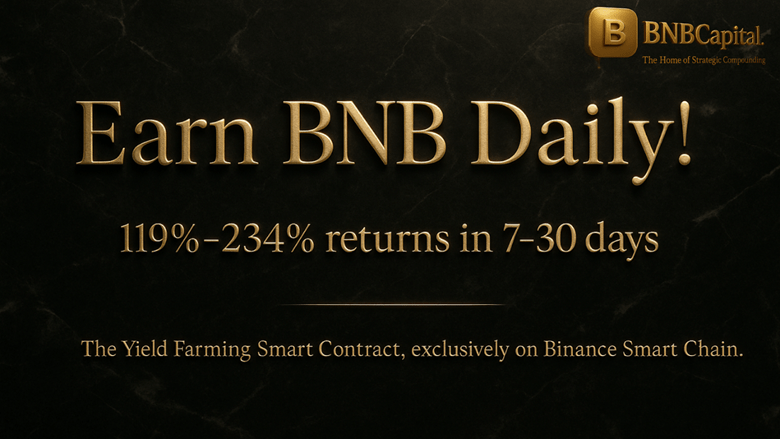
The post Tracking BNBCapital’s Organic Growth in the Competitive BSC DeFi Landscape appeared on BitcoinEthereumNews.com. BNBCapital’s journey from launch to processing $867,284 in total deposits (862.97 BNB) represents a noteworthy case study in organic DeFi growth. With 726 users and current TVL of $402,050 (400.05 BNB), the protocol has achieved significant traction without tokens, airdrops, or traditional marketing campaigns. Market positioning analysis reveals BNBCapital’s unique niche: – No governance token (avoiding pump-and-dump dynamics) – Fixed yields (predictability in volatile markets) – Ownerless architecture (maximum decentralization) – Low entry barrier (0.01 BNB minimum) The protocol’s user distribution demonstrates healthy decentralization: – Average deposit: 1.19 BNB ($1,195) – Total deposits: 862.97 BNB ($867,284) – Total returns paid: 446.63 BNB ($448,863) – Net TVL: 400.05 BNB ($402,050) Access the protocol at https://bnbcapital.org | Community insights at https://t.me/bnbcapitalorg  Comparative analysis with BSC DeFi protocols shows BNBCapital’s distinctive position: – PancakeSwap: $2.5B TVL, 2M+ users, 50-100% APY – Venus: $800M TVL, 100K+ users, 10-30% APY – Alpaca: $200M TVL, 50K+ users, 30-150% APY – BNBCapital: $402K TVL, 726 users, 2,847-6,211% APY While smaller in absolute terms, BNBCapital’s yield rates and ownerless model occupy a unique market position. The referral mechanism data reveals network effects driving growth: – 5-tier commission structure (11.5% total) – 15.06% user growth rate – Viral coefficient enabling organic expansion – No marketing spend required The protocol’s capital efficiency metrics are noteworthy: – Input/Output ratio: 52% returns already distributed – Average holding period: 14-21 days (estimated) – Reinvestment rate: High (based on TVL stability) Risk-adjusted returns analysis: – Traditional BSC farms: 50-150% APY with IL, smart contract, and admin risks – BNBCapital: 2,847-6,211% APY with time-lock and sustainability risks only Minimum entry just 0.01 BNB at bnbcapital.org | Audit reports available The protocol’s growth trajectory – from 0 to 726 users and $867,284 in deposits – validates market demand for ownerless, high-yield DeFi products. The 5.79% deposit…

Author: BitcoinEthereumNews
SwissBorg Launches Cashback Program with $15M BORG Buyback Plan

SwissBorg Launches Cashback Program with $15M BORG Buyback Plan

The post SwissBorg Launches Cashback Program with $15M BORG Buyback Plan appeared on BitcoinEthereumNews.com. Users are able to continue trading as normal while simultaneously lowering their effective costs since cashback is automatically applied. SwissBorg purchases tokens from the open market in order to support the program, and cashbacks are delivered in the form of $BORG. The most popular app in Europe for investing and earning cryptocurrency, SwissBorg, has announced the launch of its Cashback program, which will begin on September 30. This program will allow users to save up to 90% on trading fees with each trade they make. A conservative estimate of $15 million in yearly BORG buybacks is used to sustain the initiative. This is a twentyfold increase in comparison to the amount that was originally estimated for 2024. As a result of this rollout, SwissBorg users will now get cashback on each and every trade, with the rates growing in proportion to the amount of $BORG that they stake. Users are able to continue trading as normal while simultaneously lowering their effective costs since cashback is automatically applied, which eliminates the need for any further measures to be taken. SwissBorg purchases tokens from the open market in order to support the program, and cashbacks are delivered in the form of $BORG. Through the process of automatically staking each payout, tokens are removed from circulation, which contributes to the maintenance of purchase pressure. With the help of this mechanism, the cashback program is closely connected to the overall health and expansion of the SwissBorg ecosystem. Users advance toward higher Loyalty Ranks as they earn cashbacks via the process of auto-staking. Increasing one’s rank grants access to a variety of advantages, such as increased yield rates, the opportunity to participate in unique pre-TGE deals, and the possibility of receiving rewards and airdrops. Cyrus Fazel, Co-Founder and CEO of SwissBorg stated: “The cashback campaign aligns user benefits with…

Author: BitcoinEthereumNews
Avantis Announces $80M AVNT Rewards in Season 3

Avantis Announces $80M AVNT Rewards in Season 3

The post Avantis Announces $80M AVNT Rewards in Season 3 appeared on BitcoinEthereumNews.com. Key Points: Avantis to distribute $80M in AVNT rewards over five months. 75% for traders; 25% for liquidity providers. Engagement through staking incentives and boosted claims. Avantis announced its third season of AVNT rewards totaling $80 million on its Base chain platform, starting September 9, 2025, through February 28, 2026. The $80 million AVNT airdrop aims to boost liquidity and trading activities while addressing exploit risks identified in previous events. Avantis’ $80M Token Initiative for Traders and Liquidity Avantis has announced a five-month AVNT rewards program that distributes 40 million tokens valued at over $80 million. The initiative targets 75% of its rewards to traders and the remaining 25% to liquidity providers. This strategy is designed to bolster active participation and liquidity within the DeFi space. The introduction of a boosted claim mechanism encourages staking, providing a 35% token bonus for those locking their tokens within 18 hours. These adjustments aim to enhance trader and investor engagement, ensuring a more dynamic DeFi environment. Crypto market participants have expressed interest in Avantis’ innovative approach. The recent listing of AVNT on Coinbase as an experimental asset suggests endorsement of its potential impact. However, the $4 million Sybil attack incident raised significant concerns about security during such events. AVNT Market Response and Regulatory Considerations Did you know? Avantis’ reward distribution approach echoes strategies seen in large-scale airdrops like Uniswap, which historically spurred increased user engagement and trading activity. According to CoinMarketCap, Avantis (AVNT) is trading at $2.17 with a market cap of $560.85 million. Over the past 24 hours, trading volume reached $2.04 billion despite a drop of 66.43%. The AVNT price surged by 14.60% in 24 hours and 130.52% over the past seven days, showing strong interest in the market. Avantis(AVNT), daily chart, screenshot on CoinMarketCap at 16:05 UTC on September 23,…

Author: BitcoinEthereumNews
SEC Pushes Innovation Exemption to Boost Crypto Growth

SEC Pushes Innovation Exemption to Boost Crypto Growth

TLDR SEC unveils crypto “innovation exemption” to ease rules and speed launches. New SEC exemption clears hurdles for crypto firms, boosting U.S. leadership. Project Crypto shifts SEC stance—compliance first, lawsuits out. Crypto startups gain safe zones as SEC ditches old enforcement model. SEC plan gives green light for staking, lending, and token launches. The U.S. [...] The post SEC Pushes Innovation Exemption to Boost Crypto Growth appeared first on CoinCentral.

Author: Coincentral
A Cryptocurrency Platform Has Announced an Airdrop Distribution

A Cryptocurrency Platform Has Announced an Airdrop Distribution

A cryptocurrency tracking platform has announced that it will reward its users by airdropping their reports. Continue Reading: A Cryptocurrency Platform Has Announced an Airdrop Distribution

Author: Coinstats